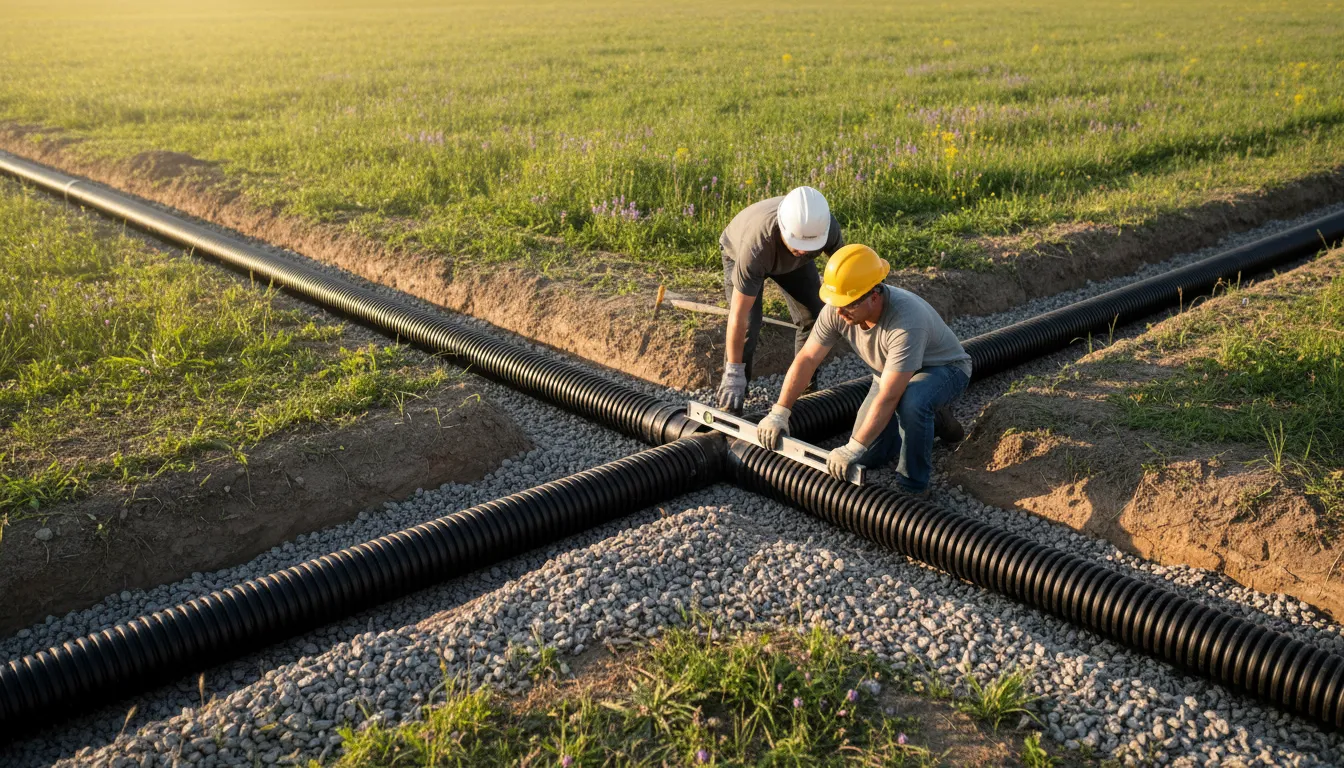
Find the Best Drain Field Repair Companies for Your Business
No obligation • Fast responses • Nationwide coverage

Why you can trust Septic Spot
Septic Spot is a leading United States resource for understanding and comparing septic services. Our editors review providers using consistent criteria and verify key business details. Listings and scores are independent, and companies cannot pay to influence our content.
Search providers near you
Best Drain Field Repair Companies in Hawaii Ranked
A failing drain field (also called a leach field or absorption bed) is a serious issue for any property with a septic system. In Hawaii, with its unique geology and strict environmental protections, addressing drain field problems requires careful planning and adherence to specific state regulations. This guide explains the critical steps, legal requirements, and practical considerations for drain field repair and replacement in the Aloha State, helping you navigate the process to find qualified local professionals for your project.
Understanding Hawaii's Drain Field Regulations
All work on individual wastewater systems in Hawaii is regulated by the State Department of Health (DOH) Wastewater Branch under Hawaii Revised Statutes (HRS) Chapter 342D and Hawaii Administrative Rules (HAR) Chapter 11-62. These rules are designed to protect Hawaii's sensitive groundwater and coastal waters from contamination.
Key Regulatory Points:
- Permits are Mandatory: Any repair involving structural changes to the septic tank or a full drain field replacement requires a state construction permit from the DOH 1. You cannot legally begin excavation or construction without this approval.
- Professional Design is Required: System plans must be developed by a Hawaii-licensed civil engineer and submitted to the DOH for review and approval. This ensures the design meets all technical standards for your specific soil and site conditions.
- Licensed Installation: The actual construction must be performed by a licensed wastewater system contractor. This ensures the installation complies with critical details like proper setbacks from property lines, water sources, and structures, as well as correct drain field depth and construction.
The Cesspool Conversion Mandate
A major driver for drain field work in Hawaii is the state's mandate to eliminate all cesspools by January 1, 2050 2. Cesspools, which are common in older properties, discharge untreated sewage directly into the ground, posing a significant pollution risk. If your property has a cesspool, you will eventually need to upgrade to a permitted septic system with a properly engineered drain field. Proactively addressing a failing drain field or planning for this conversion is crucial for environmental compliance and protecting property value.
Signs You Need Drain Field Repair or Replacement
Recognizing early warning signs can prevent a complete system failure and more costly environmental damage:
- Sewage Backups: Wastewater backing up into household drains.
- Surface Ponding: Soggy ground, standing water, or unusually lush grass over the drain field area.
- Slow Drains: Throughout the house, not isolated to one fixture.
- Foul Odors: Persistent sewage smells near the tank or drain field.
- Failed Inspection: A routine inspection by a certified professional identifies saturation or biological mat failure in the drain field.
If you observe any of these signs, you must address them immediately. A failing system is a public health hazard and can result in significant fines from the DOH.
The Step-by-Step Process for Hawaii Homeowners
Navigating a drain field project involves a series of defined steps.
1. Initial Site Evaluation and Inspection The process begins with a thorough site assessment by a licensed engineer or certified inspector. This includes a percolation (perc) test to determine the soil's absorption rate, which is critical for sizing the new drain field. The professional will evaluate the entire system, identify the cause of failure, and assess site constraints like slope, rock content, and available space.
2. System Design and Engineering Based on the evaluation, a licensed civil engineer will design a replacement system that complies with HAR Chapter 11-62 3. The design will specify the type of system (e.g., conventional trench, pressurized drip, or alternative technology for difficult sites), its size, layout, and construction specifications. This engineered plan is submitted to the DOH for permit approval 4.
3. Securing the Permit Your contractor or engineer will handle the permit application with the DOH Wastewater Branch. Work cannot legally commence until the construction permit is issued. This step ensures the proposed work meets all state health and environmental standards.
4. Construction and Installation
A licensed contractor executes the approved plan. In Hawaii, this often involves challenging excavation, especially in areas with hard pahoehoe (smooth) lava rock, which can significantly impact complexity and cost. The contractor will remove the old, failed material and install the new distribution pipes, gravel, and soil cover according to the engineered specifications.
5. Final Inspection and Approval Upon completion, the engineer-of-record must submit a final construction inspection report to the DOH 5. Only after the DOH reviews and approves this report is your new system officially authorized for use. Keep all permits and final approval documentation for your property records.
Find the perfect drain field repair companies for your needs
Get personalized recommendations and expert advice
Cost Considerations for Drain Field Work in Hawaii
Costs for drain field repair or replacement in Hawaii are highly variable and typically substantial due to regulatory and site challenges.
- Standard System in Favorable Soil: For a conventional system in areas with softer, percolative soil, installation costs can start at approximately $20,000 or more 6.
- Complex or Rocky Terrain: In areas with shallow bedrock or hard lava rock requiring extensive excavation and rock-breaking, costs can easily exceed $50,000 7. Alternative system technologies (like aerobic treatment units or drip irrigation) may be required for difficult sites, which also increases cost.
- Key Cost Factors: The final price depends on the system size (based on bedroom count), soil conditions, accessibility, the type of system technology, and current material and labor rates. Always obtain detailed, written estimates from multiple licensed contractors.
Maintaining Your New Drain Field
Protect your investment and ensure the longevity of your new system with proper care:
- Manage Water Usage: Spread out laundry and dishwasher loads throughout the week to avoid hydraulically overloading the drain field.
- Divert Water: Ensure roof gutters and surface drainage are directed away from the drain field area.
- Protect the Area: Never drive or park vehicles, or place heavy structures (like sheds or pools) on the drain field. Avoid planting trees or deep-rooted shrubs nearby.
- Regular Maintenance: Adhere to a routine maintenance schedule. The EPA recommends having your septic tank inspected every 1-3 years and pumped as needed based on usage and household size 8. This prevents solids from escaping into and clogging the new drain field.
Compliance and Environmental Responsibility
Maintaining a functional septic system is not just a homeowner's responsibility-it's a legal requirement to protect Hawaii's ʻāina (land) and vital water resources. Failure to repair a malfunctioning system can result in enforcement actions from the DOH, including fines that can reach up to $60,000 per violation per day 9. Proactive repair and proper maintenance are the best ways to ensure compliance, environmental stewardship, and the long-term functionality of your wastewater system.
Frequently asked questions
Sources
Footnotes
-
Hawaii Septic Tank Requirements | Individual Wastewater ... - https://www.ntotank.com/blog/hawaii-septic-tank-requirements ↩
-
Cesspools in Hawaii | US EPA - https://www.epa.gov/uic/cesspools-hawaii ↩
-
Chapter 11-62, Hawaii Administrative Rules (Unofficial) - https://health.hawaii.gov/wastewater/home/rule/ ↩
-
Individual Wastewater Systems - https://health.hawaii.gov/wastewater/home/iws/ ↩
-
pdf - Hawaii State Department of Health - https://health.hawaii.gov/wastewater/files/2024/01/Pilot_Inspection_Report_Redacted-002.pdf ↩
-
Know Your S@!t - Maui Real Estate - https://mauirealestate.com/know-your-st/ ↩
-
Foresignt Engieering | Septic System FAQ | Hawaii - https://www.foresight-hi.com/what-you-need-to-know ↩
-
Residential Wastewater Services near Honolulu County, Hawaii - ACSI - https://acsihawaii.com/residential-wastewater-services-near-honolulu-county-hawaii ↩
-
Residential Leach Field Installation Hawaii | Septic Bed Design - ACSI - https://acsihawaii.com/residential-leach-field-installation-near-honolulu-county-hawaii ↩