Find the Best Drain Field Repair Companies for Your Business
No obligation • Fast responses • Nationwide coverage

Why you can trust Septic Spot
Septic Spot is a leading United States resource for understanding and comparing septic services. Our editors review providers using consistent criteria and verify key business details. Listings and scores are independent, and companies cannot pay to influence our content.
Search providers near you
Top Drain Field Repair Companies in Honolulu, Hawaii Ranked
When your septic system's drain field fails, it's more than an inconvenience-it's a pressing environmental and health concern that requires immediate, expert attention. In Honolulu, addressing a failing leach field involves navigating specific state and county regulations, complex soil conditions, and a multi-step process that demands licensed professionals. This guide explains what drain field repair and replacement entails in our unique island setting, why proper system function is critical, and how you can connect with qualified local engineers and contractors to restore your property's wastewater management.
Understanding Your Septic System's Drain Field
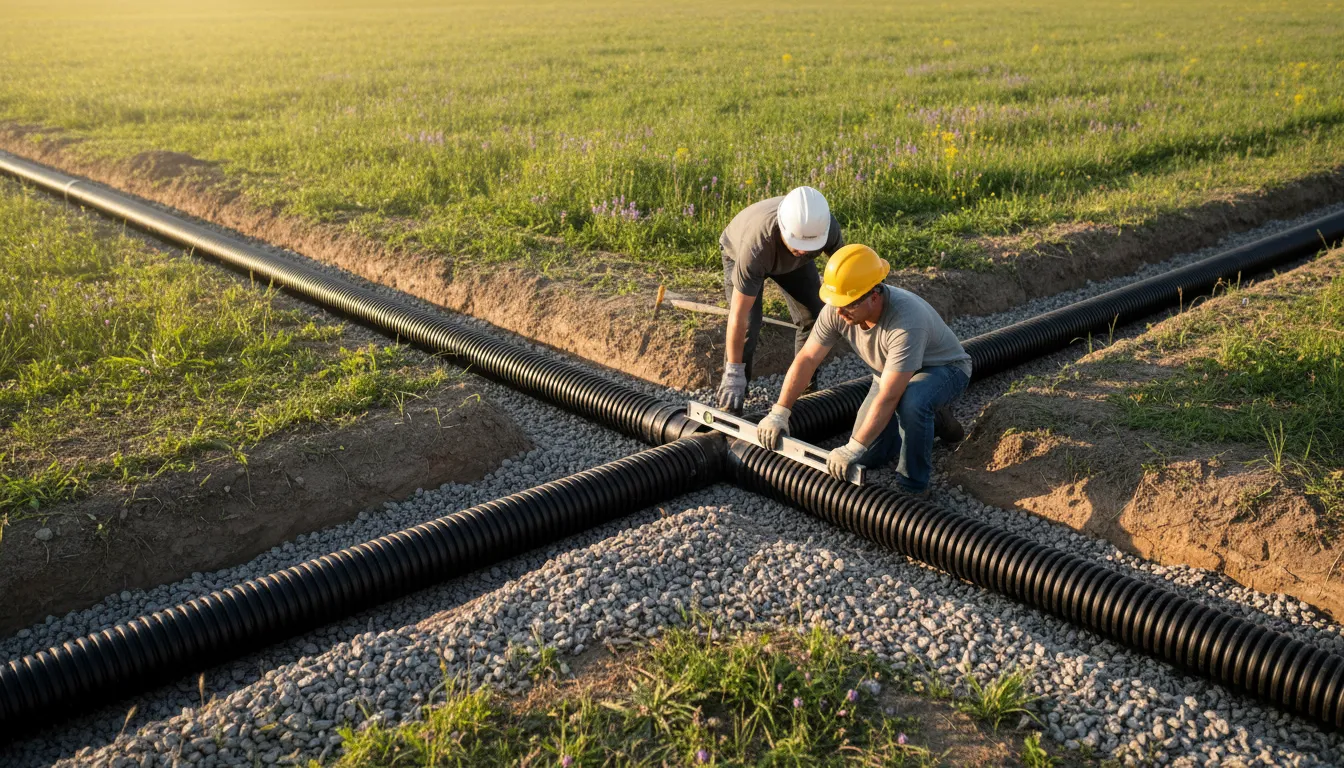
Often called a leach field or absorption bed, the drain field is the final and most crucial stage of a conventional septic system. After solids settle in the tank, the treated liquid effluent flows into a network of perforated pipes buried in trenches filled with gravel or specialized chambers. This effluent then slowly percolates through the soil, where natural biological processes provide the final treatment before the water rejoins the groundwater. A failing drain field can manifest as soggy ground or standing water over the area, sewage odors, slow-draining household fixtures, or even sewage backing up into the home. In Honolulu's dense urban and suburban environments, a malfunctioning system poses a direct risk to public health and local waterways, making timely repair or replacement essential.
Why Honolulu Presents Unique Challenges
The process for septic drain field work on Oʻahu is governed by strict rules that reflect the island's sensitive ecosystem. All repair or replacement projects require approval from both the City and County of Honolulu's Department of Planning and Permitting (DPP) and the Hawaii State Department of Health (DOH) Wastewater Branch. You cannot simply hire a contractor to dig a new field; the law requires a licensed civil engineer to design the system and submit plans for DOH review and permitting. This ensures the new system meets current standards for protecting Oʻahu's groundwater, which is a vital resource.
Furthermore, Honolulu's varied geology and topography add complexity. Soil percolation rates, which determine how quickly water absorbs, dictate the required size of the absorption area-typically 75 to 100 square feet per bedroom1 2. Shallow groundwater, which is common in many areas, or solid bedrock can severely limit options, often necessitating more advanced (and costly) engineered systems like pressure-dosed fields or raised mound systems1. Systems are ideally placed downhill from the home to utilize gravity, but if this isn't possible, a lift pump may need to be incorporated into the design2.
The Step-by-Step Process for Repair or Replacement
Navigating a drain field project involves a clear sequence of professional steps.
-
Initial Assessment and Inspection: The process begins with a thorough evaluation by a septic professional. This includes inspecting the septic tank (checking sludge and scum levels, baffle integrity) and diagnosing the cause of the drain field failure. This assessment determines whether a repair is possible or if a full replacement is necessary3.
-
Engineering Design and Permitting: If replacement is needed, a licensed civil engineer takes over. They will conduct a percolation test on your property to determine soil absorption rates. Using this data, they design a new system that complies with all Hawaii Administrative Rules (Chapter 11-62). The design plans are then submitted to the DOH for review and approval, and a building permit is secured from the City and County of Honolulu.
-
Site Preparation and Installation: Once permits are in hand, a licensed contractor (holding an A, C-9, C-37, or C-43 license) executes the work4. This involves excavating the old, failed field (if necessary) and preparing the site for the new absorption system. Modern installations often use gravelless chamber systems, which can be more efficient and require less excavation than traditional gravel-filled trenches.
-
Final Inspection and Approval: After installation, the engineer performs a post-construction inspection. A completion report is submitted to the DOH, which conducts a final review to close out the permit. Only after this final approval is your new system officially authorized for use5 6.
Find the perfect drain field repair companies for your needs
Get personalized recommendations and expert advice
System Types and Modern Standards
Gone are the days of simple pipe-in-a-trench systems for many properties. To meet today's stricter environmental standards, especially for new construction or major replacements, the DOH often requires "Level 2" or enhanced treatment systems7. These can include:
- Pressure-Dosed Drain Fields: These systems use a pump to distribute effluent evenly across the entire absorption area, preventing overloading and extending the field's life.
- Advanced Treatment Units (ATUs): These systems provide additional treatment of the effluent before it reaches the drain field, often required for properties with poor soil or near sensitive water bodies.
- Chamber Systems: These are common gravelless alternatives that use arch-shaped plastic chambers, providing a large storage volume for effluent and simplifying installation.
Typical septic tanks in Honolulu range from 1,000 to 1,250 gallons, but the accompanying drain field must be sized appropriately based on the engineer's design and soil analysis. Strict setback distances from property lines, structures, streams, and drinking water wells (often 100 feet or more) must also be factored into the design 8.
Understanding the Costs Involved
Drain field replacement is a significant investment. For a full septic system replacement (tank and drain field) in Honolulu, homeowners can generally expect costs to start between $15,000 and $24,000 for a standard system9. However, due to challenging site conditions, the need for enhanced treatment technology, high local labor costs, and the expense of importing materials to the islands, costs frequently range from $20,000 to over $50,0009 10. It's important to note that these figures are for complete systems; the cost for replacing only the drain field portion can vary widely based on the size and type of system required.
Financial Assistance: There is a potential financial benefit for some homeowners. The State of Hawaii offers an income tax credit for the upgrade of qualified cesspools to approved septic systems11 12. If your property currently uses a cesspool-which are being phased out statewide-converting to a septic system with a new drain field may make you eligible for this credit, helping to offset a portion of the project cost13.
Maintaining Your New Drain Field
Protecting your investment is key. Once your new leach field is installed, proper maintenance is non-negotiable. This includes having your septic tank pumped regularly (typically every 3-5 years, depending on usage), conserving water to avoid hydraulically overloading the system, and never parking vehicles or placing heavy structures over the absorption area. Avoid planting trees or deep-rooted shrubs near the field, as roots can clog and damage the pipes. By following these guidelines and adhering to a regular inspection schedule, you can maximize the lifespan of your new drain field and avoid premature failure.
Frequently asked questions
Sources
Footnotes
-
Foresignt Engieering | Septic System FAQ | Hawaii - https://www.foresight-hi.com/what-you-need-to-know ↩ ↩2
-
Household Wastewater Treatment Systems - CTAHR - https://www.ctahr.hawaii.edu/oc/freepubs/pdf/HH-11.pdf ↩ ↩2
-
Septic Inspections near Honolulu County, Hawaii | Honest Insight for ... - https://acsihawaii.com/septic-inspections-near-honolulu-county-hawaii ↩
-
Individual Wastewater Systems - Hawaii State Department of Health - https://health.hawaii.gov/wastewater/home/iws/ ↩
-
Septic Installation near Honolulu County, Hawaii - ACSI - https://acsihawaii.com/septic-installation-near-honolulu-county-hawaii ↩
-
Drain Field Replacement near Honolulu County, Hawaii ... - https://acsihawaii.com/drain-field-replacement-near-honolulu-county-hawaii ↩
-
Hawaii Septic Tank Requirements | Individual Wastewater Systems - https://www.ntotank.com/blog/hawaii-septic-tank-requirements ↩
-
'22JUN09 AM 8:53 CITY CLERK DEPT. COM. 421 - https://hnldoc.ehawaii.gov/hnldoc/document-download?id=14392 ↩
-
How much does it cost for a new septic and drain field? Just an ... - https://www.facebook.com/groups/204486930758046/posts/1461789831694410/ ↩ ↩2
-
Cesspool Pollution and Conversion in Hawaii: A Wastewater ... - https://www.policyinnovation.org/insights/cesspool-pollution-and-conversion-in-hawaii-a-wastewater-infrastructure-emergency ↩
-
Cesspool to Septic Conversion in Hawaiʻi - A First Hand Experience - https://www.hawaiilife.com/blog/cesspool-to-septic-conversion-in-hawai%CA%BBi-a-first-hand-experience/ ↩
-
Instructions for Applying for an Income Tax Credit for Upgrading a Qualified Cesspool | Wastewater - https://health.hawaii.gov/wastewater/files/2018/12/instr.pdf ↩
-
Septic System Upgrade Hawaii: Navigating the New Era of Wastewater Management - https://kauaiwastewatersolutions.com/blog/septic-system-upgrade-hawaii/ ↩