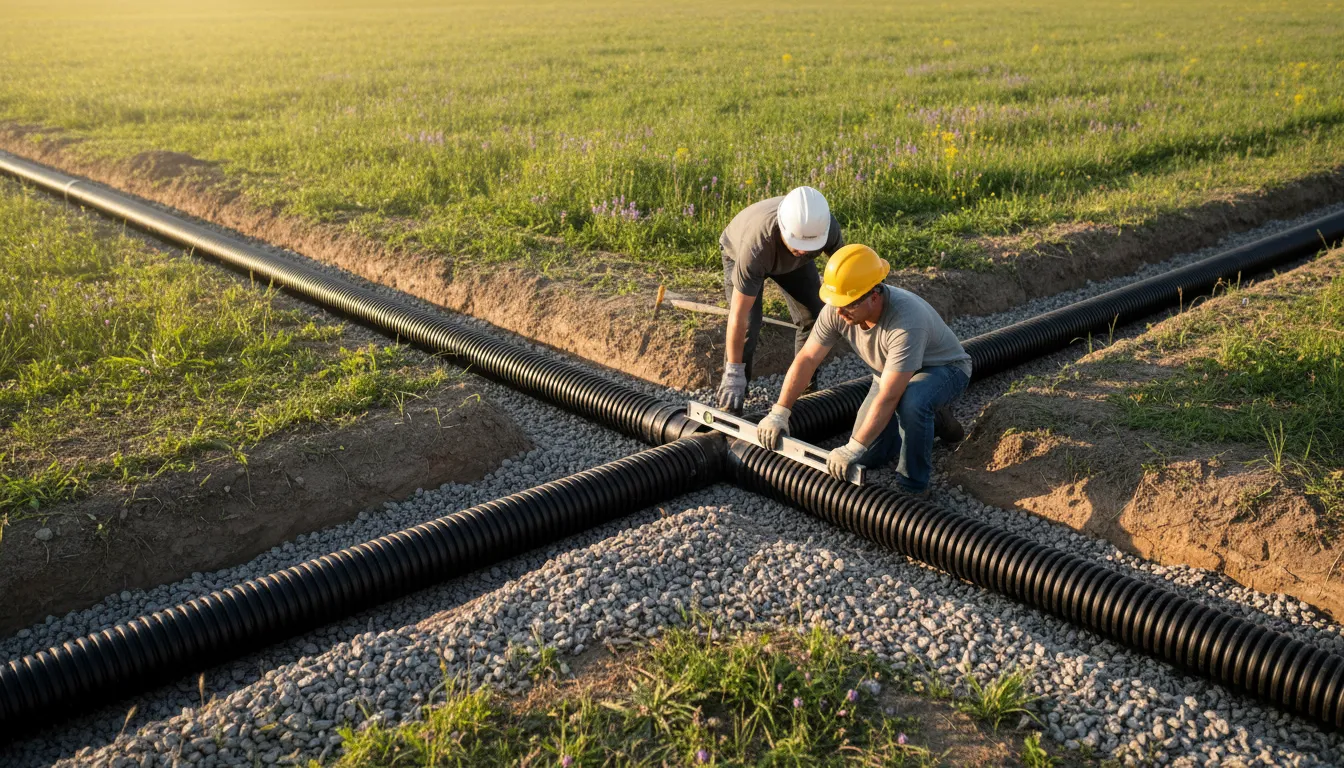
Find the Best Drain Field Repair Companies for Your Business
No obligation • Fast responses • Nationwide coverage

Why you can trust Septic Spot
Septic Spot is a leading United States resource for understanding and comparing septic services. Our editors review providers using consistent criteria and verify key business details. Listings and scores are independent, and companies cannot pay to influence our content.
Search providers near you
Top Drain Field Repair Companies in Beverly, Massachusetts Ranked
A failing septic drain field is a serious issue that can lead to sewage backups, soggy lawns, and environmental contamination. Drain field repair or replacement involves diagnosing and fixing the underground network of pipes and soil that treats wastewater from your home. In Beverly, this work is strictly regulated under Massachusetts Title 5, requiring professional engineering, soil testing, and Board of Health approval. This guide explains the local process, costs, and regulations to help you understand your options and connect with qualified local specialists for your leaching field or soil absorption system needs.
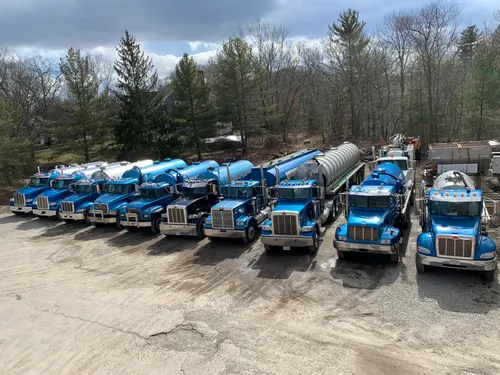
Rosano Davis Sanitary Pumping Inc
9 Rocky Ln, Cohasset, MA 02025
Rosano Davis Sanitary Pumping Inc is a family-owned septic system company serving Boston, MA. They provide a full range of services including septic system pumping, inspection, repair, and new system installation. Their capabilities include electronic locating of septic tanks and covers to minimize property disruption, as well as color video pipe inspection and high-pressure washing of leaching lines. The company manages all aspects of septic system installation, from excavation to landscaping, using their own equipment to ensure a complete service.
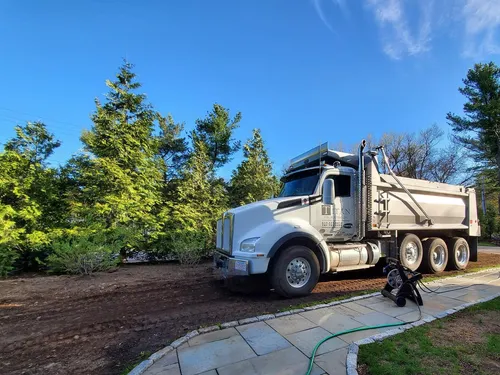
Titan Excavating, Inc
624 Commonwealth Ave, Newton, MA 02459
Titan Excavating, Inc is an excavation and septic services contractor located near Boston, MA. The company offers a range of sitework and septic solutions including septic tank installation, drain field installation, and drainage system services. Their capabilities include heavy-duty excavation, septic tank removal or reuse, contaminated soil removal, and installation of new drain fields. Titan Excavating, Inc is fully licensed and insured to handle excavation, trucking, hauling, and sewer services.
Understanding Your Drain Field and Title 5 Compliance
Your septic system's drain field, also known as a leach field or soil absorption system, is the final stage of wastewater treatment. After solids settle in the tank, liquid effluent flows into a network of perforated pipes buried in trenches filled with gravel. This effluent slowly percolates through the soil, where natural processes filter and purify it before it rejoins the groundwater.
In Massachusetts, all septic systems are governed by Title 5 of the State Environmental Code. Beverly enforces these regulations through its local Board of Health. Title 5 sets strict standards for system design, installation, and inspection to protect public health and the environment, particularly groundwater quality. A system is considered "failed" if it poses a public health threat, which includes hydraulic failure (effluent rising to the surface or backing up into the home), contamination of groundwater, or structural failure of components like pipes or the tank itself. When a failure occurs in the leaching area, repair or replacement is mandatory.
The Step-by-Step Process for Beverly Homeowners
Addressing a failed drain field in Beverly is a multi-step process that involves several professionals and city approvals. You cannot simply hire an excavator to dig a new field; the system must be designed to meet specific site conditions and legal requirements.
1. Hire a Licensed Inspector for a Title 5 Inspection The first step is an official inspection by a licensed Title 5 inspector 1. This is more than a simple check; it's a comprehensive evaluation that includes pumping the septic tank to measure sludge and scum layers, assessing the condition of the tank and distribution box, and, most critically, evaluating the drain field for signs of hydraulic failure 2. The inspector will issue a report that states whether the system passes, fails, or requires further evaluation.
2. Obtain an Engineered Design (If Replacement is Needed) If the inspection reveals a failing leaching field that cannot be repaired, you must hire a professional engineer or sanitarian to design a new system. This design is based on a detailed evaluation of your property, most importantly a soil evaluation or percolation ("perc") test. The perc test measures how quickly water drains through your soil, which directly determines the size and type of drain field required.
3. Submit Plans for Board of Health Approval The engineered design plans, along with the perc test results and a completed application (with a typical fee of $175), are submitted to the Beverly Board of Health for a permit 3 4. The Board reviews the plans to ensure they comply with all Title 5 and local requirements, such as:
- Minimum Sizing: A standard residential disposal field requires at least 800 square feet of area.
- Layout Specifications: Fields typically consist of a minimum of two lines, each no longer than 100 feet 5.
- Setback Distances: The system must be located specific distances from wells, property lines, wetlands, and buildings 6 7.
4. Hire a Licensed Installer for Construction Once permits are approved, you must hire a licensed septic system installer to perform the construction. The installer will follow the approved plans to excavate and install the new leaching field, connect it to the existing or new tank, and ensure everything is built to code. The Board of Health will perform inspections during and after installation.
Find the perfect drain field repair companies for your needs
Get personalized recommendations and expert advice
What Influences the Cost of Drain Field Work?
The cost for drain field repair or replacement in Beverly varies widely based on the extent of the failure, soil conditions, and the size and type of system required. Here's a general breakdown based on available data:
- Initial Title 5 Inspection: A professional inspection typically costs between $500 and $1,000.
- Minor Repairs: Fixing a clogged distribution box, replacing a section of broken pipe, or repairing a tank baffle may range from $500 to $2,000.
- Major Repair or Full Replacement: Completely replacing a failed drain field is a significant investment. Costs often start around $7,000 to $10,000 and can go much higher depending on the system's complexity, soil conditions (poor-draining soil requires a larger field), and whether the septic tank also needs replacement 8 9. Some sources note that partial component replacements can begin around $3,000 9.
These figures are for the construction work itself. You must also budget for the engineering design (several hundred to a few thousand dollars), permit fees, and the cost of the perc test.
Common Causes of Drain Field Failure
Understanding why drain fields fail can help with prevention. Common causes include:
- Age: Systems have a finite lifespan, often 20-40 years.
- Clogging: Over time, a biomat (a layer of bacteria and organic matter) can form around the pipes, eventually slowing percolation to a halt. This is often accelerated by flushing non-biodegradable materials.
- Physical Damage: Crushing from vehicle traffic, root intrusion from trees and shrubs, or settling can break pipes.
- Hydraulic Overload: Consistently exceeding the system's design capacity with excessive water use (like long showers, frequent laundry, or leaky fixtures) floods the field.
- Poor Original Design or Installation: Systems not built to code or for the specific soil conditions are prone to early failure.
Alternatives to Conventional Drain Field Replacement
In some cases, especially on properties with poor soil or limited space, a conventional trench-style leach field may not be feasible. An engineer may recommend an alternative technology, such as:
- Sand Filter Systems: These provide advanced treatment by passing effluent through a sand filter before dispersal.
- Aerobic Treatment Units (ATUs): These systems use oxygen to break down waste more efficiently, often allowing for a smaller drain field.
- Mound Systems: For sites with high groundwater or shallow bedrock, a raised mound of sand is constructed to create a suitable treatment area.
These alternative systems are more expensive to install but may be the only viable solution for compliance on challenging lots and must still be approved by the Board of Health 10.
Maintaining a Healthy System Post-Repair
After investing in a repair or new leaching field, proper maintenance is key to longevity.
- Pump Regularly: Have your septic tank pumped every 2-3 years, or as recommended by your inspector.
- Conserve Water: Spread out laundry loads and fix leaks to avoid overwhelming the system.
- Mind What You Flush: Only human waste and toilet paper should go down the drain. Avoid grease, chemicals, wipes, and feminine hygiene products.
- Protect the Area: Never drive or park over the drain field, and plant only grass over it to prevent root damage.
Frequently asked questions
Sources
Footnotes
-
Septic Inspection Massachusetts - https://sherwoodinspection.com/septic-inspection-massachusetts/ ↩
-
The Complete Guide to Massachusetts Title 5 Inspection - https://allclearseptic.com/the-complete-guide-to-massachusetts-title-5-inspection/ ↩
-
Septic Systems | Beverly, MA - https://www.beverlyma.gov/1031/Septic-Systems ↩
-
When You Need Septic Drain Field Repair | Western MA - https://excavationplus.net/septic/septic-drain-field-health-and-when-repair-or-replacement-is-necessary/ ↩
-
Individual Sewage Disposal Systems - City of Beverly, MA - eCode360 - https://ecode360.com/29286232 ↩
-
Massachusetts Title 5 Septic Rules | Martha's Vineyard Buyer ... - https://www.mvbuyeragents.com/title-5-septic-systems-faq ↩
-
Massachusetts Septic System Regulations, Title 5 (Title V), DEP, Perc - https://www.buyersbrokersonly.com/article-septic ↩
-
How Much Does Failed Septic System Cost? - https://www.septicconnection.com/how-much-does-failed-septic-system-cost ↩
-
Cost to Replace Septic Tank and Drain Field [2026 Data] | Angi - https://www.angi.com/articles/how-much-new-drain-fields-foot.htm ↩ ↩2
-
Massachusetts Title 5 Septic Regulations Explained - https://primeengineering.org/massachusetts-title-5-septic-regulations-explained/ ↩