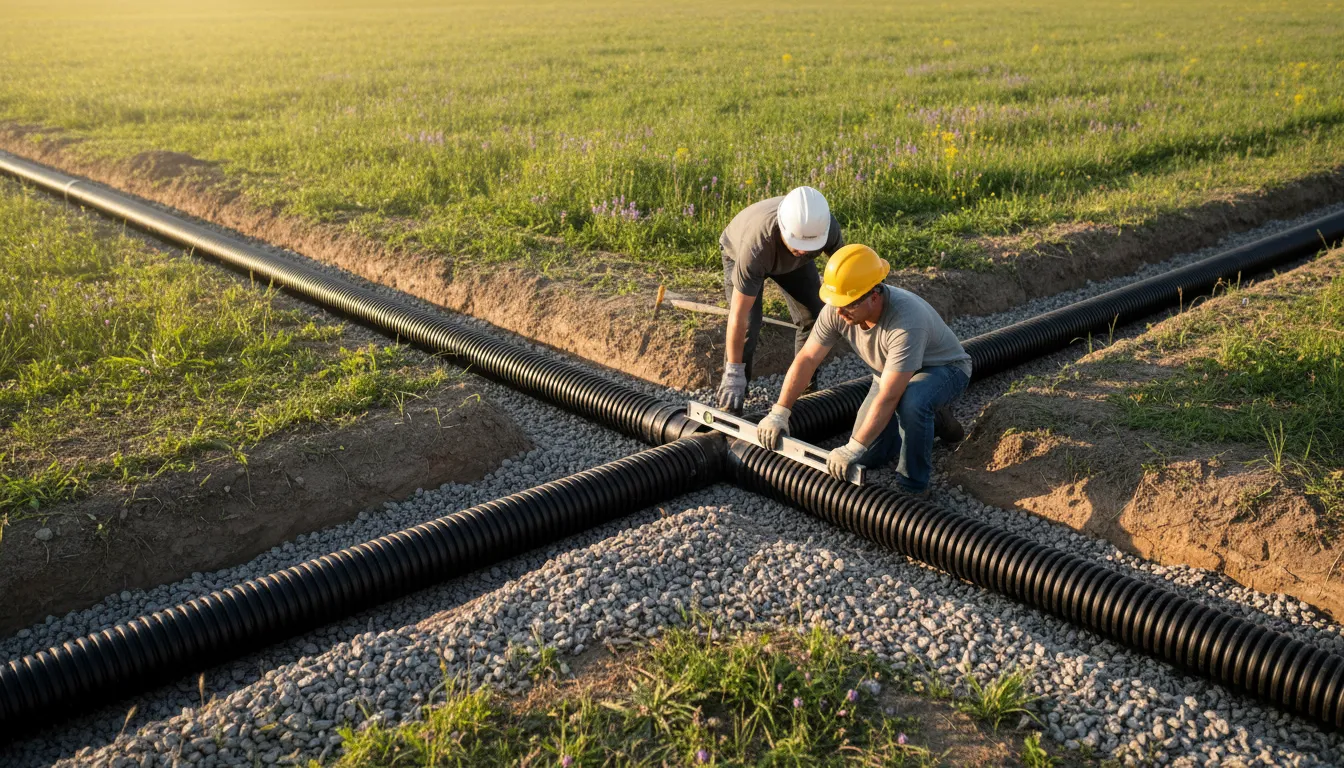
Find the Best Drain Field Repair Companies for Your Business
No obligation • Fast responses • Nationwide coverage

Why you can trust Septic Spot
Septic Spot is a leading United States resource for understanding and comparing septic services. Our editors review providers using consistent criteria and verify key business details. Listings and scores are independent, and companies cannot pay to influence our content.
Search providers near you
Top Drain Field Repair Companies in Boston, Massachusetts Ranked
A failing drain field is a serious issue for any Boston-area homeowner with a septic system. This critical component, also known as a leach field or absorption area, is responsible for safely filtering and dispersing treated wastewater into the soil. When it malfunctions, it can lead to sewage backups, environmental contamination, and significant property damage. Navigating the repair or replacement process in Massachusetts requires strict adherence to state regulations. This guide explains the local rules, the step-by-step process, and how to connect with qualified engineers and licensed installers to restore your system to proper working order.
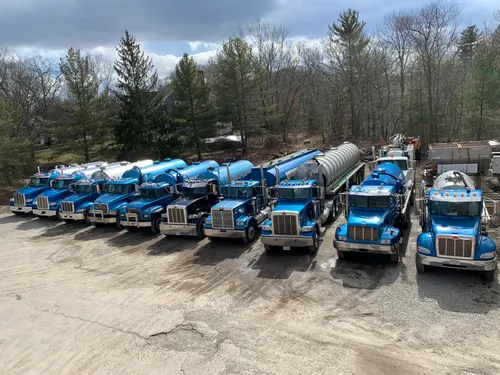
Rosano Davis Sanitary Pumping Inc
9 Rocky Ln, Cohasset, MA 02025
Rosano Davis Sanitary Pumping Inc is a family-owned septic system company serving Boston, MA. They provide a full range of services including septic system pumping, inspection, repair, and new system installation. Their capabilities include electronic locating of septic tanks and covers to minimize property disruption, as well as color video pipe inspection and high-pressure washing of leaching lines. The company manages all aspects of septic system installation, from excavation to landscaping, using their own equipment to ensure a complete service.
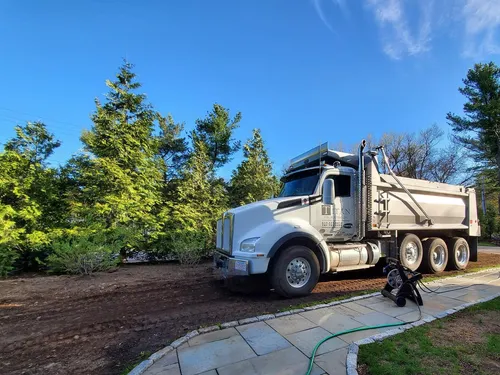
Titan Excavating, Inc
624 Commonwealth Ave, Newton, MA 02459
Titan Excavating, Inc is an excavation and septic services contractor located near Boston, MA. The company offers a range of sitework and septic solutions including septic tank installation, drain field installation, and drainage system services. Their capabilities include heavy-duty excavation, septic tank removal or reuse, contaminated soil removal, and installation of new drain fields. Titan Excavating, Inc is fully licensed and insured to handle excavation, trucking, hauling, and sewer services.
Understanding Massachusetts Title 5 Regulations
All septic system work in Boston and across Massachusetts is governed by the state's Title 5 regulations (310 CMR 15.000). These rules are enforced by your local Board of Health, which has the final say on approving any repair or replacement project. The law is designed to protect public health and groundwater quality, and non-compliance can result in fines and an order to cease work.
A key trigger for inspection and potential repair is a property transfer. A passing Title 5 inspection is required when selling a home, and it must have been conducted within two years prior to the sale or completed within six months after the transfer 1 2. If your system fails an inspection, you typically have up to two years to upgrade or replace it to meet current standards 3. Before any shovel hits the ground, you must obtain a Disposal Works Construction Permit from your local Board of Health.
Signs Your Leach Field is Failing
Recognizing early warning signs can help you address problems before they become a full-blown emergency. Common indicators of a failing absorption system include:
- Household Plumbing Issues: Slow drains, gurgling noises in pipes, and sewage backups into toilets or tubs are classic red flags.
- Surface Symptoms in the Yard: Unpleasant sewage odors outdoors, especially near the drain field area, are a telltale sign. You may also notice soggy, spongy, or overly wet soil over the leach field, even during dry weather.
- Unusual Vegetation: An oddly bright green, thick, or lush patch of grass growing directly over the drain lines can indicate a nutrient-rich effluent is surfacing, which is a symptom of failure 4.
If you observe any of these signs, it's crucial to contact a professional for an assessment immediately to prevent further damage and environmental harm.
The Step-by-Step Process for Repair or Replacement
Addressing a failed septic system in Massachusetts is a multi-stage process that involves several licensed professionals. Here's what you can expect from start to finish.
1. Professional Inspection and Diagnosis
The first step is a thorough inspection by a state-certified Title 5 inspector. They will locate and uncover system components like manholes and cleanouts, assess the tank's condition, and evaluate the drainfield's performance. For suspected pipe issues, they may use specialized cameras. This inspection will officially determine if the system has failed and pinpoint the cause, whether it's a clogged pipe, a crushed line, or a completely saturated soil absorption area.
2. Mandatory Soil Evaluation (Perc Test)
If replacement is needed, a state-certified soil evaluator must conduct a detailed site assessment. This involves deep hole tests to determine seasonal high groundwater depth and soil texture, followed by a percolation test ("perc test") to measure how quickly water moves through the soil. These tests are best performed when the ground is not frozen, typically from spring through fall 5. The results dictate the size and type of system your property can support and are a foundational part of the engineering design.
3. System Design and Board of Health Approval
With the soil data in hand, you must hire a registered civil engineer (or in some cases, a registered sanitarian) to design the new or repaired system. The engineer will create a plan that complies with all Title 5 requirements, including mandatory separation distances from wells, wetlands, property lines, and building foundations 6. This engineered plan is then submitted to your local Board of Health for review and approval as part of the permit application 7.
4. Installation by a Licensed Contractor
Once the permit is issued, a licensed septic system installer can begin work. It is illegal for anyone without this specific license to install or replace a septic system in Massachusetts. The contractor will execute the approved plan, which may involve excavating and removing the old leach field and installing new distribution lines, gravel, and soil.
Find the perfect drain field repair companies for your needs
Get personalized recommendations and expert advice
5. Final Inspection and Compliance
After installation, the Board of Health sends an inspector to verify that the work matches the approved design and meets all code requirements. Upon passing this final inspection, the Board will issue a Certificate of Compliance. This document is essential for your property records and is legally required for any future sale.
Cost Considerations for Drain Field Work in Boston
The cost to address a failed leach field in the Boston area varies widely based on the scope of work, soil conditions, and system type. Here is a general breakdown of what you might expect:
- Title 5 Inspection: Typically costs between $300 and $500.
- Minor Repairs: Fixing a broken pipe or a similar isolated issue may range from $500 to $2,000.
- Major Drain Field Replacement: This is a significant investment. Complete drainfield replacement commonly costs between $3,000 and $15,000, and can exceed $22,000 for large properties or complex alternative systems 8 9 10.
- Engineering Fees: The cost for a professional design will vary based on the project's complexity.
Financial Assistance: Massachusetts offers a valuable state income tax credit to help offset these costs. For a primary residence, you may claim a credit of up to 40% of the repair or replacement cost, with a maximum credit of $6,000 spread over four tax years 11 12. Be sure to keep all receipts and consult with a tax professional.
Maintaining Your New Septic System
After investing in a repair or replacement, proper maintenance is key to protecting your investment and avoiding another failure. This includes having the septic tank pumped regularly (every 3-5 years, depending on usage), conserving water to avoid overloading the system, and never flushing harmful chemicals or non-biodegradable materials. Your installer can provide specific guidance tailored to your new system.
Frequently asked questions
Sources
Footnotes
-
Title 5 Overview - https://www.townofgb.org/DocumentCenter/View/542/Title-5-Overview-PDF ↩
-
Title 5 & Septic Inspections When You Sell in Yarmouth - https://thecapehouseteam.com/blog/title-5-and-septic-inspections-when-you-sell ↩
-
Title V Septic System Repairs Information and Process | Bernardston ... - https://www.townofbernardston.org/board-health/page/title-v-septic-system-repairs-information-and-process ↩
-
The Ultimate Guide to Replacing a Septic Drain Field - https://www.rciseptic.com/the-ultimate-guide-to-replacing-a-septic-drain-field ↩
-
Septic System Care, Regulations, and Water Safety - https://nfmplumbing.com/septic-drain-field-failure-prevention-lee-county/ ↩
-
Local Septic Management - Homeowner Checklist - Mass.gov - https://www.mass.gov/guides/local-septic-management-homeowner-checklist ↩
-
Guidance for the Inspection of On-site Sewage Disposal ... - https://www.mass.gov/guides/guidance-for-the-inspection-of-on-site-sewage-disposal-systems ↩
-
Septic System: Repairing / Replacing - Southborough, MA - https://www.southboroughma.gov/348/Septic-System-Repairing-Replacing ↩
-
Sharon's guide to septic systems - https://www.townofsharon.net/septic-system-information/files/sharon%E2%80%99s-guide-to-septic-systems ↩
-
How Much Does Failed Septic System Cost? - https://www.septicconnection.com/how-much-does-failed-septic-system-cost ↩
-
Buying a Home with a Septic System & Title 5 Inspections - https://www.lamacchiarealty.com/buying-or-selling-home-with-septic-system/ ↩
-
TIR 97-12: Personal Income Tax Credit for Failed Cesspool or Septic System Title 5 Expenditures - https://www.mass.gov/technical-information-release/tir-97-12-personal-income-tax-credit-for-failed-cesspool-or-septic-system-title-5-expenditures ↩