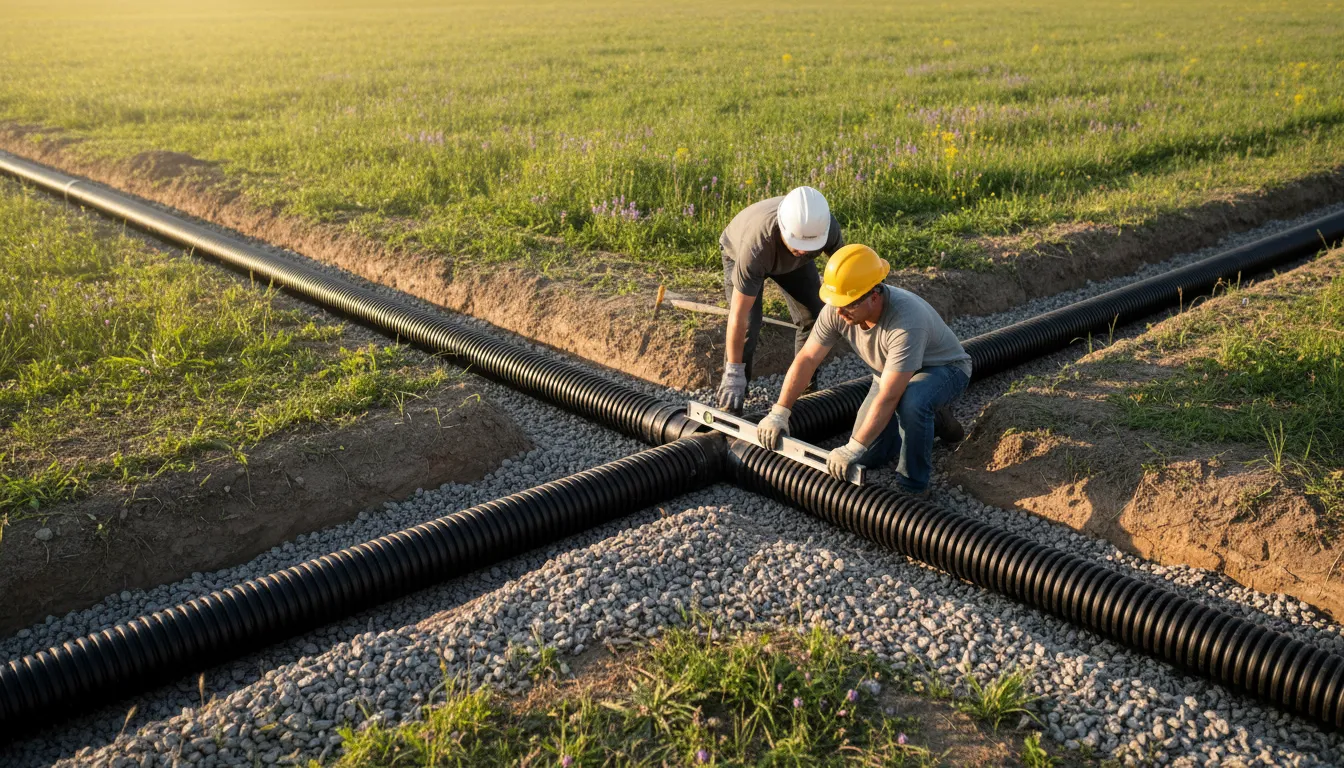
Find the Best Drain Field Repair Companies for Your Business
No obligation • Fast responses • Nationwide coverage

Why you can trust Septic Spot
Septic Spot is a leading United States resource for understanding and comparing septic services. Our editors review providers using consistent criteria and verify key business details. Listings and scores are independent, and companies cannot pay to influence our content.
Search providers near you
Top Drain Field Repair Companies in Cambridge, Massachusetts Ranked
A failing drain field is a serious issue for any Cambridge homeowner with a septic system. This critical component, also known as a leach field or soil absorption system, is responsible for the final treatment and dispersal of wastewater into the soil. When it malfunctions, it can lead to sewage backups, environmental hazards, and a system that fails mandatory state inspections. This guide explains the local process, regulations, and costs for drain field repair and replacement, helping you understand your options and connect with qualified, licensed professionals in the Cambridge area.
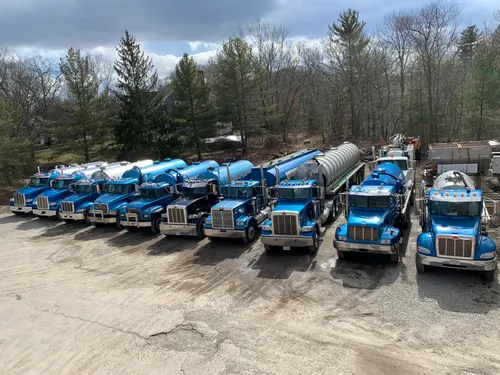
Rosano Davis Sanitary Pumping Inc
9 Rocky Ln, Cohasset, MA 02025
Rosano Davis Sanitary Pumping Inc is a family-owned septic system company serving Boston, MA. They provide a full range of services including septic system pumping, inspection, repair, and new system installation. Their capabilities include electronic locating of septic tanks and covers to minimize property disruption, as well as color video pipe inspection and high-pressure washing of leaching lines. The company manages all aspects of septic system installation, from excavation to landscaping, using their own equipment to ensure a complete service.
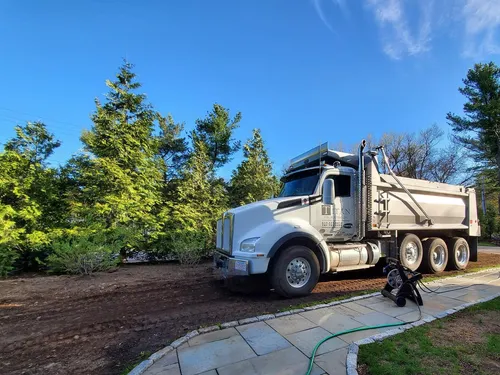
Titan Excavating, Inc
624 Commonwealth Ave, Newton, MA 02459
Titan Excavating, Inc is an excavation and septic services contractor located near Boston, MA. The company offers a range of sitework and septic solutions including septic tank installation, drain field installation, and drainage system services. Their capabilities include heavy-duty excavation, septic tank removal or reuse, contaminated soil removal, and installation of new drain fields. Titan Excavating, Inc is fully licensed and insured to handle excavation, trucking, hauling, and sewer services.
Understanding Your Cambridge Septic System and Drain Field
In Cambridge, as in all of Massachusetts, septic systems are governed by strict state regulations known as Title 5 (310 CMR 15.000). The local Board of Health is the primary authority enforcing these rules. Your system isn't just a tank; it's a multi-stage wastewater treatment plant on your property. After solids settle in the septic tank, the liquid effluent flows to the drain field. Here, it percolates through a series of perforated pipes buried in gravel-filled trenches, undergoing natural filtration and treatment by the soil before rejoining the groundwater.
A properly functioning leach field is essential for public health and environmental protection. When this soil absorption area fails, untreated wastewater can surface, contaminating yards and potentially nearby water sources. Recognizing the signs of a failing system early is crucial to managing repairs before an emergency or a failed inspection halts a property sale.
Signs You May Need Drain Field Repair or Replacement
How do you know if your leach field is in trouble? Warning signs often appear in your yard or home before a complete system failure. Being proactive can save significant time and money.
- Soggy Ground and Effluent Surfacing: The most direct sign is standing water or persistently soggy, spongy soil over the drain field area, especially when it hasn't rained. This indicates the soil is saturated and can no longer absorb liquid.
- Unusual Vegetation Growth: Patches of grass over the drain field that are noticeably greener, lusher, or faster-growing than the rest of the lawn can signal a nutrient-rich effluent leak.
- Sewage Odors: Foul smells emanating from the yard, particularly near the drain field or tank, are a strong indicator of a problem.
- Slow Drains and Backups: If sinks, toilets, and showers drain very slowly or back up into the home, it could point to a clog or failure in the absorption field preventing effluent from leaving the system.
- Failed Title 5 Inspection: The most definitive sign is a formal failure during a mandatory Title 5 inspection, which is required during property transfers, significant additions, or upon suspicion of failure 1.
The Critical Role of Title 5 Inspections in Cambridge
Before any major repair or replacement project can be planned, you must understand the legal framework. A Title 5 inspection is a state-mandated evaluation conducted by a licensed inspector. It's not just a formality; it's a rigorous assessment that determines the legal operability of your entire septic system.
The inspection process involves locating and excavating access to the septic tank and distribution box, measuring sludge and scum levels, checking for tank integrity, and assessing the drain field. The inspector will probe the leach field area to check for saturation and may perform a flow test to see if the soil accepts water properly 2. The results-Pass or Fail-are submitted directly to the Cambridge Board of Health.
If your system fails, the Board of Health will issue a requirement to repair or replace it, often within a strict timeline (commonly 2 years for a sale, or 6 months for a documented failure) 3. You cannot simply hire an excavator to dig a new field. The path forward requires a formal, engineered solution approved by the local health department.
The Path to a New Drain Field: Site Evaluation and Design
Replacing a leach field in Cambridge is an engineered project, not a simple excavation job. The process begins with a comprehensive site evaluation conducted by a licensed Soil Evaluator or Sanitarian.
- Deep Hole Tests: The evaluator will dig deep test pits to determine the seasonal high groundwater table. Massachusetts law requires a specific vertical separation between the bottom of the drain field trenches and this water table.
- Percolation Test: A "perc test" measures the soil's ability to absorb and treat effluent. The rate at which water drains from a test hole determines the required size of the new drain field-slower soils require larger fields.
- Site Constraints: The evaluator will map out setbacks from property lines, wells, waterways, and buildings. In densely populated areas like Cambridge, available space is often the biggest constraint. Many older lots cannot accommodate a new conventional drain field that meets modern setback rules.
This is where alternative or engineered systems come into play. If a standard gravity-fed trench system isn't feasible due to poor soil, high groundwater, or limited space, a professional engineer must design a specialized system. These can include pressure-dosed fields, sand filters, or advanced treatment units that allow for a smaller footprint or overcome poor soil conditions 4. The design, including all soil data and plans, is then submitted to the Cambridge Board of Health for a construction permit.
Find the perfect drain field repair companies for your needs
Get personalized recommendations and expert advice
What to Expect: The Repair and Replacement Process
Once you have a Board of Health-approved design, the physical work can begin. This is a major landscaping and construction project that should only be performed by licensed septic system installers.
- Excavation: The installer will locate and carefully excavate the existing failed drain field. Old gravel and contaminated soil may need to be disposed of at a licensed facility.
- System Installation: Following the engineered plans, new trenches are dug. These are lined with gravel, and new perforated distribution pipes are laid. A new distribution box (D-Box) that evenly splits effluent flow to each trench is installed and connected to the existing septic tank.
- Final Steps: The pipes are covered with more gravel and a protective barrier fabric before being backfilled with soil. The area is then graded and seeded. Finally, the installer and the system's engineer will provide "as-built" plans to the Board of Health and schedule a final inspection to certify the new system.
Cost of Drain Field Repair and Replacement in Cambridge
Costs for addressing a failed leach field in Cambridge are significant and highly variable. They depend entirely on the required solution, which is dictated by your site's conditions.
- Minor Drain Field Repairs: Addressing a single clogged line or a small issue might range from $1,000 to $5,000, but true repairs are rare; most failures require full replacement.
- Conventional Drain Field Replacement: Installing a new, standard gravity-fed leach field typically costs between $10,000 and $25,000. This includes design, permits, excavation, materials, and labor 5.
- Complete System Replacement (Tank & Field): If the septic tank also needs replacement, total costs often range from $25,000 to $50,000 or more 6.
- Engineered/Alternative Systems: Due to Cambridge's dense urban environment and strict environmental protections, many properties require these more complex systems. Costs for pressure-dosed systems, sand filters, or advanced treatment units can start at $30,000 and easily exceed $50,000 7.
Remember, these figures are for construction. They are in addition to the costs for the mandatory Title 5 inspection ($500-$1,000) and the professional site evaluation and engineering design fees ($1,500-$4,000+) 8 9.
Maintaining Your New Drain Field
Protecting your investment is key. Once your new soil absorption system is installed, practice conscientious maintenance: pump your septic tank every 2-3 years, conserve water to avoid hydraulically overloading the field, and never park or build over the drain field area. Avoid pouring grease, chemicals, or non-biodegradable items down the drain. Proper care can extend the life of your new leach field for decades.
Frequently asked questions
Sources
Footnotes
-
What is a Title 5 Septic Inspection? When Do You Need One? - https://www.upnest.com/post/title-5-inspection/ ↩
-
Septic Inspection Massachusetts - https://sherwoodinspection.com/septic-inspection-massachusetts/ ↩
-
About Massachusetts Septic System Regulations (Title 5) - https://www.buyersbrokersonly.com/article-septic ↩
-
Local Septic Management - Homeowner Checklist - Mass.gov - https://www.mass.gov/guides/local-septic-management-homeowner-checklist ↩
-
Cost to Replace Septic Tank and Drain Field [2026 Data] | Angi - https://www.angi.com/articles/how-much-new-drain-fields-foot.htm ↩
-
Septic System Installation Cost [2025 Data] - HomeAdvisor - https://www.homeadvisor.com/cost/plumbing/install-a-septic-tank/ ↩
-
When You Need Septic Drain Field Repair | Western MA - https://excavationplus.net/septic/septic-drain-field-health-and-when-repair-or-replacement-is-necessary/ ↩
-
Massachusetts Title 5 Septic Rules - Martha's Vineyard Buyer Agents - https://www.mvbuyeragents.com/title-5-septic-systems-faq ↩
-
The Complete Guide to Massachusetts Title 5 Inspection - https://allclearseptic.com/the-complete-guide-to-massachusetts-title-5-inspection/ ↩