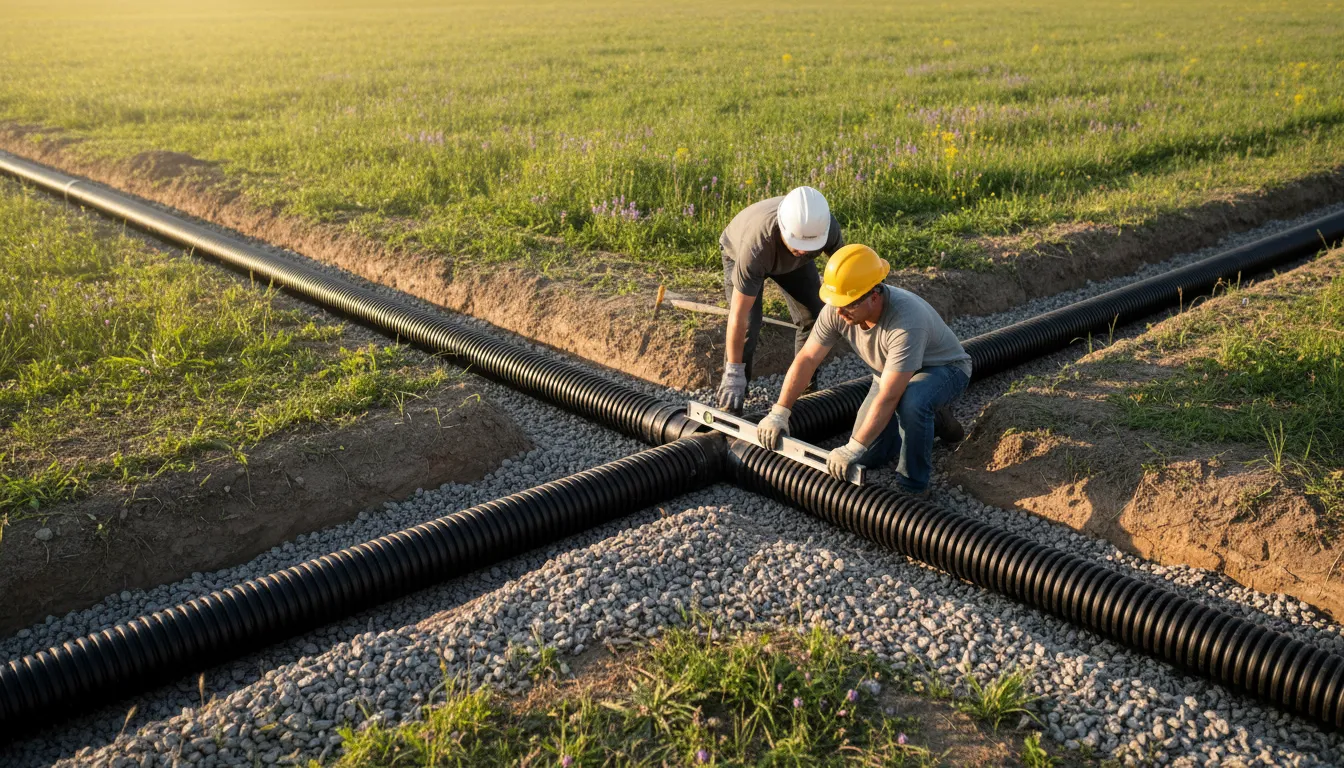
Find the Best Drain Field Repair Companies for Your Business
No obligation • Fast responses • Nationwide coverage

Why you can trust Septic Spot
Septic Spot is a leading United States resource for understanding and comparing septic services. Our editors review providers using consistent criteria and verify key business details. Listings and scores are independent, and companies cannot pay to influence our content.
Search providers near you
Top Drain Field Repair Companies in Chicopee, Massachusetts Ranked
A failing drain field, also known as a leach field or soil absorption system, is a serious issue for any Chicopee homeowner with a septic system. This critical component is responsible for safely dispersing and filtering treated wastewater into the ground. When it fails, it can lead to sewage backups, soggy yards, and environmental health hazards. Understanding the local regulations, repair process, and costs is essential for addressing problems promptly and legally. This guide provides the information you need to navigate drain field issues, from initial inspection to final permit approval, helping you connect with qualified local professionals for your project.
Understanding Your Drain Field and Title 5
In Massachusetts, all septic systems, including their drain fields, are regulated under the state's Title 5 code 1. This isn't just a suggestion-it's the law. The regulations set strict standards for system design, installation, and repair to protect public health and the environment, particularly groundwater. For Chicopee residents, this means any work on your leach field must comply with both state Title 5 rules and local requirements enforced by the Chicopee Board of Health.
A standard system consists of a septic tank and a drain field. The tank separates solids from liquids, and the liquid effluent flows to the drain field, where it percolates through soil for final treatment. Failure occurs when the soil can no longer absorb the liquid, often due to clogging, compaction, high groundwater, or simply old age.
The Chicopee Permit and Approval Process
You cannot simply hire a contractor to dig up and replace a drain field. The process is tightly controlled and must start with the proper permits.
- Disposal Works Construction Permit: Before any shovel hits the ground, you must obtain this permit from the Chicopee Board of Health. This is non-negotiable.
- Engineered Plans: For most repairs and all replacements, a licensed septic system installer or a design professional (a Professional Engineer or Registered Sanitarian) must prepare and submit detailed plans for the Board's approval. These plans must show the proposed system meets all code requirements.
- The 45-Day Review: Once submitted, the Board of Health has 45 days to review the plans.
- Connection Priority: Chicopee's site plan regulations note that septic systems must be designed to facilitate a future connection to a municipal sewer system, if one becomes available.
Step 1: The Critical Title 5 Inspection
The first concrete step when you suspect a problem is a formal Title 5 inspection. This is not a casual look-over; it's a rigorous process defined by state guidance. A certified inspector must:
- Locate all components: Find the tank, distribution box, and the boundaries of the leach field.
- Expose the system: Uncover all manholes, covers, and cleanouts for proper evaluation 2.
- Test for failure: The inspector looks for definitive signs of hydraulic failure. This includes sewage backing up into the home, effluent breaking out onto the ground surface (creating soggy, smelly areas), or the presence of sewage in inspection pipes 3 4.
- File a Report: The findings are documented in an official Title 5 inspection report, which is filed with the local Board of Health. A failing grade mandates repair or replacement.
Step 2: Site Evaluation and Design Constraints
If your system has failed, the next phase involves understanding why it failed and what can be built in its place. This is where site conditions dictate your options and costs.
- Soil Evaluation (Perc Test): A soil evaluation is required to determine the percolation rate (how fast water drains) and the depth to seasonal high groundwater. This test is crucial-it tells the designer what type of system the land can support.
- Strict Setbacks: State law mandates minimum separation distances from the drain field to wells, wetlands, property lines, foundations, and other features. Your property must have enough suitable space that meets these setbacks.
- System Type Determination: The results of the soil evaluation are everything. If you have suitable soil and deep groundwater, you may qualify for a standard tank and field system. However, if the evaluation reveals high groundwater, poor percolation, or a small lot, you will likely need an Alternative/Innovative (I/A) system 5 6 7. These are engineered systems that provide advanced treatment and can be used in challenging sites, but they come with a significantly higher price tag.
Find the perfect drain field repair companies for your needs
Get personalized recommendations and expert advice
Understanding Repair vs. Replacement Costs
The cost to address a failing soil absorption system in Chicopee varies dramatically based on the scope of work and site conditions. It's one of the most significant home maintenance expenses a homeowner can face.
- Minor Repairs: If the problem is isolated-such as a clogged or broken pipe leading to the field, or a malfunctioning distribution box-repairs can be relatively affordable. However, true drain field failure is rarely solved by a simple fix.
- Drain Field Replacement: When the leach field itself has failed and needs a complete rebuild, homeowners can generally expect costs in the range of $5,000 to $12,000 for the field portion alone 8. This assumes a standard system can be used.
- Full System Replacement: Often, replacing an old drain field also requires upgrading or replacing the septic tank to meet current code. A completely new septic system, including tank and drain field, typically ranges from $25,000 to over $40,000 9 10. If an Alternative system is mandated by poor soil conditions, costs can exceed this range.
- Financial Assistance: The Massachusetts Home Septic Loan Program offers low-interest loans to eligible homeowners for the repair or replacement of failed septic systems. This can be a vital resource for managing this unexpected expense.
The Timeline for Addressing a Failed System
Massachusetts law distinguishes between different types of failure, which affects how quickly you must act.
- Immediate Hazard: If the system is creating an immediate threat to public health or the environment (e.g., sewage on the surface, contaminating a well), the Board of Health can order immediate repair or replacement.
- Non-Imminent Failure: For systems that have failed an inspection but are not creating an imminent hazard, the law typically allows up to 2 years to complete the necessary upgrades or repairs. However, you cannot sell the property with a failed system without addressing it first.
Working with Local Professionals
Navigating this process successfully requires a team of licensed experts.
- Title 5 Inspector: Start here. Hire a state-certified inspector to get the official diagnosis.
- Design Professional: For any repair beyond the most minor, or for a full replacement, you will need a licensed septic installer or a Professional Engineer to design the system and create the plans for permit submission.
- Licensed Installer: The construction must be performed by a licensed septic system installer. They will pull the permit, execute the approved plans, and schedule the required inspections from the Board of Health during construction.
- Chicopee Board of Health: Maintain open communication. They are the final authority on what is allowed on your specific property and can clarify local requirements 11 12.
Maintaining a New or Repaired System
Once you've invested in a new or repaired leach field, protecting that investment is key. Proper maintenance includes regular septic tank pumping (every 3-5 years, typically), conserving water to avoid overloading the system, and never flushing harmful chemicals or non-biodegradable materials. Avoid parking vehicles or placing heavy structures over the drain field area to prevent soil compaction.
Frequently asked questions
Sources
Footnotes
-
Septic Systems & Title 5 New Construction - Mass.gov - https://www.mass.gov/info-details/septic-systems-title-5-new-construction ↩
-
A Complete Guide on Title 5 Septic Systems in Massachusetts - https://homesteadinc.net/n/10/A-Complete-Guide-on-Title-5-Septic-Systems-in-Massachusetts ↩
-
Guidance for the Inspection of On-site Sewage Disposal ... - https://www.mass.gov/guides/guidance-for-the-inspection-of-on-site-sewage-disposal-systems ↩
-
Massachusetts Title 5 Septic Regulations Explained - https://primeengineering.org/massachusetts-title-5-septic-regulations-explained/ ↩
-
UNDERSTANDING THE WORKFLOW FOR INSTALLATION ... - https://www.mashpeema.gov/DocumentCenter/View/1459/System-Installation-Process-0 ↩
-
Consumer Protection Tips: Septic System Inspections and Repairs - https://www.mass.gov/guides/consumer-protection-tips-septic-system-inspections-and-repairs ↩
-
Septic - https://jpcseptic.com/septic/ ↩
-
Massachusetts Title V Septic Inspection Guide for Home Sellers - https://www.panzarealestate.com/blog/2025/2/10/title-v-septic-inspections-in-massachusetts-what-home-sellers-need-to-know ↩
-
Massachusetts septic system rules regulations - http://massrealestatelawblog.com/tag/massachusetts-septic-system-rules-regulations/ ↩
-
Cost to Replace Septic Tank and Drain Field [2026 Data] | Angi - https://www.angi.com/articles/how-much-new-drain-fields-foot.htm ↩
-
The Complete Guide to Massachusetts Title 5 Inspection - https://allclearseptic.com/the-complete-guide-to-massachusetts-title-5-inspection/ ↩
-
Site Plans Regulations City of Chicopee MASSACHUSETTS - https://www.chicopeema.gov/DocumentCenter/View/813/Planning-Board-SIte-Plan-Regulations-PDF ↩