Find the Best Drain Field Repair Companies for Your Business
No obligation • Fast responses • Nationwide coverage

Why you can trust Septic Spot
Septic Spot is a leading United States resource for understanding and comparing septic services. Our editors review providers using consistent criteria and verify key business details. Listings and scores are independent, and companies cannot pay to influence our content.
Search providers near you
Top Drain Field Repair Companies in Haverhill, Massachusetts Ranked
A failing drain field, also known as a leach field or absorption area, is a serious issue for any home with a septic system. It's the final, critical stage where treated wastewater is dispersed into the soil. When it malfunctions, it can lead to sewage backups, soggy yards, and environmental health risks. In Haverhill, all septic system work is governed by strict state and local health codes. This guide explains the process, regulations, and costs for drain field repair and replacement, helping you understand how to find qualified local professionals to restore your system to proper function.

Understanding Your Septic System's Drain Field
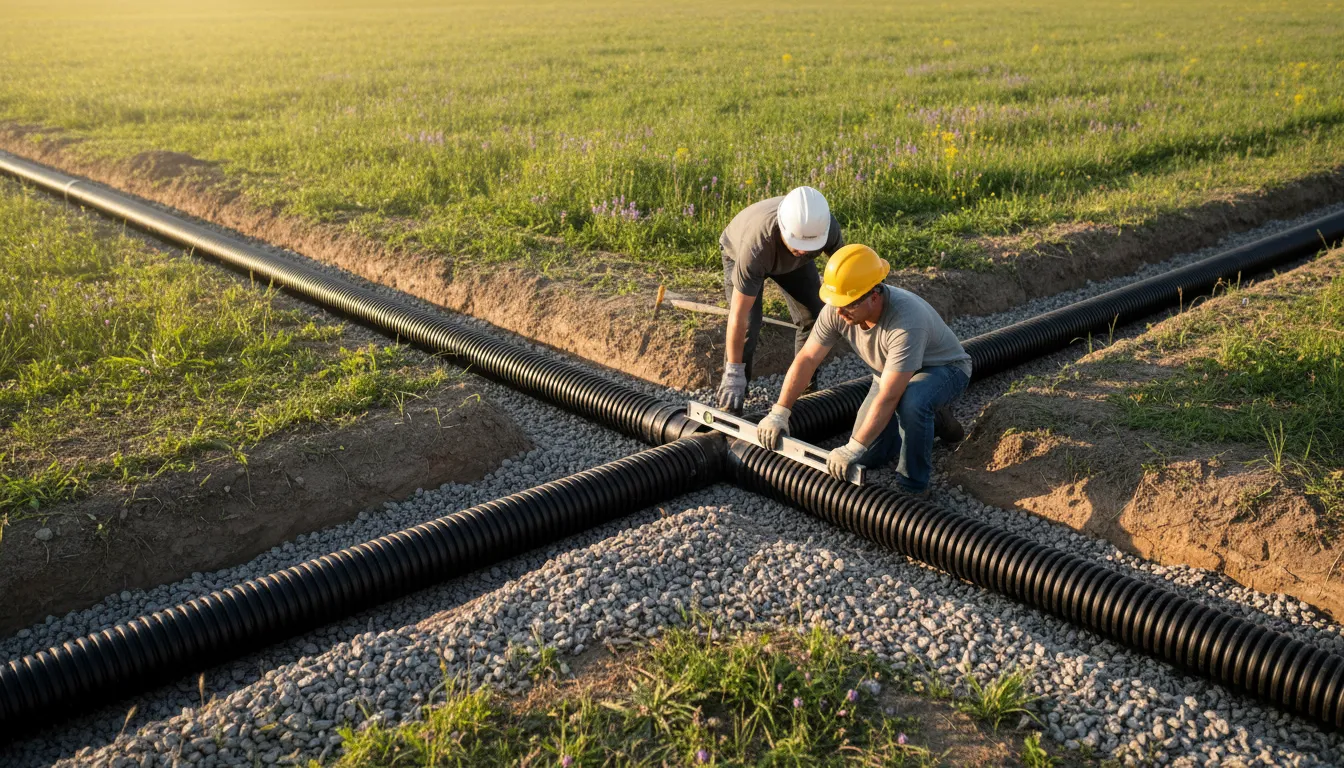
The drain field is a network of perforated pipes buried in trenches filled with gravel. After solids settle in the septic tank, the liquid effluent flows into this field, where it slowly percolates through the soil. The soil acts as a final filter, removing harmful bacteria, viruses, and nutrients before the water rejoins the groundwater. A healthy leach field is essential for protecting both your property and public health. When the soil becomes clogged or the system is overloaded, it can no longer absorb liquid, leading to a system failure.
Signs You Need Drain Field Repair or Replacement
Recognizing early warning signs can prevent a minor issue from becoming a full-blown, costly emergency. If you notice any of the following in your yard near the absorption area, it's time to call a licensed inspector:
- Soggy Ground or Standing Water: Puddles or consistently wet, spongy soil over the leach field, especially when it hasn't rained, is a primary indicator of failure.
- Foul Odors: Unpleasant sewage smells emanating from your yard or near the drain field trenches.
- Slow Drains and Backups: Gurgling pipes, slow-draining sinks and toilets, or sewage backing up into your home can signal that the drain field is saturated and not accepting water.
- Unusually Green Grass: While some growth is normal, patches of grass over the field that are much lusher and greener than the rest of the lawn can indicate a nutrient-rich effluent surge.
- Algae Blooms in Nearby Ponds or Ditches: This can be a sign of nutrient-rich wastewater surfacing and running off.
A professional inspection is required to confirm a failure and its cause 1 2.
The Mandatory Inspection Process in Haverhill
Before any repair or replacement can be planned, Massachusetts law requires a thorough inspection by a licensed System Inspector. This isn't a casual look; it's a formal evaluation to determine compliance with Title 5 regulations.
The inspector will start by locating all system components, often using "as-built" drawings or electronic probing. They must expose and inspect the septic tank, distribution box, and all cleanouts. The tank is typically pumped to assess its structural integrity and check for baffle failures. The inspector then evaluates the drain field area for the visual signs of failure mentioned above. This official inspection report forms the basis for any subsequent permit applications to the Haverhill Board of Health 3.
Haverhill and Massachusetts Title 5 Regulations
All septic system work in Haverhill must comply with the Massachusetts State Environmental Code, Title 5 (310 CMR 15.000), as well as local Board of Health rules 4. These regulations are designed to protect public health and water quality.
- Mandatory Connection: If a municipal sewer line is available within a certain distance of your property (and considered a "reasonable" connection by the Board), you will be required to connect to it instead of repairing your septic system 5.
- Failed System Timeline: If the Board of Health determines your system poses an imminent threat to health or the environment, repair or replacement must begin immediately. For less critical failures, you may have up to two years to complete the work 6.
- Soil Evaluation (Percolation & Deep Hole Tests): Any new leach field or major repair requires new soil testing. A licensed professional must perform percolation tests (to measure how fast water drains) and deep hole tests (to evaluate soil types and groundwater depth). The Haverhill Board of Health has specific requirements and must witness these tests. Fees for this witnessing are typically around $150 per set of tests 7.
- Soil Suitability: Haverhill enforces strict soil standards. Soils that drain too quickly (faster than 2 minutes per inch) or too slowly (slower than 30 minutes per inch) are deemed unsuitable for a standard system. In these cases, you will need a more complex, engineered alternative system, which increases cost significantly 8.
Permitting and Design Requirements
You cannot simply hire a contractor to dig a new leach field. The process is highly regulated and permit-driven.
- Design: After soil testing, a system designer (often a professional engineer) creates a plan that meets the minimum leaching area requirements for your property's soil conditions and household size. The City of Haverhill has strict design constraints that must be followed.
- Permit Application: The design plan is submitted to the Haverhill Board of Health for a Construction Permit. The permit fee for repairing an existing system is $225, while a permit for a completely new system is $350.
- Approval & Installation: Once the permit is issued, a licensed installer can begin work. The system must be built exactly to the approved design.
- Final Inspection: After installation, the Board of Health will perform a final inspection before the system can be covered. All system components must remain accessible for future inspection, with at least 9 inches of soil cover 9.
Find the perfect drain field repair companies for your needs
Get personalized recommendations and expert advice
Costs for Drain Field Repair and Replacement
Costs can vary widely based on the extent of the failure, soil conditions, and the size of the system needed. It's one of the most significant home maintenance expenses.
- Fees: Budget for professional inspection, soil testing, design, and permitting. Local Haverhill Board of Health fees for witnessing tests and permits range from approximately $150 to $350, depending on the project scope 10 11.
- Repair vs. Replacement: Sometimes, a problem can be solved with a less invasive repair, such as cleaning clogged pipes or adding a new section to the field. However, complete drain field failure usually requires a full replacement.
- Replacement Cost: Nationally, the cost to replace both a septic tank and its drain field can range from $5,000 to over $12,000. In Haverhill, with its stringent soil and design requirements, costs often fall at the mid-to-upper end of this range or higher, especially if an engineered alternative system is necessary 12.
Choosing a Licensed Professional in Haverhill
This is not a DIY project. Massachusetts requires that all inspection, design, and installation work be performed by individuals with specific state licenses.
- Licensed System Inspector: Hires for the mandatory Title 5 inspection.
- Licensed System Installer: Only a licensed installer can perform the construction work on your septic tank or leach field.
- Professional Engineer or Designer: Required to design the system and create the plan submitted for a permit.
When contacting local providers, verify their Massachusetts licenses and ask for references from recent projects in the Haverhill area. A reputable professional will be familiar with the local Board of Health officials and processes, which can help streamline your project.
Maintaining Your New Drain Field
Once your new or repaired absorption area is installed, proper maintenance is key to ensuring its longevity.
- Pump the Tank Regularly: Have the septic tank pumped every 2-3 years (or as recommended based on usage) to prevent solids from washing out into the new leach field.
- Conserve Water: Use water-efficient fixtures and spread out laundry loads to avoid hydraulically overloading the system.
- Mind What You Flush: Only human waste and toilet paper should go down the drain. Avoid chemicals, grease, wipes (even "flushable" ones), and medications.
- Protect the Area: Never drive or park vehicles over the drain field. Avoid planting trees or deep-rooted shrubs nearby, and keep roof drains and sump pumps directed away from the area.