Find the Best Drain Field Repair Companies for Your Business
No obligation • Fast responses • Nationwide coverage

Why you can trust Septic Spot
Septic Spot is a leading United States resource for understanding and comparing septic services. Our editors review providers using consistent criteria and verify key business details. Listings and scores are independent, and companies cannot pay to influence our content.
Search providers near you
Top Drain Field Repair Companies in Lynn, Massachusetts Ranked
A failing drain field, also known as a leach field or soil absorption system, is a serious issue for any home with a septic system. It's the final and most critical stage for treating wastewater, and when it fails, it can lead to sewage backups, soggy yards, and environmental contamination. In Lynn, Massachusetts, all repair and replacement work is strictly governed by state and local health codes, primarily Massachusetts Title 5. This guide explains the process, costs, and key considerations for addressing drain field problems in Lynn, helping you navigate the necessary steps to find qualified local professionals for your system restoration.
Rosano Davis Sanitary Pumping Inc
9 Rocky Ln, Cohasset, MA 02025
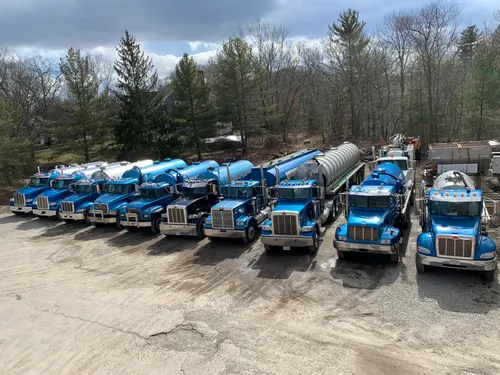
Rosano Davis Sanitary Pumping Inc is a family-owned septic system company serving Boston, MA. They provide a full range of services including septic system pumping, inspection, repair, and new system installation. Their capabilities include electronic locating of septic tanks and covers to minimize property disruption, as well as color video pipe inspection and high-pressure washing of leaching lines. The company manages all aspects of septic system installation, from excavation to landscaping, using their own equipment to ensure a complete service.
Titan Excavating, Inc
624 Commonwealth Ave, Newton, MA 02459
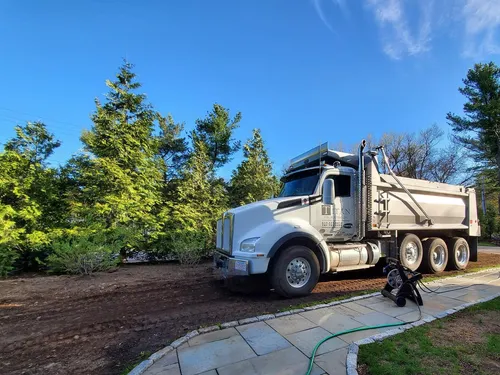
Titan Excavating, Inc is an excavation and septic services contractor located near Boston, MA. The company offers a range of sitework and septic solutions including septic tank installation, drain field installation, and drainage system services. Their capabilities include heavy-duty excavation, septic tank removal or reuse, contaminated soil removal, and installation of new drain fields. Titan Excavating, Inc is fully licensed and insured to handle excavation, trucking, hauling, and sewer services.
Understanding Your Drain Field and Common Failures
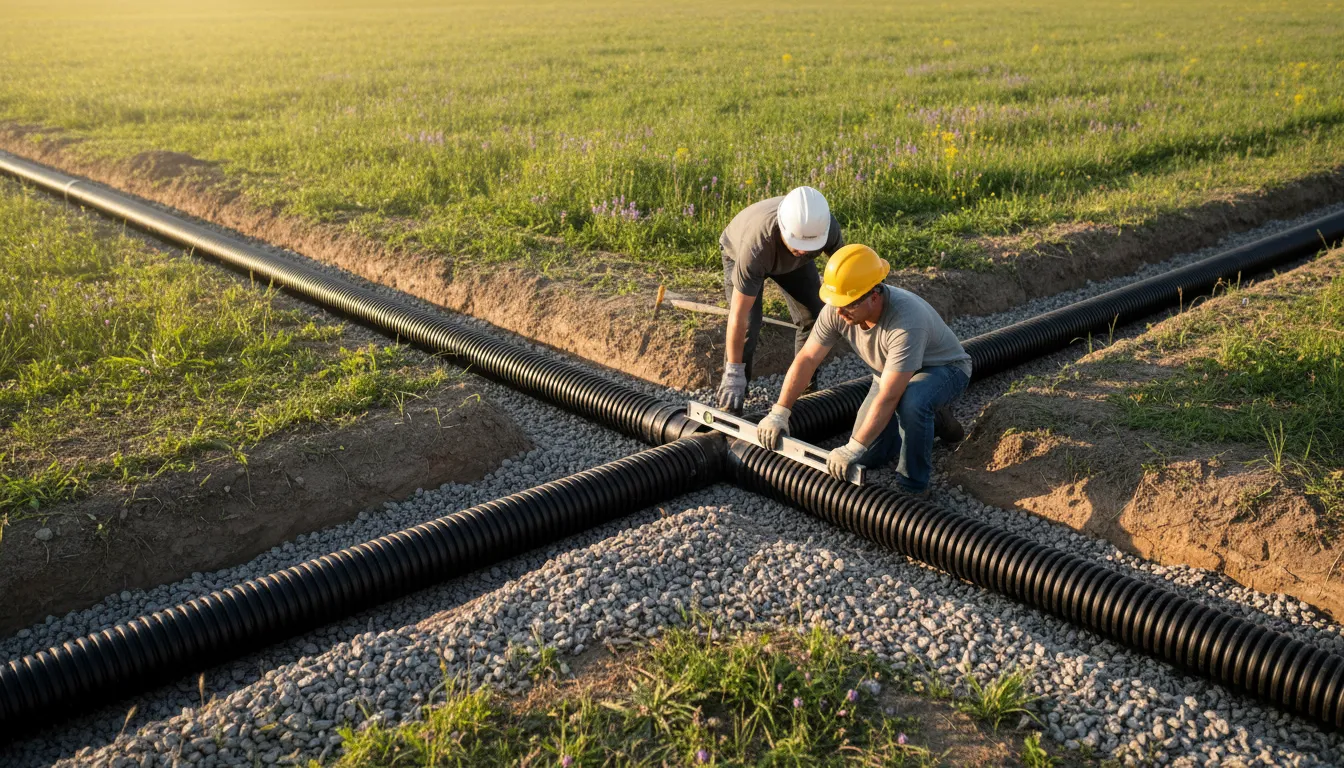
The drain field is a network of perforated pipes buried in trenches filled with gravel. It receives pre-treated liquid effluent from the septic tank and disperses it into the soil for final purification. Failure occurs when the soil can no longer absorb the water. Common signs include:
- Sewage odors in the yard or home.
- Soggy, spongy, or standing water over the drain field area, even in dry weather.
- Slow-draining household fixtures or gurgling pipes.
- Unusually green, lush grass over the drain field.
In Massachusetts, several factors lead to leach field failure. Hydraulic failure is most common, where the soil becomes permanently clogged with a biomat-a layer of organic material-preventing absorption. Physical damage from driving or parking vehicles over the field compacts the soil and can crush pipes. Root intrusion from nearby trees and shrubs can block and break pipes. Finally, system age and lack of proper maintenance, like regular septic tank pumping, accelerate failure by allowing solids to overflow into the drainage area.
The Regulatory Framework: Massachusetts Title 5
Any work on a septic system in Lynn falls under Massachusetts Title 5 regulations, enforced by the local Board of Health. Title 5 sets the standards for system design, installation, inspection, and upgrade. A key rule is that a failed system, as identified by a certified inspector, must be repaired or replaced within two years. The Lynn Board of Health must approve all system upgrades and repairs, following a strict sequence of steps.
The Step-by-Step Process for Repair or Replacement
Navigating a drain field project requires following a formal process to ensure compliance and protect your property value.
1. Title 5 Inspection The process almost always begins with a mandatory Title 5 inspection conducted by a state-licensed inspector 1. This is required upon the sale of a property, a change in use, or if a failure is suspected. The inspector evaluates the entire system: tank, distribution box, and drain field. They will issue a report that either passes the system or identifies its components as failed, which triggers the need for repair.
2. Evaluation and Design by a Professional If your leach field has failed, the next step is a detailed site evaluation by a licensed soil evaluator, sanitarian, or professional engineer. This involves deep hole tests and percolation (perc) tests to determine the soil's absorption rate and to locate the seasonal high groundwater table. This evaluation identifies the constraints of your property, such as high water tables, shallow bedrock, or limited space, which will dictate the repair options.
3. Board of Health Review and Permitting Your design professional will prepare a system repair or replacement plan that complies with Title 5 and local Lynn requirements. This plan, along with the inspection report and soil evaluation, is submitted to the Lynn Board of Health for review and permitting 2 3. The Board ensures the plan meets all setback requirements-minimum distances from wells, property lines, wetlands, and buildings.
4. Hiring a Certified Installer and Installation Once a permit is issued, you must hire a certified septic system installer. It is crucial to choose a contractor experienced with the local soil conditions and regulatory process in Lynn. They will execute the approved plan, which may involve excavating the old absorption field and installing a new one.
5. Final Inspection After installation, the Board of Health or its agent conducts a final inspection to ensure the work matches the permitted design and meets all codes. Only after passing this inspection is your system legally approved for use 4.
Find the perfect drain field repair companies for your needs
Get personalized recommendations and expert advice
Repair vs. Replacement: Understanding Your Options
The solution for your failed soil absorption system depends on the cause and extent of the failure, as well as your property's characteristics.
Potential Repair Options:
- Jet Cleaning: High-pressure water jetting can sometimes clear minor blockages in the distribution pipes.
- Septic Tank Pumping: If the tank is overfull and sending solids into the field, pumping it may temporarily alleviate symptoms, but it won't fix a biomat-clogged soil.
- Adding a New Trench: In some cases, if the original field was undersized or has partial failure, a new trench can be added to supplement the old one, subject to space and perc test results.
Replacement Options: Often, a complete replacement is necessary. Modern alternatives to a conventional stone-and-pipe trench may be required, especially on challenging sites 5 6.
- Conventional Trenches: The standard approach if soil conditions allow.
- Chamber Systems: Plastic chambers replace gravel, providing more storage volume and sometimes a smaller footprint.
- Sand Filters or Mounds: Used when soil percolation is too slow or the water table is too high. These are engineered systems that provide additional treatment above ground level.
- Advanced Treatment Systems: Systems that aerate or further treat the effluent may be mandated in environmentally sensitive areas or on very difficult sites.
Cost Considerations for Lynn Homeowners
Drain field work is a significant investment. Costs are highly variable based on the solution, soil conditions, and system size.
- Title 5 Inspection: Typically costs between $300 and $500 7.
- Minor Repairs: Such as jet cleaning or replacing a distribution box, may start around $500.
- Full Drain Field Replacement: This is a major excavation project. In Massachusetts, costs often range from $12,000 to over $50,000, with complex systems like mounds being at the higher end of the spectrum 8.
Financial Assistance: Massachusetts offers programs to help homeowners. The Massachusetts Home Septic Loan Program provides low-interest loans for eligible repairs. Additionally, a state tax credit is available for 40% of the cost, up to a maximum credit of $6,000 (applied to costs up to $15,000) 9 10. It's advisable to check current eligibility requirements for these programs.
Key Local Considerations for Lynn Properties
Lynn's coastal location and varied topography present specific challenges for septic systems.
- High Groundwater: Proximity to the ocean and wetlands can mean a high seasonal water table, which can saturate a drain field and is a major factor in system design 11 12.
- Soil Types: Local soils vary. Proper percolation testing is essential to determine the appropriate absorption rate and system type.
- Lot Size and Setbacks: In more densely populated areas, meeting the required setbacks from wells, property lines, and structures can limit where a new leach field can be placed 13.
Maintaining Your New or Repaired System
Protect your investment with proper care. Never drive or park over the drain field, and avoid planting trees or deep-rooted shrubs nearby. Divect roof drains and surface water away from the area. Most importantly, adhere to a regular schedule of septic tank pumping every 2-3 years to prevent solids from escaping into and clogging your new absorption field.
Frequently asked questions
Sources
Footnotes
-
Septic System Inspections and Repairs | Mass.gov - https://www.mass.gov/guides/consumer-protection-tips-septic-system-inspections-and-repairs ↩
-
Massachusetts septic system rules regulations - http://massrealestatelawblog.com/tag/massachusetts-septic-system-rules-regulations/ ↩
-
What is Title 5 Septic? - Lynnfield, MA - https://www.lynnfieldma.gov/DocumentCenter/View/717/What-is-a-Title-5-Septic-PDF ↩
-
The Complete Guide to Massachusetts Title 5 Inspection - All Clear Septic - https://allclearseptic.com/the-complete-guide-to-massachusetts-title-5-inspection/ ↩
-
Guidance for the Inspection of On-site Sewage Disposal ... - https://www.mass.gov/guides/guidance-for-the-inspection-of-on-site-sewage-disposal-systems ↩
-
Septic Systems & Title 5 New Construction - Mass.gov - https://www.mass.gov/info-details/septic-systems-title-5-new-construction ↩
-
What is a Title 5 Septic Inspection? When Do You Need One? - https://www.upnest.com/post/title-5-inspection/ ↩
-
Cost to Replace Septic Tank and Drain Field [2026 Data] | Angi - https://www.angi.com/articles/how-much-new-drain-fields-foot.htm ↩
-
Title 5 Overview - https://www.townofgb.org/DocumentCenter/View/542/Title-5-Overview-PDF ↩
-
Massachusetts Title 5 Septic Rules | Martha's Vineyard Buyer Agents - https://www.mvbuyeragents.com/title-5-septic-systems-faq ↩
-
When You Need Septic Drain Field Repair | Western MA - https://excavationplus.net/septic/septic-drain-field-health-and-when-repair-or-replacement-is-necessary/ ↩
-
Title 5 System Inspector Manual - https://baystatehub.com/wp-content/uploads/2024/05/System-Inspector-Manual.pdf ↩
-
Septic Installation Tips & Best Practices You Should Know - https://www.rciseptic.com/understanding-septic-installations-key-tips-and-best-practices ↩