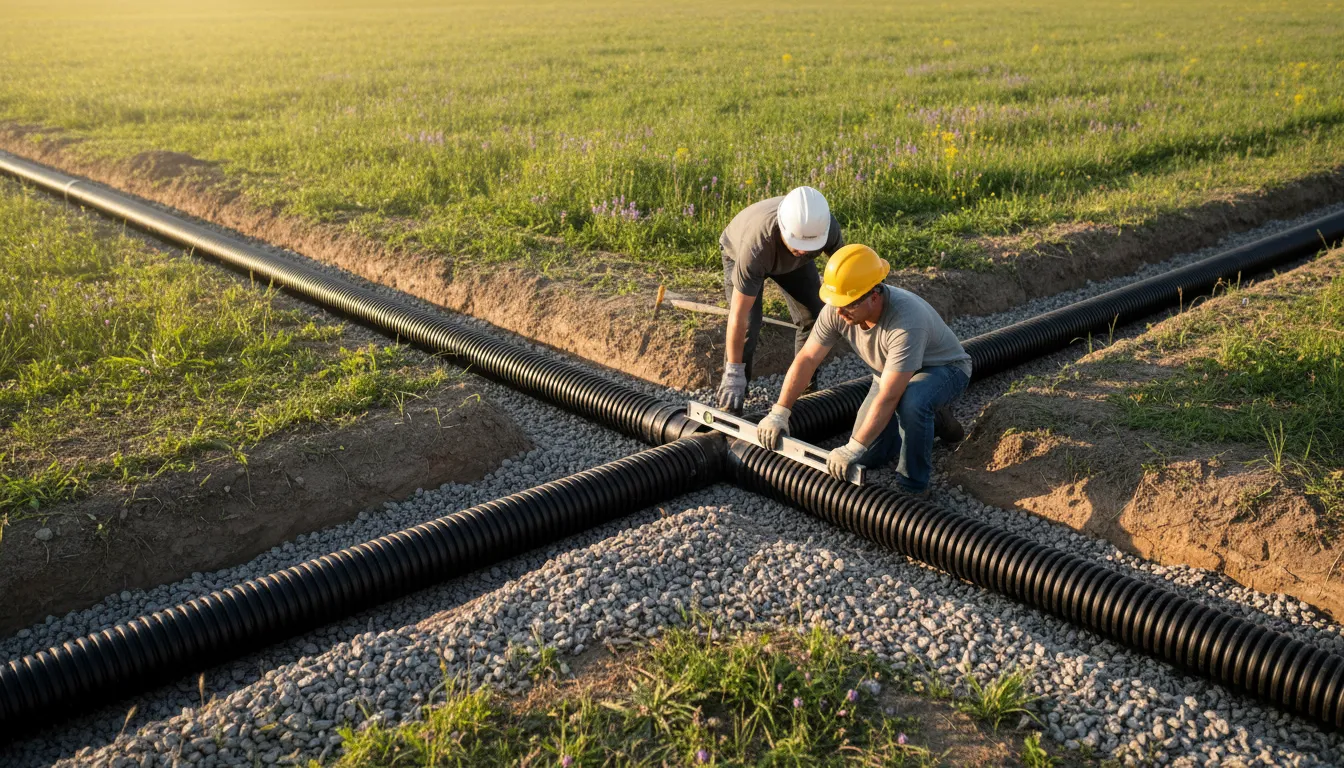
Find the Best Drain Field Repair Companies for Your Business
No obligation • Fast responses • Nationwide coverage

Why you can trust Septic Spot
Septic Spot is a leading United States resource for understanding and comparing septic services. Our editors review providers using consistent criteria and verify key business details. Listings and scores are independent, and companies cannot pay to influence our content.
Search providers near you
Top Drain Field Repair Companies in Newton, Massachusetts Ranked
A properly functioning drain field is the unsung hero of your home's septic system, quietly treating and dispersing wastewater into the soil. When this critical component fails, it can lead to soggy yards, unpleasant odors, and serious environmental and health concerns. In Newton, Massachusetts, all septic system work is governed by strict state and local health regulations, making professional expertise essential. This guide explains the process, regulations, and costs associated with leach field repair and replacement, helping you navigate finding qualified local specialists for your project.
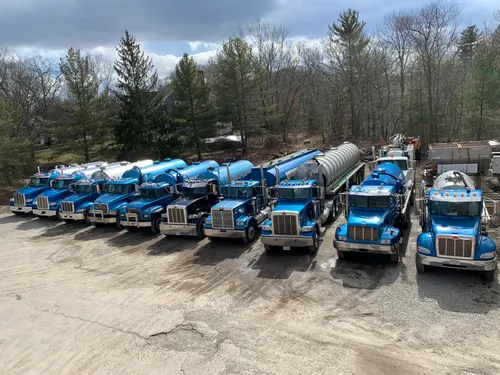
Rosano Davis Sanitary Pumping Inc
9 Rocky Ln, Cohasset, MA 02025
Rosano Davis Sanitary Pumping Inc is a family-owned septic system company serving Boston, MA. They provide a full range of services including septic system pumping, inspection, repair, and new system installation. Their capabilities include electronic locating of septic tanks and covers to minimize property disruption, as well as color video pipe inspection and high-pressure washing of leaching lines. The company manages all aspects of septic system installation, from excavation to landscaping, using their own equipment to ensure a complete service.
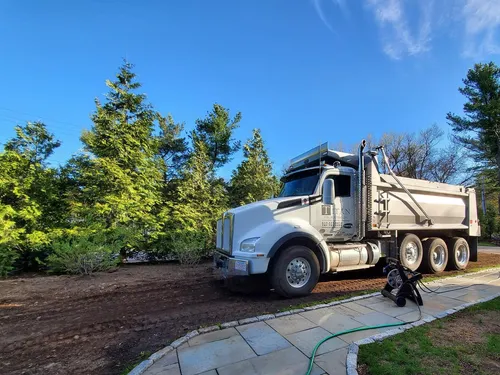
Titan Excavating, Inc
624 Commonwealth Ave, Newton, MA 02459
Titan Excavating, Inc is an excavation and septic services contractor located near Boston, MA. The company offers a range of sitework and septic solutions including septic tank installation, drain field installation, and drainage system services. Their capabilities include heavy-duty excavation, septic tank removal or reuse, contaminated soil removal, and installation of new drain fields. Titan Excavating, Inc is fully licensed and insured to handle excavation, trucking, hauling, and sewer services.
Understanding Your Septic System's Drain Field
Often called a leach field or soil absorption system, the drain field is a network of perforated pipes buried in trenches filled with gravel. After solids settle in the septic tank, the liquid effluent flows to the distribution box and is evenly distributed through these pipes. The effluent then percolates through the gravel and into the surrounding soil, where natural processes provide final treatment. A failing absorption area can no longer perform this function, leading to system backup and environmental contamination.
Massachusetts Title 5: The Regulatory Framework
All septic system work in Newton falls under the Massachusetts State Environmental Code, Title 5 (310 CMR 15.000). This isn't just a guideline-it's the law. The Newton Board of Health is the local enforcing authority, and they require a Disposal System Construction Permit (DSCP) before any construction, repair, or replacement begins on a leaching facility. Working without a permit can result in significant fines and an order to cease work.
A system is legally considered "failed" under Title 5 if there is hydraulic failure (sewage surfacing on the ground), if it's a cesspool, or if it poses a threat to public health or the environment. Upon a failed inspection, the property owner typically has two years to upgrade the system to full compliance, though the Board of Health can require more immediate action for severe failures 1.
The Inspection: First Step to Diagnosis
Before any repair or replacement plan can be developed, a thorough inspection by a licensed system inspector is required. This is often triggered by a property transfer, a suspected failure, or a planned expansion (like adding a bedroom). The inspection process involves several key steps 2 3:
- Records Review: Examining past pumping receipts and homeowner history.
- Locating Components: Finding the septic tank, distribution box, and drain field lines.
- Physical Inspection: Checking for broken pipes, saturated soil, and surfacing effluent.
- Evaluation and Reporting: The inspector submits a report to the Board of Health with a Pass, Conditional Pass, or Fail rating.
The cost for a standard Title 5 inspection in Newton typically ranges from $300 to $500.
Why Drain Fields Fail
Understanding the cause of failure is crucial for determining the correct solution. Common reasons include:
- Age and Clogging: Over decades, a biomat (a layer of organic material) can build up on the trench walls, eventually slowing percolation to a halt.
- Physical Damage: Crushing from vehicle traffic, root intrusion from trees and shrubs, or damaged pipes from landscaping.
- Hydraulic Overload: Consistently exceeding the system's design flow by adding fixtures, increasing occupancy, or having plumbing leaks.
- Poor Soil Conditions: Native clay soils or a high groundwater table that prevents proper drainage.
- Improper Maintenance: Failure to pump the septic tank regularly allows solids to wash out and clog the leach field.
Repair vs. Replacement: Understanding Your Options
The inspection findings will determine whether a simple repair or a full replacement is necessary.
Potential Repairs: Some issues may be localized. Repairing a cracked distribution box or a single broken pipe in the leaching trench might resolve the problem. These smaller repairs can cost around $500 or more, plus permitting fees. Another option is a Local Upgrade Approval, where the Board of Health may approve a limited repair if it brings the system into better compliance without requiring a full Title 5 upgrade, though this is not always possible 4.
Full Drain Field Replacement: When the entire soil absorption area has failed, a new leach field must be constructed. This is a major excavation project. The old field may be abandoned in place, and a new one constructed in a different location on the property that meets all current setbacks from wells, wetlands, and property lines 5 6. The cost for drain field replacement in the Newton area is highly variable but generally falls between $3,000 and $15,000. The final price depends heavily on soil conditions and site constraints.
Site Evaluation and System Design
Replacing a leach field isn't as simple as digging new holes. A rigorous site evaluation is required by law to design a compliant system 7.
- Percolation Test: A "perc test" measures the soil's absorption rate, which directly determines the size of the drain field needed.
- Soil Evaluation: A deep observation pit is dug to assess soil texture, structure, and the depth to seasonal high groundwater or bedrock.
- Setback Verification: The new field must be located specific distances from property lines, buildings, wells, and wetlands.
In Newton, challenging sites with poor soil or high water tables may require an engineered system. These alternative systems, like mounds, sand filters, or aerobic treatment units (ATUs), are more complex and can significantly increase the project cost beyond that of a conventional gravel trench system.
Find the perfect drain field repair companies for your needs
Get personalized recommendations and expert advice
The Cost of Compliance: A Closer Look
While drain field replacement is a major line item, it's part of a larger financial picture for septic system work. Here's a broader view of potential costs in the Boston/Newton area:
- Title 5 Inspection: $300 - $500 8
- Minor Repairs (e.g., distribution box): Approximately $500+
- Drain Field (Leach Field) Replacement: $3,000 - $15,000 9 10 11
- Full System Replacement (Tank & Field): Often exceeds $10,000+. For a standard 3-bedroom home in the Boston area, a complete new system installation can average between $8,800 and $10,50012.
It's important to note that Massachusetts offers a personal income tax credit for a portion of the costs associated with replacing a failed cesspool or septic system to achieve Title 5 compliance. This can provide some financial relief for qualifying expenditures 13.
Choosing a Professional for Your Project
Given the regulatory complexity, selecting the right professional is critical. You will likely need both a licensed septic system inspector for the initial evaluation and a licensed septic system installer for the construction work. Many companies offer both services. Look for professionals with extensive experience in Newton and Middlesex County, as they will be familiar with local Board of Health preferences and common soil challenges. Always verify that they pull the proper Disposal System Construction Permit from the Newton Board of Health before work begins.
Maintaining Your New Drain Field
Protecting your investment in a new leaching system is key. Adhere to these practices:
- Pump the Tank Regularly: Every 3-5 years, depending on usage, to prevent solids from escaping into the new field.
- Conserve Water: Spread out laundry loads, fix leaks, and install water-efficient fixtures.
- Mind What You Flush: Only human waste and toilet paper. No grease, chemicals, wipes, or feminine hygiene products.
- Protect the Area: Never drive or park over the drain field, and plant only grass over it-keep trees and shrubs with deep roots far away.
Frequently asked questions
Sources
Footnotes
-
The Complete Guide to Massachusetts Title 5 Inspection - https://allclearseptic.com/the-complete-guide-to-massachusetts-title-5-inspection/ ↩
-
Guidance for the Inspection of On-site Sewage Disposal Systems - https://www.mass.gov/guides/guidance-for-the-inspection-of-on-site-sewage-disposal-systems ↩
-
Title 5 System Inspection - https://www.doucetteengineering.com/title-5-system-inspection ↩
-
Repairs and New Construction for Title 5: Frequently Asked ... - https://www.mass.gov/guides/repairs-and-new-construction-for-title-5-frequently-asked-questions ↩
-
Cost to Install a Septic System in Boston [2026 Data] - Angie's List - https://www.angi.com/articles/what-does-it-cost-install-septic-system/ma/boston ↩
-
Massachusetts Title 5 Septic Regulations Explained - https://primeengineering.org/massachusetts-title-5-septic-regulations-explained/ ↩
-
About Massachusetts Septic System Regulations (Title 5) - https://www.buyersbrokersonly.com/article-septic ↩
-
Consumer Protection Tips: Septic System Inspections and Repairs - https://www.mass.gov/guides/consumer-protection-tips-septic-system-inspections-and-repairs ↩
-
Title 5 Overview - https://www.townofgb.org/DocumentCenter/View/542/Title-5-Overview-PDF ↩
-
Cost to Replace Septic Tank and Drain Field [2026 Data] | Angi - https://www.angi.com/articles/how-much-new-drain-fields-foot.htm ↩
-
How Much Does a Leach or Drain Field Replacement Cost? (2026) - https://homeguide.com/costs/drain-leach-field-replacement-cost ↩
-
Boston Septic Systems Costs & Prices - ProMatcher Cost Report - https://septic-systems.promatcher.com/cost/boston-ma-septic-systems-costs-prices.aspx ↩
-
TIR 97-12: Personal Income Tax Credit for Failed Cesspool or Septic System Title 5 Expenditures - https://www.mass.gov/technical-information-release/tir-97-12-personal-income-tax-credit-for-failed-cesspool-or-septic-system-title-5-expenditures ↩