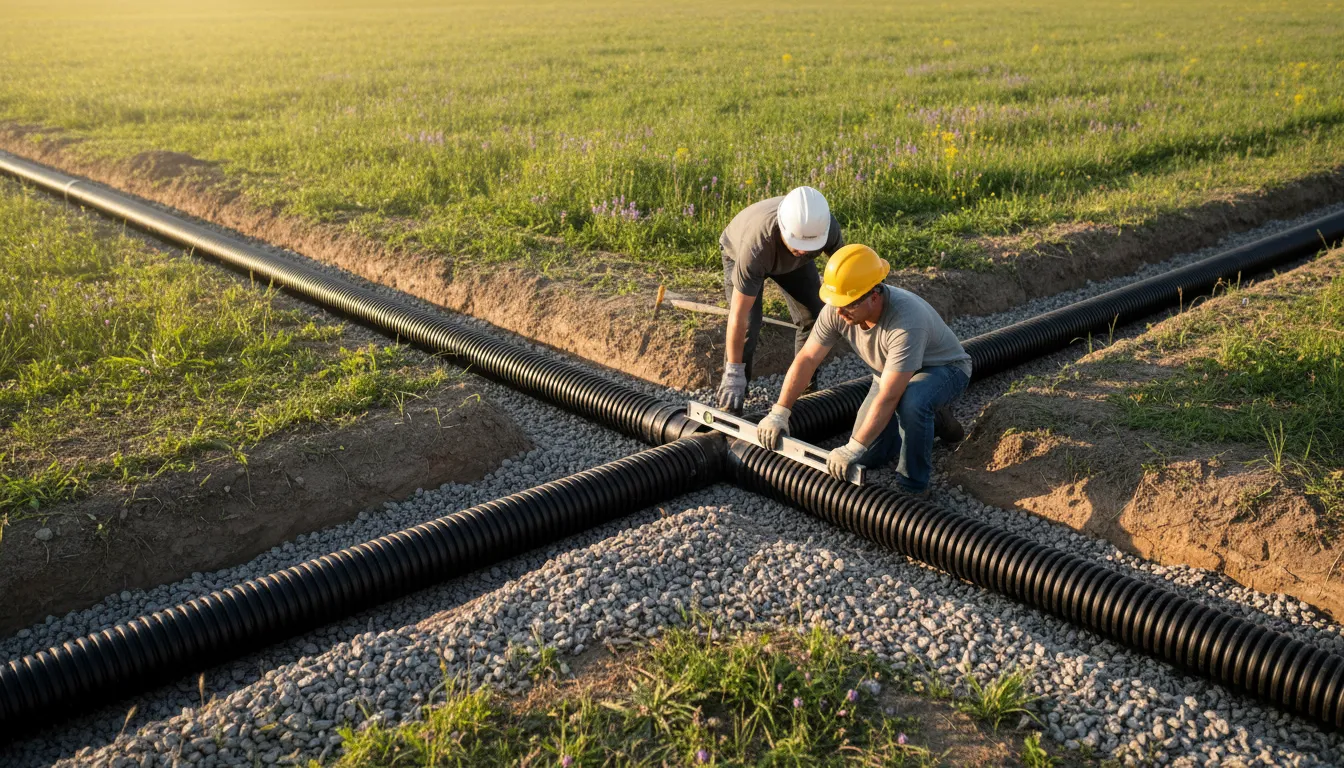
Find the Best Drain Field Repair Companies for Your Business
No obligation • Fast responses • Nationwide coverage

Why you can trust Septic Spot
Septic Spot is a leading United States resource for understanding and comparing septic services. Our editors review providers using consistent criteria and verify key business details. Listings and scores are independent, and companies cannot pay to influence our content.
Search providers near you
Top Drain Field Repair Companies in Salem, Massachusetts Ranked
A failing drain field, also known as a leach field or soil absorption system, is a serious issue for any Massachusetts homeowner with a septic system. It's the component that safely disperses treated wastewater into the soil, and its failure can lead to sewage backups, soggy yards, and environmental contamination. State law, specifically Title 5, mandates the repair or replacement of failed systems. This guide explains the regulations, process, and costs involved in drain field work in Massachusetts, helping you understand your responsibilities and connect with the certified local professionals required to get the job done correctly.
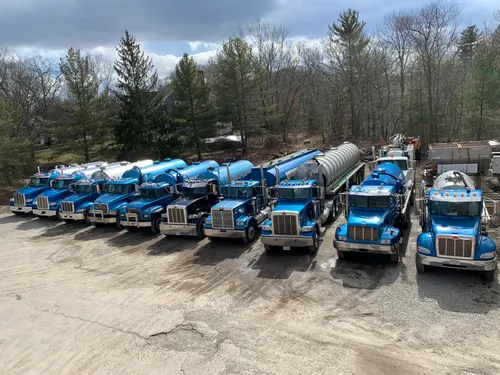
Rosano Davis Sanitary Pumping Inc
9 Rocky Ln, Cohasset, MA 02025
Rosano Davis Sanitary Pumping Inc is a family-owned septic system company serving Boston, MA. They provide a full range of services including septic system pumping, inspection, repair, and new system installation. Their capabilities include electronic locating of septic tanks and covers to minimize property disruption, as well as color video pipe inspection and high-pressure washing of leaching lines. The company manages all aspects of septic system installation, from excavation to landscaping, using their own equipment to ensure a complete service.
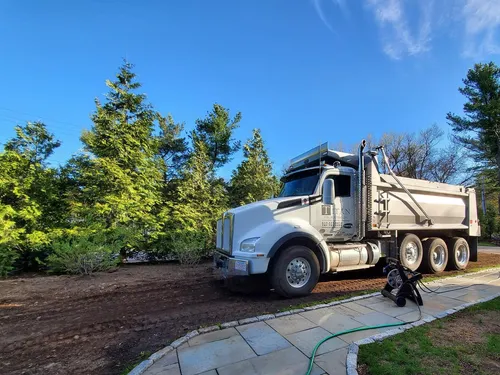
Titan Excavating, Inc
624 Commonwealth Ave, Newton, MA 02459
Titan Excavating, Inc is an excavation and septic services contractor located near Boston, MA. The company offers a range of sitework and septic solutions including septic tank installation, drain field installation, and drainage system services. Their capabilities include heavy-duty excavation, septic tank removal or reuse, contaminated soil removal, and installation of new drain fields. Titan Excavating, Inc is fully licensed and insured to handle excavation, trucking, hauling, and sewer services.
Understanding Title 5 and Your Drain Field
Massachusetts septic systems are governed by the State Environmental Code, Title 5 (310 CMR 15.000). This comprehensive set of regulations sets the standards for the siting, construction, inspection, and upgrade of all septic systems. The law is designed to protect public health and the environment, particularly the state's groundwater, which is a primary drinking water source for many communities.
A key trigger for discovering a drain field problem is the mandatory Title 5 inspection, required upon the sale, transfer, or expansion of a property 1. The inspection report is valid for two years, or three years if the tank is pumped annually. The inspector, who must be a certified Title 5 inspector, will assess the entire system, including the drain field, for signs of failure.
What Constitutes a Drain Field Failure?
Under Title 5, a system is considered to have failed if it exhibits any of the following conditions 2:
- Hydraulic Failure: This includes the surfacing of effluent (wastewater) in the yard, sewage backing up into the home, or the failure of the system to accept water from normal household use.
- Public Health/Environmental Threat: Any condition that does not protect public health and the environment, such as a system that is too close to a well or wetland, or one that is not treating wastewater effectively before it reaches groundwater.
- Non-Compliance with Code: A system that does not meet current Title 5 design standards, even if it is currently functioning, may be deemed "non-complying" and require upgrade when the property is sold or if it shows signs of failure.
If your system fails an inspection, Massachusetts law requires that it be upgraded or replaced within two years. In certain Nitrogen Sensitive Areas (NSAs), which include many coastal communities, new regulations may require upgrades within an even shorter timeframe, often five years, to reduce nitrogen pollution 3.
The Step-by-Step Process for Repair or Replacement
Addressing a failed drain field is a multi-step process that involves several licensed professionals and local government approval. You cannot simply hire a contractor to dig a new field; the process is strictly regulated.
1. Soil Evaluation and System Design
Before any plans can be drawn, a certified soil evaluator must perform tests on your property. This typically involves deep observation pits and percolation (perc) tests to determine the soil type, depth to groundwater or bedrock, and the soil's absorption rate. This information is critical.
Based on the soil evaluation, a professional engineer or registered sanitarian must design the new or repaired system 4. The design must comply with all Title 5 requirements and any local Board of Health regulations that may be more stringent. The design will specify the type of system (e.g., conventional trench, pressurized drip, or advanced treatment system) and its exact location.
2. Obtaining Permits
All septic system work requires permits from your local Board of Health 5. You or your design professional will submit the soil evaluation report and system design for review. The Board of Health will issue a Disposal System Construction Permit if the plans are approved. Do not begin any construction without this permit.
3. Installation by a Licensed Professional
The installation must be performed by a licensed septic system installer 6. It is crucial to hire a reputable contractor with experience in your area. The installer will follow the approved design to construct the new drain field and connect it to the existing or new septic tank.
4. Final Inspection and Approval
Once installation is complete, the local Board of Health or its agent must perform a final inspection before the system is covered 7. The installer is responsible for scheduling this inspection. After passing inspection, the Board of Health will issue a Certificate of Compliance, which is the official document stating your system meets Title 5 standards.
Find the perfect drain field repair companies for your needs
Get personalized recommendations and expert advice
Costs Associated with Drain Field Work in Massachusetts
The cost to address a failing drain field varies widely based on property conditions, system type, and local requirements. It is one of the most significant home maintenance expenses a homeowner can face.
- Title 5 Inspection: The initial inspection that identifies the problem typically costs between $300 and $500.
- Minor Repairs: Some issues, like a clogged distribution box or a small section of damaged pipe, may be repairable for $500 to $2,000.
- Complete Drain Field or System Replacement: This is the most common and costly outcome. For a conventional system replacement, homeowners can expect to pay between $10,000 and $30,000 8 9 10. In difficult sites with poor soil, high groundwater, or limited space-common on Cape Cod, the Islands, and in many older suburban lots-costs can easily exceed $50,000, especially if an advanced (alternative) treatment system is required to meet code 11 10.
These costs cover soil evaluation, engineering design, permitting fees, excavation, materials, installation, and final inspection. It is highly advisable to get multiple detailed quotes from licensed installers.
Maintaining Your New Drain Field
Protecting your investment in a new drain field is essential. Proper maintenance can extend its lifespan for decades.
- Regular Pumping: Pump your septic tank every 3 to 5 years, or every 1 to 2 years if you use a garbage disposal frequently 12. A full tank can send solids into the drain field, causing premature clogging and failure.
- Conserve Water: Spread out laundry loads and fix leaky fixtures to avoid overwhelming the drain field.
- Protect the Area: Never drive or park vehicles on the drain field. Keep large trees and shrubs with deep roots away from the area, as roots can clog and damage pipes 13.
- Divert Water: Ensure roof drains, sump pumps, and surface runoff are directed away from the drain field to keep the soil from becoming saturated.
- Keep Records: Maintain a file with all inspection reports, pumping receipts, design plans, and the Certificate of Compliance. This is invaluable for future sales and troubleshooting 14.
Types of Replacement Systems
When a conventional gravel trench system is not feasible due to site constraints, several alternative technologies are approved for use in Massachusetts:
- Pressurized Drip Systems: These systems use small, flexible pipes to distribute effluent more evenly over a larger, shallower area. They are good for sites with shallow soil or bedrock.
- Advanced Treatment Systems (ATS): Also called nitrogen-reducing systems, these add a treatment unit (like an aeration tank) before the drain field to significantly reduce nitrogen and other contaminants. They are often required in Nitrogen Sensitive Areas and allow for a smaller drain field.
- Sand Filters: These are constructed beds of sand that provide additional treatment before effluent reaches the soil. They can be used in areas with poor percolation.
- Mound Systems: An elevated drain field built with imported sand, used where groundwater is high or soil depth is inadequate.
Your soil evaluator and engineer will determine the best and most cost-effective technology for your specific property.
Frequently asked questions
Sources
Footnotes
-
Massachusetts law about Title 5 and septic systems - Mass.gov - https://www.mass.gov/info-details/massachusetts-law-about-title-5-and-septic-systems ↩
-
Laurel Park, Northampton, MA Know Your Septic System - https://homeownersatlaurelpark.com/wp-content/uploads/2018/10/Septic_System_Handout-2018.pdf ↩
-
Massachusetts Title 5 Septic Rules - Martha's Vineyard Buyer Agents - https://www.mvbuyeragents.com/title-5-septic-systems-faq ↩
-
Massachusetts Septic System Regulations, Title 5 (Title V), DEP, Perc - https://www.buyersbrokersonly.com/article-septic ↩
-
Title V - Septic Systems | Leominster, MA - https://www.leominster-ma.gov/294/Title-V---Septic-Systems ↩
-
Septic Systems | Oak Bluffs, MA - https://www.oakbluffsma.gov/267/Septic-Systems ↩
-
Title 5 Inspections | Hampden, MA - https://hampdenma.gov/175/Title-5-Inspections ↩
-
Title 5 Overview - https://www.townofgb.org/DocumentCenter/View/542/Title-5-Overview-PDF ↩
-
What is a Title 5 Septic Inspection? When Do You Need One? - https://www.upnest.com/post/title-5-inspection/ ↩
-
How Much Does Failed Septic System Cost? - https://www.septicconnection.com/how-much-does-failed-septic-system-cost ↩ ↩2
-
Massachusetts Title 5 Septic Regulations Explained - https://primeengineering.org/massachusetts-title-5-septic-regulations-explained/ ↩
-
Consumer Protection Tips: Septic System Inspections and Repairs - https://www.mass.gov/guides/consumer-protection-tips-septic-system-inspections-and-repairs ↩
-
Caring for Your Septic System - Mass.gov - https://www.mass.gov/guides/caring-for-your-septic-system ↩
-
Homeowners Guide to Septic Systems Brochure - Ashland, MA - https://www.ashlandmass.com/DocumentCenter/View/15541/Septic-Brochure ↩