Find the Best Drain Field Repair Companies for Your Business
No obligation • Fast responses • Nationwide coverage

Why you can trust Septic Spot
Septic Spot is a leading United States resource for understanding and comparing septic services. Our editors review providers using consistent criteria and verify key business details. Listings and scores are independent, and companies cannot pay to influence our content.
Search providers near you
Top Drain Field Repair Companies in Southaven, Mississippi Ranked
A failing drain field, or leach field, is a serious issue for any Southaven homeowner with a septic system. This critical component is responsible for safely filtering and dispersing treated wastewater into the soil. When it malfunctions, it can lead to sewage backups, environmental contamination, and health hazards. Understanding the signs of failure, the local regulatory process, and your options for repair or replacement is essential. This guide provides the information you need to navigate finding qualified local professionals for your septic system's absorption area.

ABC Plumbing & Septic Service
741 Lee Creek Rd, Byhalia, MS 38611
ABC Plumbing & Septic Service is a septic tank pumping, inspection, repair, and installation company serving Memphis, TN. With over 70 years of experience, they provide residential, commercial, and industrial septic services including hydrojetting, video inspection, and drain field repair. The company offers 24/7 emergency service and uses advanced equipment to ensure effective septic system maintenance and repairs.

All In One Services
1651 Dancy Blvd #4b, Horn Lake, MS 38637
All In One Services is a family-owned business serving Memphis, TN, with over 20 years of experience in septic system care. They provide a range of services including septic tank pumping, inspections, repairs, and drain field replacement. The company uses hydro-jetting equipment to clear clogged sewer lines and offers expert advice based on thorough inspections to help maintain and extend the life of septic systems.
Understanding Your Septic System's Drain Field
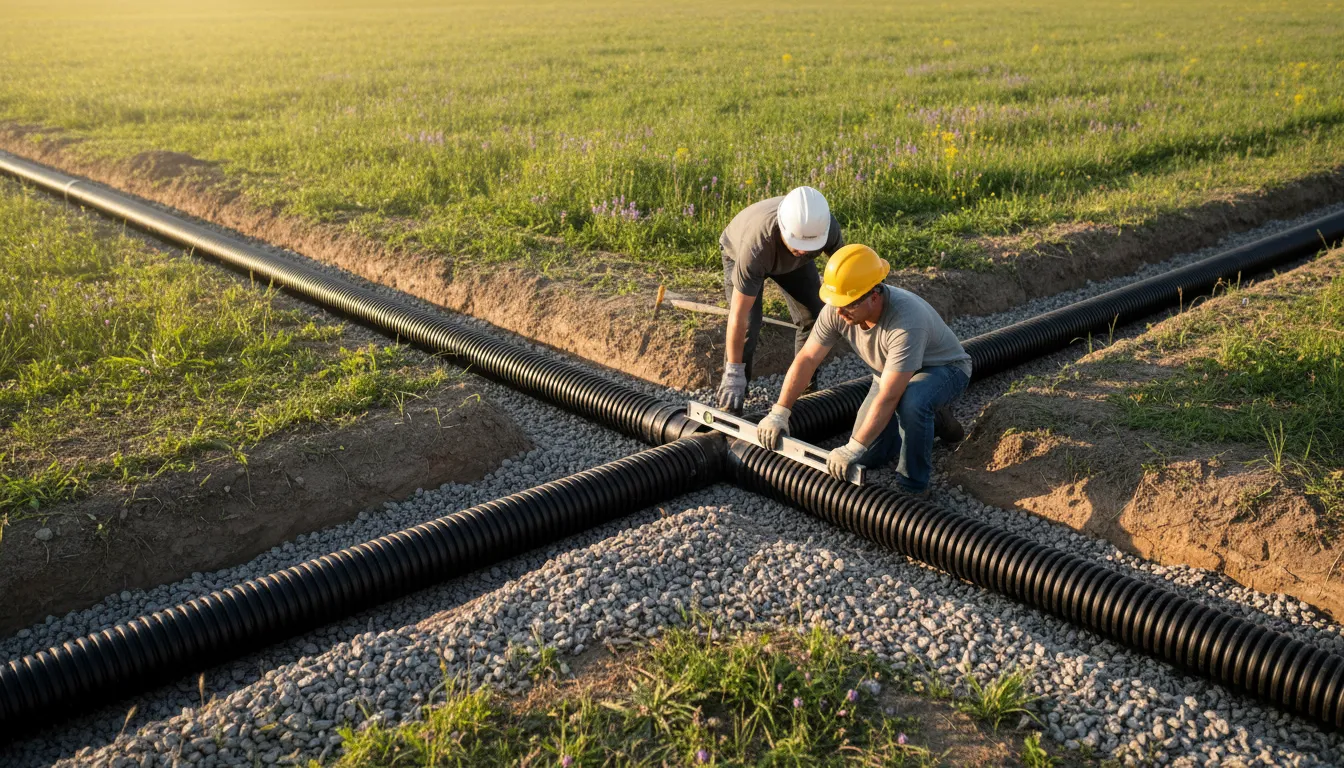
The drain field is the final stage of your on-site wastewater treatment system. After solids settle in the septic tank, the liquid effluent flows into a network of perforated pipes buried in trenches filled with gravel. This effluent slowly percolates into the soil, where natural processes provide final treatment. A properly functioning leach field is vital for protecting groundwater and your property's value.
Common terms used interchangeably with "drain field" include leach field, absorption field, and soil absorption system. In Southaven and throughout DeSoto County, these systems are regulated to ensure public and environmental safety.
Signs Your Southaven Drain Field Needs Attention
Recognizing early warning signs can prevent a complete system failure and more costly repairs. If you notice any of the following, it's time to contact a licensed professional for an inspection 1:
- Soggy Ground or Standing Water: Puddles or consistently mushy soil over the drain field area, especially when it hasn't rained.
- Sewage Odors: Unpleasant smells emanating from your yard or near the septic tank.
- Slow Drains and Backups: Gurgling pipes, slow-draining sinks and toilets, or sewage backing up into your home.
- Unusually Lush Grass: While some growth is normal, patches of grass that are significantly greener and faster-growing than the rest of your lawn can indicate a nutrient-rich sewage leak.
- Algae Blooms in Nearby Ditches or Ponds: Nutrient-rich effluent reaching surface water can cause excessive algae growth.
The Inspection Process: Diagnosing the Problem
Before any repair or replacement can be planned, a thorough inspection is necessary to diagnose the exact issue. A licensed inspector will typically follow a multi-step process 2 3 4 5:
- System Location: If the layout of your tank and leach field is unknown, the inspector may use probes or a tracer to map it.
- Tank Inspection: The septic tank is pumped and inspected for cracks, baffle damage, and sludge/scum levels. The liquid level is checked to see if it indicates a blockage.
- Hydraulic Load Test: Water is run into the system to see how quickly it drains, testing the absorption field's capacity.
- D-Box and Line Check: The distribution box (D-box) is opened to ensure effluent is flowing evenly to all drain field lines. Lines are checked for blockages or collapse.
- Dye Test: In some cases, a non-toxic dye is flushed into the system to visually confirm if untreated wastewater is surfacing in the yard.
This inspection will determine if the issue is a minor repair (like a clogged pipe or damaged baffle) or a major failure requiring partial or full leach field replacement.
Mississippi and DeSoto County Regulations You Must Follow
All drain field repair and replacement work in Southaven is governed by state and local codes. Ignoring these regulations can result in fines and an unsafe system.
- State Permit Required: You must obtain a construction permit from the Mississippi State Department of Health (MSDH) before any work begins. The standard permit fee is $90.00 6 7.
- Licensed Professionals Only: State law requires that only MSDH-registered installers perform the construction or major repair of an on-site sewage system 8.
- Soil Evaluation (Perc Test): A new or replacement drain field requires a percolation test to evaluate the soil's absorption rate. This test, which can cost around $1,300, determines the size and design of the field needed 9 10.
- Mandatory Inspections: The MSDH must inspect the installed system before it is backfilled. Your installer is required to notify the health department by 9 a.m. on the day before the anticipated backfill.
- Setback Requirements: Systems must be installed at least 100 feet from any drinking water well or source 11.
- Local Authority: The DeSoto County Regional Utility Authority (DCRUA) may have additional requirements or oversight in certain areas, so it's important to verify local rules 12.
Find the perfect drain field repair companies for your needs
Get personalized recommendations and expert advice
Factors Influencing Drain Field Repair & Replacement
Several key factors will determine the approach and cost for addressing your failing leach field in Southaven.
- Soil Type: Ideal soils are loamy mixtures of sand, silt, and clay. Very dense clay or shallow, rocky soil has poor absorption and may require a more expensive engineered system like a mound or aerobic treatment unit (ATU) 13 14.
- Extent of Failure: Is only one section of the field saturated, or is the entire area failed? A partial repair might be possible, but often, hydraulic overloading means the entire field needs replacement.
- System Size: The size of your home (number of bedrooms) dictates the required capacity of your drain field, directly impacting material and labor costs.
- Site Conditions: The presence of large trees (whose roots can invade pipes), slope, and available space on your property all influence the design and feasibility of a new absorption field. Driveways or other structures should never be built over a drain field.
Cost Considerations for Southaven Homeowners
While prices can vary based on the factors above, here are general cost ranges for drain field work, drawing from regional data 15:
- Minor Repairs: Fixing a damaged baffle, unclogging a line, or repairing a distribution box typically costs less but does not address a fully failed field.
- Drain Field Replacement: The average cost to replace a residential leach field is over $7,000. This can vary widely based on size and soil conditions.
- Full System Replacement: If both the septic tank and drain field need to be replaced, total costs typically range from $3,600 to over $12,400.
- Additional Costs: Remember to budget for the required soil evaluation (percolation test), MSDH permit fees, and the cost of the initial diagnostic inspection.
The Repair and Replacement Process
Once you've selected a licensed installer and secured the necessary permits, the process generally follows these steps:
- Site Preparation: The area is marked, and any landscaping is carefully removed.
- Excavation: Heavy equipment is used to excavate the old, failed drain field lines and gravel.
- Soil Assessment & Grading: The installer prepares the subsoil according to health department specifications based on the perc test.
- New Installation: New perforated pipes are laid in gravel-filled trenches, connected to a new or cleaned distribution box, and linked to the existing septic tank.
- Inspection: The MSDH inspector visits to approve the installation before backfilling.
- Backfilling and Restoration: Once approved, the trenches are filled with soil and the site is graded and seeded for restoration.
Choosing a reputable, licensed professional is the most important step in ensuring this process goes smoothly and results in a system that will function properly for years to come.
Frequently asked questions
Sources
Footnotes
-
10 Signs Your Septic System is Failing (And What to Do About It) - https://www.atsenvironmental.com/blog/10-signs-your-septic-system-is-failing-and-what-to-do-about-it/ ↩
-
Managing Household Wastewater | Mississippi State ... - https://extension.msstate.edu/publications/managing-household-wastewater ↩
-
What to Expect from a Septic Inspection - https://www.wrenvironmental.com/blog/2023/may/what-to-expect-from-a-septic-inspection/ ↩
-
What Does a Septic Inspection Entail? - HomeLight - https://www.homelight.com/blog/septic-inspection/ ↩
-
Septic Inspection Explained: What Homeowners Can Expect - https://www.townesseptic.com/blog/what-happens-during-a-septic-inspection ↩
-
On-sight Sewage - Mississippi County Health Department - https://www.misscohealth.com/sewage.php ↩
-
Mississippi State Department of Health Part 15 - https://sos.ms.gov/ACProposed/00020819b.pdf ↩
-
Well and Septic System Plumbing in Mississippi - https://mississippiplumbingauthority.com/mississippi-well-and-septic-plumbing ↩
-
Cost to Replace Septic Tank and Drain Field [2026 Data] | Angi - https://www.angi.com/articles/how-much-new-drain-fields-foot.htm ↩
-
Soil Evaluation for Home Septic Systems - Ohioline - https://ohioline.osu.edu/factsheet/aex-742 ↩
-
Notice of Intent - Mississippi State Department of Health - | MS.GOV - https://msdh.ms.gov/page/resources/7436.pdf ↩
-
DESOTO COUNTY REGIONAL UTILITY AUTHORITY - http://www.digitdesoto.com/data/DCRUA_Sewer%20Use%20Ordinance%201%2004_ENACTED%20%281%29.pdf ↩
-
Managing Household Wastewater | Mississippi State ... - https://extension.msstate.edu/publications/managing-household-wastewater ↩
-
Managing Household Wastewater: An Environmental Self- ... - https://extension.msstate.edu/sites/default/files/publications/p1869.pdf ↩
-
How Much Does a Septic Tank Cost? - NerdWallet - https://www.nerdwallet.com/home-ownership/home-improvement/learn/septic-tank-cost ↩