
Find the Best Drain Field Repair Companies for Your Business
No obligation • Fast responses • Nationwide coverage

Why you can trust Septic Spot
Septic Spot is a leading United States resource for understanding and comparing septic services. Our editors review providers using consistent criteria and verify key business details. Listings and scores are independent, and companies cannot pay to influence our content.
Search providers near you
Best Drain Field Repair Companies in Montana Ranked
A failing drain field is a serious issue for any Montana homeowner with a septic system. This critical component, also known as a leach field or absorption area, is responsible for safely dispersing treated wastewater into the soil. When it fails, it can lead to sewage backups, soggy yards, and environmental contamination. Understanding Montana's specific regulations and processes for drain field repair and replacement is essential. This guide provides the practical information you need to navigate the permitting, installation, and maintenance requirements to restore your system's function and protect your property and local groundwater.
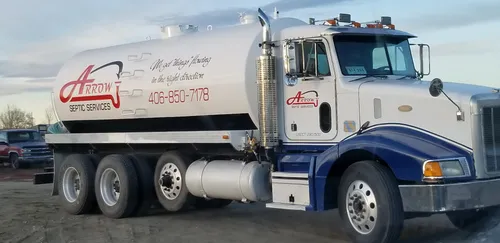
Understanding Your Drain Field and Signs of Failure
The drain field is the final stage of your onsite wastewater treatment system. After solids settle in the septic tank, the liquid effluent flows into a network of perforated pipes buried in gravel-filled trenches. This effluent slowly percolates through the soil, where natural processes provide final treatment before it reaches groundwater.
Recognizing early warning signs can save you from more extensive and costly repairs:
- Sewage odors around the yard or drain field area.
- Slow drains and gurgling plumbing fixtures throughout the home.
- Wet, spongy, or soggy ground over the drain field, especially when it hasn't rained.
- Unusually lush, green grass growing over the drain field.
- Standing water or sewage effluent surfacing in your yard.
- Backups into your home's lowest drains, like basement floor drains.
If you notice any of these signs, it's time to contact a licensed professional for an evaluation.
Montana's Regulatory Framework: DEQ-4 and County Authority
All septic system work in Montana, including drain field repairs and replacements, is governed by state standards administered at the county level. The Montana Department of Environmental Quality (DEQ) sets the minimum technical standards in Circular DEQ-4 and the Administrative Rules of Montana (ARM) Title 17, Chapter 36.
Key Regulatory Point: Your local County Sanitarian or Public Health Department is the permitting and enforcement authority. They interpret state rules, which can be supplemented by stricter local county regulations. Always start any project by contacting your local health office.
The Critical Requirement: The 100% Replacement Area
One of Montana's most important rules is the mandate for a 100% replacement area1. This means your property must have enough suitable space, in addition to the original drain field, to install a completely new, full-sized system. This area must be legally protected (often through a covenant on your property title) from any development or disturbance. If your property cannot accommodate this, you may not be permitted to repair your existing system and may need to explore alternative treatment technologies.
The Step-by-Step Process for Repair or Replacement
Navigating a drain field project involves several mandatory steps. Skipping any can result in fines, orders to cease work, or an unpermitted-and thus illegal-system.
1. Initial Evaluation and Permit Application
The process begins with a site evaluation, often conducted by a licensed septic system installer or a professional engineer. They will assess the cause of failure, evaluate soil conditions (percolation tests), and determine the best location for the repair or new drain field. You or your contractor must then submit a detailed permit application to your county health department. This includes a site plan, system design, and proof of the protected replacement area.
2. Understanding Key Design and Setback Standards
Your new or repaired drain field must comply with strict placement rules to protect public health and water resources 2 3:
- Vertical Separation: A minimum of 4 feet of natural soil is required between the bottom of the drain field trench and the seasonal high groundwater table or an impermeable layer like bedrock.
- Setbacks from Water Sources: Absorption trenches must be at least 100 feet from any water well (yours or a neighbor's) and 100 feet from lakes, rivers, streams, or other surface water.
- Property and Infrastructure: Systems must be 10 feet from property lines and pressurized water lines, and 25 feet from the top of banks or cliffs.
3. Installation by a Licensed Professional
Montana law requires that all septic systems be installed by a county-licensed installer. Hiring a licensed professional ensures the work meets code, which is crucial for passing inspection and protecting your investment. They will handle the excavation, pipe and gravel placement, and connection to the septic tank.
4. The Mandatory Final Inspection
Before a single shovelful of dirt is used to cover the new drain field, you must schedule a final inspection with your county sanitarian 4. The installer will typically arrange this. The inspector will verify that the installation matches the permitted design and complies with all regulations. Only after passing this inspection can the system be covered. Failure to get this inspection can result in being ordered to excavate the system for inspection.
5. Ongoing Operation and Maintenance
Once your new drain field is operational, proper care is essential for its longevity. The Montana DEQ recommends inspecting your system annually and pumping your septic tank every 3 to 5 years, depending on usage. Protect your drain field by:
- Never driving or parking vehicles over it.
- Not planting trees or deep-rooted shrubs nearby.
- Divecting roof drains and surface runoff away from the area.
- Avoiding excessive water use (like multiple laundry loads in one day) 5 6.
Find the perfect drain field repair companies for your needs
Get personalized recommendations and expert advice
Costs, Financial Assistance, and Compliance
The cost of drain field repair or a full system replacement in Montana varies widely based on soil conditions, system size, design complexity, and local labor rates. Simple repairs may cost a few thousand dollars, while a complete replacement system for a challenging site can cost significantly more.
- Permit Fees: County permit fees are an additional cost, typically ranging from $100 to over $300, with higher fees for systems requiring engineered designs 7 8 9.
- Financial Assistance: Homeowners should inquire about potential grants or low-interest loan programs for septic system upgrades. Funding is sometimes available through local Conservation Districts or the Montana Department of Natural Resources and Conservation (DNRC) 10.
- Compliance Orders: If your system fails and poses a public health risk, a county health officer can issue a compliance order giving you a specified time (often 30 days) to make repairs or replace the system 11.
Choosing a Provider in Montana
When selecting a professional for your drain field project, due diligence is key. Verify that the installer holds a current license from your specific county. Ask for references from recent jobs and proof of insurance. A reputable provider will be familiar with local county regulations, handle the permit application process, and guarantee their work to meet code and pass the final county inspection.
Frequently asked questions
Sources
Footnotes
-
Septic System Information | Madison County, MT - https://madisoncountymt.gov/247/Septic-System-Information ↩
-
Septic Systems - Montana Department of Environmental Quality - https://deq.mt.gov/files/Water/WQPB/TMDL/PDF/LakeHelena/VolII/M09-TMDL-02a_App_K.pdf ↩
-
Septic System Programs - Lewis & Clark County - https://www.lccountymt.gov/Government/Public-Health/Environmental-Health/Septic-Systems ↩
-
Rules and Regulations for On-Site Wastewater Treatment Systems ... - https://riverstonehealth.org/wp-content/uploads/Rule-3-11th-revision-approved-9.22.16-signed-document.pdf ↩
-
A Montana Homeowner's Guide to Septic Systems - https://deq.mt.gov/files/Land/SolidWaste/Documents/HomeownerGuideSepticSystems.pdf ↩
-
Septic Tank and Drainfield Operation and Maintenance - https://www.healthygallatin.org/wp-content/uploads/2013/04/WWTSOM.pdf ↩
-
Outline of Septic System Permitting Process - https://centralmontanahealthdistrict.org/images/health/septic/Outline%20of%20Septic%20System%20Process.pdf ↩
-
Septic Systems - RICHLAND COUNTY MONTANA - https://www.richland.org/septic-systems.html ↩
-
Western Montana Conservation Commission Septic Briefing Packet - https://westernmtwaters.com/wp-content/uploads/2025/07/WMCC_Septic_Briefing_Packet.pdf ↩
-
Massachusetts Title 5 Septic Rules | Martha's Vineyard Buyer Agents - https://www.mvbuyeragents.com/title-5-septic-systems-faq ↩
-
Onsite Wastewater Treatment Regulations - https://www.adlc.us/DocumentCenter/View/152/Tri-County-Wastewater-Regulation-PDF ↩