Find the Best Drain Field Repair Companies for Your Business
No obligation • Fast responses • Nationwide coverage

Why you can trust Septic Spot
Septic Spot is a leading United States resource for understanding and comparing septic services. Our editors review providers using consistent criteria and verify key business details. Listings and scores are independent, and companies cannot pay to influence our content.
Search providers near you
Top Drain Field Repair Companies in Billings, Montana Ranked
A failing drain field is a serious issue for any home with a septic system, leading to soggy yards, foul odors, and potential environmental contamination. Drain field repair or replacement involves addressing the underground network of pipes or chambers that treat and disperse wastewater from your septic tank. In Billings, this work is strictly regulated to protect public health and local groundwater. This guide helps you understand the local process, regulations, and steps to take when you need professional drain field services, connecting you with qualified local experts.
Understanding Your Drain Field and Signs of Failure
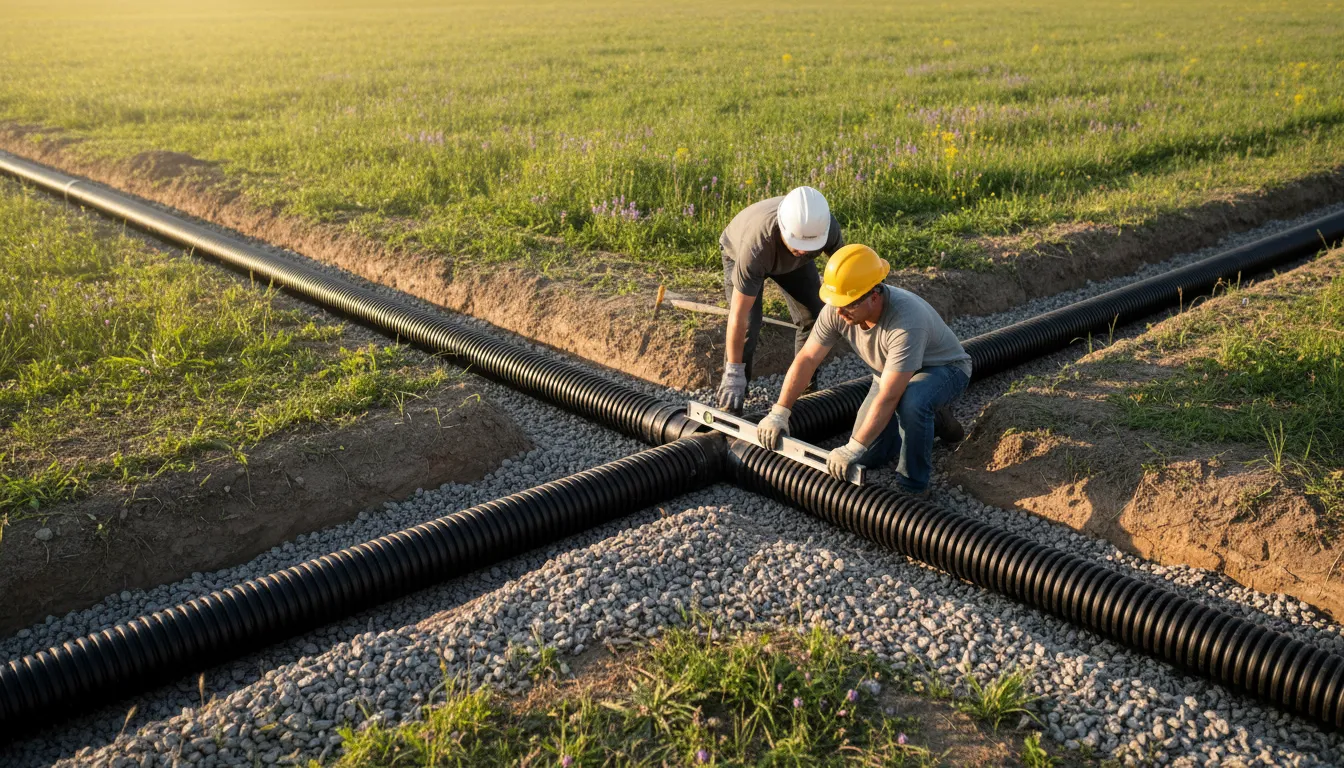
Your septic system's drain field, also known as a leach field or absorption field, is the final stage of wastewater treatment. After solids settle in the septic tank, liquid effluent flows into a network of perforated pipes buried in gravel-filled trenches. This effluent slowly percolates through the soil, where natural processes remove harmful bacteria and nutrients before the water rejoins the groundwater.
A system fails when the soil can no longer absorb the liquid. Common warning signs include:
- Sewage odors in the yard or home.
- Spongy, soggy, or standing water over the drain field area, even in dry weather.
- Lush, green grass growing over the field compared to the rest of the lawn.
- Slow-draining or gurgling household fixtures.
- Sewage backing up into the home.
Billings and Montana Regulatory Overview
All septic system work in Yellowstone County, including Billings, is overseen by RiverStone Health Environmental Health Services. They enforce state regulations set by the Montana Department of Environmental Quality (DEQ). You cannot begin any excavation or repair on your leach field without first obtaining the proper permit from RiverStone Health.
Key local site requirements for a new or replacement absorption field include:
- Soil Suitability: The soil must pass a percolation ("perc") test or soil pit evaluation to prove it can treat wastewater effectively.
- Setback Distances: The field must generally be at least 100 feet from any water well and 100 feet from a 100-year floodplain.
- Depth to Water Table: The bottom of the trenches must be at least 4 feet above the seasonal high-water table or a restrictive layer like bedrock.
- Replacement Area: Properties are often required to have a designated, undisturbed area where a completely new drain field can be installed if the original fails.
The Step-by-Step Process for Repair or Replacement
When you suspect a problem, a structured approach is required to comply with local law and ensure a lasting solution.
1. Initial Assessment and Locating Records
Your first step is to gather information. Contact RiverStone Health or the Yellowstone County Courthouse to locate the "as-built" drawing of your original septic system. This blueprint shows the tank and drain field layout, which is crucial for any evaluation. Next, hire a licensed septic system installer or designer to inspect the system. They will check for tank issues, inspect the distribution box, and often perform a soil pit test in the suspected failure area to diagnose the cause 1.
2. Obtaining the Required Permit
Once a plan is formed, your licensed professional will submit a repair or replacement permit application to RiverStone Health 2. This application includes the site evaluation findings and a proposed plan for correcting the issue. A site visit from a RiverStone Health official is typically required before the permit is approved3.
3. Repair vs. Full Replacement
The solution depends on the failure's cause:
- Minor Repairs: These may involve cleaning a clogged distribution line, leveling a tilted distribution box, or replacing a section of crushed pipe. These address isolated issues without rebuilding the entire field.
- Full Drain Field Replacement: This is necessary when the soil is permanently saturated or clogged (a condition called "biomat" overload). The old field is abandoned-often by pumping out any liquid and filling the trenches with clean soil4. A new field is then constructed in a new location, often using modern chamber systems or traditional gravel-and-pipe trenches5.
Find the perfect drain field repair companies for your needs
Get personalized recommendations and expert advice
4. Installation and Final Inspection
The licensed installer will excavate and construct the new leach field according to the permitted design. Crucially, the new system cannot be covered until a final inspection is passed. A RiverStone Health inspector must visit the site to verify the work meets code before the trenches are backfilled6. Once approved and covered, the new drain field can begin operation.
Cost Considerations for Drain Field Work
Costs in Billings vary significantly based on the system size, soil conditions, and the repair's complexity. Permit fees from the health department generally range from $200 to $5007 8.
- Drain Field Replacement: For a conventional trench system replacement, homeowners can expect costs ranging from $4,000 to $7,0009. This includes design, permitting, excavation, materials, and installation.
- Alternative System Installation: If your property's soil is unsuitable for a standard trench (too shallow, too permeable, or too dense), an engineered alternative like a mound system may be required. These systems, which involve building an elevated sand mound, are more complex and can cost $7,000 to $12,000 or more10 11.
- Minor Drain Field Repair: Costs for repairs like jet-cleaning lines or replacing a distribution box are more variable but represent a smaller investment than a full replacement.
Maintaining Your New or Repaired System
Protect your investment with proper care. Have your septic tank pumped regularly by a professional (typically every 3-5 years) to prevent solids from washing out into the new field. Conserve water to avoid hydraulically overloading the system. Never drive or park vehicles over the drain field, and avoid planting trees or deep-rooted shrubs nearby. Direct all roof drains and surface water away from the absorption area12.
Frequently asked questions
Sources
Footnotes
-
Septic System Information - https://www.lawrence.sd.us/214/Septic-System-Information ↩
-
Rules and Regulations for On-Site Wastewater Treatment ... - https://riverstonehealth.org/wp-content/uploads/Rule-3-11th-revision-approved-9.22.16-signed-document.pdf ↩
-
Septic Systems - https://livingonthebank.com/buying-land-and-selecting-construction-site/septic-systems/ ↩
-
Septic Tank Inspection and Trouble-Shooting - Cascade County - https://www.cascadecountymt.gov/DocumentCenter/View/762/MSU-Extension-Guide-for-Septic-Tank-Inspection-and-Trouble-Shooting-PDF ↩
-
The Ultimate Guide to Replacing a Septic Drain Field - https://www.rciseptic.com/the-ultimate-guide-to-replacing-a-septic-drain-field ↩
-
Septic Permits + Subdivision Review - RiverStone Health - https://riverstonehealth.org/inspections-permits/septic-permits-subdivision-review/ ↩
-
Septic Systems - RICHLAND COUNTY MONTANA - https://www.richland.org/septic-systems.html ↩
-
Outline of Septic System Permitting Process - https://www.centralmontanahealthdistrict.org/images/health/Outline%20of%20Septic%20System%20Permit%20Process%202016.pdf ↩
-
ON-SITE WASTEWATER TREATMENT SYSTEMS - https://archive.legmt.gov/content/Committees/Interim/2019-2020/Local-Government/Meetings/Sept-2019/On-site%20systems%20summary.pdf ↩
-
Septic Systems - Montana DEQ - https://deq.mt.gov/files/Water/WPB/NRISReports/Fact%20Sheets/Factsheet_103_SepticSystems.docx ↩
-
Cost to Replace Septic Tank and Drain Field [2026 Data] | Angi - https://www.angi.com/articles/how-much-new-drain-fields-foot.htm ↩
-
Septic Tank and Drainfield Operation and Maintenance - https://www.healthygallatin.org/wp-content/uploads/2013/04/WWTSOM.pdf ↩