Find the Best Drain Field Repair Companies for Your Business
No obligation • Fast responses • Nationwide coverage

Why you can trust Septic Spot
Septic Spot is a leading United States resource for understanding and comparing septic services. Our editors review providers using consistent criteria and verify key business details. Listings and scores are independent, and companies cannot pay to influence our content.
Search providers near you
Best Drain Field Repair Companies in New Mexico Ranked
A failing drain field, also known as a leach field, is a serious issue that can lead to sewage backups, foul odors, and environmental contamination. In New Mexico's diverse landscapes, from arid plains to mountainous regions, proper septic system function is critical for both property value and public health. This guide provides clear, practical information on the regulations, processes, and considerations for drain field repair and replacement in the state, helping you understand your options and connect with qualified local professionals.
Understanding Your Drain Field in New Mexico
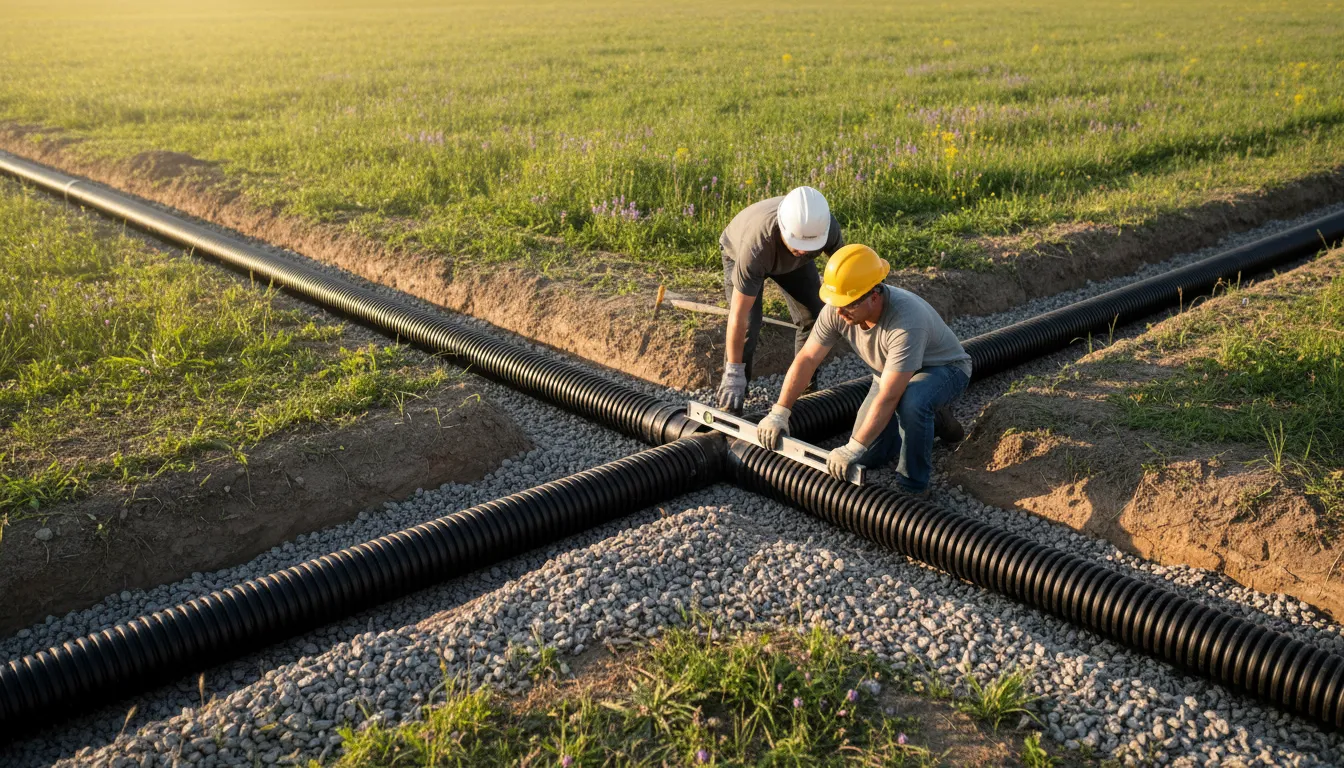
The drain field is the final and most crucial stage of a conventional septic system. After solids settle in the septic tank, liquid effluent flows into a network of perforated pipes buried in trenches filled with gravel or other aggregate. This effluent slowly percolates into the soil, where natural processes filter and treat it before it rejoins the groundwater.
In New Mexico, common signs of drain field failure include:
- Sewage odors in the yard or home.
- Soggy, spongy, or overly green grass over the drain field area.
- Slow-draining or backing-up household fixtures.
- Standing wastewater or surfacing sewage.
When these issues arise, a repair or full replacement is often necessary. The specific approach depends on the cause of failure, local soil conditions, and state regulations.
New Mexico Regulations for Septic System Work
All work on septic systems, including drain field repairs and replacements, is regulated by the New Mexico Environment Department (NMED) under the Liquid Waste Program. Compliance is not optional; it's legally required to protect water quality and public health.
Key Regulatory Requirements
- Permits Are Mandatory: Any new installation, modification, repair, or replacement of a septic system requires a permit from NMED. You cannot legally begin construction without one.
- Property Transfer Inspections: New Mexico law mandates that all septic systems be inspected upon the transfer of property 1. If the inspection reveals a failure, the system must be repaired or replaced to current code standards before the sale can proceed.
- System Sizing and Setbacks: Conventional septic systems require a minimum lot size of 0.75 acres. Furthermore, drain fields must be located at least 100 feet from any stream, well, or other water source 2.
- Inspections: NMED must inspect new, modified, or repaired systems before they are backfilled and put into use.
The Permit Application Process
To obtain a permit for drain field work, you or your contractor must submit an application to NMED with several key documents:
- A detailed site plan showing the proposed drain field location, property lines, wells, and water sources.
- A professional soil analysis and percolation test report.
- A floor plan of the home to determine the required system size (based on number of bedrooms).
- Proof of land ownership.
Permit fees are set by the state. For a conventional system (which includes a standard drain field), the fee is $325 for a design flow of 1,001 to 2,000 gallons per day. Alternative or advanced treatment systems, which may be required in difficult soils, have fees starting at $450 3. These are state fees only and do not include any contractor costs for installation or materials.
Find the perfect drain field repair companies for your needs
Get personalized recommendations and expert advice
Options for Drain Field Repair vs. Replacement
Not all drain field problems require a completely new system. A qualified professional can diagnose the issue and recommend the most effective solution.
Potential Repair Strategies
- Jetting and Cleaning: High-pressure water jetting can sometimes clear minor blockages in the distribution pipes.
- Adding a New Trench ("Spot Repair"): If only a portion of the drain field has failed, it may be possible to add a new replacement trench in a different area of the property, provided there is sufficient space and the overall system design can accommodate it. This still requires a permit from NMED.
- Advanced Treatment Systems: Installing an aerobic treatment unit (ATU) or other advanced pre-treatment component can significantly improve effluent quality, allowing it to be dispersed in a smaller area or in soils that would not support a conventional drain field. This can be a solution for repair on a constrained lot.
When Full Replacement is Necessary
A complete drain field replacement is typically required when:
- The entire soil absorption area is clogged and no longer percolating.
- The existing field is in a location that violates current setback rules (e.g., too close to a well installed after the original system).
- The property lacks the space for a compliant expansion or spot repair.
- The system is old and the components have structurally failed.
Replacement involves designing and installing an entirely new drain field in a compliant location on the property, which will require a new permit, soil testing, and full inspection.
Can You Do It Yourself? Homeowner Installation in NM
New Mexico is one of the few states that allows homeowners to install or repair their own septic system, including the drain field 4 5. However, there are strict rules:
- Qualification Test: The homeowner must pass a written examination administered by NMED to prove understanding of the regulations and proper construction techniques.
- No Paid Help: A qualifying homeowner cannot pay anyone to assist with the construction unless that person is a licensed septic system contractor. Family or friends may provide unpaid labor.
- Full Compliance: The homeowner-installed system must meet all the same design, setback, and construction standards as a contractor-installed system and will undergo the same NMED inspections 6.
Given the complexity, heavy equipment needs, and potential for costly mistakes, most homeowners opt to hire a licensed professional.
Maintaining Your New or Repaired Drain Field
Protecting your investment after a repair or replacement is essential. Proper maintenance can extend the life of your drain field for decades.
- Regular Pumping: Have your septic tank pumped every 3 to 5 years by a licensed pumper to prevent solids from escaping into and clogging the drain field 7 8.
- Conserve Water: Spread out laundry loads and fix leaks to avoid hydraulically overloading the drain field.
- Protect the Area: Never drive or park vehicles over the drain field. Do not pave over it or plant trees and shrubs with deep roots in the area.
- Divert Water: Ensure roof gutters, sump pumps, and surface runoff are directed away from the drain field to keep it from becoming saturated.
Staying compliant with these maintenance practices helps you avoid fines and ensures your system functions properly 9.
Choosing a Professional for Your Project
For most homeowners, hiring a certified and experienced contractor is the best path forward. Look for professionals who:
- Are familiar with NMED's permitting process and can handle the paperwork.
- Conduct thorough site and soil evaluations.
- Provide clear, detailed quotes and explain the proposed solution.
- Have positive references and a good standing with the state.
A properly functioning drain field is key to a healthy home and environment. By understanding New Mexico's specific rules and processes, you can make informed decisions to address system failures effectively and ensure long-term compliance.
Frequently asked questions
Sources
Footnotes
-
Property Transfer Evaluations - New Mexico Environment Department - https://www.env.nm.gov/septic/property-transfer-evaluations/ ↩
-
New Mexico Septic Regulations Are a Big Deal! - https://www.swanrealtyinc.com/blog/new-mexico-septic-regulations-are-big-deal/ ↩
-
Apply for a Permit - New Mexico Environment Department - https://www.env.nm.gov/septic/apply-for-a-permit/ ↩
-
Homeowners Information - https://www.env.nm.gov/septic/information-for-homeowners/ ↩
-
New Mexico Septic Regulations, A Guide For Homeowners - https://www.swanrealtyinc.com/blog/new-mexico-septic-regulations/ ↩
-
Liquid Waste Permitting Process - https://www.env.nm.gov/septic/liquid-waste-permitting-process/ ↩
-
Septic Systems and Private Wells - NM-Tracking - https://nmtracking.doh.nm.gov/environment/water/SepticSystems.html ↩
-
Aprill 2022: New Mexico Septic Regulations Area Big Deal! - https://questanews.com/aprill-2022-new-mexico-septic-regulations-area-big-deal/ ↩
-
Stay Compliant: Avoid Fines with Septic System Regulations - https://smartsepticpros.com/blog/septic-system-regulations/ ↩