Find the Best Drain Field Repair Companies for Your Business
No obligation • Fast responses • Nationwide coverage

Why you can trust Septic Spot
Septic Spot is a leading United States resource for understanding and comparing septic services. Our editors review providers using consistent criteria and verify key business details. Listings and scores are independent, and companies cannot pay to influence our content.
Search providers near you
Top Drain Field Repair Companies in Albuquerque, New Mexico Ranked
A failing drain field is a serious issue for any Albuquerque home with a septic system. This critical component, also known as a leach field or absorption field, is responsible for safely dispersing treated wastewater into the soil. When it fails, it can lead to soggy yards, foul odors, and environmental contamination. Navigating the repair or replacement process involves strict state regulations, professional assessments, and significant investment. This guide explains the local requirements, costs, and steps to take to restore your property's wastewater system effectively and legally.
Understanding Your Albuquerque Drain Field
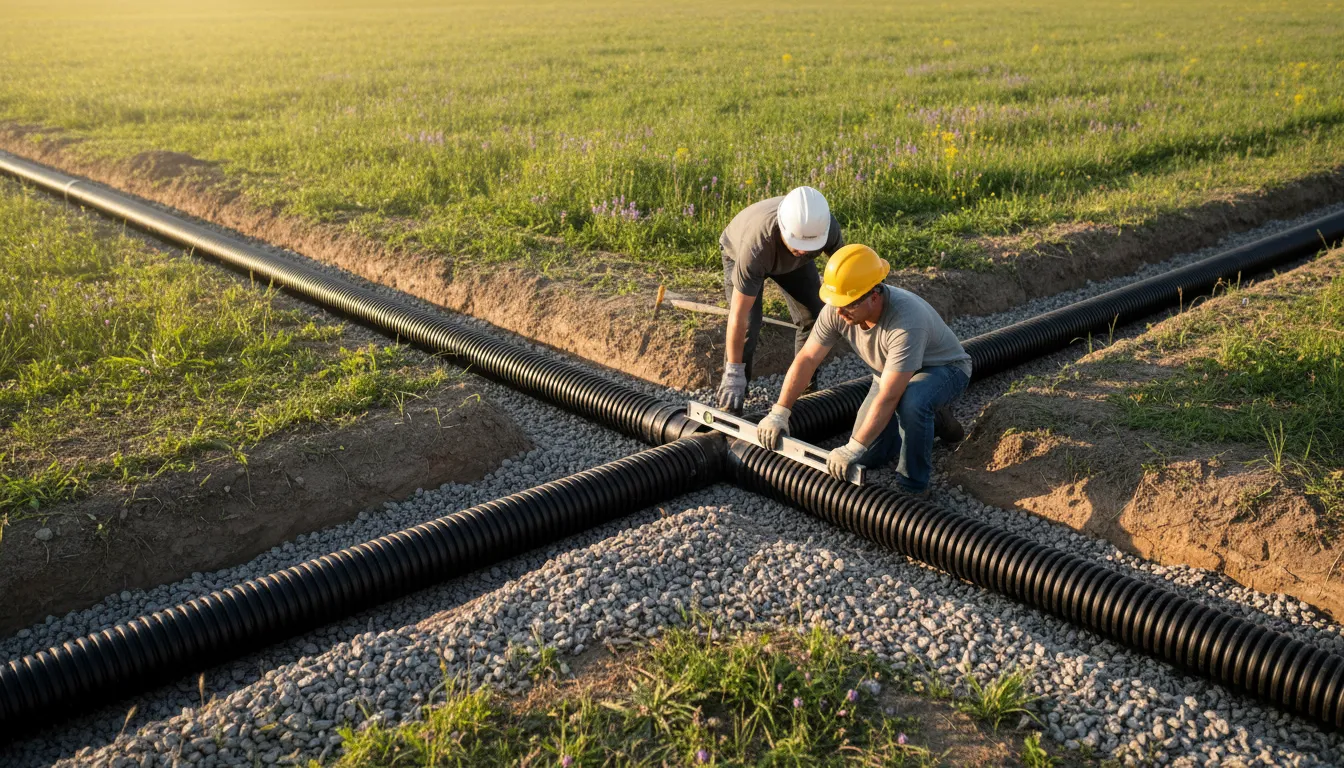
The drain field is the final stage of a conventional septic system. After solids settle in the tank, liquid effluent flows into a network of perforated pipes buried in trenches filled with gravel. This effluent slowly percolates through the soil, where natural processes provide final treatment. In Albuquerque and across New Mexico, the arid climate and specific soil types-from sandy loams to dense clay-profoundly impact how a drain field functions and how it must be designed.
Common signs of leach field failure include:
- Sewage odors in the yard or home.
- Spongy, soggy, or standing water over the field area, even in dry weather.
- Slow-draining sinks and toilets, or plumbing backups.
- Unusually lush, green grass growing over the field.
If you notice these signs, immediate action is required to protect your health, your property value, and the local groundwater.
New Mexico's Regulatory Landscape
All septic system work in Albuquerque falls under the authority of the New Mexico Environment Department (NMED). The state has clear, non-negotiable rules to protect public health and water resources.
Permits Are Mandatory: You must obtain a Permit to Construct from the NMED before beginning any repair or replacement work on your septic absorption field. Starting work without a permit can result in fines and orders to remove improperly installed work.
Licensed Professionals Required: With very limited exceptions for qualifying owner-builders, all septic system construction, including leach field work, must be performed by a licensed professional. New Mexico licenses include MM-1 (Master Mechanical), MS-1 (Master Septic), and others. Hiring a licensed contractor ensures the work meets state code.
Property Transfer Inspections: If you are buying or selling a home with a septic system in New Mexico, a mandatory inspection by the NMED is required. The system must pass this inspection for the property transfer to proceed. This rule makes maintaining a functional drain field crucial for real estate transactions.
Key Factors Influencing Your Project
Several site-specific factors will determine the scope and cost of your drain field restoration.
Soil and Percolation Testing: The most critical factor is your soil's ability to absorb water. A licensed professional must conduct a percolation (or "perc") test to determine the soil's absorption rate. This test dictates the size and design of the replacement leach field-poorly draining clay soils require a much larger field than sandy soils.
Lot Size and Setbacks: New Mexico regulations generally require a minimum lot size of 0.75 acres for a conventional septic system1. Furthermore, strict setbacks must be maintained: the drain field must be at least 100 feet from any water well, stream, or property line. These rules can limit repair options on smaller or densely developed parcels.
System Type: A standard gravity-fed trench system is the most common and affordable. However, if your lot has a high water table, poor soil, or space constraints, you may need an advanced system like a pressurized dosing bed or an aerobic treatment unit (ATU). These systems provide enhanced treatment but come with a significantly higher price tag 2.
Find the perfect drain field repair companies for your needs
Get personalized recommendations and expert advice
The Step-by-Step Process for Repair or Replacement
Successfully navigating a drain field project involves a defined sequence of steps to ensure compliance and functionality.
- Professional Assessment: The first step is to hire a licensed septic professional or inspector. They will diagnose the cause of failure, which could be a clogged pipe, crushed lines, or a biomat buildup. They will also determine if a partial repair is possible or if a full replacement is necessary.
- Soil Testing and System Design: Your contractor will perform the required percolation test. Using these results, they will design a new drain field that meets NMED standards for your specific soil conditions and household size3.
- Obtain the NMED Permit: Your licensed contractor will typically handle the permit application process, submitting the system design and site plan to the local NMED office for a Permit to Construct 4. Do not proceed until this permit is in hand.
- Installation: The old, failed field is excavated. The new trenches are dug, gravel is laid, and new perforated pipes are installed according to the approved design. The type of system (gravity, pressurized, etc.) will be installed during this phase.
- Final Inspection: Once installation is complete but before the trenches are backfilled, you or your contractor must schedule a final inspection with the NMED. The inspector must approve the work before it can be covered with soil 5.
Cost Considerations for Albuquerque Homeowners
The cost to address a failing leach field in Albuquerque varies widely based on the factors above. It's one of the most significant investments a homeowner with a septic system may face.
- Drain Field Replacement Only: If the septic tank is still functional, replacing just the absorption field typically ranges from $3,000 to $10,000 or more. The final cost depends heavily on the size (linear feet of trench needed) and the soil type, which dictates the field's dimensions6 7.
- Complete System Replacement: If the tank is also old or damaged, replacing the entire septic system-including tank and leach field-can cost between $15,000 and $24,000+ for a conventional system. Advanced treatment systems can push costs even higher8 9.
- Material and Fee Breakdown: Lateral pipes for the field itself cost approximately $9 to $12 per linear foot10. You must also budget for permit fees from the NMED, soil testing costs, and the labor for excavation and installation.
While costly, a properly permitted and installed drain field replacement is a long-term investment that protects your property and complies with state law, avoiding future liabilities and ensuring your home's wastewater system operates safely for years to come.
Frequently asked questions
Sources
Footnotes
-
New Mexico Septic Regulations, A Guide For Homeowners - https://www.swanrealtyinc.com/blog/new-mexico-septic-regulations/ ↩
-
Septic Systems and Private Wells - NM-Tracking - https://nmtracking.doh.nm.gov/environment/water/SepticSystems.html ↩
-
FACTSHEET NEW MEXICAN LIQUID WASTE AND SEPTIC ... - https://www.amigosbravos.org/wp-content/uploads/2020/07/Fact-Sheet-Liquid-Waste-Septic-Tanks.pdf ↩
-
Apply for a Permit - New Mexico Environment Department - https://www.env.nm.gov/septic/apply-for-a-permit/ ↩
-
SEPTIC SYSTEM INSPECTIONS IN NEW MEXICO - https://keeptheriogrand.org/wp-content/uploads/2021/09/SEPTIC_INSPECTIONS_SQT_04242017.pdf ↩
-
Homeowners Information - https://www.env.nm.gov/septic/information-for-homeowners/ ↩
-
How Much Does A Septic System Cost? - https://uniquedrainseptic.com/blogs/resources/how-much-does-a-septic-system-cost ↩
-
How much does it cost for a new septic and drain field? Just an ... - https://www.facebook.com/groups/204486930758046/posts/1461789831694410/ ↩
-
How Much Does It Cost to Replace a Septic System? - https://alphaenvironmental.net/blog/how-much-cost-replace-septic-system/ ↩
-
Cost to Install a Septic System - https://www.scorpionsepticservices.com/blog/how-much-does-it-cost-to-install-a-septic-system ↩