Find the Best Drain Field Repair Companies for Your Business
No obligation • Fast responses • Nationwide coverage

Why you can trust Septic Spot
Septic Spot is a leading United States resource for understanding and comparing septic services. Our editors review providers using consistent criteria and verify key business details. Listings and scores are independent, and companies cannot pay to influence our content.
Search providers near you
Best Drain Field Repair Companies in Nevada Ranked
A failing drain field is a serious issue for any Nevada homeowner with a septic system. It can lead to sewage backups, soggy yards, and environmental contamination. Drain field repair or replacement is a regulated process that requires navigating local health codes, securing permits, and hiring licensed professionals. This guide explains the critical steps, costs, and regulations for managing drain field issues in Nevada, helping you understand the process and connect with qualified local experts to restore your system's function.
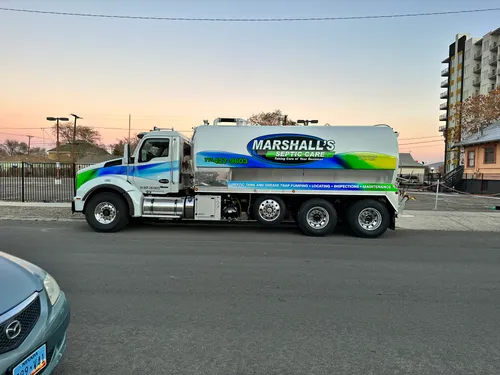
Marshalls Septic Care
4250 Reno Hwy #8377, Fallon, NV 89406
Marshalls Septic Care is a family-owned and operated septic service provider based in Reno, NV. The company offers septic tank inspections, septic system repairs, and drain field repair or replacement. They use camera septic inspections with fiber-optic technology to thoroughly assess septic systems and identify potential issues. Marshalls Septic Care also installs septic risers to facilitate easier maintenance without extensive digging. The business emphasizes well-maintained heavy equipment to support their services and has established itself as a key septic care provider in Northern Nevada.
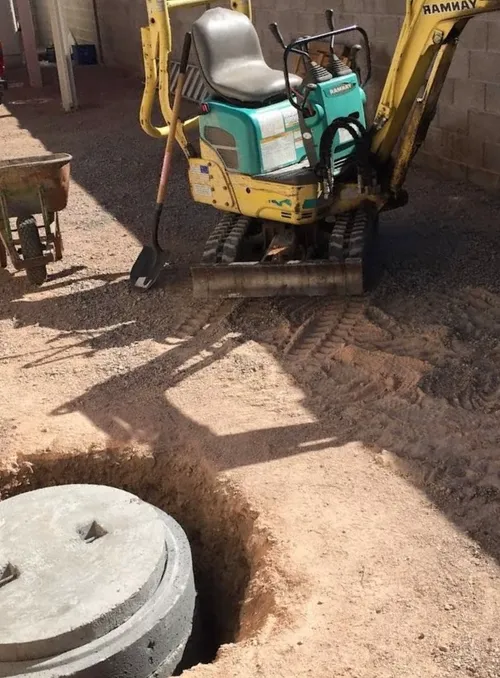
Reno Septic Service
Reno, NV
Reno Septic Service provides a full range of septic system services in Reno, NV, and surrounding areas including Sparks, Carson City, and Truckee. They handle septic tank pumping, installation, inspections, repairs, and sewer line services for both residential and commercial properties. Their team is licensed, bonded, and insured, equipped to manage projects of any size. Reno Septic Service offers specialized capabilities such as trenchless sewer line replacement and backflow testing to ensure system compliance and functionality. They provide 24/7 emergency services to address urgent septic issues promptly.
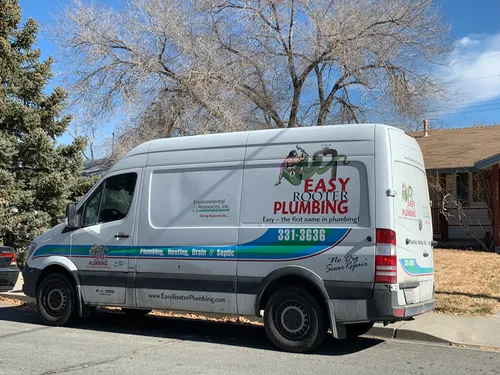
Easy Rooter Plumbing, Drain and Septic
Reno, NV
Easy Rooter Plumbing, Drain and Septic has been serving residential, commercial, and industrial customers in Reno, NV, since 1979. They offer a wide range of plumbing and septic services, including septic tank pumping, inspection, and repair, as well as drain field repair and replacement. The company uses advanced techniques such as hydro jetting and trenchless pipe repair to address plumbing challenges specific to Reno's climate and infrastructure. Their team is available 24/7 for emergency plumbing services, ensuring prompt assistance whenever needed.
Understanding Your Drain Field in Nevada's Environment
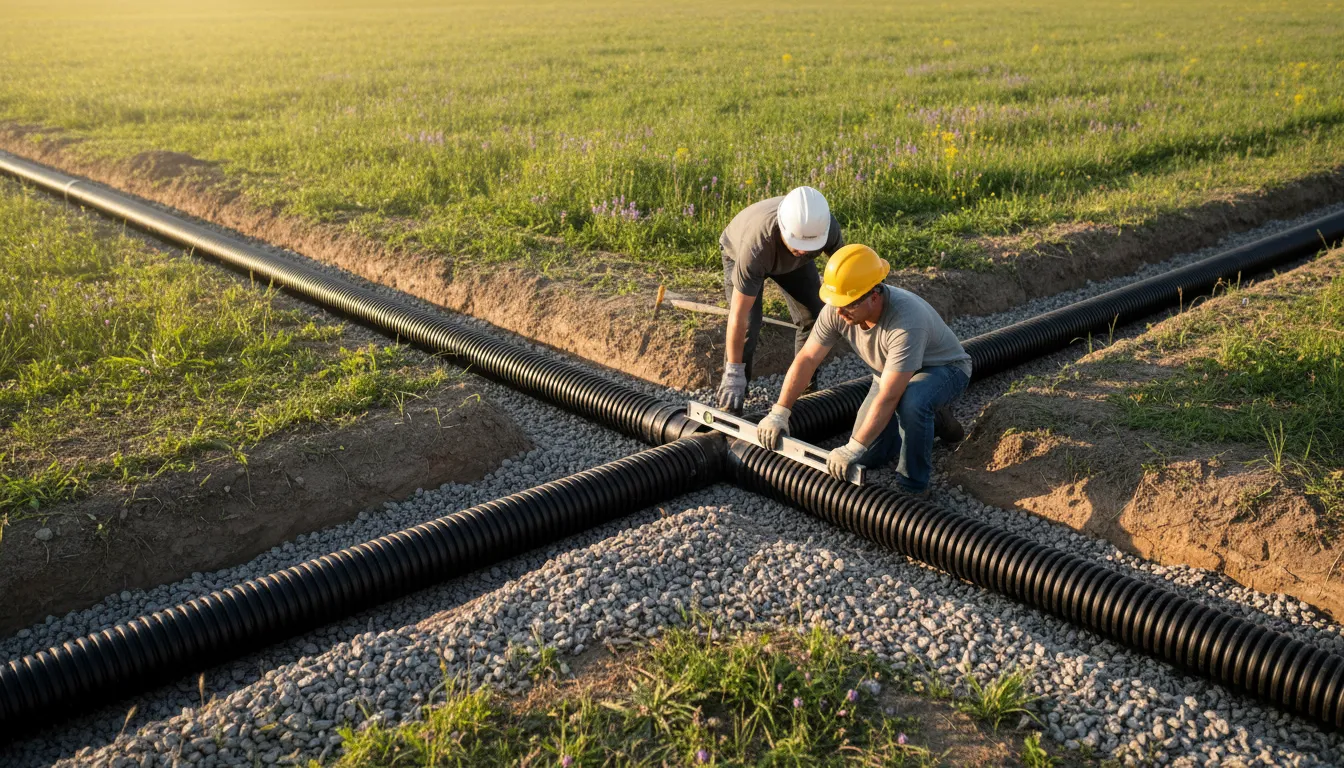
The drain field, also known as a leach field or absorption area, is the final and most crucial stage of your onsite wastewater system. After solids settle in the septic tank, liquid effluent flows into a network of perforated pipes buried in trenches filled with gravel. This effluent slowly percolates into the soil, where natural processes filter and treat it before it rejoins the groundwater.
Nevada's arid climate and varied soil types-from sandy desert soils to dense clay-present unique challenges for drain fields. Proper function depends heavily on the soil's ability to absorb and treat effluent. Many system failures are due to soil compaction, hydraulic overloading from excessive water use, or a natural decline in the soil's absorptive capacity over decades of use.
Signs You Need Drain Field Repair or Replacement
Recognizing early warning signs can prevent a complete system failure and more costly repairs. Contact a professional if you notice:
- Sewage Odors: Persistent smells of sewage in the yard, especially near the drain field area.
- Soggy Ground or Surfacing Effluent: Wet, spongy, or standing water over the drain field, even during dry weather. This is a clear sign the soil is saturated and cannot absorb more liquid.
- Slow Drains and Backups: Gurgling pipes, slow-draining sinks and toilets, or sewage backups in the home. While this could indicate a full tank, it often points to a drain field blockage.
- Unusually Green Grass: Patches of grass over the drain field that are much lusher and grow faster than the rest of the lawn, indicating a nutrient-rich effluent surge.
- Failed Inspection: A mandatory inspection during a property transfer will reveal if the drain field is failing and requires repair before the sale can proceed.
Nevada's Regulatory Landscape for Drain Field Work
All work on a septic system's drain field in Nevada is strictly regulated. The governing authority depends on your county:
- Southern Nevada Health District (SNHD): Oversees Clark County (Las Vegas area).
- Northern Nevada Public Health (NNPH): Oversees Washoe County (Reno area) and Storey County.
- Nevada Division of Environmental Protection (NDEP): Provides statewide oversight and model regulations, often adopted by local districts.
- Other Local Districts: Rural counties have their own environmental health departments (e.g., Central Nevada Health District).
A permit is mandatory for any repair or replacement of a drain field. The process typically involves:
- Site Evaluation: A licensed professional must assess the soil and site conditions.
- Engineered Design: For major repairs or full replacements, Nevada often requires a system design prepared by a registered professional engineer (P.E.), especially for alternative systems or those with a high daily flow 1 2.
- Permit Application: Your contractor will submit the design, site evaluation, and application to the local health authority.
- Installation & Inspection: The work must be performed by a licensed installer. Health authorities require an inspection of new or replaced systems before they are backfilled with soil.
Permits are generally valid for one year from the date of issue.
The Drain Field Repair and Replacement Process
Step 1: Professional Diagnosis
A specialist will perform tests, often including a "perc test" (soil permeability evaluation) and a thorough inspection of the existing system, to determine the exact cause and extent of failure.
Step 2: Exploring Repair Options
Not all failures require a full replacement. Possible repairs include:
- Jet Cleaning: High-pressure water jets can clear minor blockages in drain lines.
- Trench Rejuvenation: Excavating access points to add new gravel or replace a portion of clogged pipes.
- Adding a New Field ("Curtain Drain"): Installing an additional drain field line to share the hydraulic load with the original field.
Step 3: Full Drain Field Replacement
If repairs are not viable, a full replacement is necessary. This involves:
- Abandoning the Old Field: The existing trenches are properly cleaned and filled with soil.
- Siting a New Field: Identifying a new, suitable area on your property that meets all setback requirements from wells, property lines, and structures.
- Installing the New System: Excavating new trenches, laying gravel and perforated pipe, and covering with soil and topsoil.
Find the perfect drain field repair companies for your needs
Get personalized recommendations and expert advice
Costs of Drain Field Work in Nevada
Costs vary widely based on property size, soil conditions, system size, and permit fees. The following are general estimates based on available data:
- System Inspection (for property transfer): $500 - $1,200 3.
- Septic Tank Pumping: $300 - $600 (often required during an inspection if not done in the last 12 months).
- Minor Repairs: (e.g., replacing a baffle) $500 - $1,000.
- Drain Field Repairs: Costs can range from a few thousand dollars for localized fixes.
- Full Drain Field Replacement: Often exceeds $20,0004. This high cost reflects the engineering, heavy machinery, materials, and extensive labor required.
- Permit Fees: Vary by county but can range from approximately $100 to $800 or more, depending on the scope of work 5 6.
Property Transfers and Mandatory Inspections
In Nevada, a septic system inspection (often called a "certification") is typically required when selling a home. This inspection includes locating and digging up tank lids to check sludge levels (which should be one-third or less of the tank's volume) and evaluating the drain field's function 7.
If the drain field fails this inspection, the property owner is obligated to obtain a repair permit and fix the system before the sale can be finalized8 9. Maintaining records of all maintenance, pumping, and past permits is invaluable during this process.
Maintaining Your Drain Field to Avoid Failure
Preventative maintenance is the most cost-effective strategy:
- Pump Regularly: Have the septic tank pumped every 3-5 years to prevent solids from escaping into the drain field 10 11.
- Conserve Water: Spread out laundry loads, fix leaks, and use water-efficient fixtures to avoid hydraulically overloading the field.
- Protect the Area: Never drive, park, or build structures (sheds, patios) over the drain field. The weight compacts the soil, and roots can damage pipes 12 13.
- Mind What You Flush: Only human waste and toilet paper should go down the drain. Avoid chemicals, grease, wipes, and feminine hygiene products.
Disclaimer: Regulations are subject to change. For instance, as of late 2025/early 2026, Southern Nevada was reviewing potential new 5-year permit renewal requirements 14 15. Always consult your local health authority and licensed professionals for the most current rules.
Frequently asked questions
Sources
Footnotes
-
Onsite Sewage Disposal System Program | NDEP - https://ndep.nv.gov/water/water-pollution-control/permitting/onsite-sewage-disposal-system-program ↩
-
Design Criteria for Septic Tanks and Individual Disposal Systems - https://ndep.nv.gov/uploads/water-wpc-resources-publications-docs/wts22-rev-5-2017.pdf ↩
-
2026 Septic Inspection Costs | Tank, System, & Title 5 - https://homeguide.com/costs/septic-tank-inspection-cost ↩
-
New Septic Rules in 2025: What Nevada Homeowners Need ... - https://www.thebrenkusteam.com/blog/nevada-septic-rules-2025-homeowners-guide ↩
-
INDIVIDUAL SEWAGE DISPOSAL SYSTEM GUIDE - https://www.centralnevadahd.org/wp-content/uploads/2024/04/ISDS_CNHD2024.pdf ↩
-
Septic System | Nevada County, CA - https://www.nevadacountyca.gov/2520/Septic-System ↩
-
nevada health authority - DPBH (nv.gov) - https://www.dpbh.nv.gov/siteassets/boards/boh/r-nnph-septic-regulation-changes-final.pdf ↩
-
Septic Systems & Liquid Waste - Northern Nevada Public Health - https://www.nnph.org/programs-and-services/environmental-health/land-development/septic-liquid-waste.php ↩
-
How to Get Septic to Pass Inspection - https://www.guardianangelinspections.com/how-to-get-septic-to-pass-inspection ↩
-
Certification Procedures for Individual Sewage Disposal System ( ... - https://www.southernnevadahealthdistrict.org/permits-and-regulations/sewage-septic-disposal-systems-isds/residential-isds-permits/certification-procedures-for-individual-sewage-disposal-system-isds-and-or-water-well/ ↩
-
Nevada Septic Solutions Guide | Advanced Septic Systems in Nevada - https://www.nexgenseptics.com/nevada-septic-solutions-guide/ ↩
-
Stay Compliant: Avoid Fines with Septic System Regulations - https://smartsepticpros.com/blog/septic-system-regulations/ ↩
-
Septic System 101 - Homeowners Manual - https://www.mohave.gov/departments/development-services/environmental-qualitywaste-disposal/documents/septic-system-101-homeowners-manual/ ↩
-
Frequently Asked Questions - Southern Nevada Health District - https://www.southernnevadahealthdistrict.org/permits-and-regulations/sewage-septic-disposal-systems-isds/faq/ ↩
-
Septic tanks regulations in Southern Nevada - Facebook - https://www.facebook.com/groups/519080815467071/posts/1719665848741889/ ↩