Find the Best Drain Field Repair Companies for Your Business
No obligation • Fast responses • Nationwide coverage

Why you can trust Septic Spot
Septic Spot is a leading United States resource for understanding and comparing septic services. Our editors review providers using consistent criteria and verify key business details. Listings and scores are independent, and companies cannot pay to influence our content.
Search providers near you
Top Drain Field Repair Companies in Reno, Nevada Ranked
A failing drain field, also known as a leach field or absorption field, is a serious issue for any home with a septic system. When this critical component stops properly filtering and dispersing wastewater, it can lead to sewage backups, foul odors, and environmental contamination. In Reno, managing these systems is a regulated process overseen by local health authorities. This guide explains the local requirements, the repair and replacement process, and how to find qualified professionals to restore your property's wastewater treatment system.
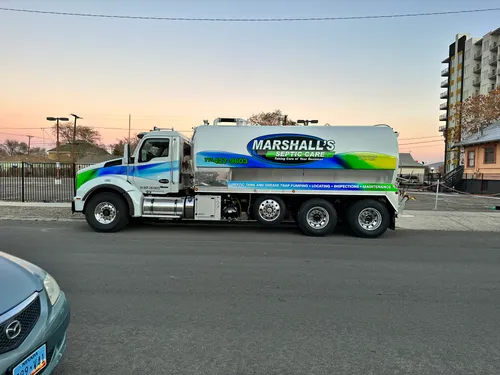
Marshalls Septic Care
4250 Reno Hwy #8377, Fallon, NV 89406
Marshalls Septic Care is a family-owned and operated septic service provider based in Reno, NV. The company offers septic tank inspections, septic system repairs, and drain field repair or replacement. They use camera septic inspections with fiber-optic technology to thoroughly assess septic systems and identify potential issues. Marshalls Septic Care also installs septic risers to facilitate easier maintenance without extensive digging. The business emphasizes well-maintained heavy equipment to support their services and has established itself as a key septic care provider in Northern Nevada.
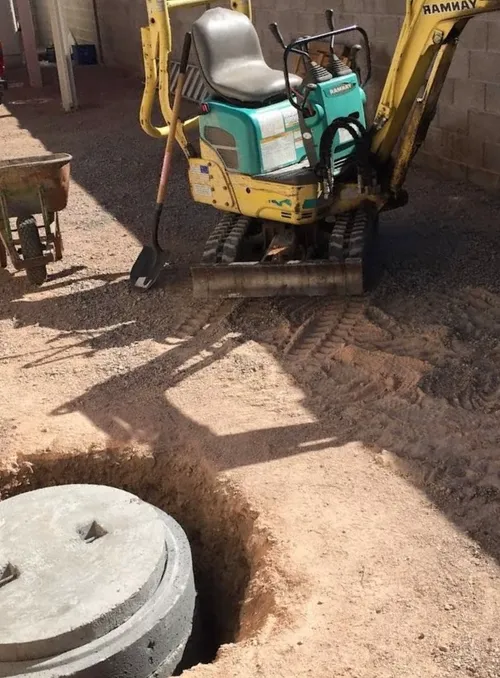
Reno Septic Service
Reno, NV
Reno Septic Service provides a full range of septic system services in Reno, NV, and surrounding areas including Sparks, Carson City, and Truckee. They handle septic tank pumping, installation, inspections, repairs, and sewer line services for both residential and commercial properties. Their team is licensed, bonded, and insured, equipped to manage projects of any size. Reno Septic Service offers specialized capabilities such as trenchless sewer line replacement and backflow testing to ensure system compliance and functionality. They provide 24/7 emergency services to address urgent septic issues promptly.
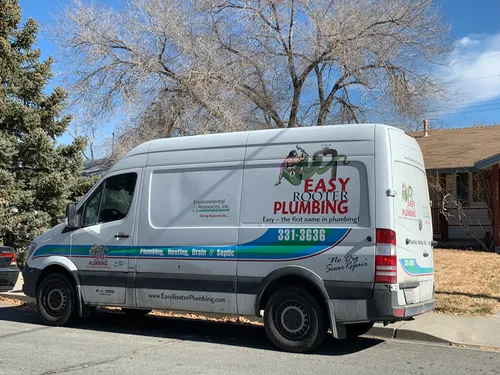
Easy Rooter Plumbing, Drain and Septic
Reno, NV
Easy Rooter Plumbing, Drain and Septic has been serving residential, commercial, and industrial customers in Reno, NV, since 1979. They offer a wide range of plumbing and septic services, including septic tank pumping, inspection, and repair, as well as drain field repair and replacement. The company uses advanced techniques such as hydro jetting and trenchless pipe repair to address plumbing challenges specific to Reno's climate and infrastructure. Their team is available 24/7 for emergency plumbing services, ensuring prompt assistance whenever needed.
Understanding Your Septic System's Drain Field
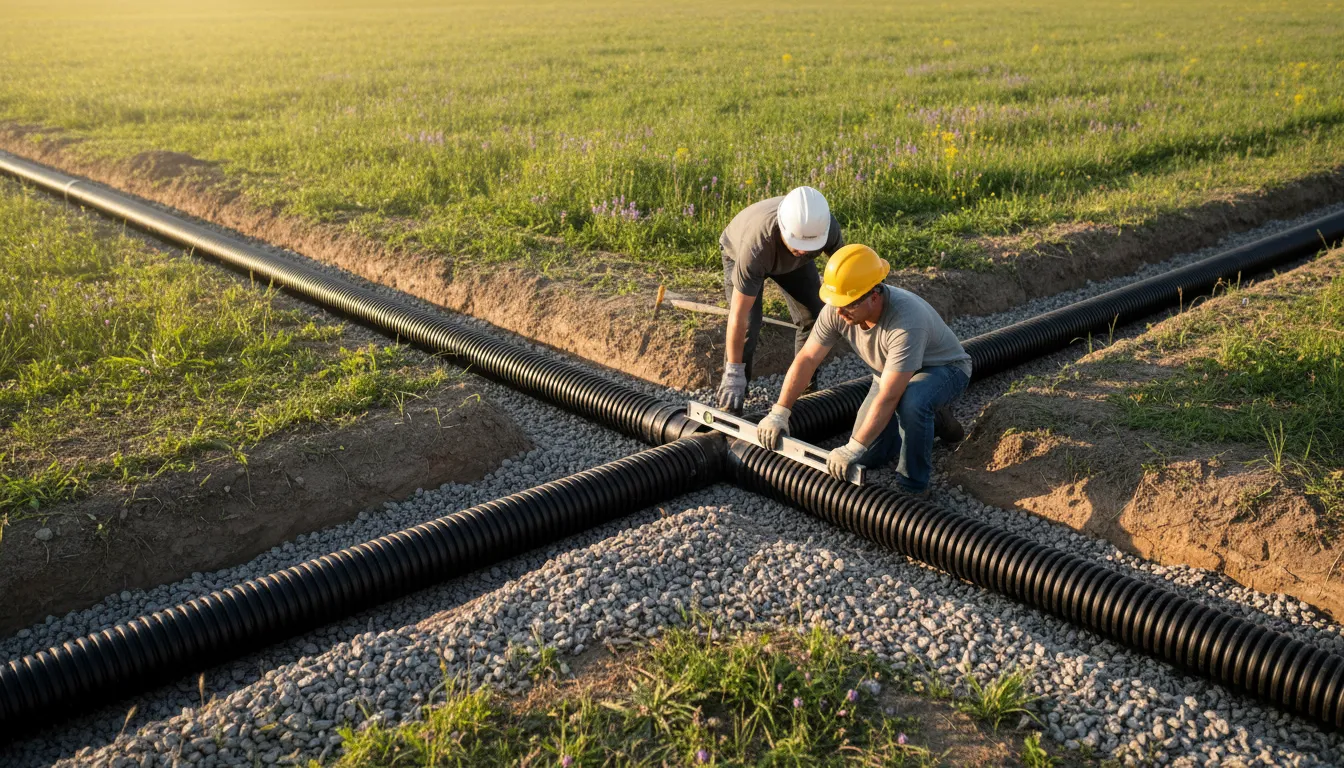
The drain field is the final and most crucial stage of a conventional septic system. After solids settle in the tank, liquid effluent flows out into a network of perforated pipes buried in trenches filled with gravel. This effluent slowly percolates through the soil, where natural processes remove harmful bacteria, viruses, and nutrients before the water rejoins the groundwater. A healthy leach field is essential for protecting both your home and the local environment, especially in areas like Reno where groundwater protection is paramount.
Common signs of a failing absorption field include:
- Sewage surfacing in your yard, particularly near the field area.
- Persistent foul odors around the drain field or tank.
- Unusually lush, green, or soggy grass over the field.
- Slow drains and gurgling plumbing fixtures throughout the home.
- Sewage backups into the home's lowest drains.
Reno's Regulatory Landscape: Northern Nevada Public Health
All septic system work in Reno and Washoe County is regulated by Northern Nevada Public Health (NNPH), formerly the Washoe County Health District (WCHD). They enforce state and local codes to ensure repairs and replacements protect public health and water quality. You cannot begin any work on your leach field without first obtaining the proper permits from NNPH.
Key regulations homeowners must know include:
- Permitting Portal: All applications for septic tank replacements, repairs, and abandonments must be submitted online through the Onenv.us portal.
- Designated Repair Area: Every permitted septic system must have a designated, undeveloped area suitable for a future replacement field. This space must meet all current setback requirements 1.
- Mandatory Inspections: NNPH Environmental Health staff conduct a site visit for every permit application to evaluate soil conditions, groundwater levels, and required setbacks from wells, property lines, and drainages.
- Setback Requirements: Strict distances must be maintained. For example, the minimum setback from a septic system to a water well is typically 100 feet, and to drainages is 25 feet 2.
- Engineer Requirements: If the existing system is not code-compliant, or in complex cases involving difficult soil or slope, a Nevada-licensed professional engineer may be required to design the repair or replacement.
The Step-by-Step Process for Repair or Replacement
1. Initial Assessment and Inspection
The process begins with a professional evaluation to determine the exact problem. A qualified septic service provider will:
- Locate and Uncover: Find and expose the septic tank and distribution box lids, which may require specialized locating equipment 3.
- Pump and Inspect: The tank is pumped to allow a thorough internal inspection of baffles, tees, tank walls, and the outlet structure 4.
- Assess the Field: The drain field area is checked for visual signs of failure, and a hydraulic load or dye test may be performed to see if effluent is properly absorbing or surfacing 5.
2. The Permit and Design Phase
If replacement or significant repair is needed, the formal process with NNPH begins.
- Submit Application: The property owner or their contractor submits a permit application via Onenv.us. NNPH notes a typical 7-day turnaround time for plan reviews for repairs and replacements.
- Test Trench Inspection: This is often the first required step. An NNPH inspector visits to examine a dug trench, looking for restrictive soil layers, seasonal high groundwater (indicated by soil color), and evaluating the soil profile and percolation rate 6. Soil that percolates too slowly (e.g., greater than 60 minutes per inch) will require an engineer's design 7.
- Finalize Design: Based on the site evaluation, a repair plan or a new leach field design is created, ensuring it fits within the designated repair area and meets all setbacks.
3. Installation and Final Approval
Once permitted, the construction phase can start.
- System Installation: For a full replacement, the old field may be abandoned in place, and a new network of trenches and piping is installed in the approved repair area.
- Construction Inspection: NNPH will inspect the installation at various stages to ensure it matches the approved design and meets code standards.
- Final Approval: After passing all inspections, the system receives final approval from NNPH, and you will receive a record of the work for your property files.
Find the perfect drain field repair companies for your needs
Get personalized recommendations and expert advice
Costs Associated with Drain Field Work in Reno
Costs can vary widely based on soil conditions, system size, site accessibility, and the extent of the problem. It's important to get multiple estimates from licensed professionals. Based on available regional data:
- Drain Field Repair/Rejuvenation: Costs for repairing components like a damaged distribution box or adding rejuvenation techniques are generally lower than a full replacement but vary significantly.
- Full Drain Field Replacement: This is a major project. In the Reno area, a full leach field replacement often averages around $7,000, though this can be higher or lower depending on specific site factors 8.
- Septic Tank Replacement: If the tank also needs to be replaced, this can add roughly $3,000 to $10,000 to the total project cost 9.
- Permit and Inspection Fees: NNPH charges a septic permit renewal fee of approximately $226 every five years (about $45 annually). Fees for the initial permit and test trench inspection are part of the application process 10.
Choosing a Qualified Service Provider in Reno
Selecting the right contractor is critical for a compliant and long-lasting solution. Look for professionals who:
- Are licensed by the state of Nevada to install and repair septic systems.
- Have extensive local experience and are familiar with NNPH procedures and the unique soils of the Reno area.
- Can provide references from recent projects.
- Will handle the entire process, including pulling permits and coordinating with NNPH inspectors.
- Offer clear, detailed written estimates and warranties on their work.
Northern Nevada Public Health (Environmental Health Services) is your primary resource for regulatory questions. They are located at 1001 E. Ninth St. in Reno and can be reached at (775) 328-2434. Their website and the Onenv.us portal are essential tools for property owners.
Frequently asked questions
Sources
Footnotes
-
Washoe County Health District (WCHD) Property Owner's Guidance ... - https://www.nnph.org/files/ehs/North_Valleys_Flood_Guidance.pdf ↩
-
OSSE and SEPTIC SYSTEMS COUNTY OF NEVADA - https://www.nevadacountyca.gov/2838/Did-you-Know ↩
-
Septic Inspection Process: What Homeowners Should Know ... - https://www.lunspro.com/vlog/the-septic-system-inspection-process-what-homeowners-should-know ↩
-
What to Expect During a Septic System Inspection - https://www.ableplumbingsolutions.com/what-to-expect-during-a-septic-system-inspection/ ↩
-
What To Expect During Your Septic Inspection - https://www.aeration-septic.com/blog/what-to-expect-during-your-septic-inspection/ ↩
-
INDIVIDUAL SEWAGE DISPOSAL SYSTEM GUIDE - https://www.centralnevadahd.org/wp-content/uploads/2024/04/ISDS_CNHD2024.pdf ↩
-
Effective Septic System Layout Guide for Homeowners - https://www.rciseptic.com/effective-septic-system-layout-a-practical-guide-for-homeowners ↩
-
Cost to Replace Septic Tank and Drain Field [2026 Data] | Angi - https://www.angi.com/articles/how-much-new-drain-fields-foot.htm ↩
-
New Septic Rules in 2025: What Nevada Homeowners Need ... - https://www.thebrenkusteam.com/blog/nevada-septic-rules-2025-homeowners-guide ↩
-
Septic Systems & Liquid Waste - Northern Nevada Public Health - https://www.nnph.org/programs-and-services/environmental-health/land-development/septic-liquid-waste.php ↩