Find the Best Drain Field Repair Companies for Your Business
No obligation • Fast responses • Nationwide coverage

Why you can trust Septic Spot
Septic Spot is a leading United States resource for understanding and comparing septic services. Our editors review providers using consistent criteria and verify key business details. Listings and scores are independent, and companies cannot pay to influence our content.
Search providers near you
Top Drain Field Repair Companies in Woonsocket, Rhode Island Ranked
A failing drain field is a serious issue for any homeowner with a septic system. When this critical component stops absorbing wastewater, it can lead to sewage backups, soggy yards, and significant environmental health risks. In Woonsocket, Rhode Island, repairing or replacing a leach field is a regulated process overseen by state and local authorities. This guide explains the steps, regulations, and key considerations to help you navigate the process of restoring your onsite wastewater treatment system.
Understanding Your Septic System's Drain Field
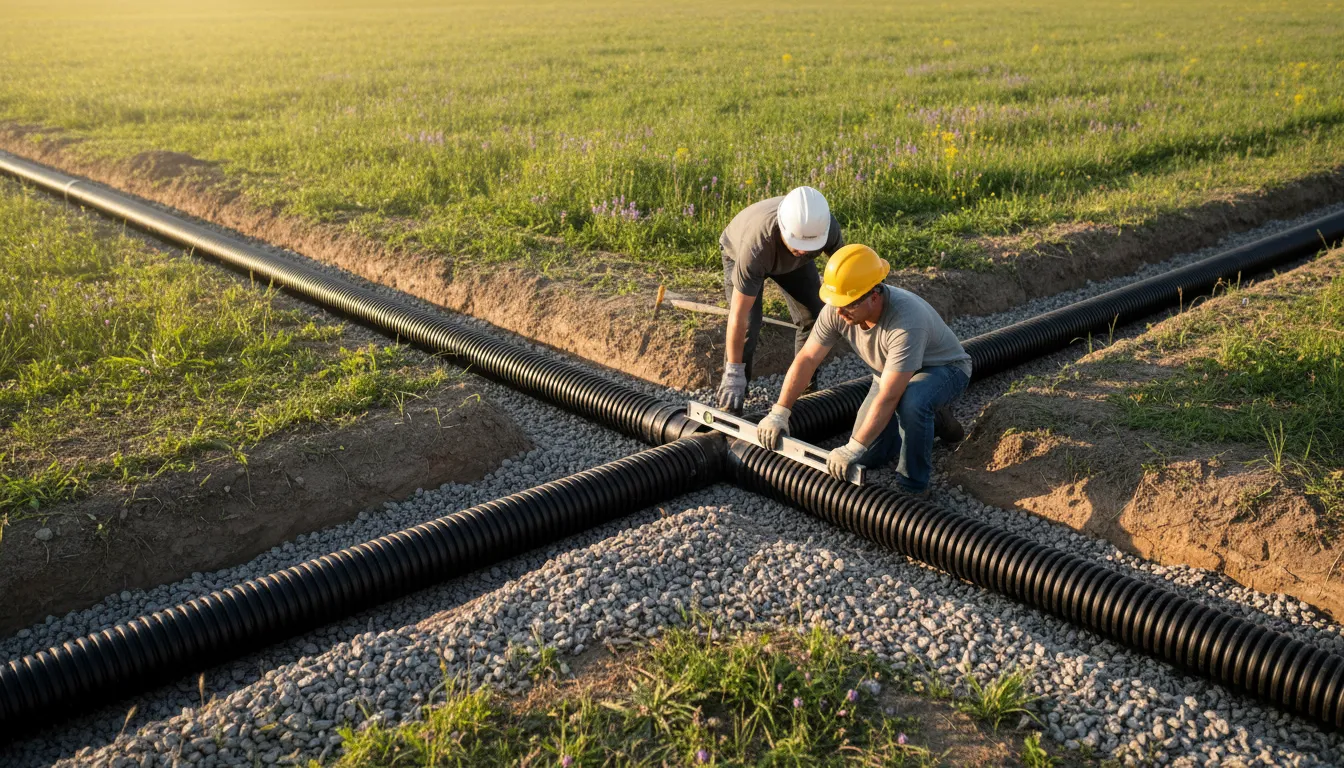
The drain field, also known as a leach field or absorption area, is the final stage of a septic system. After solids settle in the tank, liquid effluent flows into a network of perforated pipes buried in trenches filled with gravel. This effluent slowly percolates into the soil, where natural processes provide final treatment. A failure here means the soil can no longer absorb liquid, causing the system to back up.
Common signs of drain field failure include:
- Sewage odors or surfacing wastewater in the yard.
- Persistently soggy or spongy ground over the field area.
- Gurgling sounds in plumbing fixtures and slow drains throughout the home.
- Unusually green, lush grass over the field while surrounding grass is dry.
In Rhode Island, if a system fails, state law requires it to be repaired or replaced within one year-or sooner if it poses an immediate public health threat. Furthermore, cesspools must be replaced immediately if located within 200 feet of tidal water or public drinking water supplies, or upon the sale of the home 1.
The Regulatory Landscape in Rhode Island
All septic system work in Woonsocket falls under the jurisdiction of the Rhode Island Department of Environmental Management (RIDEM) and its Onsite Wastewater Treatment System (OWTS) rules 2. The local Woonsocket building or wastewater management office is also involved, as they must receive copies of all final approvals.
A critical first step is understanding that you cannot simply hire an excavator to dig a new field. State law requires the involvement of licensed professionals:
- A RIDEM-licensed system designer (Class I, II, or III) must assess the failure and create the repair plan.
- A RIDEM-licensed installer must perform the construction.
These regulations ensure the repair protects both your property and Rhode Island's groundwater.
Key Setback Requirements
Your property must have adequate space for a new or repaired absorption area that meets strict minimum setbacks from features like:
- Private well: 100 feet.
- Dwelling: 20 feet.
- Property line: 10 feet.
- In-ground pool: 25 feet 3.
A licensed designer will evaluate your site plan to ensure the proposed field location complies with all these requirements. If your existing failed field is in an unsuitable location (e.g., too close to a well), the new field may need to be placed in a completely different area of your yard.
Step-by-Step: The Repair & Replacement Process
Navigating a drain field project involves a series of defined steps from diagnosis to final approval.
1. Initial Assessment and System Locating
When problems arise, a licensed professional will first locate all system components-the tank, distribution box, and existing drain field lines-using as-built records or specialized inspection cameras 4. This determines the extent of the failure and whether a repair or full replacement is necessary.
2. Mandatory Soil Evaluation
This is a non-negotiable step in Rhode Island. The designer will conduct soil testing, which typically includes:
- Deep Hole Test: Excavates a pit to determine the seasonal high groundwater level and soil texture 5.
- Percolation (Perc) Test: Measures the soil's water absorption rate.
These tests cost approximately $1,300 on average and are crucial for sizing the new field correctly. If the groundwater table is too high, a standard conventional leach field may not be permitted, and an alternative (and often more expensive) system may be required 6.
3. System Design and Sizing
Using the soil data, the designer creates a site-specific plan. In Rhode Island, system sizing is based on the number of bedrooms in the home (using a standard of 115 gallons of wastewater per day per bedroom), not the home's square footage 7. The designer prepares detailed site plans showing property lines, structures, wells, and the proposed new system components.
4. Permit Application
The designer submits the "ISDS Application for Repair" along with the site plans and soil data to RIDEM for review 8. Permit fees typically range from $100 to $300 for repair permits. No construction can legally begin until RIDEM issues the permit.
5. Construction and Installation
Once permitted, the licensed installer excavates the new leach field according to the approved plans. This involves removing the old gravel (if necessary), laying new perforated pipes in gravel-filled trenches, and covering them with soil and a vegetative layer.
6. Final Inspection and Certification
After installation, a final inspection is conducted by RIDEM or an authorized agent to ensure compliance with the approved plan. Upon passing inspection, you will receive a Certificate of Conformance, which is the official approval document needed for your town records.
Find the perfect drain field repair companies for your needs
Get personalized recommendations and expert advice
Cost Considerations for Woonsocket Homeowners
The cost to address a failing leach field can vary widely based on soil conditions, system size, and the type of system required. Here's a general breakdown based on available data:
- Drain Field Replacement: The average cost is around $7,000.
- Full System Replacement: If the tank also needs replacement, total costs can range from $3,000 to over $10,000 9.
- Additional Costs: Remember to budget for the required soil evaluation (~$1,300) and permit fees ($100-$500) 10 11.
Financial Assistance: Rhode Island offers low-interest loan programs to help homeowners finance the repair or replacement of failing septic systems 12. Your licensed professional or RIDEM can provide information on current assistance programs.
Why Professional Guidance is Non-Negotiable
Attempting to bypass the formal process is not only illegal but also risky. An improperly installed leach field will fail again, leading to repeated costs and potential environmental contamination. A licensed Rhode Island OWTS professional ensures:
- Regulatory Compliance: Your project meets all RIDEM and local codes.
- Correct Sizing: The system is built to handle your household's wastewater flow.
- Long-Term Function: Proper installation maximizes the system's lifespan.
- Property Value Protection: A permitted, functioning system is essential for home sales.
Always consult with a licensed professional and RIDEM for the most current requirements before proceeding with any septic system work 13.
Frequently asked questions
Sources
Footnotes
-
Do You Need To Replace A Cesspool or Repair A Septic ... - https://charlestownri.gov/index.asp?SEC=57BE787A-1F23-406A-906B-4FBC5BCACF34&DE=2DA1EE12-56D5-41C2-A0FE-867381A2C166 ↩
-
Septic & Onsite Wastewater Treatment Systems - https://dem.ri.gov/environmental-protection-bureau/water-resources/permitting/septic-onsite-wastewater-treatment-owts ↩
-
Rhode Island Septic System Regulations for Homeowners - https://www.rockhouseconstruction.com/rhode-island-septic-system-regulations-for-homeowners ↩
-
Failed Septic on RI Home Inspection - Replacement - https://www.rockhouseconstruction.com/failed-septic-on-ri-home-inspection-replacement ↩
-
The Ultimate Guide to Replacing a Septic Drain Field - https://www.rciseptic.com/the-ultimate-guide-to-replacing-a-septic-drain-field ↩
-
fact sheet - Rhode Island Department of Environmental Management - https://dem.ri.gov/sites/g/files/xkgbur861/files/programs/benviron/water/permits/isds/pdfs/resssdfs.pdf ↩
-
Considering a New Septic System in RI? What to Expect - https://www.rockhouseconstruction.com/considering-a-new-septic-system-in-ri-what-to-expect ↩
-
Onsite Wastewater Treatment System Application for Repair - https://dem.ri.gov/sites/g/files/xkgbur861/files/programs/benviron/water/permits/isds/pdfs/repairfs.pdf ↩
-
Cost of Replacing a Septic System in Rhode Island - https://www.rockhouseconstruction.com/cost-of-replacing-a-septic-system-in-rhode-island ↩
-
Rhode Island Septic System Regulations for Homeowners - https://www.rockhouseconstruction.com/rhode-island-septic-system-regulations-for-homeowners ↩
-
Cost to Replace Septic Tank and Drain Field [2026 Data] | Angi - https://www.angi.com/articles/how-much-new-drain-fields-foot.htm ↩
-
Procedure to Repair or Replace - South Kingstown, RI - https://www.southkingstownri.gov/388/Procedure-to-Repair-or-Replace ↩
-
Expert New Septic Tank Installation - https://www.scorpionsepticservices.com/blog/septic-tank-installation-what-homeowners-need-to-know ↩