Find the Best Drain Field Repair Companies for Your Business
No obligation • Fast responses • Nationwide coverage

Why you can trust Septic Spot
Septic Spot is a leading United States resource for understanding and comparing septic services. Our editors review providers using consistent criteria and verify key business details. Listings and scores are independent, and companies cannot pay to influence our content.
Search providers near you
Best Drain Field Repair Companies in South Carolina Ranked
A failing drain field is a serious issue for any South Carolina homeowner with a septic system. This critical component, also known as a leach field or absorption field, is responsible for safely filtering and dispersing treated wastewater into the soil. When it malfunctions, you may face soggy yards, foul odors, or even sewage backups into your home. Repairing or replacing a drain field is a regulated process in South Carolina, requiring permits and licensed professionals. This guide provides clear, practical information on navigating the regulatory requirements, understanding the costs, and finding qualified local specialists to restore your system to proper working order.
Understanding Your Septic System's Drain Field
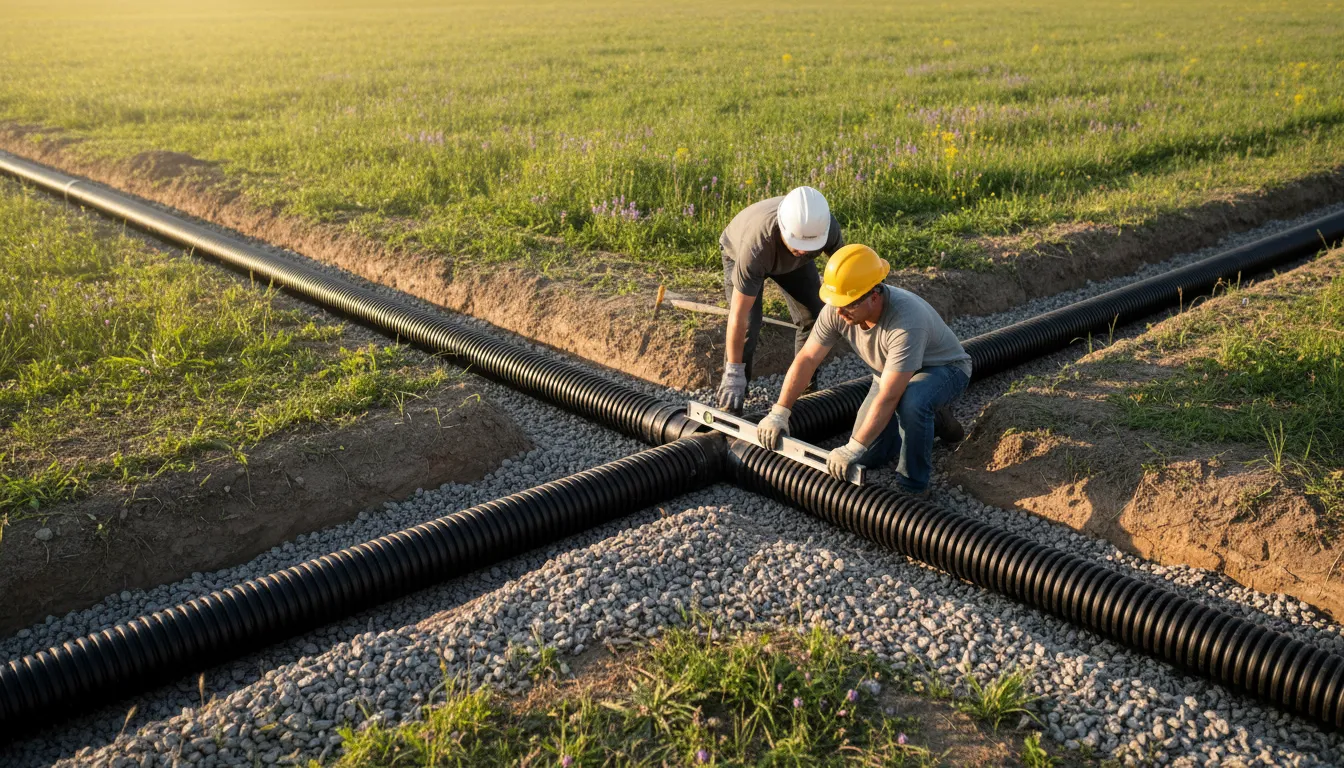
The drain field is the final stage of your onsite wastewater treatment system. After solids settle in the septic tank, the liquid effluent flows into a network of perforated pipes buried in trenches filled with gravel. This effluent slowly percolates into the soil, where natural processes provide final treatment. A healthy drain field is essential for protecting groundwater, public health, and your property value.
Common signs of drain field failure in South Carolina include:
- Sewage odors in the yard or home.
- Soggy, spongy, or standing water over the drain field area, especially when it hasn't rained.
- Lush, green grass growing over the field while the rest of the lawn is dry.
- Slow-draining toilets and fixtures, or sewage backing up into the house.
If you notice any of these signs, it's crucial to act quickly. Ignoring a failing drain field can lead to environmental contamination, costly property damage, and official violation notices from the South Carolina Department of Environmental Services (SCDES) 1.
South Carolina Regulations and Permit Requirements
All work on septic systems in South Carolina, including drain field repair and full replacement, is regulated by the SCDES (formerly DHEC). State law requires permits and licensed professionals for this work to ensure it is done correctly and safely.
The Permit Process
Before any construction, repair, or replacement begins, you or your licensed contractor must submit an Onsite Wastewater System Application (Form D-1740) to the SCDES 2. This application triggers a mandatory site inspection by an SCDES representative. The inspector will evaluate soil conditions, property lines, and setbacks from wells, water bodies, and structures to determine if the proposed drain field location is suitable 3. A permit to construct will only be issued after a successful site evaluation.
Key points about SCDES permits:
- Licensed Installer Required: All installation, repair, and replacement work must be performed by a contractor licensed by the SCDES.
- Permit Validity: Once issued, a construction permit is valid for five years, provided site conditions remain unchanged.
- Final Inspection: After the licensed installer completes the work, a final inspection by SCDES is required to approve the system.
- Homeowner Responsibility: If your system fails and you receive a notification of violation, you are legally responsible for arranging and paying for the necessary repairs or replacement.
The Role of Soil Evaluation (Perc Test)
Replacing a drain field often requires a new, approved soil evaluation, commonly called a percolation or "perc" test. This test, conducted by a licensed professional, determines the soil's absorption rate. The results are used to correctly size the new drain field to handle your household's wastewater flow 4. The cost for a site evaluation and perc test in South Carolina can range from $150 to over $3,000, depending on the property size and testing complexity 5.
Find the perfect drain field repair companies for your needs
Get personalized recommendations and expert advice
Costs for Drain Field Repair and Replacement in South Carolina
The cost to address drain field issues varies widely based on the extent of the problem, your soil type, system size, and local labor rates. It's one of the most significant investments you may make in your home's infrastructure.
- Minor Repairs: Fixing a broken pipe or a clogged distribution box is less expensive, but these are less common causes of full failure.
- Major Repair or Replacement: For a complete drain field failure, costs typically range from $3,000 to over $10,000 6. This estimate generally includes:
- The SCDES permit application fee (currently $150) 7.
- Site evaluation and soil testing costs.
- Excavation and removal of the old gravel and piping.
- Installation of new trenches, gravel, perforated pipes, and a new distribution box.
- Labor from the licensed installer.
- The required final inspection.
Systems for larger homes, properties with poor soil, or those requiring advanced treatment technologies will be at the higher end of this range or exceed it. It's important to note that the SCDES does not provide funding or financial assistance for septic system repairs or replacements.
Choosing a Licensed Professional in South Carolina
Hiring a qualified, SCDES-licensed contractor is not just a legal requirement-it's your best assurance of a job done right. A licensed professional understands local regulations, can navigate the permit process, and has the expertise to design a system that will function properly for years.
When evaluating local specialists:
- Verify License: Confirm the contractor holds a current SCDES license for septic system installation and repair 8.
- Get Multiple Quotes: Obtain detailed written estimates from at least three licensed contractors. The quote should break down costs for permits, testing, materials, labor, and site restoration.
- Check References and Insurance: Ask for references from recent jobs and verify the company carries liability and workers' compensation insurance.
- Ask About the Process: A reputable contractor will willingly explain the steps, from pulling the SCDES permit to scheduling the final inspection.
Maintaining Your New or Repaired Drain Field
Protecting your investment is key. While South Carolina state law does not mandate routine professional inspections, they are highly recommended to catch small issues before they become costly failures. A common benchmark for tank pumping is when the sludge layer reaches one-third of the tank's capacity 9.
Follow these preventive maintenance tips to extend the life of your drain field 10 11:
- Pump Regularly: Have your septic tank pumped every 3-5 years by a licensed pumper, depending on household size and usage.
- Conserve Water: Spread out laundry loads and fix leaky fixtures to avoid overwhelming the system.
- Mind What You Flush: Only human waste and toilet paper should go down the drain. Avoid chemicals, grease, wipes, and feminine hygiene products.
- Protect the Area: Never drive or park vehicles, build structures, or store heavy items on the drain field. The pressure can compact the soil and crush pipes.
- Landscape Carefully: Plant only grass over the field. Tree and shrub roots can infiltrate and clog the pipes.
Frequently asked questions
Sources
Footnotes
-
Backups, Leaks and Odors | South Carolina Department of ... - https://des.sc.gov/permits-regulations/septic-tanks/homeowner-resources/backups-leaks-and-odors ↩
-
S.C. Code Regs. § 61-56.104 - Application, Permit, Final ... - https://www.law.cornell.edu/regulations/south-carolina/R-61-56.104 ↩
-
Site Inspections | South Carolina Department of Environmental Services - https://des.sc.gov/permits-regulations/septic-tanks/homeowner-resources/site-inspections ↩
-
Septic Tanks - Frequently Asked Questions | South Carolina Department of Environmental Services - https://des.sc.gov/permits-regulations/septic-tanks/homeowner-resources/septic-tanks-frequently-asked-questions ↩
-
Septic Systems For Mountain Homes: Options, Requirements, And Cost Considerations - https://hibritenhomes.com/blog/design/septic-systems-mountain-homes-options-requirements-cost/ ↩
-
How Much Does a Perc Test Cost? [2026 Data] - Angi - https://www.angi.com/articles/perc-test-cost.htm ↩
-
Septic Tanks - Residential, Single Home Builder | South Carolina Department of Environmental Services - https://des.sc.gov/permits-regulations/septic-tanks/permits-licenses/septic-tanks-residential-single-home-builder ↩
-
Licensing for Septic System Installers | South Carolina Department ... - https://des.sc.gov/permits-regulations/septic-tanks/licensing-septic-system-installers ↩
-
How to Get Septic to Pass Inspection - https://www.guardianangelinspections.com/how-to-get-septic-to-pass-inspection ↩
-
Be Septic Safe - Clemson University - https://www.clemson.edu/extension/water/resources/be-septic-safe.html ↩
-
Septic System Owner's Guide | NC State Extension Publications - https://content.ces.ncsu.edu/septic-system-owners-guide ↩