Find the Best Drain Field Repair Companies for Your Business
No obligation • Fast responses • Nationwide coverage

Why you can trust Septic Spot
Septic Spot is a leading United States resource for understanding and comparing septic services. Our editors review providers using consistent criteria and verify key business details. Listings and scores are independent, and companies cannot pay to influence our content.
Search providers near you
Top Drain Field Repair Companies in Charleston, South Carolina Ranked
A failing drain field is a serious issue for any home with a septic system, leading to soggy yards, foul odors, and potential environmental contamination. In Charleston, the unique coastal environment makes proper repair and replacement of your leach field especially critical. This guide explains the local regulations, common challenges, and the process for restoring your system's functionality, helping you connect with qualified, licensed professionals who understand the Lowcountry's specific requirements.
Understanding Your Septic System's Drain Field
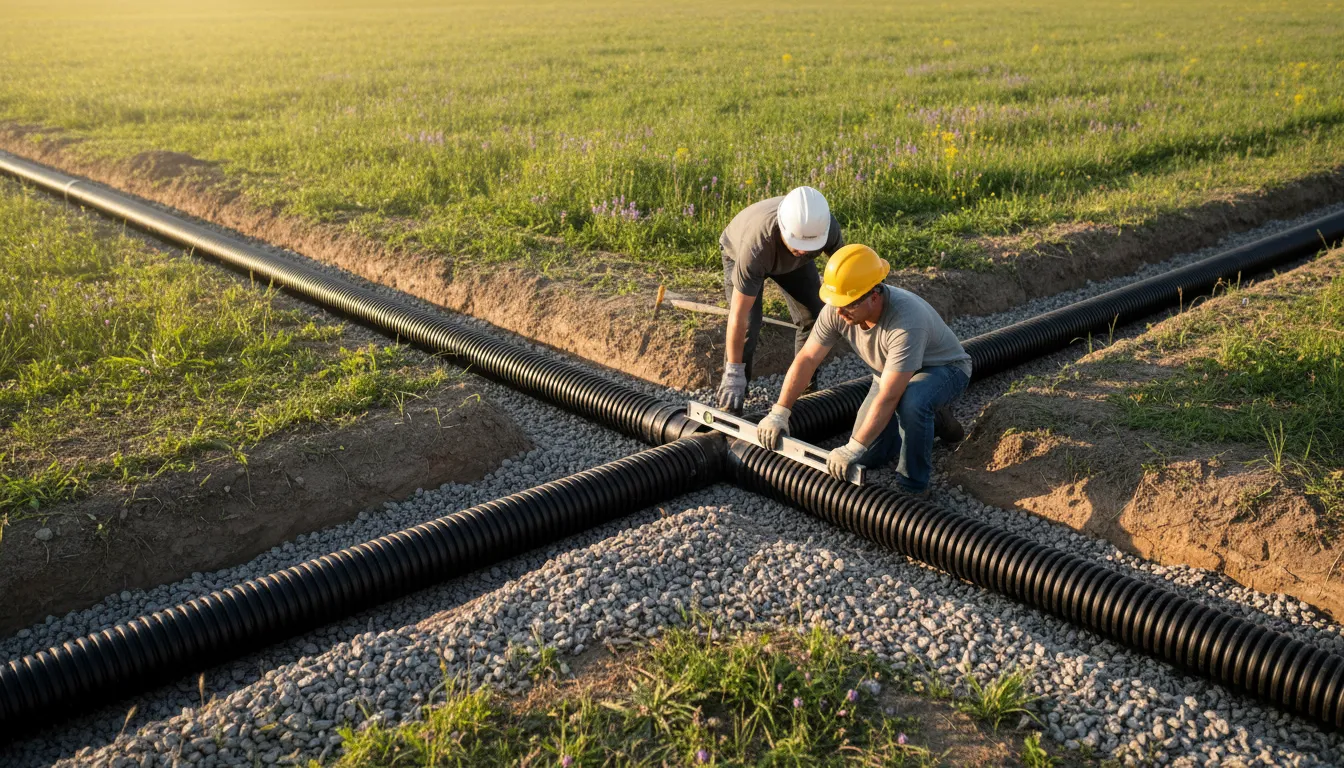
The drain field, also known as a leach field or soil absorption field, is the final and most crucial stage of your onsite wastewater system. After solids settle in the septic tank, liquid effluent flows into a network of perforated pipes buried in trenches. This effluent slowly percolates through the soil, where natural processes filter and treat it before it rejoins the groundwater. When this area fails, wastewater can no longer be properly dispersed, leading to system backup and surface pooling. In Charleston, with its high water tables and dense soils, a failing absorption field requires immediate attention from a licensed specialist.
Why Charleston Presents Unique Challenges
The Lowcountry's geography directly impacts how drain fields function and how they must be repaired or replaced. Several key factors dictate the design and feasibility of any leach field project.
- High Water Table: Coastal South Carolina often has a seasonal high water table very close to the surface. State regulations require a separation of 2 to 4 feet between the bottom of the drain field trenches and the high water table level. This limited usable soil depth can restrict repair options and often necessitates engineered solutions.
- Soil Composition: Clay soils are common in low-lying areas around Charleston. Clay drains very slowly, which can cause a standard drain field to fail prematurely. A soil evaluation (percolation test) will determine if the native soil is suitable or if a more advanced system, like a low-pressure dose (LPD) or sand filter system, is required.
- Wet Soil Limitations: The South Carolina Department of Environmental Services (SCDES) may delay site evaluations and permitting if the ground is too saturated. Inspections often must wait for drier conditions, which can postpone critical repairs.
- Flat Topography: While steep slopes require pump systems, very flat sites-common in Charleston-can have poor natural drainage. This can contribute to standing water in yards and complicate the grading required for a new drain field to function correctly 1.
South Carolina Regulations and Permits
All work on a septic system drain field in Charleston is strictly regulated by SCDES (formerly DHEC). Undertaking repairs without proper permits and a licensed contractor is illegal and can result in significant fines.
- Permit to Construct: A formal "Permit to Construct" from SCDES is mandatory for any repair or replacement of a drain field. This applies even if you are only repairing a portion of the field 2.
- Licensed Professionals: Only state-licensed installers are authorized to perform repairs, inspections, or pump-outs. It is illegal for an unlicensed person to conduct this work 3.
- Critical Setbacks: Any new or repaired drain field must adhere to minimum distance requirements from various features:
- State Regulation 61-56: This is the governing rule for all onsite wastewater systems in South Carolina, outlining everything from design standards to installer licensing.
Find the perfect drain field repair companies for your needs
Get personalized recommendations and expert advice
The Step-by-Step Process for Repair or Replacement
Navigating a drain field project involves several key stages, from initial evaluation to final approval.
- Site Inspection and Soil Evaluation: The first step is a professional site inspection with soil borings. A SCDES inspector or a licensed soil classifier will take samples to determine soil type, texture, and the depth to the seasonal high water table. This evaluation dictates the entire design 6.
- System Design: If the repair is not a simple, like-for-like replacement, a Professional Engineer (PE) or qualified system designer must create a site-specific engineered design. This plan accounts for soil limitations, water table depth, and property layout.
- Permit Application: Your licensed contractor will submit the Onsite Wastewater System Application to SCDES, including the site plan, design, soil report, and applicable fees. The contractor handles this process on the homeowner's behalf 7.
- Installation and Inspection: Once permitted, the licensed installer constructs the new drain field or performs the approved repairs. State law requires the installer to notify SCDES for a final inspection before the system is covered with soil. Notably, if a SCDES inspector does not arrive within 30 minutes of a scheduled inspection time, the licensed installer may perform a self-inspection and submit a "Contractor Approval to Operate" form to proceed 8.
Cost Considerations for Charleston Homeowners
The cost to address a failing drain field in the Charleston area varies widely based on the extent of the failure, soil conditions, and the type of system required.
- Total Drain Field Replacement: For a complete leach field replacement, costs can be significant. While some municipal repair program data points to costs around $800+, a full conventional system replacement for a failing system typically ranges from $5,000 to $15,000 or more. Complex sites with poor soil that require an engineered alternative system (like a sand filter or aerobic treatment unit) will be at the higher end of this range or exceed it 9.
- Component Repairs: Repairing or replacing a septic tank pump or alarm system, which may be part of a larger drain field issue, can cost between $800 and $2,000 10.
- Permitting and Fees: Permit fees vary based on project scope and are usually bundled by the contractor. If a private contractor performs the required soil evaluation, state rules cap their fee at no more than three times the Department's own permitting fee for that service 11.
Financial Assistance and Local Programs
Homeowners facing the high cost of a mandatory repair should explore available local resources.
- Charleston County Well and Septic Program: County residents may qualify for financial assistance through this program for necessary repairs or replacements.
- Municipal Programs: Some towns, like Mount Pleasant, offer specific initiatives. Mount Pleasant Waterworks provides information on septic maintenance and may have assistance programs for properties being required to connect to sewer or for failing systems 12.
- Mandatory Repair: It is important to understand that repairing a failed septic system is the legal responsibility of the property owner. While assistance may be available, the ultimate obligation and cost fall to the homeowner 13.
Maintaining Your New or Repaired Drain Field
Protecting your investment after a repair is essential. Practice water conservation, avoid parking or building over the field, and keep trees with invasive roots at a distance. Have your septic tank pumped regularly by a licensed pumper (typically every 3-5 years) to prevent solids from clogging the new drain lines. Following these steps will help ensure the longevity of your repaired leach field 14 15.
Frequently asked questions
Sources
Footnotes
-
Basics for Septic Systems in Upstate SC - https://carolinacountrysideproperties.com/septic-systems-in-upstate-sc/ ↩
-
Septic Tanks - Residential, Single Home Builder - https://des.sc.gov/permits-regulations/septic-tanks/permits-licenses/septic-tanks-residential-single-home-builder ↩
-
Septic Tanks - Licensing for OSWW System Professionals - https://des.sc.gov/permits-regulations/septic-tanks/permits-licenses/septic-tanks-licensing-osww-system-professionals ↩
-
Be Septic Safe - Clemson University - https://www.clemson.edu/extension/water/resources/be-septic-safe.html ↩
-
Before You Buy Land | South Carolina Department of Environmental ... - https://des.sc.gov/permits-regulations/septic-tanks/homeowner-resources/you-buy-land ↩
-
Site Inspections | South Carolina Department of ... - https://des.sc.gov/permits-regulations/septic-tanks/homeowner-resources/site-inspections ↩
-
Septic Tanks - Residential, Single Home Builder - https://des.sc.gov/permits-regulations/septic-tanks/permits-licenses/septic-tanks-residential-single-home-builder ↩
-
Septic Tanks - Regulation, Forms, Fact Sheets | South Carolina ... - https://des.sc.gov/permits-regulations/septic-tanks/septic-tanks-regulation-forms-fact-sheets ↩
-
Basics for Septic Systems in Upstate SC - https://carolinacountrysideproperties.com/septic-systems-in-upstate-sc/ ↩
-
Cost of Septic Maintenance | Annual Expenses Explained | Blog - https://www.blueribbonseptic.com/blog/cost-of-septic-maintenance ↩
-
Septic Tanks - Residential Subdivision Builder - https://des.sc.gov/permits-regulations/septic-tanks/permits-licenses/septic-tanks-residential-subdivision-builder ↩
-
Septic Systems - Mount Pleasant Waterworks - https://www.mountpleasantwaterworks.com/your_water/septic_systems.php ↩
-
4/21/2024 1 septic tank inspections and maintenance - https://www.masc.sc/sites/default/files/uploads/affiliated-associations/for-web-septic-tank-inspections-and-maintenance-presentation-for-2q-scasm.pdf ↩
-
Be Septic Safe - Clemson University - https://www.clemson.edu/extension/water/resources/be-septic-safe.html ↩
-
Septic Tanks - Frequently Asked Questions | South Carolina ... - https://des.sc.gov/permits-regulations/septic-tanks/homeowner-resources/septic-tanks-frequently-asked-questions ↩