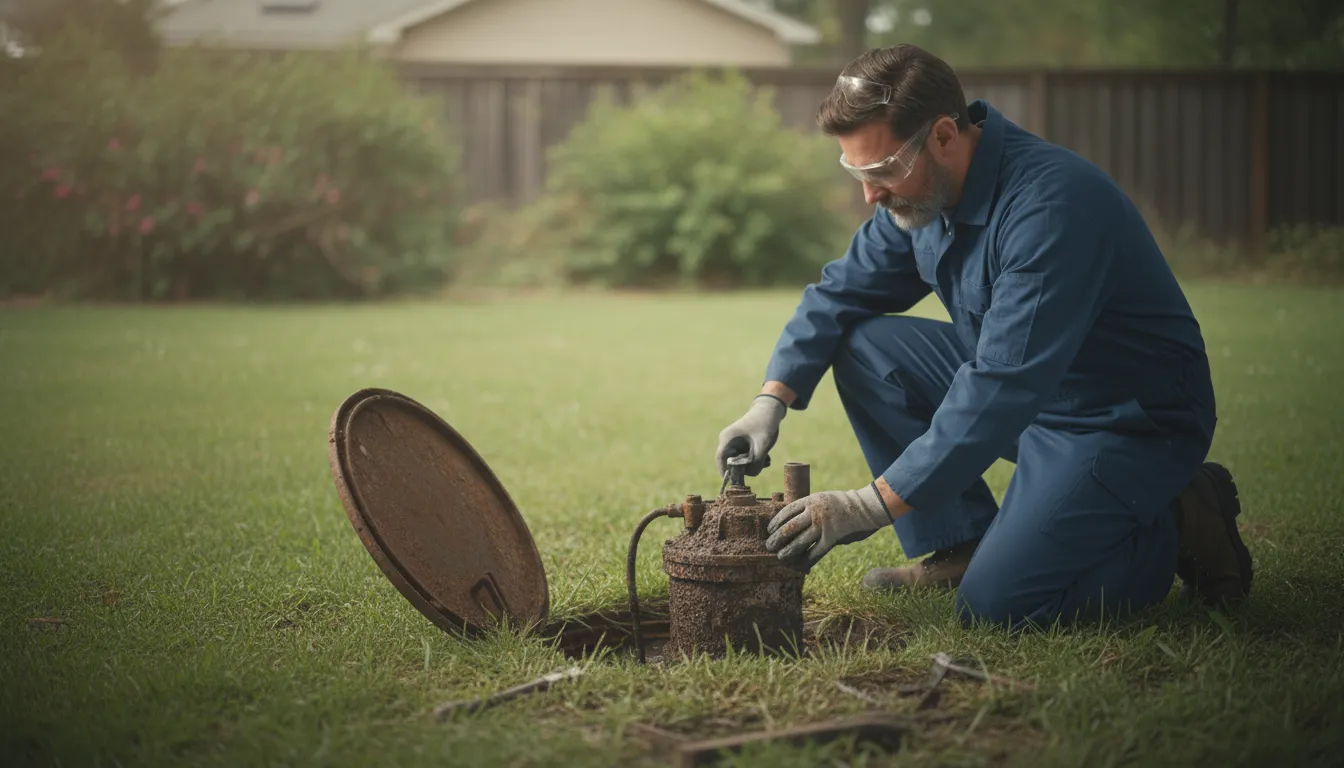
Find the Best Septic Pump Repair Companies for Your Business
No obligation • Fast responses • Nationwide coverage

Why you can trust Septic Spot
Septic Spot is a leading United States resource for understanding and comparing septic services. Our editors review providers using consistent criteria and verify key business details. Listings and scores are independent, and companies cannot pay to influence our content.
Search providers near you
Top Septic Pump Repair Companies in Fort Collins, Colorado Ranked
When your septic system shows signs of trouble, it's more than an inconvenience-it's a critical home maintenance issue that demands immediate attention. For homeowners in Fort Collins, understanding your options for septic pump repair and full system replacement is essential for protecting your property value and the local environment. This guide provides a detailed look at the process, costs, and local considerations for septic system servicing, helping you connect with qualified professionals who can diagnose and resolve your specific issue.

Understanding Your Fort Collins Septic System
Northern Colorado's unique geography plays a major role in the health and complexity of your septic system. Unlike municipal sewer connections, a private onsite wastewater system relies on the soil on your property to treat and disperse effluent. The two most common challenges in the Fort Collins area are heavy clay soil and high groundwater tables, both of which can complicate repairs and influence the type of system you have.
- Heavy Clay Soil: Prevalent in our region, dense clay has very slow permeability. This inhibits proper drainage from the drain field (or leach field), which can lead to premature system failure. Repairs or replacements in clay soils often require engineered solutions, like larger drain fields or advanced treatment systems, which increase project complexity and cost 1.
- High Groundwater or Bedrock: Properties near the Cache la Poudre River or with shallow bedrock may experience a high water table. Standard gravity-fed systems can fail in these conditions, as the saturated soil cannot absorb more liquid. Solutions often involve mound systems or other elevated designs, which are more complex to install and repair 2.
Most homes will have one of two primary system types:
- Gravity Systems: These rely on natural slope to move wastewater from the tank to the drain field. They are generally simpler and less expensive to repair.
- Pump (Pressure) Systems: These use an electrical pump and control panel to push effluent to the drain field. They are necessary for properties with uphill drain fields or challenging soil. Repairs often involve these electrical and mechanical components.
Signs You Need Septic Repair or Replacement
Recognizing early warning signs can mean the difference between a manageable repair and a catastrophic, expensive failure. Don't ignore these symptoms:
- Slow Drains and Backups: Gurgling toilets, slow-draining sinks, or sewage backing up into household drains are classic red flags.
- Unpleasant Odors: Foul smells emanating from drains, your yard, or near the septic tank area indicate a serious problem.
- Soggy or Lush Lawn: An overly green, soggy patch in your yard, especially near the drain field, signals that untreated effluent is surfacing.
- Alarm Sounds: If your system has a pump, it will include an alarm that sounds when the water level is too high, indicating a pump failure or blockage.
- Failed Inspection: Routine inspections may reveal cracked tanks, failed drain fields, or other issues that necessitate repair.
The Septic Service Process: From Diagnosis to Completion
When you contact a local septic professional for pump repair or system issues, they typically follow a structured process.
- Inspection & System Locating: The technician will first locate your tank and distribution box, often using specialized electronic locating equipment. They will then perform a thorough inspection, which may involve camera scoping of lines, a "push test" to check drain field absorption, and an assessment of all mechanical components 3.
- Pumping: To safely inspect and work on the tank, it must be pumped out. This is a standard first step in any major repair4.
- Permitting: For any major repair or full replacement, a permit from Larimer County Health Department or your local city jurisdiction is required. Your contractor should handle this process, ensuring the work meets all local codes.
- Repair or Replacement Work: The specific work depends on the diagnosis:
- Component Repair: This includes fixing or replacing tank baffles, effluent filters, risers, or the pump and float switches themselves.
- Drain Field Rehabilitation: For a failing leach field, options range from spot repairs of clogged lateral lines to more extensive procedures like jetting or, ultimately, full replacement.
- Final Inspection & Approval: Once work is complete, a final inspection by the local health authority is often required to approve the system for use.
Find the perfect septic pump repair companies for your needs
Get personalized recommendations and expert advice
Cost Guide for Septic Repairs in Fort Collins
Costs for septic system work vary dramatically based on the scope of the problem, your soil conditions, and the type of system you have. The following estimates are based on regional data for Northern Colorado.
- Pump or Control Component Repair/Replacement: Repairing or replacing a failed septic pump, control panel, or float assembly typically ranges from $800 to $5,000. The wide range accounts for the pump's horsepower, depth, and whether it's a simple repair or a full replacement 5.
- Tank Component Repair: Fixing or replacing damaged baffles, tees, or effluent filters inside the tank generally costs between $300 and $1,2006.
- Lateral Line Repair: Addressing a single clogged or broken pipe in the drain field can cost $1,500 to $8,000, depending on depth and accessibility7.
- Partial or Full Drain Field Replacement: When a significant portion or the entire leach field has failed, replacement costs range from $3,000 to $15,000 or more. This is heavily influenced by soil conditions and the need for engineered systems like mounds 8.
- Full Septic System Replacement: For a complete new system for a 3-5 bedroom home in Fort Collins, homeowners can expect costs between $28,000 and $35,000+. This includes a new tank, drain field, all components, excavation, and permitting. Complex sites with poor soil or high groundwater can drive prices toward the higher end of this spectrum or beyond9 10 11.
Important Note: These are estimated ranges. The only way to get an accurate cost for your situation is to obtain a detailed assessment and quote from a licensed local contractor.
Repair vs. Replacement: Making the Right Choice
A common dilemma for homeowners is whether to repair a failing system or invest in a full replacement. A professional inspection is crucial for this decision. Generally, repair is a viable option if the tank is structurally sound and the drain field is still functioning but has a localized issue, like a clogged lateral line or a failed pump.
Full replacement is often necessary when:
- The septic tank is cracked or collapsed.
- The drain field has completely failed and cannot be rehabilitated.
- The system is old (often 20-40 years), undersized for the home, or no longer meets current health code standards.
- The cost of repeated repairs approaches the cost of a new, reliable system.
Investing in a new system, while a significant upfront cost, provides decades of reliable service and protects your property value.
Maintaining Your System After Repair
Once your system is repaired or a new pump is installed, proper maintenance is key to extending its lifespan. This includes:
- Regular Pumping: Have the tank pumped every 3-5 years, depending on household size and usage.
- Water Conservation: Spread out laundry loads and fix leaky fixtures to avoid overloading the system.
- Mindful Flushing: Only human waste and toilet paper should go down the drains. Avoid chemicals, grease, wipes, and other non-biodegradables.
- Protect the Drain Field: Never drive or park heavy vehicles over it, and keep roof drains and sump pumps directed away from the area.
Frequently asked questions
Sources
Footnotes
-
Engineered Septic System Design: A Complete Guide - https://landperc.com/engineered-septic-system-design/ ↩
-
Understanding the Costs of Septic Tank Installation and Repair: A Guide for Homeowners - https://mathisandsonsseptic.com/mathis-sons-septic-blog-orlando-fl/understanding-the-costs-of-septic-tank-installation-and-repair/ ↩
-
Fort Collins Septic Repair | Septic System Repair | (970) 632-2273 - https://lionhomeservice.com/septic-repair/ ↩
-
Fort Collins Septic Systems - Lion Home Service - https://lionhomeservice.com/septic-systems/ ↩
-
How Much Does Septic Tank Repair Cost? [2026 Data] | Angi - https://www.angi.com/articles/how-much-does-repairing-septic-tank-cost.htm ↩
-
Septic Repair vs. Replacement: A Guide to Costs & Red Flags - https://prosepticri.com/septic-repair-vs-replacement-guide/ ↩
-
Septic Repair vs. Replacement: What's Best for Your System - https://www.townesseptic.com/blog/septic-repair-vs-replacement ↩
-
Cost Of Septic System Restoration Vs Septic System Replacement - https://www.aero-stream.com/cost-of-septic-system-restoration-vs-septic-system-replacement/ ↩
-
The True Cost of a 4-Bedroom Septic System in Colorado - https://www.soiltestandseptic.com/post/the-true-cost-of-a-4-bedroom-septic-system-in-colorado-why-prices-range-from-the-low-20ks-to-the ↩
-
Septic System Replacement Costs, Repair & Pumping in Northern CO - https://boonstraexcavation.com/septic-systems/ ↩
-
Cost to Install a Septic System in Denver [2026 Data] - Angi - https://www.angi.com/articles/what-does-it-cost-install-septic-system/co/denver ↩