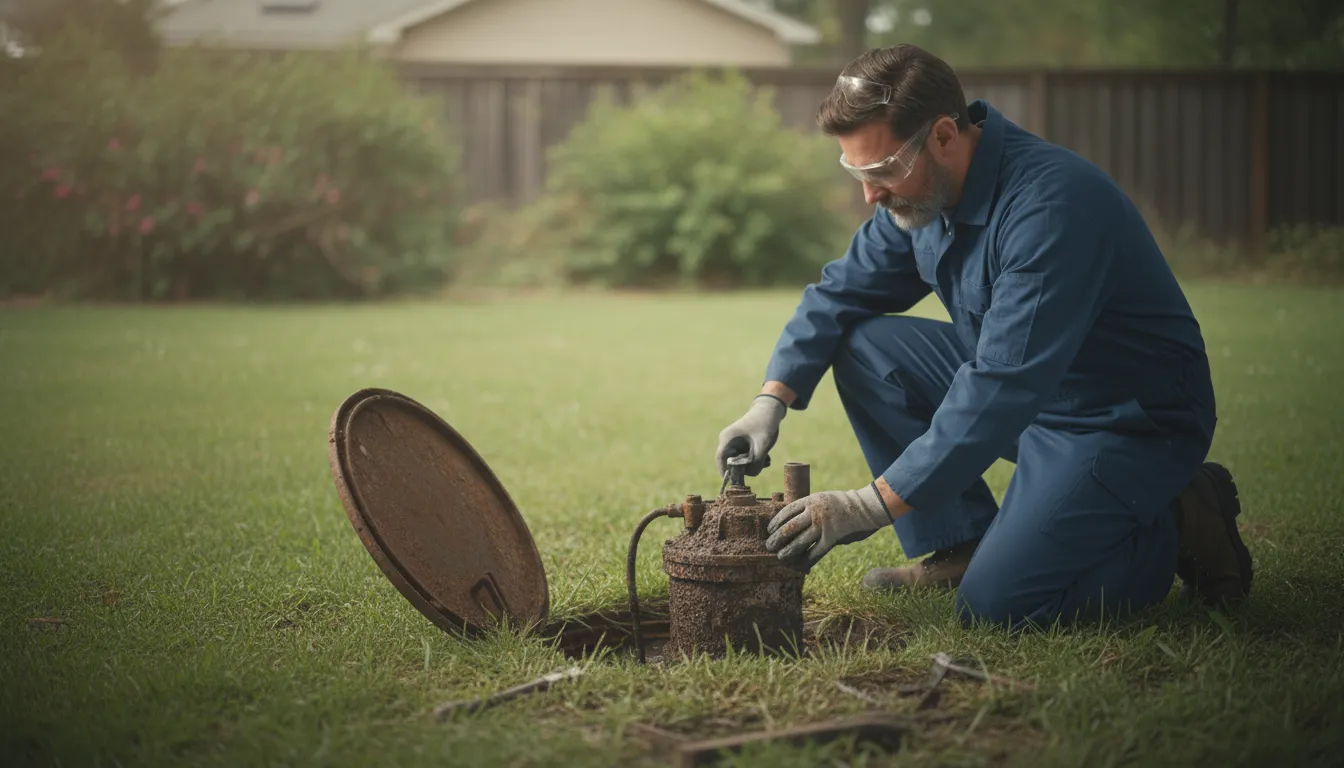
Find the Best Septic Pump Repair Companies for Your Business
No obligation • Fast responses • Nationwide coverage

Why you can trust Septic Spot
Septic Spot is a leading United States resource for understanding and comparing septic services. Our editors review providers using consistent criteria and verify key business details. Listings and scores are independent, and companies cannot pay to influence our content.
Search providers near you
Top Septic Pump Repair Companies in Lakewood, Colorado Ranked
A failing septic pump can bring your household to a standstill, leading to backups, unpleasant odors, and potential property damage. Septic pump repair and replacement are critical services that ensure your wastewater system continues to function safely and efficiently. For homeowners in Lakewood, navigating local soil conditions, regulations, and finding a qualified professional is essential. This guide provides the information you need to understand the process, anticipate costs, and connect with local specialists who can diagnose and fix your system.

Understanding Your Septic System's Pump
Not all septic systems have a pump. Traditional gravity-fed systems rely on slope to move effluent from the tank to the drain field. However, many homes in Lakewood and across Southern California require a pump, or effluent pump, to overcome challenging topography or soil conditions. This component is responsible for moving wastewater from the septic tank up to the drain field. When it fails, the entire drainage process halts. Recognizing the signs of a failing pump-such as alarms sounding, gurgling drains, sewage backups in lower-level fixtures, or an overly soggy drain field-is the first step toward a solution 1.
Common Causes of Pump Failure
Several issues can lead to the need for septic pump repair or a full pump replacement. Understanding these can help you communicate with a technician:
- Electrical Failures: The pump motor can burn out due to power surges, faulty wiring, or simply old age. Float switches, which control the pump's on/off cycle, are also common points of failure.
- Clogs and Blockages: Solids that escape the tank can clog the pump's impeller or the discharge pipe, causing the motor to overwork and fail.
- Mechanical Wear: Like any mechanical device, pumps have a lifespan. Continuous cycling and normal wear and tear will eventually require a replacement.
- Improper Installation: A pump that is not correctly sized for your home's water usage or the required head pressure (the height it must lift wastewater) will fail prematurely.
The Impact of Lakewood's Soil on Your System
The local environment plays a significant role in your septic system's health and the complexity of repairs. Much of Southern California, including areas near Lakewood, is characterized by dense clay soil 2. Clay absorbs and drains water very slowly, which can cause several problems:
- Drain Field Saturation: Effluent cannot percolate quickly through the dense soil, leading to a saturated drain field and potential surfacing of wastewater.
- Increased System Stress: Slow drainage places more back-pressure on the pump, causing it to cycle more frequently and wear out faster.
- Need for Enhanced Systems: Due to poor percolation, clay soils often require more advanced-and expensive-system designs, such as pressure-dosed drain fields or aerobic treatment units (ATUs), which rely heavily on functioning pumps 3.
A qualified local professional will understand how to diagnose issues specific to clay soil conditions, which may require specialized equipment or deeper excavation to access and repair system components.
The Repair and Replacement Process: What to Expect
When you call a professional for septic pump service, they will typically follow a structured process to ensure a safe, effective, and code-compliant repair.
- Inspection and Diagnosis: The technician will first inspect the pump, check electrical connections, controls, and float switches to pinpoint the exact malfunction 4. They may also check the tank and drain field to see if the pump failure is a symptom of a larger issue.
- Permitting: In California, many septic system repairs, especially those involving components that handle sewage, require permits from the Los Angeles County Department of Public Health. A reputable provider will handle this permitting process for you 5.
- Tank Pumping: To safely access and remove the pump, the septic tank usually needs to be pumped out first. In Lakewood, the average cost for this service ranges from $414 to $542 6.
- Pump Repair or Replacement: The old pump is disconnected and removed. For a replacement, a new, correctly sized pump is installed and connected to the discharge piping and electrical system.
- System Testing: Finally, the system is tested to ensure the new pump cycles correctly, maintains proper water levels, and is effectively moving effluent to the drain field 7.
Find the perfect septic pump repair companies for your needs
Get personalized recommendations and expert advice
Cost Breakdown for Septic Pump Services in Lakewood
Costs can vary widely based on the pump type, the extent of the problem, and local factors like soil conditions. Here's a breakdown of what you might expect to pay for septic pump repair and related services in the Lakewood area:
- Pump or Float Switch Replacement: Repairing or replacing the pump components themselves typically ranges from $300 to $800.
- Overall Minor Repairs: Addressing common electrical issues or clogs often falls in the range of $300 to $900 8.
- Comprehensive System Repair: When a pump failure is part of a broader problem, such as issues with pipes or the drain field, costs for overall system repairs average between $1,000 and $5,000 9.
- Lateral or Pipe Repair: Fixing broken pipes leading to or from the tank can cost between $1,250 and $4,250 10.
- Full Tank Replacement: In severe cases where the tank is damaged, replacement costs can range from $3,000 to $15,000 11.
Important Note: For homes with more complex aerobic treatment systems, which use an air pump for higher treatment efficiency, repair and replacement costs can be significantly higher, sometimes reaching $10,000 to $20,000+ for a full system overhaul 12.
Factors That Increase Repair Costs
Several situations can lead to costs on the higher end of these scales or beyond:
- Severe Soil Problems: If the drain field has failed due to degraded soil, repairs like drain field rejuvenation or complete replacement can cost $20,000 to $40,000+ 13.
- Older Systems: Systems nearing the end of their lifespan may have multiple failing components, making piecemeal repairs less cost-effective than a full system upgrade.
- Access Challenges: If the septic tank or pump is located under a driveway, deck, or mature landscaping, excavation costs will rise.
- Regulatory Compliance: Meeting current California and Los Angeles County codes, which are often stricter than when older systems were installed, can add to the project cost 14.
Repair vs. Replacement: Making the Right Choice
Facing a major septic pump issue often leads to a critical decision: should you repair the existing component or invest in a full replacement? For the pump itself, replacement is usually the most reliable option if it's old or has a burned-out motor. However, the decision becomes broader when considering the entire system.
A professional assessment is crucial. They can help you determine if a repair is a cost-effective, long-term solution or if you're facing a "money pit" scenario where repeated repairs will soon exceed the cost of a new system. Key red flags that indicate replacement may be the wiser investment include frequent backups, chronically soggy drain fields, and an aging system (over 20-30 years old) requiring constant attention.
Maintaining Your System Post-Repair
After a repair or pump replacement, proper maintenance is key to protecting your investment. This includes:
- Regular septic tank pumping every 3-5 years.
- Conserving water to avoid overwhelming the system.
- Avoiding flushing non-biodegradable items, grease, and harsh chemicals.
- Keeping vehicles and heavy equipment off the drain field area.
- Scheduling periodic inspections to catch small issues before they become major failures.
Frequently asked questions
Sources
Footnotes
-
New Homebuyer's Guide to Septic Systems - EPA - https://www.epa.gov/sites/default/files/2017-08/documents/170803-homebuyerssepticguide_508c.pdf ↩
-
How Soil Type Affects Septic System Performance - https://www.septicblueraleigh.com/how-your-soil-determines-your-septic-systems-success.html ↩
-
Choosing the Right Septic System for Your Southern California Home - https://www.lanikseptic.com/choose-septic-system/ ↩
-
Septic Pump Repair Service in Tucson - https://www.grossseptic.com/blog/septic-pump-repair-service-in-tucson/ ↩
-
California Septic Tank Requirements | Onsite Wastewater Treatment ... - https://www.ntotank.com/blog/california-septic-tank-requirements ↩
-
Septic Pumping in Lakewood, CA - Costs 01 / 2026 - Homeyou - https://www.homeyou.com/ca/septic-pumping-lakewood-costs ↩
-
How Much Does Septic Tank Repair Cost? [2026 Data] | Angi - https://www.angi.com/articles/how-much-does-repairing-septic-tank-cost.htm ↩
-
Septic Repair Cost in California: Complete Breakdown of Pricing ... - https://www.lanikseptic.com/septic-repair-cost/ ↩
-
Common Septic Tank Repairs In California (& What They Cost) - https://cacciaplumbing.com/blog/common-septic-tank-repairs-in-california/ ↩
-
How Much Does Failed Septic System Cost? - https://www.septicconnection.com/how-much-does-failed-septic-system-cost ↩
-
Septic Repair vs. Replacement: How to Decide What's Best for Your System - https://www.townesseptic.com/blog/septic-repair-vs-replacement ↩
-
Septic Tank Replacement & Installation in Riverside, CA - https://www.inlandsepticservices.com/septic-tank-replacement--installation ↩
-
Understanding the Costs of Septic Tank Installation and Repair - https://mathisandsonsseptic.com/mathis-sons-septic-blog-orlando-fl/understanding-the-costs-of-septic-tank-installation-and-repair/ ↩
-
Septic Repair vs. Replacement: A Guide to Costs & Red Flags - https://prosepticri.com/septic-repair-vs-replacement-guide/ ↩