Find the Best Septic Pump Repair Companies for Your Business
No obligation • Fast responses • Nationwide coverage

Why you can trust Septic Spot
Septic Spot is a leading United States resource for understanding and comparing septic services. Our editors review providers using consistent criteria and verify key business details. Listings and scores are independent, and companies cannot pay to influence our content.
Search providers near you
Top Septic Pump Repair Companies in Chicago, Illinois Ranked
When your home's wastewater system falters, it's more than an inconvenience-it's a pressing health and environmental concern. Septic pump repair and replacement services address the critical mechanical and electrical components that keep your system functioning, especially vital in the Chicago area where challenging soil conditions can strain conventional setups. This guide explains the local factors influencing these services, outlines the process and costs, and helps you understand how to find qualified professionals to restore your system's reliability.
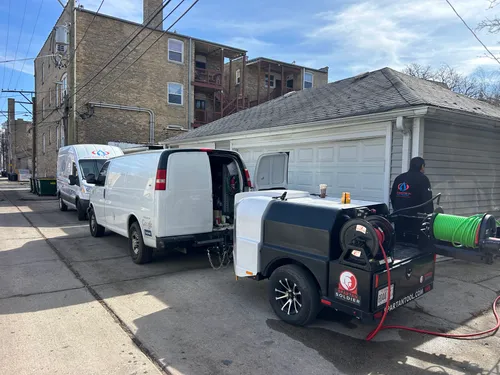
Elite Sewer & Drain Inc.
9116 Kilpatrick Ave, Skokie, IL 60076
Elite Sewer & Drain Inc. provides septic pump repair and replacement services along with sewer, drain, and plumbing solutions in Chicago, IL. They serve both commercial and residential clients, specializing in hydro jetting to clear clogs and grease buildup. The company also offers backflow preventer testing, repair, and replacement, as well as installation and replacement of sewage, ejector, and sump pumps. Elite Sewer & Drain Inc. is family owned and operated, servicing the north side of Chicago and surrounding suburbs with same-day emergency service available.

Weidner's Septic Service Inc.
Chicago, IL
Weidner's Septic Service Inc. provides septic tank pumping, inspection, repair, and pump replacement services in Chicago, IL. The company handles septic system maintenance and emergency repairs, including pump replacements, with attention to keeping job sites clean and providing helpful advice for system upkeep. Customers have noted their responsiveness and professionalism in addressing septic issues promptly.

R & R Septic & Sewer Services
24451 W Black Rd, Shorewood, IL 60404
R & R Septic & Sewer Services is a family-owned company serving Chicago, IL, and the Joliet area. They provide a full range of septic and sewer services including septic tank pumping, system repair, installation, sewer rodding, televising, and hydro jetting. With over five years of experience, they focus on quality work and environmentally conscious practices, such as using zero-emission vehicles. Their capabilities include sewer rodding and televising to identify and address drainage issues effectively.
Zeilinga Services, Inc.
850 Meadowview Crossing #9, West Chicago, IL 60185
Zeilinga Services, Inc. is a septic system company based in Chicago, IL. They provide septic tank pumping, inspection, repair, and installation services, along with drain field repair and septic pump replacement. Their work includes servicing various septic units such as Aqua 02, AquaKleer, and Norweco systems. They perform thorough maintenance tasks like cleaning pumps, changing filters, checking alarms, and conducting sludge tests to determine pumping needs. Zeilinga Services also offers specialized capabilities including jetting, lift station work, TV camera line inspections, and root control treatments.
Eagle Engineering
Chicago, IL
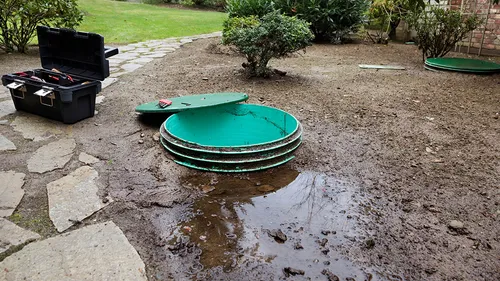
Eagle Engineering is a septic tank pumping and sewage pump repair company based in Chicago, IL. They provide septic tank pumping, sewage pump replacement, and septic tank riser installation services. The company is licensed, insured, and bonded, and offers a 3-year parts and labor warranty on sewage pump replacements. Eagle Engineering also provides after-hours emergency service for urgent needs.
Understanding Your Chicago-Area Septic System
Before diving into repairs, it's helpful to know what type of system you have. The most common residential septic systems in the Chicago suburbs fall into two main categories, each with different repair needs.
Conventional Gravity Systems are simpler, relying on natural slope to move effluent from the tank to the drain field. While generally less expensive to repair, they are less common in areas with poor drainage. Aerobic Treatment Units (ATUs), however, are frequently installed where space is limited or soil conditions are poor 1. These systems use mechanical pumps and aerators to treat wastewater more thoroughly before it reaches the drain field. Because they have more moving parts-namely pumps, floats, and electrical controls-they are more prone to failures that require specialized septic pump service.
Why Chicago's Environment Demands Special Attention
The local geography plays a significant role in septic system health and the type of repairs needed. Much of the Chicago area is characterized by heavy, clay-rich soil that drains poorly 2. This dense soil can lead to several issues:
- Drainfield Saturation: Clay soil doesn't absorb effluent quickly, leading to ponding, soggy yards, and system backups.
- System Strain: Poor drainage forces pumps in ATU systems to work harder, increasing the likelihood of motor burnout or float switch failure.
- Specialized Designs: To combat poor drainage, many local systems are engineered as raised bed or mound systems, which incorporate more complex components like pumps and sand filters that may need servicing.
Furthermore, older systems in the region may face complete drainfield failure after decades of compaction and clogging from the heavy soil, moving beyond a simple pump fix to a major drain field restoration.
Common Repair and Replacement Scenarios
Not every system problem requires a full overhaul. Here's a breakdown of common issues and the scope of work they entail.
Pump or Float Replacement: This is a core component of septic pump repair. The pump is the heart of an ATU system, and the float switch acts as its brain, telling the pump when to turn on and off. Failure here often causes alarms to sound or wastewater to back up into the home. Repairs can range from a simple float switch adjustment to replacing the entire pump unit.
Baffle or Riser Repair: The baffles inside your tank are crucial for preventing scum and solids from exiting into the drain field. Over time, they can corrode or break. Risers provide access from the ground surface to the tank lid; repairing or installing these makes future maintenance much easier and safer.
Drain Field (Lateral Line) Repair: When the soil absorption area fails, it can be due to clogged perforated pipes or a biomat-a layer of sludge that forms and prevents drainage. Repair might involve cleaning the lines with a high-pressure jetter or, in severe cases, excavating to replace sections of the field.
Full System Replacement: This is the most extensive and costly option, necessary when the tank itself has collapsed, the drain field is irreparably failed, or the system is so outdated it cannot be brought up to code. In Chicago's tough soil, this often means installing a completely new, engineered system like a mound or ATU 3.
The Step-by-Step Repair Process
Professional septic system repair follows a logical sequence to ensure the job is done correctly and legally.
- Diagnosis and Inspection: A certified technician will inspect the system. This often involves checking the tank, using a probe to assess drain field saturation, and testing electrical components like pumps and alarms to pinpoint the exact failure.
- Permitting: In Illinois, nearly any septic system repair or alteration requires a permit from the local county health department (e.g., Cook, Lake, or DuPage). The provider will typically handle this, which may involve a site evaluation and soil testing to ensure the repair plan meets current codes.
- Excavation and Repair/Replacement: Once permitted, the crew will excavate to access the faulty component-whether it's the tank, pump chamber, or drain field lines. The broken part is removed and replaced with a new, code-compliant unit.
- Inspection and Backfill: After the physical work is complete, a county health department inspector will visit to approve the installation. Only after this official approval can the excavation be backfilled and the site restored 4.
Find the perfect septic pump repair companies for your needs
Get personalized recommendations and expert advice
Cost Factors for Septic Services in Chicago
Costs can vary widely based on the complexity of the job, your system type, and local permit fees. Here's a general overview based on regional data:
- Septic Tank Pumping/Inspection: $200 - $600. This routine maintenance is not a repair, but it is the first step in diagnosing problems and is essential for preventing them 5 6.
- Pump or Float Replacement: $300 - $5,000. The low end covers a simple float switch or minor repair, while the high end involves replacing a high-capacity pump, control panel, and associated wiring.
- Baffle Repair or Riser Installation: $300 - $1,200. Costs depend on the material and how much excavation is needed to access the tank.
- Drain Field Repair: $1,500 - $15,000+. Spot repairs for a few clogged lateral lines are less expensive. Full drain field replacement, requiring new gravel, piping, and extensive excavation, is a major project 7.
- Full System Replacement: $10,000 - $40,000+. This is the most significant investment, heavily influenced by the soil conditions and the type of advanced system (like a mound or ATU) required to meet code in the Chicago area 8.
Residential septic pump repair in Chicago typically ranges from $800 to $5,000, while a full system replacement can easily exceed $10,000 to $40,000 or more 9 10.
Maintenance Tips to Avoid Major Repairs
Proactive care is the most cost-effective strategy for septic system ownership.
- Schedule Regular Pumping: Have your tank pumped every 3-5 years. This prevents solids from overflowing into the drain field, which is a leading cause of catastrophic (and expensive) failure.
- Conserve Water: Reduce strain on your system by fixing leaks, using high-efficiency fixtures, and spreading out laundry loads.
- Mind What You Flush: Only human waste and toilet paper should go down the drain. Avoid chemicals, grease, wipes, and other non-biodegradables.
- Consider an Aerator: For existing systems that are struggling, installing a septic aerator ($300 - $900) can introduce more oxygen into the tank, boosting bacterial activity and improving effluent quality before it reaches the drain field 11.
- Protect Your Drain Field: Never drive or park heavy vehicles over it, and keep roof drains and sump pump discharges directed away from the area.
Navigating Local Regulations
All septic work in Illinois must comply with state and local county health department regulations 12. Reputable service providers will be familiar with the specific requirements in your jurisdiction (Cook, Lake, DuPage, Will, etc.) and will pull all necessary permits. This regulatory oversight is for your protection, ensuring repairs are performed to standards that safeguard public health and the environment.
Frequently asked questions
Sources
Footnotes
-
Comparing Septic System Types: Which One Fits Best for Rural Homes in Brown County and Beyond - https://gullettsanitation.com/2025/09/comparing-septic-system-types-which-one-fits-best-for-rural-homes-in-brown-county-and-beyond/ ↩
-
Flood Control System - https://firstchicagoplumbing.com/residential-plumbing-services/flood-control-system/ ↩
-
Septic Tank Replacement Explained: Costs, Lifespan, And What To ... - https://www.theseptictankman.com/blog/septic-tank-replacement-explained-costs-lifespan-and-what-to-expect ↩
-
How Much Does Failed Septic System Cost? - https://www.septicconnection.com/how-much-does-failed-septic-system-cost ↩
-
How Much Does It Cost to Pump A Septic Tank in Chicago, IL? | Angi - https://www.angi.com/articles/how-much-does-septic-tank-pumping-cost/il/chicago ↩
-
How Much Does Septic Tank Pumping Cost in Illinois? - https://suburbanplumbingexperts.com/how-much-does-septic-tank-pumping-cost-in-illinois/ ↩
-
Understanding the Costs of Septic Tank Installation and Repair: A Guide for Homeowners - https://mathisandsonsseptic.com/mathis-sons-septic-blog-orlando-fl/understanding-the-costs-of-septic-tank-installation-and-repair/ ↩
-
Cost to Replace Septic Tank and Drain Field [2026 Data] | Angi - https://www.angi.com/articles/how-much-new-drain-fields-foot.htm ↩
-
Septic Repair vs. Replacement: How to Decide What's Best for Your System - https://www.townesseptic.com/blog/septic-repair-vs-replacement ↩
-
Septic Repair vs. Replacement: A Guide to Costs & Red Flags - https://prosepticri.com/septic-repair-vs-replacement-guide/ ↩
-
Septic System Repair: Essential Guidelines for Homeowners - https://smartsepticpros.com/blog/septic-system-repair-guidelines/ ↩
-
Illinois Septic Tank Requirements - https://www.ntotank.com/blog/illinois-septic-tank-requirements ↩