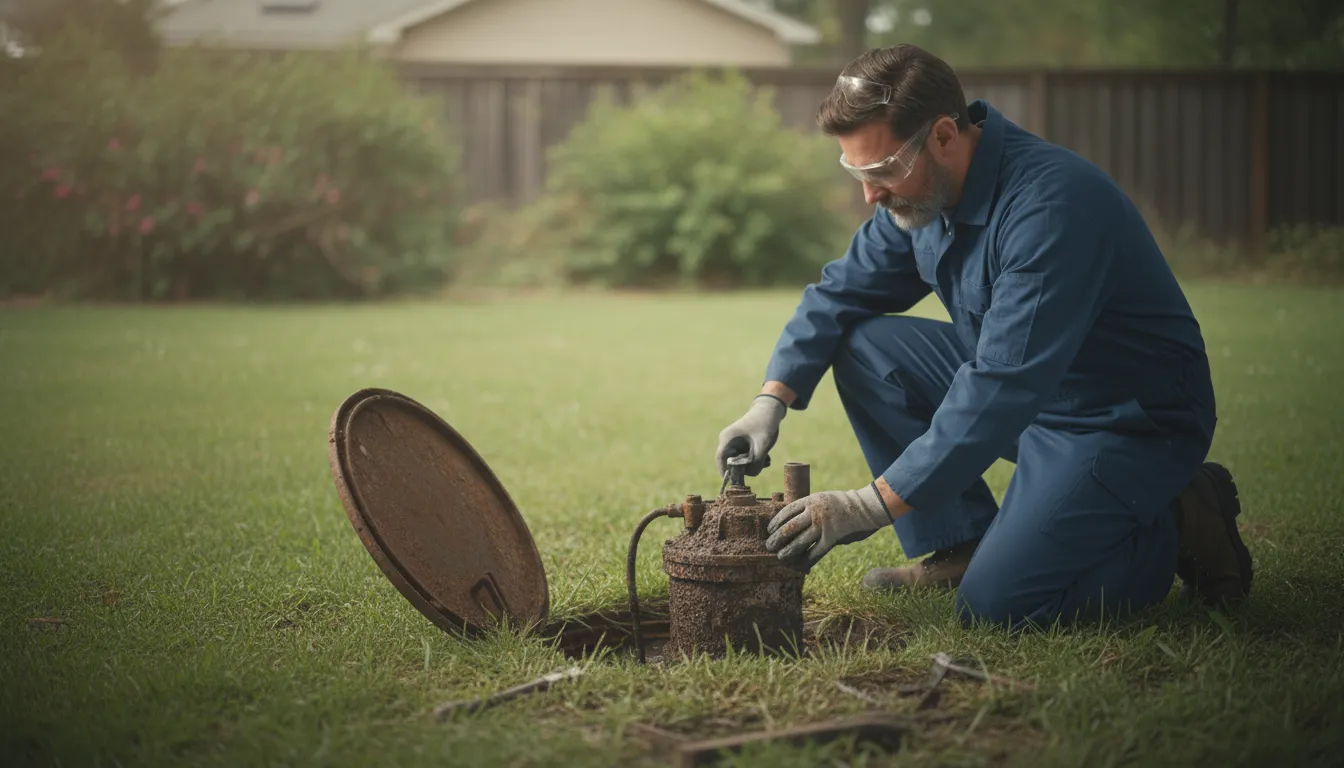
Find the Best Septic Pump Repair Companies for Your Business
No obligation • Fast responses • Nationwide coverage

Why you can trust Septic Spot
Septic Spot is a leading United States resource for understanding and comparing septic services. Our editors review providers using consistent criteria and verify key business details. Listings and scores are independent, and companies cannot pay to influence our content.
Search providers near you
Top Septic Pump Repair Companies in Des Plaines, Illinois Ranked
A failing septic pump can quickly lead to sewage backups, foul odors, and a complete system shutdown, turning a home's essential wastewater management into a major health and financial headache. In Des Plaines, where local soil conditions present unique challenges, understanding your repair and replacement options is critical. This guide provides a detailed look at the process, costs, and key considerations for maintaining your septic system, helping you connect with qualified local professionals who can assess your situation and provide a reliable solution.
Elite Sewer & Drain Inc.
9116 Kilpatrick Ave, Skokie, IL 60076
Elite Sewer & Drain Inc. provides septic pump repair and replacement services along with sewer, drain, and plumbing solutions in Chicago, IL. They serve both commercial and residential clients, specializing in hydro jetting to clear clogs and grease buildup. The company also offers backflow preventer testing, repair, and replacement, as well as installation and replacement of sewage, ejector, and sump pumps. Elite Sewer & Drain Inc. is family owned and operated, servicing the north side of Chicago and surrounding suburbs with same-day emergency service available.

Weidner's Septic Service Inc.
Chicago, IL
Weidner's Septic Service Inc. provides septic tank pumping, inspection, repair, and pump replacement services in Chicago, IL. The company handles septic system maintenance and emergency repairs, including pump replacements, with attention to keeping job sites clean and providing helpful advice for system upkeep. Customers have noted their responsiveness and professionalism in addressing septic issues promptly.

Zeilinga Services, Inc.
850 Meadowview Crossing #9, West Chicago, IL 60185
Zeilinga Services, Inc. is a septic system company based in Chicago, IL. They provide septic tank pumping, inspection, repair, and installation services, along with drain field repair and septic pump replacement. Their work includes servicing various septic units such as Aqua 02, AquaKleer, and Norweco systems. They perform thorough maintenance tasks like cleaning pumps, changing filters, checking alarms, and conducting sludge tests to determine pumping needs. Zeilinga Services also offers specialized capabilities including jetting, lift station work, TV camera line inspections, and root control treatments.
JW Trenching, Inc.
28074 W Industrial Ave, Barrington, IL 60010
JW Trenching, Inc. is a septic system repair and installation company serving Chicago, IL. They provide a range of services including soil testing for septic suitability, septic field locating, system design, and consulting. Their capabilities include septic tank replacement and repair, lift station pump replacement, and septic field repair or replacement. They also install various septic systems such as stone trench, chamber trench, mound systems, sand filter, raised filter bed, constructed wetland, textile filter, peat filter, and drip irrigation systems.
Understanding Your Septic System's Components
Before diving into repairs, it's helpful to know the key players in your septic system. The septic tank itself is a large, buried container that holds wastewater, allowing solids to settle and begin breaking down. The liquid effluent then flows out to the drainfield (or leach field), where it percolates through the soil for final treatment. The septic pump, or effluent pump, is a crucial component in many systems, especially when gravity flow isn't possible. It moves the treated liquid from the tank to the drainfield. When this pump fails, the entire drainage process halts. Other vital parts include baffles and filters inside the tank, which prevent solids from escaping, and the network of perforated pipes in the drainfield.
Common Signs You Need Pump Repair or System Attention
Ignoring early warning signs can turn a simple pump repair into a catastrophic system replacement. Be alert for these red flags:
- Slow Drains and Sewage Backups: The most immediate sign of a failing pump or a clogged system is water draining slowly from toilets, showers, and sinks, or worse, raw sewage backing up into your home.
- Unpleasant Odors: Foul smells around the drainfield or even inside your home often indicate that effluent is not being properly treated and absorbed, potentially surfacing.
- Unusually Lush or Soggy Lawn: A bright green, soggy patch over the drainfield area signals that wastewater is saturating the surface instead of filtering down through the soil.
- Gurgling Sounds: Strange noises from your plumbing can point to a blockage or a pump struggling to move effluent.
- Alarm Activation: Many modern systems have a high-water alarm that sounds when the pump fails and the tank level rises dangerously.
If you notice any of these issues, it's time for a professional inspection and diagnosis.
Key Factors Influencing Septic Work in Des Plaines
Several local conditions significantly impact the approach and cost of septic pump service and system work in Des Plaines.
Soil Type: The Heavy Clay Challenge Des Plaines is part of a region known for its heavy clay soil. Clay has very slow percolation rates, meaning it doesn't absorb water quickly. This often requires more complex and expensive system designs, such as aerobic treatment units (ATUs) or significantly larger leaching fields, to properly treat and disperse effluent. When repairing or replacing a system, soil testing is a mandatory first step.
High Water Table and Accessibility A shallow groundwater table can complicate excavation and may necessitate the installation of a mound system instead of a traditional in-ground drainfield 1 2. Furthermore, many homes in established Des Plaines neighborhoods have limited space and tight access for backhoes and other large equipment. This can require more manual labor or specialized smaller machinery, which can increase project costs 1 2.
Permitting and Regulations All major septic work in Cook County requires permits and must be designed and inspected according to local health department codes. This process ensures the system is safe and effective for your property's specific conditions but adds time and planning to any project.
Breakdown of Repair and Replacement Costs
Costs can vary widely based on the issue, system type, and site conditions. Here's a general range for common services in the Des Plaines area 3:
- Septic Pump Repair or Replacement: $800 - $3,000. This covers diagnosing the pump issue, electrical components, and installing a new pump if needed.
- Baffle or Filter Repair: $200 - $1,200. Repairing or replacing the inlet/outlet baffles or the effluent filter prevents solids from damaging the drainfield.
- Spot Drainfield Repair: $1,500 - $8,000. If only a section of the leach field has failed, it can sometimes be repaired or replaced individually.
- Full Septic Tank Replacement: $3,000 - $15,000+. Replacing the entire tank is necessary if it is cracked, collapsed, or severely corroded.
- Complete Drainfield Replacement: $5,000 - $15,000+. This is a major excavation project to install a new leaching area.
- Full System Replacement: For a complete new conventional or advanced system, homeowners in Des Plaines can expect costs ranging from $10,000 to $40,000 or more, heavily influenced by the need for an aerobic system or a mound due to soil conditions 4 5.
Find the perfect septic pump repair companies for your needs
Get personalized recommendations and expert advice
The Step-by-Step Process for Major Septic Work
Understanding the process can help you know what to expect when undertaking a significant repair or replacement project 6 7.
- Inspection and Diagnosis: A professional will perform a thorough inspection, often using cameras, to locate the tank, assess the pump, and determine the exact cause of failure.
- Permitting and Design: For replacements or major drainfield work, a detailed site plan and system design must be submitted to the Cook County Department of Public Health for permit approval. This step is non-negotiable.
- Excavation and Removal: Heavy equipment is used to carefully excavate and expose the septic tank, pump chamber, or drainfield lines. Old components are removed and properly disposed of.
- Installation: New components-whether a pump, tank, or entire network of pipes and gravel-are installed according to the permitted design.
- Backfilling and Grading: The site is backfilled with soil, compacted, and graded to ensure proper surface drainage away from the new system.
- Final Inspection and Certification: A county health inspector will visit to approve the installation. Once passed, you receive certification that your system is compliant.
Repair vs. Replacement: Making the Right Decision
This is a crucial financial decision. Often, repair is the best course, but sometimes replacement saves money long-term.
Opt for Repair When:
- The issue is isolated, like a single failed pump, clogged filter, or a minor tank leak.
- The drainfield is still functioning well, and the tank is structurally sound.
- The system is relatively new (under 15-20 years old).
Consider Full Replacement When:
- The septic tank is cracked, corroded, or collapsed.
- The drainfield has completely failed, evidenced by persistent surfacing effluent.
- You have an old, undersized system that can't handle your household's volume.
- You are planning a major home addition that will increase wastewater flow.
- Repeated repairs are becoming more frequent and costly, indicating systemic failure 8 9 10.
Addressing problems early is always the most cost-effective strategy, preventing environmental hazards and avoiding the far greater expense of a total system collapse 11.
Maintaining Your System After Repair or Replacement
Protect your investment with proper care:
- Pump Regularly: Have the solids pumped out of your tank every 3-5 years, depending on usage.
- Conserve Water: Spread out laundry loads and fix leaky fixtures to avoid overwhelming the system.
- Mind What You Flush: Only human waste and toilet paper should go down the drain. Avoid chemicals, grease, wipes, and feminine products.
- Protect the Drainfield: Never drive or park heavy vehicles over it, and keep trees with deep roots planted far away.
Frequently asked questions
Sources
Footnotes
-
How Much Does It Cost to Repair a Septic Tank? - https://www.wepumpitsepticservice.com/how-much-does-it-cost-to-repair-septic-tank ↩ ↩2
-
Septic Drain Field Replacement Costs Vs. Long-Term Savings - https://www.theseptictankman.com/blog/septic-drain-field-replacement-costs-vs-long-term-savings ↩ ↩2
-
How Much Does Septic Tank Repair Cost? [2026 Data] | Angi - https://www.angi.com/articles/how-much-does-repairing-septic-tank-cost.htm ↩
-
Septic System Services - https://www.leducusa.com/services/septic-system-services/ ↩
-
Costs of Replacing a Septic Tank - https://www.scorpionsepticservices.com/blog/understanding-the-costs-of-replacing-a-septic-tank ↩
-
Septic Tank Replacement Explained: Costs, Lifespan, And ... - https://www.theseptictankman.com/blog/septic-tank-replacement-explained-costs-lifespan-and-what-to-expect ↩
-
Your Septic System: What You Need to Know - https://cornerstone.co.tt/living/your-septic-system-what-you-need-to-know/ ↩
-
Septic Repair vs. Replacement: A Guide to Costs & Red Flags - https://prosepticri.com/septic-repair-vs-replacement-guide/ ↩
-
Septic Repair vs. Replacement: How to Decide What's Best for Your System - https://www.townesseptic.com/blog/septic-repair-vs-replacement ↩
-
Septic System Repair or Replace Guide (2025) - https://www.vdwws.com/blog/traditional-septic-systems-when-to-repair-or-replace ↩
-
Public Health Hazards Septic system failures are common and ... - https://www.terrebonnesd.org/files/90581a66e/20211215-terrebonne-openhouse-posters.pdf ↩