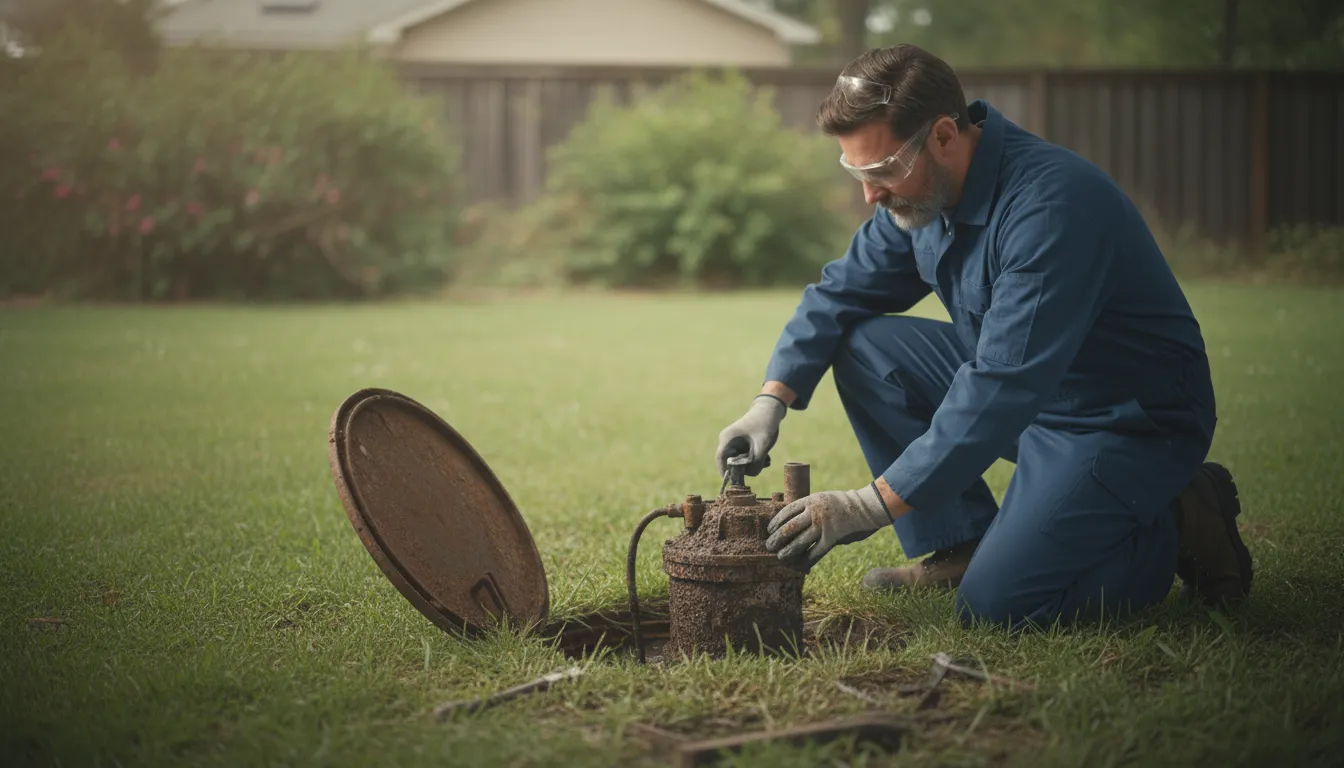
Find the Best Septic Pump Repair Companies for Your Business
No obligation • Fast responses • Nationwide coverage

Why you can trust Septic Spot
Septic Spot is a leading United States resource for understanding and comparing septic services. Our editors review providers using consistent criteria and verify key business details. Listings and scores are independent, and companies cannot pay to influence our content.
Search providers near you
Top Septic Pump Repair Companies in High Point, North Carolina Ranked
A failing septic pump or a malfunctioning system can quickly escalate from a minor nuisance to a major household emergency. Septic pump repair and replacement services address the critical mechanical and electrical components that move wastewater from your home to the drainfield. This matters because a properly functioning system protects your property, your health, and the local environment. For homeowners in High Point, navigating local soil conditions and regulations is key to a lasting fix. The following information can help you understand the process, costs, and local considerations, empowering you to connect with qualified professionals in your area.
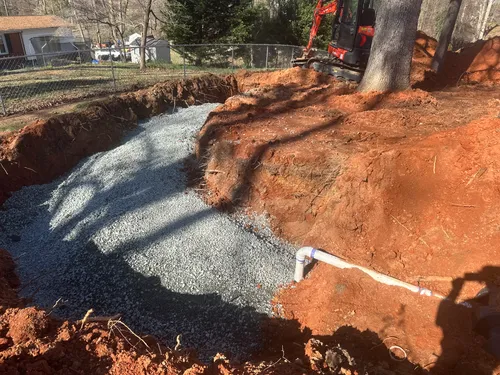
Chris Mendenhall Excavation & Septic LLC
5703 Midway School Rd, Thomasville, NC 27360
Chris Mendenhall Excavation & Septic LLC provides septic system inspection, repair, installation, and drain field services in Winston Salem, NC. The company handles septic pump repair and replacement along with excavation work related to septic systems. Known for installing pump tanks and leach fields, they have experience resolving long-standing septic issues. Customers appreciate their ability to diagnose repairs accurately, often saving the need for full replacements. Chris Mendenhall Excavation & Septic LLC is recognized for completing projects efficiently and maintaining site conditions.
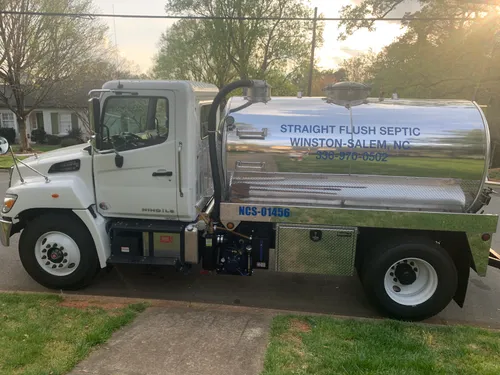
Straight Flush Septic
Winston Salem, NC
Straight Flush Septic provides a full range of septic services in Winston-Salem, NC, including septic tank pumping, inspections, repairs, and pump replacements. They serve residential and commercial clients throughout Forsyth County and nearby areas. The company offers specialized lift station maintenance and repair, ensuring systems that require more than gravity-fed solutions operate effectively. With a team of experienced technicians using advanced tools, Straight Flush Septic focuses on maintaining system health and environmental safety. They emphasize thorough maintenance and timely repairs to prevent system failures and extend longevity.
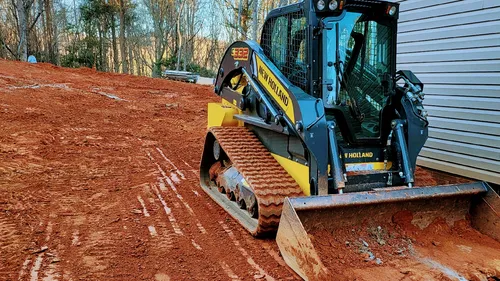
Newcomb Septic Services
5723 Country Club Rd M, Winston-Salem, NC 27104
Newcomb Septic Services is a locally owned company providing comprehensive septic system and excavation services in Winston-Salem, NC. Their offerings include septic pump installation and repair, septic system installation, septic tank repair, line jetting, and drain field repair and installation. They also provide grading, erosion control, storm drain installation, backfill, footing, and foundation services. The team brings decades of combined experience and focuses on quality workmanship and safety. They handle emergency septic repairs to prevent backups and protect properties.
Riddle Septic Solutions.
Winston Salem, NC
Riddle Septic Solutions is a locally owned and family-operated septic service provider based in Winston Salem, NC. They offer a range of services including septic and grease trap pumping, installations, inspections, repairs, pump replacements, and lift station maintenance for residential, commercial, and industrial customers. The company uses advanced techniques such as hydro jetting to maintain and repair septic systems efficiently.
A&B Septic Services
2544 Alamance Church Rd, Greensboro, NC 27406
A&B Septic Services, Inc. provides comprehensive septic system services in Greensboro, NC, including pumping, inspection, installation, repair, and grease trap pumping for both residential and commercial properties. With over twenty years of experience, they offer expertise in equipment such as Zoeller Pumps, Alderon Controls, and Liberty Pumps, ensuring proper system matching and long-term reliability. The company serves a broad area including High Point, Jamestown, and Winston-Salem, with weekend, after-hours, and emergency availability to address urgent septic needs promptly.
Understanding Your Septic System in High Point
A septic system is an on-site wastewater treatment plant for your property. In a typical system, waste flows from your home into a septic tank, where solids settle. The clarified liquid, or effluent, then exits the tank. In a conventional gravity system, it flows by gravity into a network of underground pipes in the drainfield. However, many homes in the Piedmont region, including High Point, require a more complex setup due to challenging soil conditions.
This is where pumps become essential. When the terrain or soil doesn't allow for gravity flow, a septic pump (or effluent pump) is installed to push the effluent to the drainfield. These systems, often called Low-Pressure Pipe (LPP) systems or pump systems, rely on a pump, a control panel, float switches, and an alarm to function correctly 1. Repairing or replacing these components is a specialized task that ensures your home's wastewater is managed safely.
The Impact of North Carolina Soils on System Design and Repair
The soil in your yard is the single most important factor in your septic system's design and its long-term viability. North Carolina's Piedmont region, where High Point is located, is known for its dense, heavy clay soils 2. Clay particles are very fine and packed tightly together, which means they drain water extremely slowly.
This poor drainage, or percolation rate, creates a significant challenge for septic systems. Wastewater can pool and saturate the soil, leading to system failure. To work around this, engineers often design systems that include pumps to distribute effluent under pressure or use advanced designs like mound systems 3. When a repair is needed, the soil type directly influences the options. For instance, a simple drainfield line repair might be possible, but if the underlying soil has completely failed, the entire system may need to be relocated or replaced with an engineered alternative.
Common Signs You Need Septic Pump or System Repair
Ignoring warning signs can lead to costly backups and property damage. Be alert for these indicators that your septic pump or system requires professional attention:
- Alarm Sounds: Most pump systems have a high-water alarm. If it's beeping or lit, the pump has failed or the water level is too high.
- Slow Drains & Backups: Gurgling toilets, slow-draining sinks, or sewage backing up into showers are classic signs of a system blockage or failure.
- Soggy Lawn or Odors: Unusually lush, soggy grass or foul odors near the tank or drainfield area indicate that effluent is surfacing.
- Electrical Issues: A tripped breaker at the pump control panel or signs of electrical damage point to pump motor or control problems.
If you notice any of these issues, it's time to call a specialist for an inspection. Regular maintenance, including inspections and pumping every 3-5 years, can help catch problems before they become emergencies 4.
The Professional Repair and Replacement Process
When you contact a septic service provider in High Point for a suspected pump issue, they will typically follow a structured process to diagnose and resolve the problem.
- Inspection and Diagnosis: A technician will first inspect the system. This involves checking the pump, control panel, float switches, and alarm. They will also assess the tank's sludge and scum levels and may perform a dye test or probe the drainfield to locate the issue 5.
- Permitting: For any repair that involves altering the tank or drainfield-such as replacing a tank, adding a new pump chamber, or repairing the absorption area-a permit from the Guilford County Environmental Health Department is required 6. Reputable companies will handle this permitting process.
- Pumping: Before any repair work inside the tank can begin, the tank must be pumped out. This is a critical safety and practical step that prevents damage during repairs and allows for a clear assessment of tank components like baffles and tees 7.
- Repair or Replacement: The specific work is then completed. This could range from replacing a $50 float switch to swapping out a $2,000 pump motor, or from cleaning a clogged drainfield line to installing a completely new engineered system 8.
Find the perfect septic pump repair companies for your needs
Get personalized recommendations and expert advice
Cost Guide for Septic Repairs in High Point
Understanding potential costs helps in planning and evaluating estimates. Prices can vary widely based on the system's complexity, the extent of the damage, and local soil conditions.
- Pump & Component Repairs: Repairing or replacing a septic pump, control panel, or float switches typically ranges from $800 to $5,000.
- Tank Component Repairs: Replacing a damaged baffle, riser, or tank lid generally costs between $300 and $1,200.
- Drainfield Repair: Addressing issues in the absorption area is more involved. Spot repairs or cleaning can cost $3,000 to $15,000, depending on access and the problem's scope 9.
- Complete System Replacement: When repair is not feasible, a full conventional system replacement starts around $10,000. For homes with poor soil requiring an engineered mound system or advanced pretreatment, costs can easily reach $40,000 or more10 11.
It's important to get detailed, written estimates from multiple licensed contractors. The lowest bid isn't always the best, especially if it doesn't account for necessary permits or long-term soil suitability.
Choosing a Local Septic Service Provider
High Point is home to several established septic service companies. When selecting a provider, look for:
- Proper Licensing: Ensure they are licensed by the state of North Carolina for wastewater system installation and repair.
- Local Experience: Choose a company familiar with Guilford County's specific regulations and the common clay soils of the Piedmont.
- Comprehensive Services: Opt for a provider that offers inspection, pumping, repair, and installation, so they can give unbiased advice on repair versus replacement.
- Good Communication: They should clearly explain the problem, your options, the associated costs, and the permitting process.
Local companies serving the High Point area include McMahan Septic Tank Inc., Driggers Septic Tank, Transou's Plumbing & Septic, and Straight Flush Septic, among others 12 13 14.
Repair vs. Replacement: Making the Right Decision
This is a critical crossroads for any homeowner facing a major septic issue. A professional inspection is essential to guide this decision. Generally, repair is the best path when the problem is isolated to a single component (like a pump or a section of pipe) and the rest of the system-especially the drainfield soil-is still functioning properly.
Replacement becomes necessary when the system has reached the end of its functional life, often due to drainfield failure. If the soil is permanently saturated or the system is undersized for the home, repairs will only be a temporary and costly bandage. In cases of severe drainfield failure, installing a new, properly engineered system is the only permanent solution 15. A trustworthy contractor will help you weigh the long-term costs and benefits of each option for your specific situation.
Frequently asked questions
Sources
Footnotes
-
Septic Systems and Their Maintenance - https://content.ces.ncsu.edu/septic-systems-and-their-maintenance ↩
-
How Soil Type Affects Septic System Performance - https://www.septicblueraleigh.com/how-your-soil-determines-your-septic-systems-success.html ↩
-
Septic Systems - https://www.martins-services.com/sanitation-service/septic-systems ↩
-
How Frequent Septic Tank Pumping Benefits DuPage County Homeowners - https://suburbanplumbingexperts.com/how-frequent-septic-tank-pumping-benefits-dupage-county-homeowners/ ↩
-
Septic Inspections: What is Involved & Costs - Transactly - https://blog.transactly.com/septic-inspections ↩
-
Repairing a Septic System | Onslow County, NC - https://www.onslowcountync.gov/715/Repairing-a-Septic-System ↩
-
Septic Pumping | High Point, NC - https://www.mcmahanseptictank.com/contact/septic-pumping-service-area/High-Point-NC ↩
-
Septic Repair | High Point, NC - https://www.mcmahanseptictank.com/contact/septic-repair-service-area/High-Point-NC ↩
-
Septic Drain field Repair | Septic Tank Repair Statesville, NC - https://www.lentzwastewater.com/septic-drainfield-repair/ ↩
-
Septic Systems: The Underground Cost of North Carolina's Growth - https://seaboundseptic.com/septic-systems-the-underground-cost-of-north-carolinas-growth/ ↩
-
Septic Repair vs. Replacement: A Guide to Costs & Red Flags - https://prosepticri.com/septic-repair-vs-replacement-guide/ ↩
-
Exceptional Septic Services | High Point, NC | Straight Flush Septic - https://straightflushseptic.com/areas-served/high-point-nc/ ↩
-
Septic System Services High Point, NC - https://transousseptic.com/high-point/ ↩
-
Expert Septic Tank Services - High Point, NC - https://www.driggersseptictanks.com/high-point-septic-services ↩
-
Septic Repair vs. Replacement: What's Best for Your System - https://www.townesseptic.com/blog/septic-repair-vs-replacement ↩