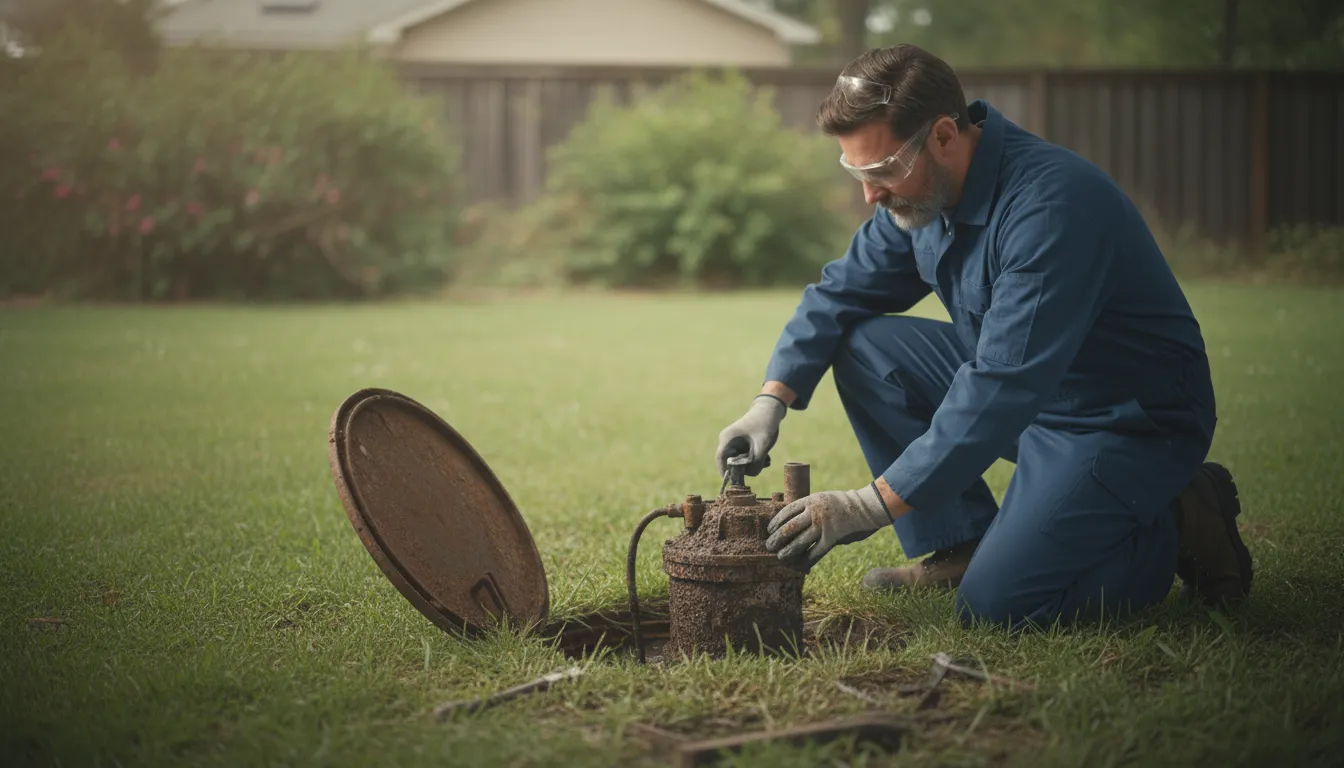
Find the Best Septic Pump Repair Companies for Your Business
No obligation • Fast responses • Nationwide coverage

Why you can trust Septic Spot
Septic Spot is a leading United States resource for understanding and comparing septic services. Our editors review providers using consistent criteria and verify key business details. Listings and scores are independent, and companies cannot pay to influence our content.
Search providers near you
Top Septic Pump Repair Companies in Missouri City, Texas Ranked
A failing septic pump can quickly escalate from a minor nuisance to a major emergency, especially in Missouri City's unique soil conditions. Septic pump repair and replacement services address critical mechanical failures in your wastewater system, ensuring it continues to treat and disperse effluent safely. This guide explains what these services entail, why they are crucial for local homeowners, and how you can find qualified professionals to assess and resolve your system's issues.
Understanding Your Septic System's Pump
Not all septic systems have a pump, but many in Missouri City do. Understanding the type of system you have is the first step in diagnosing a problem.
- Conventional Gravity Systems: These rely on the natural slope of your land to move effluent from the tank to the drain field. They typically do not include a pump unless the terrain requires a lift station.
- Aerobic Treatment Units (ATUs): These are advanced systems that use an electric pump to inject air into the treatment tank, fostering bacteria that break down waste more efficiently. They often include a separate pump to move treated effluent to a spray field. Due to their mechanical complexity, ATUs are more prone to needing pump and component repairs.
- Effluent (Dosing) Pumps: Used in both mound systems and some conventional systems where gravity flow isn't possible, these pumps periodically dose the drain field with liquid from the septic tank.
Why Missouri City's Soil Demands Attention
The ground beneath your home plays a starring role in your septic system's health and longevity. Missouri City, located in Fort Bend County, is known for its high-clay content soil.
- Low Permeability: Clay soil absorbs water very slowly, a characteristic known as low permeability. This makes traditional drain fields, which rely on soil absorption, inefficient and prone to failure.
- The Need for Advanced Systems: Because of this dense soil, many properties in the area require engineered solutions like aerobic treatment units (ATUs) or mound systems 1. These systems depend heavily on mechanical pumps to function correctly.
- Impact on Repairs: When a pump fails in these systems, the consequences are swift. Effluent can back up or the drain field can flood because the soil cannot absorb the excess liquid, leading to potential property damage and health hazards. This makes prompt repair response times critical.
Common Pump Problems and Repair Solutions
A septic pump repair involves diagnosing and fixing the mechanical or electrical component that has failed. Common issues include:
- Pump Burnout: The pump motor fails due to age, electrical surge, or running dry. Repair involves replacing the pump unit.
- Float Switch Failure: The float that turns the pump on and off gets stuck or malfunctions, causing the pump to run continuously or not at all.
- Clogged Impeller: Debris enters the pump and jams the impeller, preventing it from moving water.
- Control Panel/Alarm Malfunction: The electrical panel that operates the pump or the alarm that signals high water levels in the tank fails.
- Broken Pipes or Check Valves: The pipes leading to or from the pump crack, or the valve that prevents backflow fails.
For aerobic systems, repairs can also involve the air pump (aerator) or spray head components. A professional will first diagnose the exact issue, often starting with the control panel and checking electrical connections before moving to the pump itself.
When Replacement Becomes Necessary
Sometimes, a repair is a temporary fix on a system that is failing overall. Knowing when to replace the pump or the entire system can save you money and headaches in the long run.
Consider pump or system replacement if:
- The System is Beyond Its Lifespan: Most septic systems last 20-30 years. If your system is in this age range and experiencing frequent failures, replacement is likely more cost-effective 2.
- Repair Costs Are Prohibitive: A common rule of thumb is to consider replacement if repair estimates approach or exceed 50% of the cost of a new system 3.
- There is Drain Field Failure: If the underlying issue is a saturated or clogged drain field-a common problem in clay soils-repairing the pump won't solve the problem. The entire system, including the field, may need to be redesigned and replaced.
- You Have an Outdated System: Upgrading from an old, failing conventional system to a modern aerobic unit, while a larger investment, can be a necessary solution for difficult soil.
Find the perfect septic pump repair companies for your needs
Get personalized recommendations and expert advice
The Cost of Septic Pump Services in Missouri City
Costs can vary widely based on the complexity of your system, the extent of the problem, and local permit fees. The clay soil and prevalence of aerobic systems in Missouri City often influence these figures.
- Septic Pump Repair or Replacement: Replacing a failed effluent or aerator pump typically ranges from $250 to $1,000 for the service 4.
- Aerobic System Component Repair: Fixing or replacing parts like the aerator, control panel, or spray heads can range from $800 to $5,000, depending on the component and labor involved 5.
- Full Septic System Replacement: This is a major project. For an aerobic system, which is common locally, homeowners can expect costs between $10,000 and $28,000 or more 6 7. A conventional system replacement may be on the lower end of that scale, but may not be viable for the soil.
- Permits and Engineering: In Texas, permits are required for system repairs and replacements. This process often includes a soil morphology test and can cost between $1,100 and $1,600 in fees 8.
The Professional Service Process: From Diagnosis to Inspection
Hiring a licensed professional ensures the job is done safely and complies with Texas Commission on Environmental Quality (TCEQ) regulations.
- Diagnosis and Consultation: A technician inspects your system, checks the alarm, tests the pump and electrical components, and assesses the drain field to determine the root cause.
- Permitting and Site Assessment: For replacements or major repairs, the provider will pull the necessary local permits. A crucial part of this is a soil analysis to determine the appropriate system design for your property.
- Excavation and Installation: For a pump replacement, this is a relatively quick dig-and-replace operation. For a full system replacement, it involves excavating the old tank and field, installing the new tank, pump, and piping, and constructing a new drain field or spray system. This process can take 3 to 5 days 9.
- Final Inspection and Approval: Once installed, the county or local authority will conduct a final inspection to approve the system before the excavation is backfilled.
Maintaining Your System to Avoid Costly Repairs
Proactive maintenance is the best way to extend the life of your septic pump and system, especially for sensitive aerobic units.
- Schedule Regular Pumping: Have the solids pumped from your tank every 3-5 years to prevent clogs that can overload the pump.
- Annual Aerobic System Maintenance: ATUs require yearly servicing by a licensed maintenance provider. This includes checking the pump, aerator, alarms, and adding chlorine tablets, with average annual costs around $200-$300 10 11.
- Mind What You Flush: Never flush chemicals, grease, wipes, or excessive food waste. These can kill beneficial bacteria, clog pipes, and damage pump impellers.
- Protect Your Drain Field: Don't drive or park heavy vehicles over it, and divert rainwater runoff away from the area to prevent saturation.
Frequently asked questions
Sources
Footnotes
-
Septic Tank/Absorption Field Systems: A Homeowner's Guide to Installation and Maintenance - https://extension.missouri.edu/publications/eq401 ↩
-
Septic Tank Replacement Explained: Costs, Lifespan, And What To ... - https://www.theseptictankman.com/blog/septic-tank-replacement-explained-costs-lifespan-and-what-to-expect ↩
-
Septic Repair vs. Replacement: How to Decide What's Best for Your System - https://www.townesseptic.com/blog/septic-repair-vs-replacement ↩
-
How Much Does Septic Tank Repair Cost? [2026 Data] | Angi - https://www.angi.com/articles/how-much-does-repairing-septic-tank-cost.htm ↩
-
Aerobic Septic System Cost in Texas (Updated 2026) - https://dillonseptic.com/aerobic-septic-system-cost-in-texas/ ↩
-
Cost of a Septic System in Texas - https://dillonseptic.com/cost-of-a-septic-system-in-texas/ ↩
-
Septic System Installation Cost [2025 Data] - HomeAdvisor - https://www.homeadvisor.com/cost/plumbing/install-a-septic-tank/ ↩
-
Septic Repair vs. Replacement: A Guide to Costs & Red Flags - https://prosepticri.com/septic-repair-vs-replacement-guide/ ↩
-
Septic Tank Replacement in New Caney, TX | Affordable Local Service - https://www.septicproservices.com/services/septic-tank-replacement/ ↩
-
Average Cost to Install Septic System in Texas - https://dillonseptic.com/average-cost-to-install-septic-system-in-texas/ ↩
-
How to Avoid Costly Septic System Repairs - Take Care of Texas - https://takecareoftexas.org/about-us/blog/how-avoid-costly-septic-system-repairs ↩