
Find the Best Septic System Repair Companies for Your Business
No obligation • Fast responses • Nationwide coverage

Why you can trust Septic Spot
Septic Spot is a leading United States resource for understanding and comparing septic services. Our editors review providers using consistent criteria and verify key business details. Listings and scores are independent, and companies cannot pay to influence our content.
Search providers near you
Top Septic System Repair Companies in Anderson, Indiana Ranked
Maintaining a functional septic system is crucial for protecting your property, health, and the local environment in Anderson. When components fail, prompt and proper septic system repair is essential to prevent backups, contamination, and costly environmental damage. This guide explains the local regulations, common repair types, and the inspection process to help you navigate finding qualified professionals for your septic tank or drain field issues.
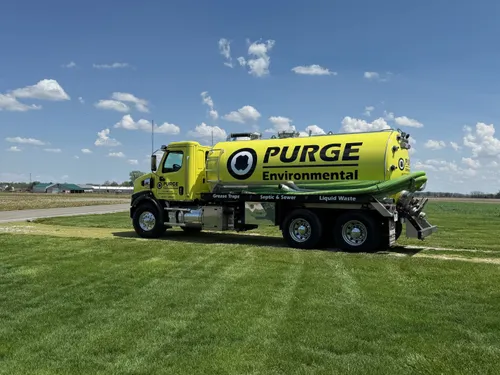
Purge Environmental
10625 Deme Dr D, Indianapolis, IN 46236
Purge Environmental is a locally owned and operated company based in Indianapolis, IN, specializing in septic tank pumping, inspection, and repair services. They offer residential and commercial solutions including septic tank cleaning, grease trap pumping, lift station maintenance, and industrial wastewater hauling. Their services cover Central and Eastern Indiana, focusing on environmentally responsible waste management. Purge Environmental provides 24/7 emergency pumping services to address urgent septic issues promptly. Their trained technicians follow a thorough twenty-point inspection process and dispose of waste at IDEM-approved facilities, ensuring compliance and eco-friendly practices.
Max Haas Septic Service
7514 E 39th St, Indianapolis, IN 46226
Max Haas Septic Service has been providing septic system services in Indianapolis, IN, and Central Indiana since 1923. They offer a full range of residential and commercial septic solutions including tank pumping, inspections, system installations, drain field replacements, sewer repairs, and drainage system design. With over 100 years of experience, the company handles everything from routine maintenance to complex system installations, ensuring compliance with local codes and long-term system performance. Their organized team uses modern equipment to deliver efficient service across multiple counties in the region.
Understanding Anderson's Septic System Regulations
All work on onsite sewage systems in Madison County is strictly regulated by the Madison County Health Department to ensure public and environmental safety. Before any repair, replacement, or modification can begin, a permit must be obtained from the department. This regulatory framework is designed to prevent groundwater contamination, which is a significant concern.
A critical rule is that repairs must be performed by a state-licensed septic installer. While homeowners are allowed to perform their own work, they must first pass a certified installer's exam and sign a formal "Homeowner Agreement" with the local health department 1. Furthermore, if raw sewage is surfacing on your property, you are required to notify the health department immediately, and the system must be repaired promptly to avoid potential fines 2.
Common Septic Repairs and Solutions
When your system shows signs of trouble, the solution depends on which component has failed. Here are the most frequent types of septic system fixes needed in the Anderson area:
- Septic Tank Repairs: This includes fixing cracks in concrete tanks, replacing collapsed or deteriorated inlet/outlet baffles, and installing new, watertight risers (made from concrete, fiberglass, or plastic) to provide easier future access for pumping and inspection 3.
- Drain Field (Leach Field) Issues: A failing absorption field is a serious problem. Solutions range from drain field rejuvenation techniques like high-pressure jetting (hydro-jetting) to remove clogging roots and biomat, to partial or full drain field replacement 4. Installing or cleaning an effluent filter at the tank outlet can also prevent solids from migrating and clogging the field.
- Distribution Box Repair: The distribution box (D-box) is a critical component that evenly disperses liquid effluent from the tank to the drain field lines. If it becomes broken, unlevel, or clogged, it can cause uneven distribution and field failure, necessitating repair or replacement 5.
- Complete System Replacement: In cases where repairs are not feasible or cost-effective-such as with severely compromised soil or an antiquated system-a full septic system installation may be required. This could involve a conventional gravity system or a more complex pump-assisted system, often utilizing a designated reserve area on the property.
The Professional Inspection: Your First Step
Before any repair is decided, a thorough professional inspection is vital to accurately diagnose the problem. In Anderson, systems are typically recommended for inspection every 3 years 6. A comprehensive inspection involves:
- Locating the System: Using specialized equipment if records are unclear to find the tank and drain field boundaries.
- Uncovering Access Points: Exposing the tank's manhole covers and inspection ports.
- Checking Water Levels: Determining if the tank is abnormally full (indicating a downstream blockage) or low (suggesting a leak) 7.
- Inspecting Baffles and Tees: Ensuring the inlet and outlet baffles are intact to prevent solids from exiting the tank.
- Evaluating Sludge and Scum: Measuring the layers of sludge (at the bottom) and scum (at the top) to determine if pumping is immediately necessary 8.
- Drain Field Assessment: Visually checking the drain field area for soggy soil, foul odors, or surfacing sewage, which are clear signs of failure 9.
This inspection provides the diagnostic report needed to plan effective repairs and is often required by the health department for permitting.
Permit and Soil Evaluation Requirements
The repair process is governed by specific rules. For most repairs, especially those involving the absorption field, the Madison County Health Department requires a soil profile evaluation 10. This typically involves digging three or more observation holes to assess the soil type, depth to limiting conditions (like bedrock or water table), and permeability. This evaluation ensures the repaired or new field is suitable for the property's conditions, as outlined in state code 410 IAC 6-8.3 11.
Once repairs are completed, a final inspection by the health department is mandatory before the excavation is backfilled 12. This ensures the work complies with the issued permit and all regulations.
Find the perfect septic system repair companies for your needs
Get personalized recommendations and expert advice
Understanding Repair and Replacement Costs
Costs for septic work in Anderson can vary widely based on the repair's complexity, tank size, soil conditions, and system type. It's always recommended to get multiple estimates from licensed professionals. Based on regional data, here are general price ranges:
- Permit Fees: A repair permit from the county is approximately $30, while a new construction permit is around $60 13.
- Pumping and Inspection: A standard septic tank pumping and inspection typically costs between $300 and $600, depending on tank size.
- Baffle or Riser Repair: Fixing or replacing baffles and installing risers can range from $500 to $1,500 14.
- Drain Field Rejuvenation/Repair: Procedures like hydro-jetting or replacing a section of field lines generally fall between $1,500 and $5,000 15.
- Full System Replacement: This is the most significant expense, often ranging from $5,000 to $15,000 or more, depending on the system technology required and site conditions 16.
Important Note: For the most current fee schedules and to ensure full compliance, always contact the Madison County Health Department directly at (765) 641-9523 before commencing any project.
Choosing a Service Provider in Anderson
When your system needs attention, selecting the right contractor is key. Look for professionals who are licensed by the state of Indiana for septic system installation and repair. They should be familiar with Madison County's specific permit process and soil evaluation requirements. A reputable provider will handle the permit application and coordinate with the health department for necessary inspections, making the process smoother for you. They should also provide a clear, detailed estimate that outlines the diagnosed problem, the proposed solution, and all associated costs.
Frequently asked questions
Sources
Footnotes
-
Environmental Health: Installing Your Own Septic System? - IN.gov - https://www.in.gov/localhealth/harrisoncounty/environmental-health/septic-systems/installing-your-own-septic-system/ ↩
-
Septic system oversight: Advocates say new Indiana law could ... - https://www.yahoo.com/news/septic-system-oversight-advocates-indiana-161700956.html ↩
-
SEPTIC APPLICATION - Madison County Health Department - https://www.madisoncountyhealth.org/uploads/5/9/7/0/59701963/septic_application_-_new_rev_07-31-2020.pdf ↩
-
Septic System Repairs in Indianapolis, IN - Purge Environmental - https://purgeenvironmental.com/residential/septic-repair/ ↩
-
Find Septic system installers and replacers in Anderson - https://www.homeadvisor.com/tloc/Anderson-IN/Septic-System-Install-or-Replace/ ↩
-
Homeowner's Guide to Septic Systems - http://indiana.clearchoicescleanwater.org/resources/epa-homeowners-guide-to-septic-systems/ ↩
-
Septic Inspection Process: What Homeowners Should Know ... - https://www.lunspro.com/vlog/the-septic-system-inspection-process-what-homeowners-should-know ↩
-
Indiana Onsite Sewage System Inspection Form - IOWPA - https://iowpa.org/wp-content/uploads/2019/09/Inspection_Form21.pdf ↩
-
Inspecting Your Household Septic System - https://www.extension.arizona.edu/sites/default/files/2024-09/az1159-2018_Inspecting%20Your%20Household%20Septic%20System.pdf ↩
-
CHAPTER 51: SEWAGE AND SEPTIC SYSTEMS REGULATIONS - https://www.in.gov/localhealth/stjosephcounty/files/County-Code-Septic-Ordinance.pdf ↩
-
Rule 410 IAC 6-8 Residential Sewage Disposal Systems - IN.gov - https://www.in.gov/health/eph/onsite-sewage-systems-program/historic-bulletins-and-rules/410-IAC-6-8-Residential-Sewage-Disposal-Systems,-1978-05-26.pdf ↩
-
County On-site Sewage Systems Ordinance This ... - IN.gov - https://www.in.gov/health/eph/files/Recommended-Ordinance-Sections-2024-05-28.pdf ↩
-
How to get a septic permit - IN.gov - https://www.in.gov/localhealth/harrisoncounty/files/Brochure_Septic_permit_how_to_get_one.pdf ↩
-
TOP 10 BEST Septic Services in Anderson, IN - Updated 2026 - Yelp - https://m.yelp.com/search?find_desc=Septic+Services&find_loc=Anderson%2C+IN ↩
-
Indiana Septic Tank Requirements | On-Site Sewage Systems - https://www.ntotank.com/blog/indiana-septic-tank-requirements ↩
-
How Much Does it Cost to Replace Leach Field - the Original Plumber - https://theoriginalplumber.com/plumbing-tips/cost-to-replace-leach-field/ ↩