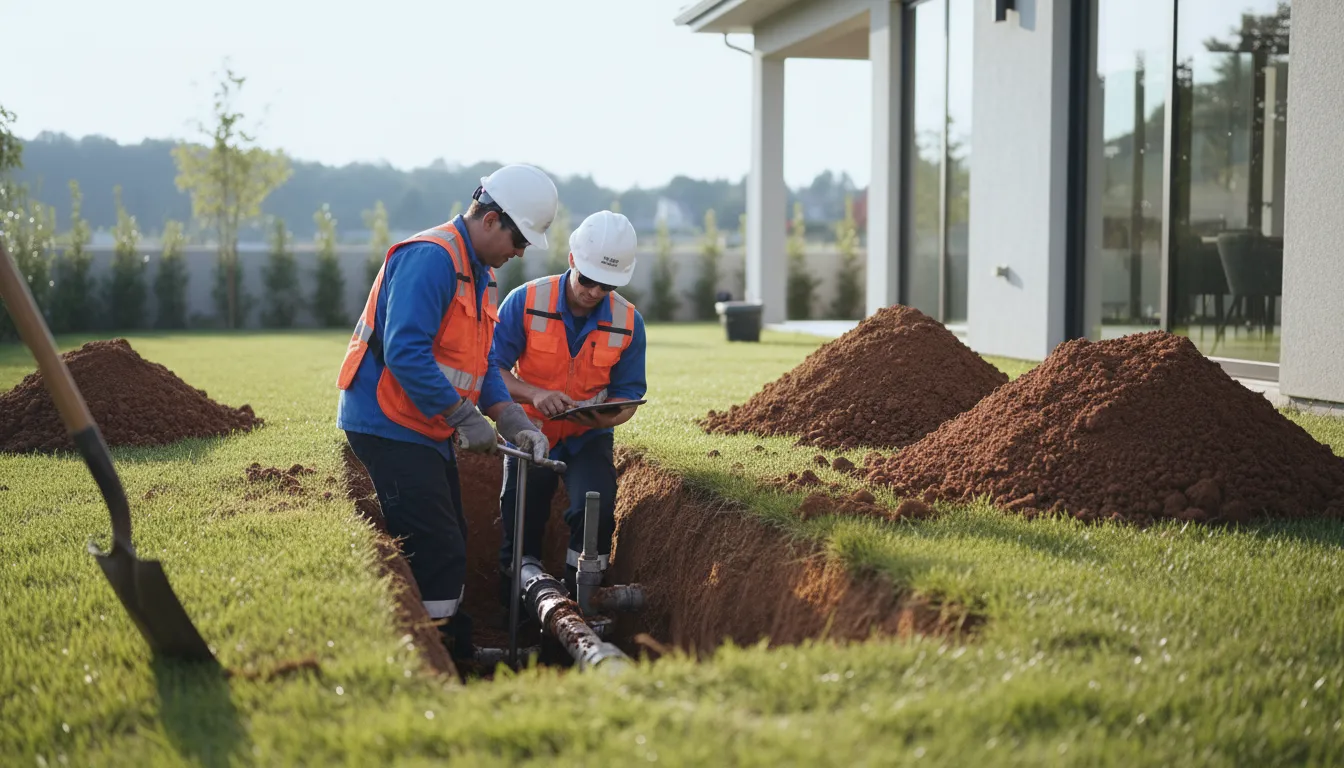
Find the Best Septic System Repair Companies for Your Business
No obligation • Fast responses • Nationwide coverage

Why you can trust Septic Spot
Septic Spot is a leading United States resource for understanding and comparing septic services. Our editors review providers using consistent criteria and verify key business details. Listings and scores are independent, and companies cannot pay to influence our content.
Search providers near you
Top Septic System Repair Companies in Greenwood, Indiana Ranked
A failing septic system is more than an inconvenience; it's a serious health and environmental hazard that requires immediate, professional attention. Septic system repair involves diagnosing and fixing issues with your on-site sewage system, from minor component replacements to major drain field overhauls. In Greenwood, these repairs are strictly regulated by the Johnson County Health Department to protect groundwater and public health. This guide will help you understand the local repair process, regulations, and what to expect when you need to restore your system's function.
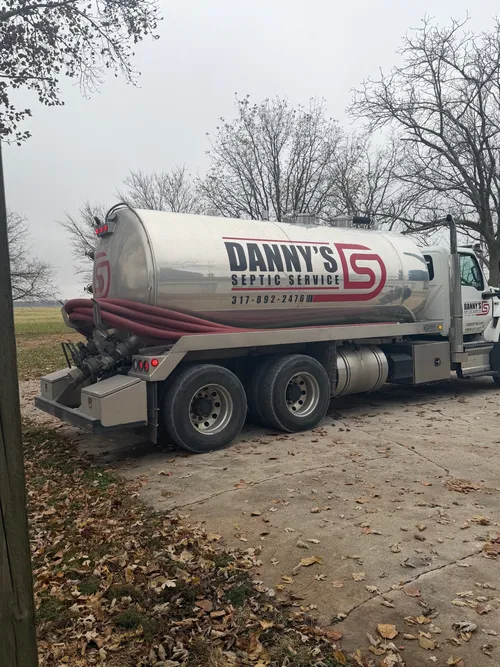
Danny's Septic Service
4938 E County Rd 1000 N, Pittsboro, IN 46167
Danny's Septic Service is a septic tank pumping, repair, and installation company based near Indianapolis, IN. They provide services to residential and commercial customers across several counties including Boone, Clinton, Hendricks, Montgomery, Putnam, Tippicanoe, and parts of Marion County. Their licensed team handles a full range of septic system needs with a focus on building strong client relationships.
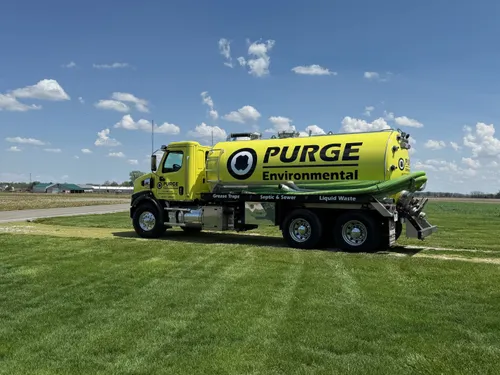
Purge Environmental
10625 Deme Dr D, Indianapolis, IN 46236
Purge Environmental is a locally owned and operated company based in Indianapolis, IN, specializing in septic tank pumping, inspection, and repair services. They offer residential and commercial solutions including septic tank cleaning, grease trap pumping, lift station maintenance, and industrial wastewater hauling. Their services cover Central and Eastern Indiana, focusing on environmentally responsible waste management. Purge Environmental provides 24/7 emergency pumping services to address urgent septic issues promptly. Their trained technicians follow a thorough twenty-point inspection process and dispose of waste at IDEM-approved facilities, ensuring compliance and eco-friendly practices.
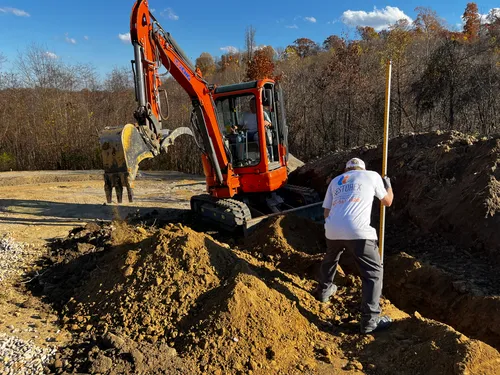
Restorex Septic Solutions
6616 E S R 144, Mooresville, IN 46158
Restorex Septic Solutions provides residential and commercial septic services in Indianapolis, IN. Their offerings include septic tank pumping, inspections, repairs, and installations to maintain proper waste management and comply with environmental regulations. The company addresses issues such as backups, odors, and slow drains to help preserve property sanitation and occupant health. Restorex Septic Solutions is available to assist with septic system problems whenever needed, working with clients and insurance companies to manage repairs efficiently.

AA Septic Service
Indianapolis, IN
AA Septic Service is a full-service septic company based in Indianapolis, IN, specializing in septic tank pumping, inspections, repairs, and grease trap pumping. They serve residential and commercial clients, offering services such as lift station pumping, video inspections, and septic system diagnostics. Their equipment includes large capacity pump trucks and video inspection tools, enabling thorough maintenance and repair work. AA Septic Service operates primarily in Morgan County, Indiana, focusing on maintaining and repairing septic systems to ensure proper wastewater treatment and disposal.
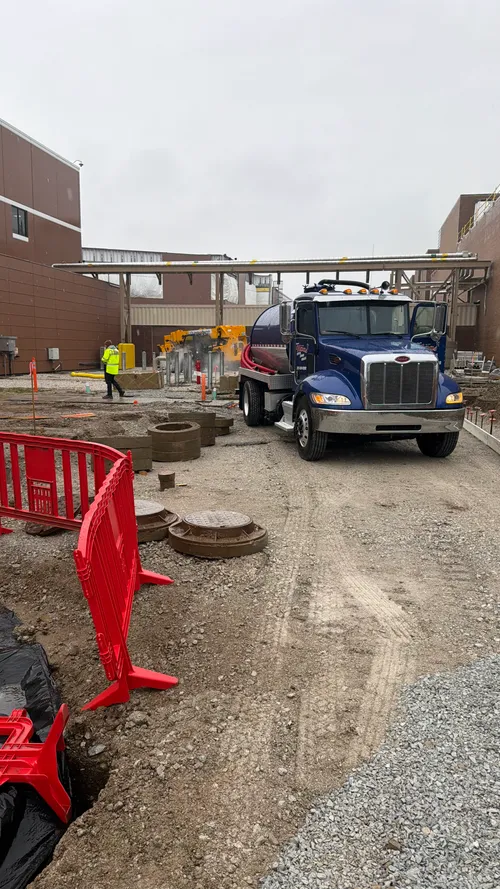
Max Haas Septic Service
7514 E 39th St, Indianapolis, IN 46226
Max Haas Septic Service has been providing septic system services in Indianapolis, IN, and Central Indiana since 1923. They offer a full range of residential and commercial septic solutions including tank pumping, inspections, system installations, drain field replacements, sewer repairs, and drainage system design. With over 100 years of experience, the company handles everything from routine maintenance to complex system installations, ensuring compliance with local codes and long-term system performance. Their organized team uses modern equipment to deliver efficient service across multiple counties in the region.
Understanding Septic System Failures
Before diving into repairs, it's crucial to recognize the signs of a failing system. Common red flags include slow-draining sinks and toilets, gurgling sounds in your plumbing, sewage odors in your yard or home, and soggy ground or standing water over the drain field area. These symptoms indicate that your system is not properly treating and dispersing wastewater, which can lead to contamination 1. In Greenwood, a system is officially considered "failing" if it causes a public health nuisance, contaminates surface or groundwater, or is not constructed according to code 2. Addressing these issues promptly with proper septic repair can prevent more extensive damage and costly replacements.
The Regulatory Landscape in Johnson County
All septic system work in Greenwood is governed by Johnson County ordinances and Indiana state code (410 IAC 6-8.3). The Johnson County Health Department oversees the permitting and inspection process to ensure all repairs meet safety and environmental standards 3. A fundamental rule is that only contractors licensed and registered with the Johnson County Health Department are legally permitted to perform septic repairs 4. This licensing requirement is your first assurance of quality and compliance.
Before any shovel hits the ground, a Septic System Repair Application must be filed with and approved by the Health Department. This permit is mandatory and ensures the proposed fix adheres to current codes. The department may also require a site evaluation by a licensed soil scientist for major repairs, particularly those involving the soil absorption field 5. Final inspections are not optional; a county inspector must approve the completed work before the system is put back into service.
Common Types of Septic Repairs
Septic fixes range from simple, affordable adjustments to complex, ground-up projects. Understanding the scope helps in planning and budgeting.
Minor Repairs
These are typically confined to the tank and its immediate components:
- Baffle Replacement: The inlet and outlet baffles inside the tank are crucial for preventing scum and solids from escaping into the drain field. Broken or deteriorated baffles are a common cause of field clogging and can often be replaced without replacing the entire tank.
- Installing Risers and Lids: Adding risers (vertical pipes) from the tank lids to the ground surface provides easy access for future pumping and inspection. Replacing broken or unsafe concrete lids with modern, secure plastic lids is also a standard minor repair.
- Pipe Repairs: Fixing broken or offset pipes connecting the house to the tank or the tank to the distribution box can resolve drainage issues.
Major Repairs and System Replacement
When the problem lies in the soil absorption field (leach field) or the tank itself, the project becomes more significant.
- Drain Field Repairs: This is often the most costly repair. If the field is saturated or clogged (a condition called "biomat overload"), options include installing additional lateral lines, replacing a portion of the field, or in some cases, adding a completely new field in a different location on the property. This often requires a new soil evaluation 6 7.
- Tank Replacement: A septic tank can fail due to cracking (common in older concrete tanks), deterioration, or being undersized for the home. Replacing a tank involves excavating the old one, disposing of it properly, and installing a new concrete or plastic tank that meets current size standards.
- Holding Tank Installation: In some cases where soil conditions are prohibitive or space is extremely limited, the Health Department may permit a holding tank as a last resort. This is not a treatment system but a storage tank that must be pumped out very frequently, adding a significant ongoing cost 8.
The Professional Repair Process: What to Expect
A reputable, licensed contractor will follow a systematic approach to diagnose and fix your system.
- System Locating and Evaluation: The contractor will first locate all system components-tank, distribution box, and drain field-using property records or electronic locating equipment. This is a critical first step, especially for older homes where records may be lost 9.
- Pumping and Inspection: The tank will be pumped out to allow for a thorough internal inspection. The contractor will check the tank's structural integrity, look for cracks, and assess the condition of baffles and outlet tees. They will also inspect the drain field for signs of surfacing effluent or saturation.
- Diagnosis and Permit Acquisition: Based on the inspection, the contractor will diagnose the root cause of the failure. They will then prepare and submit the necessary repair application and plans to the Johnson County Health Department to obtain the required permit 10.
- Execution of Repairs: Once the permit is secured, the repair work begins. For field work, this involves careful excavation to protect the surrounding soil structure. The contractor will follow the approved plans exactly.
- Final Inspection: After the repair is complete, the contractor will request a final construction and grade inspection from the Health Department. Passing this inspection is required to close the permit and legally put your system back into operation 11.
Find the perfect septic system repair companies for your needs
Get personalized recommendations and expert advice
Cost Considerations for Septic Repairs in Greenwood
Repair costs can vary dramatically based on the type and extent of the failure, soil conditions, and system size. It's always wise to get multiple estimates from licensed contractors. Here's a general range based on common repair types in the region 12 13 14:
- Repair Permit Fee: Typically between $100 and $250.
- Diagnostic Pumping & Inspection: $300 to $600.
- Minor Repairs (e.g., baffle replacement, riser installation): $500 to $1,000+.
- Major Drain Field Repairs (e.g., new lateral lines): $3,000 to $10,000+.
- Full System Replacement: This major undertaking can easily exceed $10,000 to $20,000, depending on soil type and system design.
Note: If a public sanitary sewer line is available within a reasonable distance of your property, the Johnson County Health Department may require you to connect to it instead of investing in a major septic system repair or replacement 15. This is a crucial factor to investigate early in the process.
Protecting Your Investment: Maintenance and Best Practices
The best repair is the one you can avoid. Proactive maintenance is key to extending the life of your septic system.
- Pump Regularly: Have your tank pumped every 3 to 5 years by a licensed professional to prevent solids from overflowing into the drain field, which is a primary cause of failure 16.
- Protect the Drain Field: Never drive, park, or build structures (like sheds or patios) on top of your absorption field. The weight compacts the soil, destroying its ability to absorb and treat wastewater 17. Also, divert roof drains and surface water away from the area.
- Mind What Goes Down the Drain: Avoid flushing chemicals, grease, diapers, wipes (even "flushable" ones), and excessive use of garbage disposals. These can clog pipes, disrupt the bacterial balance in the tank, and accelerate drain field failure.
Frequently asked questions
Sources
Footnotes
-
Homeowner's Guide to Septic Systems - http://indiana.clearchoicescleanwater.org/resources/epa-homeowners-guide-to-septic-systems/ ↩
-
Failing Systems - Johnson County Kansas - https://www.jocogov.org/department/environment/septic-systems/failing-systems ↩
-
Johnson - IN.gov - https://www.in.gov/health/eph/files/Johnson-Ordinance-2024-08-27a.pdf ↩
-
Commercial Systems - Johnson County Kansas - https://www.jocogov.org/department/environment/septic-systems/commercial-systems ↩
-
FAQs / Johnson County, Indiana - https://johnsoncounty.in.gov/egov/apps/faq/list.egov?eGov_searchTopic=48 ↩
-
Onsite Sewage Systems Program - IN.gov - https://www.in.gov/health/eph/onsite-sewage-systems-program/ ↩
-
410 13-350 | IARP - https://iar.iga.in.gov/register/20131023-IR-410130350PRA ↩
-
Septic Systems - Greene County, Indiana - https://www.co.greene.in.us/topic/index.php?topicid=48&structureid=23 ↩
-
Septic Services near Greenwood in Johnson County, IN ... - https://maxhaassepticservices.com/septic-services-near-greenwood-johnson-county-in ↩
-
SEPTIC SYSTEM REPAIR APPLICATION - Johnson County - https://johnsoncounty.in.gov/egov/apps/document/center.egov?view=item;id=1923 ↩
-
Indiana Septic Tank Requirements | On-Site Sewage Systems - https://www.ntotank.com/blog/indiana-septic-tank-requirements ↩
-
RESIDENTIAL ONSITE SEPTIC PERMIT PROCESS - https://rushcounty.in.gov/wp-content/uploads/2021/07/RESIDENTIAL-ONSITE-SEPTIC-PERMIT-PROCESS-1.pdf ↩
-
Septic System Inspections: A Step-by-Step How-To Guide - https://westcoastsanitationinc.com/septic-inspection-service/ ↩
-
Understanding the Costs: Septic Inspection and Repair in Bloomington, MN - https://mikesseptic.com/2025/07/understanding-the-costs-septic-inspection-and-repair-in-bloomington-mn/ ↩
-
Onsite Sewage (Septic) Systems Program - https://marionhealth.org/onsite-sewage-septic-systems-program/ ↩
-
Greenwood IN Septic System Service - https://jlgsepticllc.com/service-areas/indiana/greenwood/ ↩
-
Indiana Septic Tank Requirements | On-Site Sewage Systems - https://www.ntotank.com/blog/indiana-septic-tank-requirements ↩