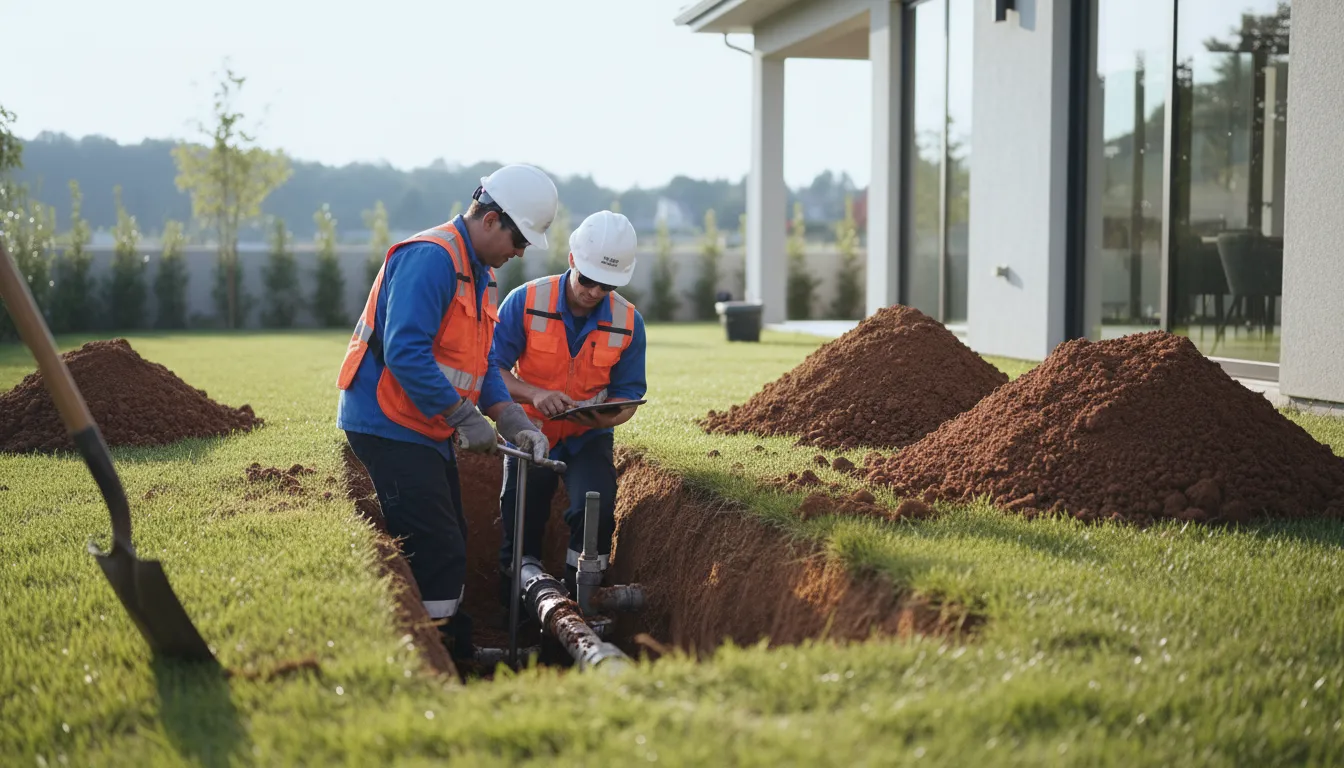
Find the Best Septic System Repair Companies for Your Business
No obligation • Fast responses • Nationwide coverage

Why you can trust Septic Spot
Septic Spot is a leading United States resource for understanding and comparing septic services. Our editors review providers using consistent criteria and verify key business details. Listings and scores are independent, and companies cannot pay to influence our content.
Search providers near you
Top Septic System Repair Companies in Hammond, Indiana Ranked
A failing septic system is more than an inconvenience; it's a serious health and environmental hazard that requires prompt, professional attention. Septic system repair involves diagnosing and fixing issues with your tank, pipes, or drain field to restore proper wastewater treatment on your property. For Hammond homeowners, navigating these repairs means understanding local regulations enforced by the Lake County Health Department and finding qualified, licensed professionals to do the job correctly. This guide will help you understand the repair process, local requirements, and how to connect with trusted service providers in Northwest Indiana.

Suburban Plumbing Sewer Line and Drain Cleaning Experts
9100 Plainfield Rd Suite #9A, Brookfield, IL 60513
Suburban Plumbing Sewer Line and Drain Cleaning Experts is a full-service plumbing company serving Chicago, IL, and the greater Chicagoland area. They provide a wide range of services including septic tank pumping, inspections, repairs, and new system installations, as well as sewer line repairs, drain cleaning, water heater services, and flood control solutions. With over 30 years of experience, their licensed and insured technicians use advanced equipment like hydro jetting and sewer camera inspections to deliver effective plumbing solutions. The company offers 24/7 emergency plumbing services to address urgent issues promptly.
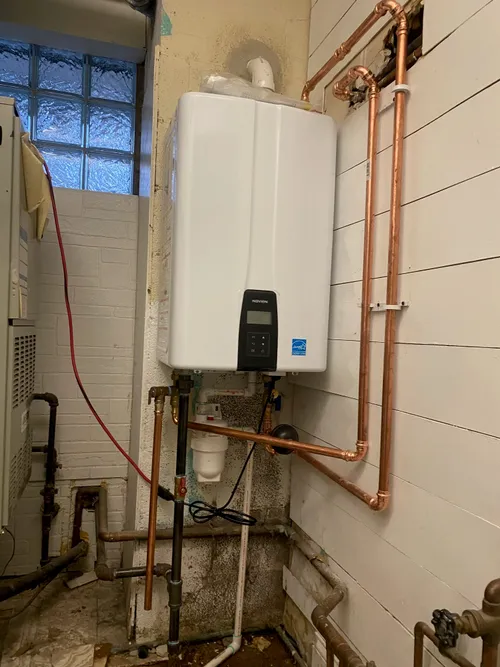
Feikema Plumbing & Sanitation
1854 Ridge Rd, Munster, IN 46321
Feikema Plumbing & Sanitation is a family-owned business based in Munster, IN, serving the Chicago, IL area with plumbing and septic system services. Established in 1956, they offer a wide range of solutions including septic tank pumping, septic system repairs, drain cleaning, water heater installation, and sewer maintenance. Their expertise includes advanced diagnostics using sewer cameras and modern rodding tools. With over 60 years of experience, Feikema Plumbing & Sanitation combines local community focus with licensed, bonded, and insured service.
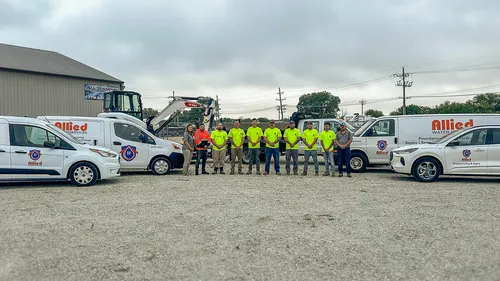
Allied Water Services
Joliet, IL
Allied Water Services is a septic system repair and installation company based in Joliet, IL. They specialize in comprehensive underground and water management solutions, including septic system repairs, septic tank installations, drainage system design, and waterproofing. The company is equipped to handle challenging soil and water conditions common in the region. Their services cover a broad area including Kankakee, DuPage, Will, Iroquois, Cook, Livingston, and Grundy counties. Allied Water Services emphasizes code compliance and thorough project planning, providing documentation and warranties for their work.
FreeFlow Environmental
4411 Evans Ave, Valparaiso, IN 46383
FreeFlow Environmental offers septic tank pumping and septic system repair services in Chicago, IL. They serve residential and commercial clients in Northwest Indiana and Illinois, providing comprehensive solutions including septic system restoration, sewer line cleaning, and no-dig sewer line repairs. The company is licensed, bonded, insured, and IOWPA certified, emphasizing environmentally responsible practices and adherence to local regulations. Their skilled technicians use advanced technology to diagnose and fix septic and sewer issues efficiently.
FreeFlow Environmental of Cook County
7030 Centennial Dr Suite 133, Tinley Park, IL 60477
FreeFlow Environmental of Cook County offers septic tank pumping and septic system repair services in Chicago, IL. They serve residential and commercial clients, addressing septic, sewer, and drainage issues with licensed and insured professionals. The company uses advanced technology for septic system repair, pumping, and sewer line cleaning, including no-dig sewer line repairs. Their services cover system maintenance, emergency repairs, and full restorations to ensure efficient operation and prevent backups. FreeFlow Environmental also emphasizes environmental stewardship in their work.
Understanding Septic System Failures and Local Regulations
When your septic system malfunctions, it's often due to age, lack of maintenance, or component failure. Common signs include slow drains, sewage backups into the home, soggy ground or standing water over the drain field, and foul odors. In Hammond and throughout Lake County, all septic system repairs are strictly regulated. Before any work begins, you must obtain a repair permit from the Lake County Health Department. This ensures the work complies with Indiana State Department of Health Rule 410 IAC 6-8.3, the governing code for on-site sewage systems 1.
A critical rule for homeowners to understand is that a "repaired" system must generally meet the same design standards as a brand-new system 2. This means if your old system has failed, a simple patch job is rarely an option. The entire system, or a major component like the drain field, may need to be upgraded to current code. If a system cannot be repaired to meet these standards, a full replacement is required.
The Permit Process for Repairs
The repair permit process is designed to protect public health and groundwater. Key steps include:
- Application: Submit a permit application to the Lake County Health Department Environmental Health Division.
- Site Evaluation: For repairs involving the soil absorption field (leach field), a certified soil scientist must perform an on-site evaluation to determine the appropriate design for the new or repaired component 3 4.
- Plan Approval: The proposed repair plans, often prepared by a licensed installer or engineer, must be approved.
- Licensed Installation: Repairs must typically be performed by a licensed and bonded septic system installer 5. While Indiana allows homeowners to install or repair their own systems in some cases, they may be required to pass an installer's exam and will still need the approved permit 6.
Common Types of Septic Repairs
Not all septic issues require a full system overhaul. Many problems can be resolved with targeted repairs. Here are some of the most common fixes performed by Hammond-area contractors.
Tank-Related Repairs
The septic tank itself can develop issues over time.
- Baffle Repair/Replacement: The inlet and outlet baffles are crucial for preventing solids from flowing into the drain field. If they are broken or deteriorated, they must be repaired or replaced to prevent drain field clogging.
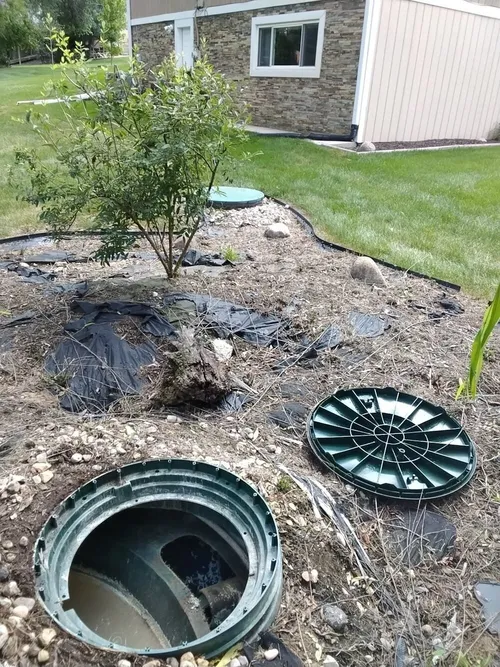
- Riser Installation: Older tanks are often buried deep without easy access. Installing risers brings the tank lid to the surface, making future inspections, pumping, and repairs much easier and safer, and is often required to meet modern standards.
- Tank Pumping/Cleaning: While routine maintenance, pumping is sometimes the first step in a repair to remove excess sludge and inspect the tank's interior.
Drain Field (Leach Field) Repairs
The drain field is where pre-treated liquid effluent is dispersed into the soil. Failures here are common and can be complex.
- Line Repair/Replacement: Individual perforated pipes in the drain field can crack, collapse, or become clogged with roots or biomat. Excavating to repair or replace these lines can restore function.
- Drain Field Rejuvenation: This is a broader repair approach that may involve techniques like hydro-jetting to clear clogged pipes, adding new gravel, or even installing entirely new lateral lines alongside the old ones.
System Component Repairs
For systems with mechanical parts, component failure is a frequent issue.
- Effluent Pump Replacement: Aerobic treatment units (ATUs) or mound systems use pumps to move effluent. A failed pump will halt the entire system and needs immediate replacement.
- Filter Cleaning/Replacement: Outlet filters catch solids; a clogged filter can cause backups and needs regular service.
The Professional Diagnostic & Inspection Process
An accurate diagnosis is the foundation of any effective repair. Professional septic inspectors in Hammond follow a systematic process 7 8 9:
- Locating the System: Using property records, "as-built" diagrams, or electronic locating equipment to find the tank and drain field lines.
- Exposing the Tank: Carefully excavating to uncover the tank lid and inspection ports.
- Internal Inspection: Checking the tank for structural integrity (cracks, leaks), measuring sludge and scum levels, and inspecting baffles and tees.
- Flow Test: Running water through household fixtures to check for proper drainage and to see if sewage backs up into the tank or home.
- Drain Field Evaluation: Probing the soil absorption area for signs of saturation, standing water, or surfacing sewage, which indicate failure 10.
This thorough inspection pinpoints the exact problem, allowing the contractor to recommend the most efficient and code-compliant repair solution.
Find the perfect septic system repair companies for your needs
Get personalized recommendations and expert advice
Understanding Repair Costs in Northwest Indiana
Repair costs in Hammond vary widely based on the problem's severity, soil conditions, and system size. The following are estimated price ranges; always get multiple quotes for your specific situation 11 12 13.
- Inspection & Diagnosis: $100 - $450. This essential first step identifies the issue.
- Septic Pumping: $300 - $700. Often needed before repairs or as part of maintenance.
- Minor Repairs: $200 - $1,500. Includes fixing baffles, replacing a damaged lid, or servicing an effluent filter.
- Major Repairs (Line Replacement): $1,000 - $5,000. For repairing or replacing sections of the drain field piping.
- Drain Field Rejuvenation: $1,000 - $5,000. For advanced cleaning or partial replacement of the leach field.
- Total System Replacement: $3,000 - $20,000+. Required when the existing system cannot be repaired to code.
- Permit Fees: Vary by county; Lake County fees are typically around $100+ for a repair permit 14.
Local Hammond & Lake County Service Providers
Finding a licensed and reputable contractor is crucial. The following are examples of local businesses that offer septic repair and related services in the area 15 16 17 18 19:
- Scott's Septic Service (219-405-3395): Offers inspections, repairs, and pumping.
- FreeFlow Environmental (219-462-0400): Specializes in septic repair and drain field rejuvenation.
- Feikema Plumbing & Sanitation (219-838-5618): Provides residential septic repair and drain cleaning services.
- Johnson Septic Service (219-393-3576): Specializes in pumping and baffle repairs.
When contacting providers, verify they are licensed to work in Lake County and ask for references from recent repair jobs.
Frequently asked questions
Sources
Footnotes
-
CHAPTER 51: SEWAGE AND SEPTIC SYSTEMS REGULATIONS - https://www.in.gov/localhealth/stjosephcounty/files/County-Code-Septic-Ordinance.pdf ↩
-
Indiana Septic Tank Requirements | On-Site Sewage Systems - https://www.ntotank.com/blog/indiana-septic-tank-requirements ↩
-
Guidelines for Addressing a Failing Septic System - https://www.lakecountyil.gov/DocumentCenter/View/4182/Failing-Systems-Brochure-PDF?bidId= ↩
-
CHAPTER 51. - SEWAGE AND SEPTIC SYSTEMS REGULATIONS | ... - https://library.municode.com/in/st._joseph_county/codes/code_of_ordinances?nodeId=TITVPUWO_CH51SESESYRE ↩
-
Inspections and Permits - Lake County Government - https://lakecountyin.gov/departments/health/environmental-health-division/inspections-and-permits/ ↩
-
Environmental Health: Installing Your Own Septic System? - IN.gov - https://www.in.gov/localhealth/harrisoncounty/environmental-health/septic-systems/installing-your-own-septic-system/ ↩
-
Homeowner's Guide to Septic Systems - http://indiana.clearchoicescleanwater.org/resources/epa-homeowners-guide-to-septic-systems/ ↩
-
Clark County Indiana Septic System Installers - https://clarkhealth.net/index.php/environmental-health/septic-systems ↩
-
Preparing for Septic Tank Inspection: 7 Key Steps - https://septic911.com/preparing-for-septic-tank-inspection/ ↩
-
DIY vs Professional Septic Inspections: Do You Need Pro Help? - https://www.sterlingsepticandplumbing.com/blog/diy-vs-pro-septic-inspections/ ↩
-
How much does septic tank system repair cost? - HomeGuide - https://homeguide.com/costs/septic-tank-repair-cost ↩
-
How Much Do Septic Tank Repairs Cost? [2025 Data] - HomeAdvisor - https://www.homeadvisor.com/cost/plumbing/repair-a-septic-tank/ ↩
-
Understanding the Costs of Replacing a Septic Tank and Other Components - https://www.scorpionsepticservices.com/blog/understanding-the-costs-of-replacing-a-septic-tank ↩
-
RESIDENTIAL ONSITE SEPTIC PERMIT PROCESS - https://rushcounty.in.gov/wp-content/uploads/2021/07/RESIDENTIAL-ONSITE-SEPTIC-PERMIT-PROCESS-1.pdf ↩
-
Homeowner's Guide to Septic Systems - http://indiana.clearchoicescleanwater.org/resources/epa-homeowners-guide-to-septic-systems/ ↩
-
Scott's Septic Service - https://www.google.com/viewer/place?mid=/g/11vqhr0sk8 ↩
-
FreeFlow Environmental - https://www.google.com/viewer/place?mid=/g/1tfkrck7 ↩
-
Feikema Plumbing & Sanitation - https://www.google.com/viewer/place?mid=/g/1vn_zkj7 ↩
-
Johnson Septic Service - https://www.google.com/viewer/place?mid=/g/11q847cyld ↩