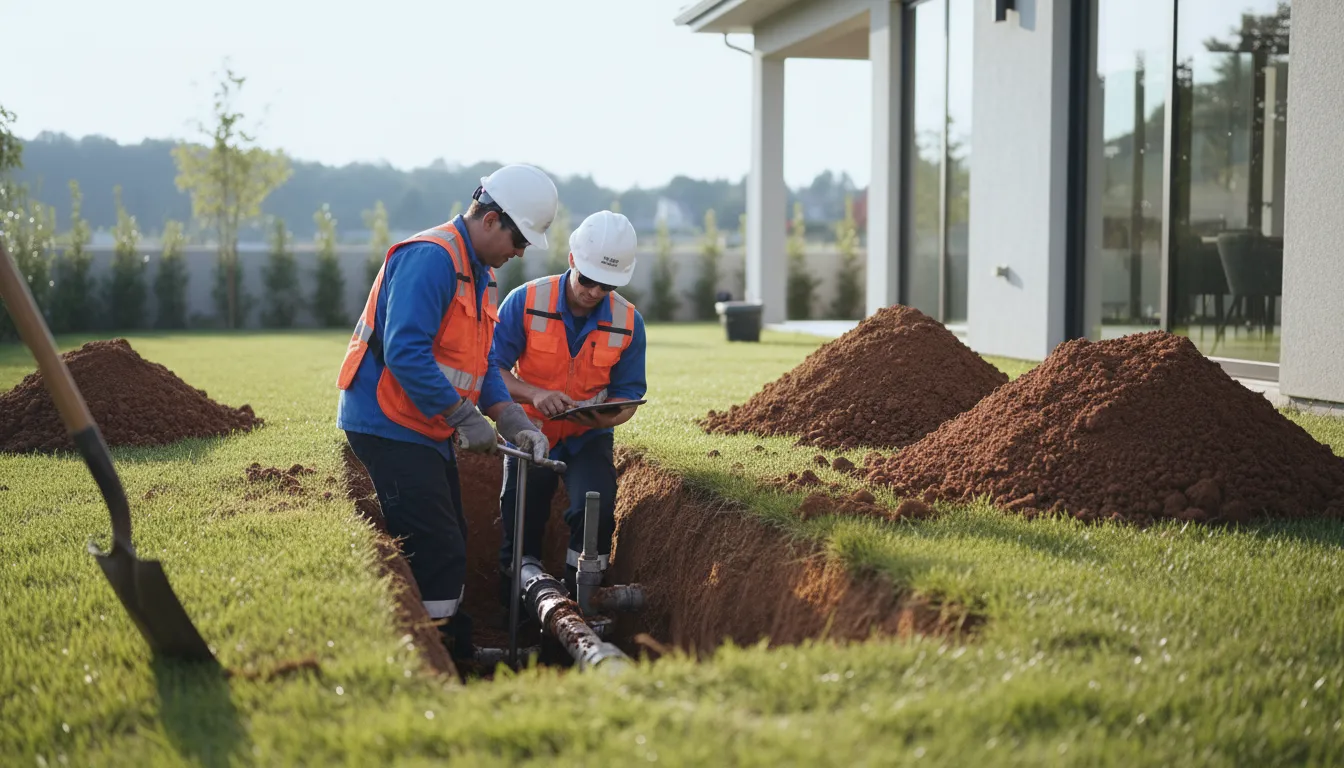
Find the Best Septic System Repair Companies for Your Business
No obligation • Fast responses • Nationwide coverage

Why you can trust Septic Spot
Septic Spot is a leading United States resource for understanding and comparing septic services. Our editors review providers using consistent criteria and verify key business details. Listings and scores are independent, and companies cannot pay to influence our content.
Search providers near you
Top Septic System Repair Companies in Gaithersburg, Maryland Ranked
A failing septic system is a serious issue that can threaten your home's sanitation, your property value, and the local environment. Septic system repair involves diagnosing and fixing problems with your tank, pipes, or drainfield to restore proper wastewater treatment. In Gaithersburg, these repairs are strictly regulated by Montgomery County to protect public health and water quality. This guide explains the local repair process, common issues, and how to connect with qualified, registered septic contractors who can navigate the county's permitting and inspection requirements to get your system functioning safely again.
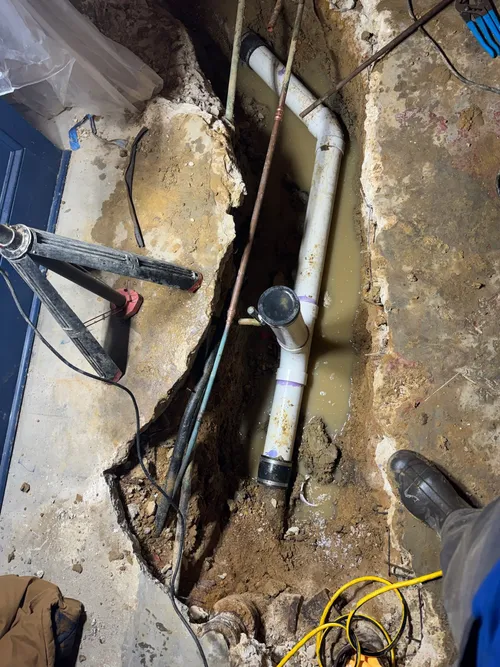
Emerald Plumbing Co.
119 Oronoco St #101, Alexandria, VA 22314
Emerald Plumbing Co. has been serving the Washington, DC metropolitan area since 2001, providing residential and commercial plumbing services. They specialize in septic tank pumping, inspection, repair, and installation, offering comprehensive maintenance to help prevent costly system failures. Their team is trained to handle the complexities of plumbing systems in the region and is equipped to respond quickly to service needs. Emerald Plumbing Co. also offers a five-point drain cleaning maintenance program for businesses to avoid plumbing disruptions and liabilities.
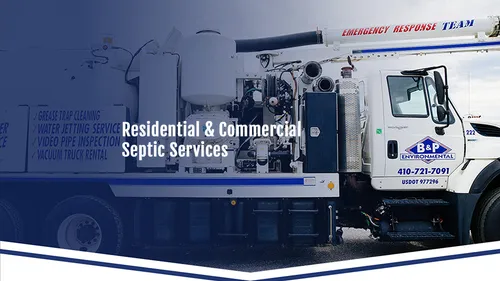
B & P Environmental, A Wind River Company
1230 Cronson Blvd, Crofton, MD 21114
B & P Environmental, A Wind River Company, is a septic tank pumping and repair business serving Washington, DC. They provide septic, grease trap, and drain cleaning services for residential, commercial, industrial, and municipal clients. The company is equipped to handle projects of all sizes and offers 24/7 emergency support. Established in 1985, B & P Environmental has grown through a partnership with Wind River Environmental, expanding their fleet and workforce to meet diverse wastewater management needs.
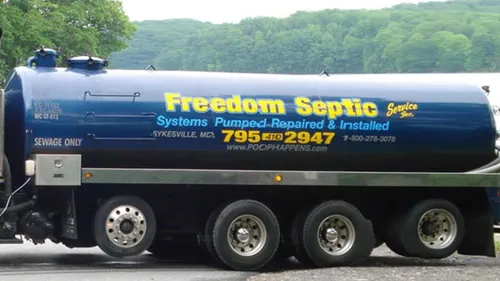
Freedom Septic Service, Inc.
2809 Liberty Rd, Sykesville, MD 21784
Freedom Septic Service, Inc. is a family-owned business with over 20 years of experience providing septic system services in Baltimore, MD. They offer a range of solutions including septic tank pumping, installation, repair, sewage treatment, and grease trap cleaning. The company also provides portable toilet and restroom trailer rentals for events and job sites, featuring options like handicap accessible units and climate-controlled trailers. Serving Baltimore and surrounding counties, Freedom Septic Service combines licensed expertise with comprehensive sanitation services to meet residential and commercial needs.
Oak Hill Construction
16910 Oak Hill Rd, Silver Spring, MD 20905
Oak Hill Construction is a septic system repair and installation contractor based near Washington, DC. They offer site development, excavation, and septic services for civil, commercial, residential, and government projects in the Maryland-Virginia area. Founded in 1987, Oak Hill Construction has over 30 years of experience in home building and site development. Their capabilities include septic tank installation and repair as part of broader land development services.
Shilling Septic
Washington, DC
Shilling Septic is a locally owned septic service provider based in Washington, DC, serving Anne Arundel County and Central Maryland. With over 65 years of experience, the company offers a full range of septic services including installation, pumping, cleaning, inspections, and repairs. They understand the unique challenges of the region's soil and property types and provide maintenance programs aimed at preventing major issues. Shilling Septic also offers 24/7 emergency services to address urgent septic system needs.
Understanding Septic System Failures and County Regulations
When a septic system malfunctions, it's not just an inconvenience-it's a public health concern that requires immediate and regulated action. In Montgomery County, the Department of Permitting Services (DPS), Well and Septic Section, oversees all septic system repairs. A system is considered failing if there is visible sewage on the ground, persistent foul odors, or sewage backing up into the home. Homeowners are legally required to report a failed system to the DPS Well and Septic Section at 240-777-03111.
The cornerstone of the local repair process is the septic repair permit. You cannot legally replace a failing system without one. This permit is valid for 12 months from the date of issuance, with a potential 6-month extension if needed. The process begins with an online application submitted through the DPS eServices portal, accompanied by a non-refundable fee. Crucially, you must secure a qualified, registered septic contractor before applying, as they play an integral role in the county's evaluation process.
The Step-by-Step Repair Process in Montgomery County
Navigating a septic fix in Gaithersburg involves a defined sequence of steps designed to ensure the repair is effective and compliant.
- Application and Contractor Engagement: After you or your contractor submits the permit application online, your registered contractor must contact the county inspector directly to schedule the mandatory repair evaluation.
- County Repair Evaluation: A county inspector will visit your property to verify the system failure. A critical part of this evaluation is determining the viability of your drainfield (also called a leach field). If the original drainfield has failed and there is no pre-approved "reserve area" on your property, the inspector will typically order a soil "percolation" or "perc" test. This test determines if the soil can absorb and treat wastewater effectively for a new conventional drainfield.
- Design and Permit Issuance: Based on the evaluation, the path forward is determined. If soil conditions are suitable, plans for a conventional system repair or replacement can be finalized. If the perc test fails or environmental conditions require it, you may need an Innovative/Alternative (I/A) system, such as a Best Available Technology (BAT) unit designed for enhanced nitrogen removal. These advanced systems require a private designer and review by the Maryland Department of the Environment (MDE) before a county permit is issued 2.
- Construction and Final Inspection: Your contractor completes the permitted repair work. Once finished, the county inspector must perform a final inspection to approve the work and close the permit 3.
Common Types of Septic Repairs
Septic system fixes can range from minor component replacements to major excavation and installation. Here are the most common repairs undertaken in the Gaithersburg area:
- Tank Repairs: This includes replacing broken or deteriorated inlet/outlet baffles, which are crucial for preventing scum and solids from escaping into the drainfield. Repairing cracks or leaks in concrete, fiberglass, or metal tanks is also common, as is installing risers and modern lids for safer, easier future access and pumping.
- Pipe and Distribution Box Repairs: The network of pipes carrying wastewater from your house to the tank and from the tank to the drainfield can become clogged with roots or grease, or collapse over time. These pipes must be cleaned or replaced. The distribution box (D-box), which evenly disperses liquid effluent to the drainfield trenches, can also fail and require replacement.
- Drainfield Repairs or Replacement: This is often the most extensive and costly repair. If the soil in the drainfield has become clogged and saturated (a condition called "biomat" failure), it may not be recoverable. In most cases, a new drainfield must be constructed in a new location on your property, as mandated by the county's repair guidelines 4 5.
- Pump and Alarm System Repairs: For systems with a pump chamber (common in areas with high water tables or uphill drainfields), mechanical failures of the pump, float switches, or alarm systems need professional repair to prevent backups or surface discharges.
The Role of Professional Inspection in Diagnosis
Before any repair path is chosen, a thorough professional inspection is essential to accurately diagnose the problem. A comprehensive septic inspection in Maryland involves several key steps 6 7 8:
- Locating and Exposing Components: The contractor will locate all system components, including the tank, D-box, and drainfield, and may need to excavate to expose the tank lids and inspection ports.
- Visual and Physical Tank Inspection: The tank is pumped to allow for an internal visual inspection. The inspector checks the tank's structural integrity-looking for cracks in concrete, rust in steel tanks, or damage in fiberglass-and examines the watertight seals at inlet and outlet pipes.
- Baffle and Scum/Sludge Level Assessment: The condition of the inlet and outlet baffles is checked, and the levels of scum and sludge are measured to determine if pumping is needed and if the tank is functioning correctly.
- Hydraulic Load Test and Dye Test: In some inspections, water is run through the household plumbing to see how quickly the tank fills and if the drainfield is accepting effluent. Dye tests may be used to check for unauthorized surface discharges.
- Pump and Mechanical Checks: For systems with pumps, the pump is activated, float switches are tested, and the alarm panel is checked for proper operation.
This inspection, which typically costs several hundred dollars, provides the critical evidence needed for the county's repair evaluation and informs the contractor's repair plan.
Find the perfect septic system repair companies for your needs
Get personalized recommendations and expert advice
Understanding the Costs of Septic Repairs
The cost of septic system servicing in Gaithersburg varies dramatically based on the repair's scope. It's important to budget not just for construction, but for the required professional services.
- Minor Repairs: Simple fixes like replacing baffles, repairing small sections of pipe, or fixing a pump float switch are generally the least expensive, often ranging from under $1,000 to $3,000 9.
- Septic Tank Replacement: If the tank itself is damaged beyond repair, replacing it can cost between roughly $5,000 and $10,000 or more, depending on tank size, material, and site accessibility 10.
- Full System Replacement: This is the most significant expense. In Maryland, completely replacing a failed conventional septic system, including a new tank and drainfield, typically costs between $20,000 and $40,000 or more11 12. The cost for an advanced Innovative/Alternative (I/A) system can be even higher due to complex components and design requirements.
- Permit and Inspection Fees: Remember to factor in the non-refundable county permit application fee and the cost of the professional inspection required for diagnosis and county compliance 13.
Financial Assistance Note: Maryland homeowners may be eligible for financial help through state programs like the Bay Restoration Fund, which offers grants to upgrade or replace failing systems with enhanced nutrient-removing technology to protect the Chesapeake Bay 14.
Maintaining Your System Post-Repair
After investing in a major septic fix, protecting that investment through proper maintenance is crucial. A repaired or new system will last decades if cared for correctly. Key maintenance steps include having the tank pumped regularly (every 3-5 years, depending on usage), conserving water to avoid overloading the system, avoiding flushing harmful chemicals or non-biodegradables, and protecting the drainfield area from vehicle traffic and deep-rooted plants. The University of Maryland Extension provides excellent guidelines for ongoing septic system care 15 16.
Frequently asked questions
Sources
Footnotes
-
Failed Septic System - MC311 - https://www3.montgomerycountymd.gov/311/SolutionView.aspx?SolutionId=1-4VYYJ0 ↩
-
Septic System Repair Guidelines - Montgomery County - https://www.montgomerycountymd.gov/DPS/Resources/Files/Land_Development/Guideline_Septic%20System%20Repair.pdf ↩
-
Septic System Repair Permit & Inspection Process - https://www.montgomerycountymd.gov/DPS/Process/ld/septic-repair-permit.html ↩
-
Septic Systems, DEP, Montgomery County, MD - https://www.montgomerycountymd.gov/DEP/water/water-supply-wastewater/septic-systems.html ↩
-
Septic Repairs | John Seek Septic Tank Pumping | Laytonsville, MD - https://johnseekmd.com/septic-repairs ↩
-
Septic Inspections For Real Estate MD, WV - Tri-County Pumps - https://www.tricountypumps.com/blog/septic-tank-inspections-frederick/ ↩
-
Services | Maryland - Homeland Environmental - https://www.homelandhealthyhomes.com/services-maryland ↩
-
Septic Repair Guidelines - https://www.montgomerycountymd.gov/DPS/Resources/Files/Land_Development/Guideline_Septic%20System%20Repair.pdf ↩
-
Septic System Repairs | Septic Tanks | Forest Hill, MD - https://www.chavissepticservices.com/septic-system-repairs ↩
-
Septic Installation Process Maryland - Cox Enterprises - https://www.coxenterprisesllc.com/septic-installation-process-maryland/ ↩
-
The Hidden Costs of Neglecting Your Septic System - Cox Enterprises - https://www.coxenterprisesllc.com/septic-maintenance-costs-neglect-consequences/ ↩
-
Septic System Replacement Maryland: Signs, Costs & What to ... - https://www.coxenterprisesllc.com/septic-system-replacement/ ↩
-
DPS - Septic Permit Process - Montgomery County - https://www.montgomerycountymd.gov/DPS/Process/ld/septic-permit.html ↩
-
Safer Septic Systems for Maryland | Clean Water Action - https://cleanwater.org/safer-septic-systems-maryland ↩
-
A Guide to Septic Systems and Maintenance - https://mde.maryland.gov/programs/water/BayRestorationFund/OnsiteDisposalSystems/Documents/Onsite%20Systems/Uof%20MD%20Septic%20Records%20and%20Maintenance%20Guidelines.pdf ↩
-
FAQs on Septic Systems | University of Maryland Extension - https://extension.umd.edu/programs/environment-natural-resources/program-areas/wells-septics-and-water-quality/septicsunderstandingmaintaining/faqs-septic-systems ↩