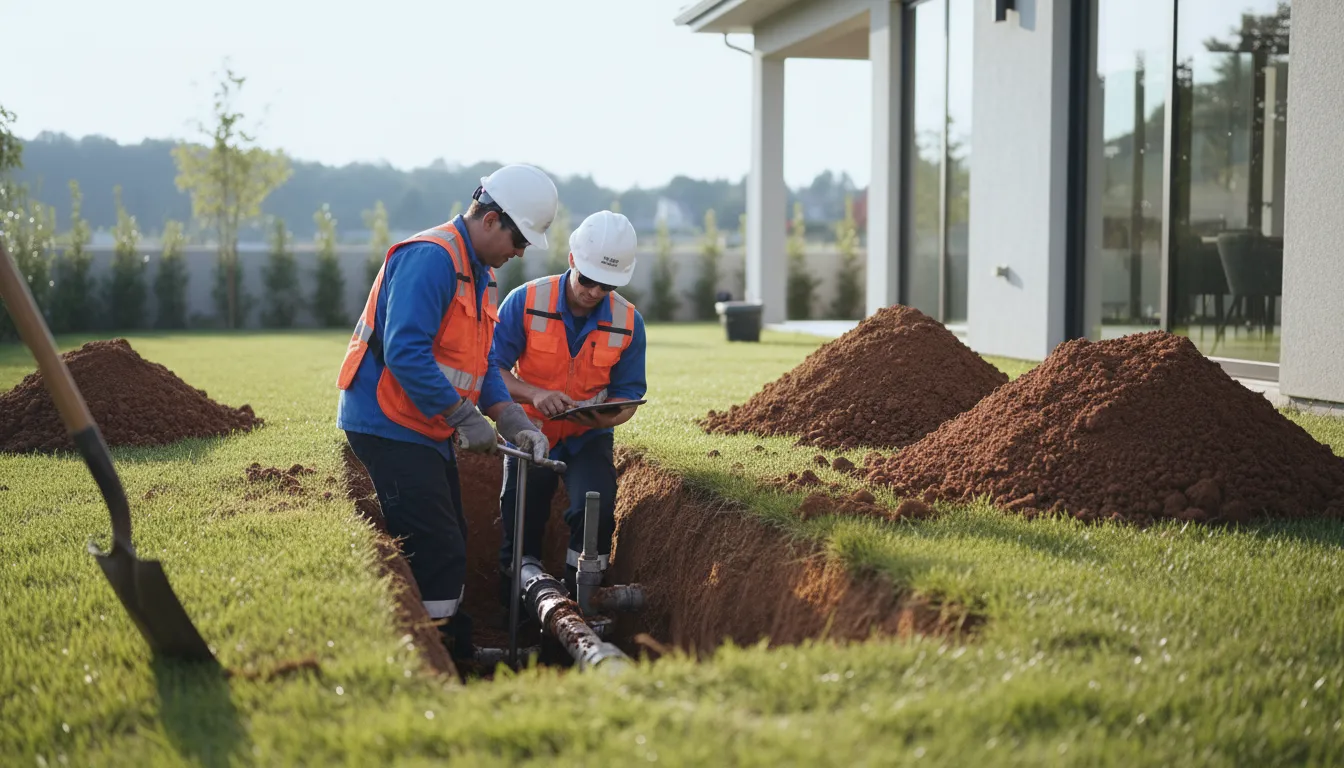
Find the Best Septic System Repair Companies for Your Business
No obligation • Fast responses • Nationwide coverage

Why you can trust Septic Spot
Septic Spot is a leading United States resource for understanding and comparing septic services. Our editors review providers using consistent criteria and verify key business details. Listings and scores are independent, and companies cannot pay to influence our content.
Search providers near you
Top Septic System Repair Companies in Pawtucket, Rhode Island Ranked
Maintaining a functional septic system is a critical responsibility for homeowners in Pawtucket. While the city is largely connected to municipal sewers, properties with on-site wastewater treatment systems must ensure they operate correctly to protect public health and local water resources. Septic system repair involves diagnosing and fixing issues with the tank, pipes, or leach field to restore proper wastewater treatment. This guide provides essential information on the repair process, Rhode Island regulations, and how to connect with qualified local professionals for your septic maintenance needs.
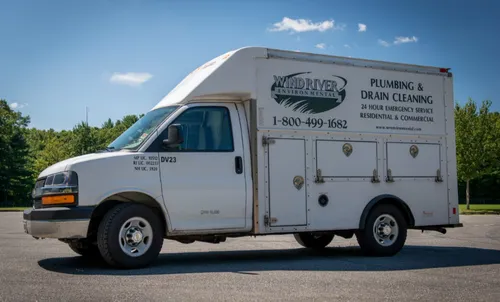
Wind River Environmental of Johnston, RI
141 Shun Pike, Johnston, RI 02919
Wind River Environmental of Johnston, RI provides septic tank pumping, inspection, and repair services in Providence, RI. Serving residential, commercial, and municipal clients, the company offers tailored solutions that comply with local codes and regulations. With a history dating back to 1946, Wind River Environmental brings decades of experience and a broad resource network to handle projects of varying complexity. The company is available 24/7 to address urgent septic and wastewater needs.
Chase Harris Septic Services
85 Dudley Rd, Sutton, MA 01590
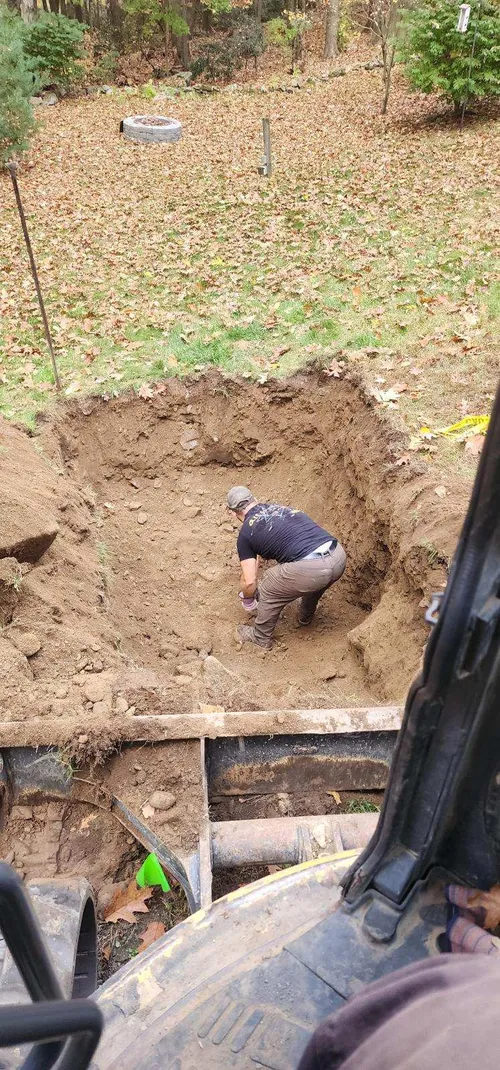
Chase Harris Septic Services is a family-owned business providing septic system maintenance, repair, installation, and inspection services in Worcester, MA. With decades of experience, they serve residential and commercial clients, offering comprehensive septic pumping, Title 5 inspections, and grease trap cleaning. Their team also handles excavation and site preparation to ensure proper system installation and repair. Chase Harris Septic Services is known for meeting local codes and regulations, including Title 5 compliance, and uses advanced equipment to maintain system efficiency and safety.
Devine Septic LLC
Providence, RI
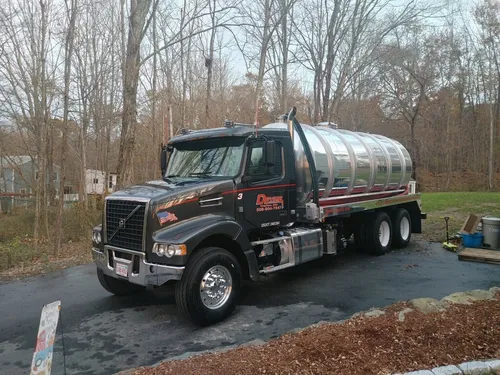
Devine Septic LLC is a septic tank inspection and repair company serving Providence, RI. With over 10 years of experience, they offer services including septic system maintenance, emergency repairs, and Title V inspections required for home sales in Massachusetts. They focus on educating customers about septic system operation to help prevent issues and maintain efficient performance.
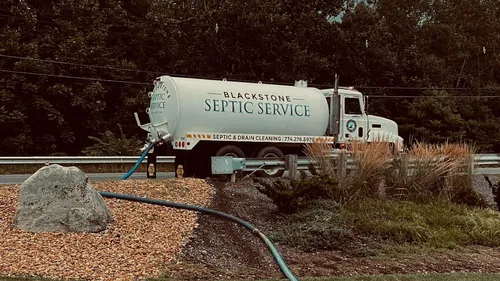
Blackstone Septic Service
47 Burbank St, Millbury, MA 01527
Blackstone Septic Service is a family-owned company based near Worcester, MA, offering septic tank pumping, septic system maintenance and repair, grease trap cleaning, and light excavation services. Serving Blackstone, Central Massachusetts, and surrounding areas, the company brings over 75 years of experience to its work. Their technicians are highly trained to handle septic and excavation jobs efficiently while maintaining a focus on honesty and transparency.

A & D Sanitation.
223 Hinchey Ln, Somerset, MA 02726
A & D Sanitation provides septic tank pumping, inspection, and repair services in Providence, RI. The company handles septic system maintenance including pumping, line snaking to clear blockages, and basic repairs such as installing filters, risers, and covers. They also offer yearly bacteria treatments and inspections required for Rhode Island point-of-sale ISDS. Their services include maintaining cesspool tight tanks and providing tank seals and jetting.
Understanding Septic System Regulations in Rhode Island
All septic system work in Pawtucket falls under the strict jurisdiction of the Rhode Island Department of Environmental Management (RIDEM). The state's regulations are designed to safeguard groundwater and prevent contamination, which is vital in a densely populated area. A system is legally considered "failed" if it discharges wastewater into a watercourse, onto the ground surface, or into the groundwater. Furthermore, the Rhode Island Cesspool Act of 2007 mandates the replacement of any cesspool located within 200 feet of tidal water, a drinking water well, or classified as "large capacity" 1.
Key Regulatory Points:
- Permits are Mandatory: Any major septic repair or full system replacement requires a permit from RIDEM before work begins 2.
- Licensed Professionals Only: Repair plans must be prepared and executed by a licensed Class I, II, or III system designer or installer 3.
- Regular Inspections: RIDEM recommends systems be inspected every 2-5 years, with more complex systems often requiring annual checks to catch problems early 4 5.
Common Septic System Repairs
When a septic system malfunctions, the issue can range from a simple component failure to a complete drainfield breakdown. Identifying the correct repair is the first step toward a solution.
Minor Component Repairs
These are often the most straightforward and affordable fixes, addressing parts that have worn out or been damaged.
- Baffle or Riser Repair: The inlet and outlet baffles inside the tank are crucial for controlling the flow of wastewater and preventing scum and sludge from exiting. Repairing damaged baffles or replacing corroded access risers typically costs between $300 and $1,200.
- Pipe Repair: Broken, collapsed, or clogged pipes connecting your home to the tank or the tank to the leach field can cause backups or surface pooling. Repairing these pipes can range from $1,500 to $8,000 depending on the depth and length of the line.
Major Drainfield and System Repairs
When the soil absorption area fails, repairs become more complex and costly.
- Distribution Box Replacement: This box evenly distributes effluent from the septic tank to the lines in the leach field. If it becomes clogged or damaged, it must be repaired or replaced to restore proper function.
- Partial Drainfield Repair: Sometimes, only a section of the leaching field is saturated or damaged. Excavating and replacing just the failed portion can be a cost-effective alternative to a full replacement, with costs often between $3,000 and $15,000.
- Full System Replacement: In cases of catastrophic failure, an old cesspool, or a leach field that cannot be repaired, a full system replacement is necessary. This involves installing a new tank, distribution box, and drainfield that meets current code. This is a significant investment, typically ranging from $10,000 to over $40,000.
Find the perfect septic system repair companies for your needs
Get personalized recommendations and expert advice
The Professional Inspection & Diagnosis Process
Before any repair can be planned, a thorough inspection by a licensed professional is essential to accurately diagnose the problem. Here's what a standard septic inspection in Pawtucket entails 6 7:
- Locate the System: The technician will first locate the septic tank and the boundaries of the leach field using probes, records, or electronic locating equipment.
- Uncover and Inspect the Tank: The access lids are excavated to allow for a visual inspection of the tank's interior. The inspector looks for structural cracks, root intrusion, and signs of leakage.
- Measure Sludge and Scum: Using specialized tools, the inspector measures the depth of the sludge layer at the bottom and the scum layer at the top. If the combined solids exceed one-third of the tank's liquid depth, pumping is immediately recommended 8 9.
- Evaluate Components: The inlet and outlet pipes, baffles, and, if accessible, the distribution box are checked for blockages, damage, and proper flow.
- Dye Testing: In some cases, a non-staining fluorescent dye is flushed into the system. This helps verify that wastewater is flowing to the intended drainfield area and can reveal unauthorized surface discharges.
- Final Report: The homeowner receives a detailed report outlining the system's condition, any evidence of failure, and recommended corrective actions, which forms the basis for any repair permit application.
Cost Overview for Septic Services
Understanding potential costs helps homeowners budget for maintenance and unexpected repairs. Prices can vary based on system size, soil conditions, and the extent of the problem.
- Inspection & Pumping: $200 - $600
- Minor Repairs (Baffles, Covers): $300 - $1,200
- Small Repair (Pipe/Lateral Line): $1,500 - $8,000
- Significant Repair (Partial Drainfield): $3,000 - $15,000
- Complete System Replacement: $10,000 - $40,000+ 10 11
Financial Assistance Note: Rhode Island offers a Community Septic System Loan Program (CSSLP), which provides low-interest loans to eligible homeowners for repairing or replacing failing septic systems. This program can make necessary major repairs more financially manageable.
Maintaining Your System to Avoid Major Repairs
Proactive maintenance is the most effective way to avoid costly septic system failures. Adhere to these best practices:
- Pump Regularly: Have your tank pumped every 3-5 years, or as recommended by your inspector based on sludge levels.
- Conserve Water: Spread out laundry loads and fix leaky fixtures to avoid hydraulically overloading the system.
- Mind What You Flush: Only human waste and toilet paper should go down the drain. Avoid chemicals, grease, wipes, and feminine hygiene products.
- Protect the Drainfield: Never park vehicles or build structures over the leach field. Keep roof drains and sump pumps directed away from the area.
Frequently asked questions
Sources
Footnotes
-
Cesspools and the Rhode Island Cesspool Act of 2007 - https://www.narragansettri.gov/DocumentCenter/View/383/Cesspool-Act ↩
-
250-ricr-150-10-6 active rule - https://rules.sos.ri.gov/regulations/part/250-150-10-6 ↩
-
Procedure to Repair or Replace - South Kingstown, RI - https://www.southkingstownri.gov/388/Procedure-to-Repair-or-Replace ↩
-
Rhode Island Septic System Regulations for Homeowners - https://www.rockhouseconstruction.com/rhode-island-septic-system-regulations-for-homeowners ↩
-
Rhode Island Septic Inspection Requirements: What to Know - https://www.rockhouseconstruction.com/rhode-island-septic-inspection-requirements-what-to-know ↩
-
Septic Inspection Service in Rhode Island - https://sherwoodinspection.com/septic-inspection-rhode-island/ ↩
-
How to Inspect a Private Septic System - https://www.youtube.com/watch?v=URhIPaX-csA&t=20 ↩
-
1st Main inspection - The University of Rhode Island - https://web.uri.edu/owt/wp-content/uploads/sites/2062/1st-Main-inspection-FS.pdf ↩
-
What you need to know about the Rhode Island Septic System ... - https://allclearseptic.com/wp-content/uploads/2019/02/rhodeislandsepticinspection.pdf ↩
-
Septic & Onsite Wastewater Treatment Systems - https://dem.ri.gov/environmental-protection-bureau/water-resources/permitting/septic-onsite-wastewater-treatment-owts ↩
-
Septic Repair vs. Replacement: A Guide to Costs & Red Flags - https://prosepticri.com/septic-repair-vs-replacement-guide/ ↩