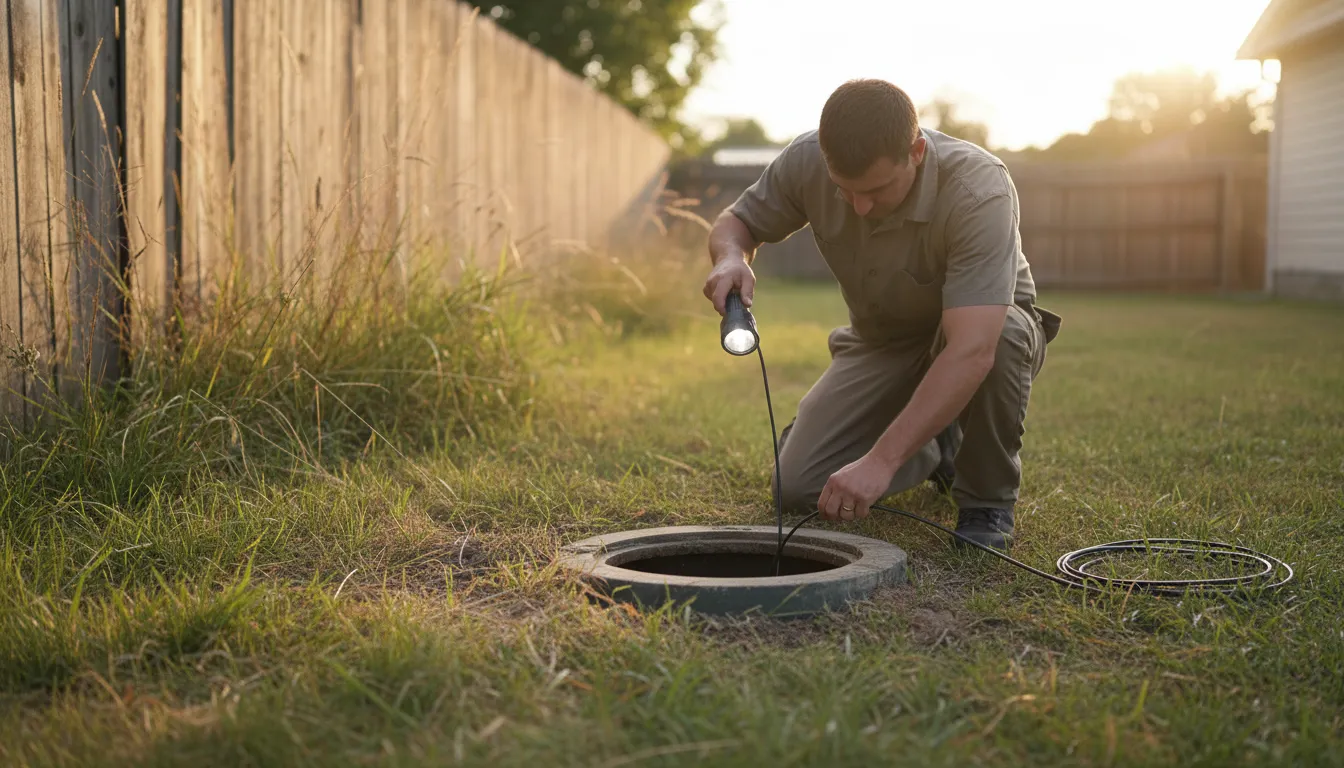
Find the Best Septic Tank Inspection Companies for Your Business
No obligation • Fast responses • Nationwide coverage

Why you can trust Septic Spot
Septic Spot is a leading United States resource for understanding and comparing septic services. Our editors review providers using consistent criteria and verify key business details. Listings and scores are independent, and companies cannot pay to influence our content.
Search providers near you
Best Septic Tank Inspection Companies in Arkansas Ranked
A septic tank inspection is a professional assessment of your onsite wastewater system's condition and functionality. In Arkansas, these evaluations are crucial for protecting your property value, ensuring public health, and complying with state and local regulations. This guide provides clear, practical information to help you understand the inspection process, state requirements, and how to find qualified professionals in your area.

S & S SEPTIC SYSTEMS AND ENVIRONMENTAL SERVICES, LLC
13726 W Gary Ln, Ward, AR 72176
S & S SEPTIC SYSTEMS AND ENVIRONMENTAL SERVICES, LLC is a family-owned company based near Little Rock, AR, offering septic system installation, repair, and inspection services. They serve customers throughout Arkansas, providing new septic system installations, replacements, and repairs tailored to each situation. The company focuses on delivering durable septic solutions designed to last for many years and works closely with clients to ensure proper system design and diagnosis.
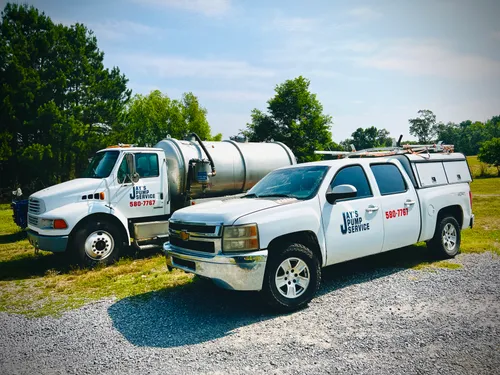
Jay's Pump Service
16429 N Sardis Rd, Mabelvale, AR 72103
Jay's Pump Service is a family-owned septic service provider based in Little Rock, AR. Established in 2000, the company offers a range of septic system services including tank pumping, inspections, lift pump replacement, and drain field repairs. Their skilled technicians also handle tank locating, riser installation, and commercial lift station cleaning. Jay's Pump Service provides emergency call availability during evening hours to support urgent septic needs.
Why Septic Inspections Are Essential in Arkansas
Regular septic system evaluations are not just a good idea-they are a key part of responsible homeownership. Arkansas's diverse geography, from the Ozark Mountains to the Delta, means soil types and system designs vary widely. An inspection identifies potential problems like leaks, blockages, or failing drain fields before they become expensive emergencies or environmental hazards. The U.S. Environmental Protection Agency (EPA) recommends a system inspection at least every three years. Proactive maintenance through inspections can prevent groundwater contamination, which is vital for protecting both private wells and the state's natural waterways.
Arkansas State Regulations and Permit Requirements
The Arkansas Department of Health (ADH) oversees all onsite wastewater systems. Understanding the regulatory framework is the first step before any inspection or work.
- Permit Mandate: Any installation, alteration, or repair of a septic system requires a "Permit for Construction" from the ADH. This permit is valid for one year from the date of issuance 1.
- Design & Soil Evaluation: Obtaining a permit requires a detailed site evaluation, including professional soil testing to determine suitability and design the correct system type for your property 2.
- Limited Exemptions: A single-family residence on a tract of ten (10) or more acres may be exempt from permit requirements, provided all system components are located more than 200 feet from any property line 3.
- Inspector Certification: Only inspectors who are registered as Designated Representatives (DRs) and certified by the Arkansas Department of Health are authorized to perform official evaluations for permit compliance.
What a Professional Inspection Involves
A thorough septic system check-up goes beyond just looking at the tank. A certified professional will assess the entire system.
- Tank Assessment: The inspector will locate and uncover the tank access lids. They measure the sludge and scum layers to determine if pumping is needed. They also check the tank's structural integrity for cracks, leaks, or signs of corrosion.
- Component Check: All components, including baffles, tees, and the outlet filter (if present), are inspected for proper function and blockage.
- Drain Field Evaluation: This is a critical part. Inspectors look for signs of failure, such as soggy ground, surfacing sewage, or unusually lush grass over the field. They may also use probes to check for proper drainage.
- Flow Test: In some inspections, particularly for real estate transactions, water is run through the household plumbing to check for backups or slow drainage, indicating a system problem.
- Report: You should receive a detailed written report outlining the findings, any issues discovered, and recommended actions.
Inspection Frequency and Pumping
Routine maintenance is the best way to extend the life of your septic system.
- Inspection Schedule: Adhere to the EPA guideline of having your system inspected every three years 4. More frequent checks (annually) may be wise for older systems, systems with pumps, or if you have a large household.
- Pumping Schedule: Pumping is a separate but related service. While not every inspection will require a pump-out, most household septic tanks need to be pumped every three to five years 5. The inspection will tell you precisely when it's needed based on sludge accumulation.
Find the perfect septic tank inspection companies for your needs
Get personalized recommendations and expert advice
Understanding Inspection Costs in Arkansas
The price of a septic inspection depends on the type and depth of the evaluation.
- Standard Inspection: For a routine check of an accessible system, homeowners can expect to pay between $200 and $900 in Arkansas.
- Basic/Visual Inspection: A more limited visual assessment may cost between $150 and $225 6.
- Comprehensive/Real Estate Inspection: A full inspection required for property transfer, which often includes a flow test and a more detailed report, can cost up to $1,300 or more 7.
- Factors Influencing Cost: Prices vary based on tank size, accessibility (e.g., need for excavation), system complexity (e.g., presence of pumps or mounds), and the inspector's travel distance.
Local County Rules and Critical Setbacks
State rules provide the baseline, but local county health units can enforce additional requirements.
- Local Ordinances: Counties like Benton County have adopted their own onsite wastewater ordinances that may mandate inspections at the time of property sale or set specific maintenance requirements 8 9. Always check with your local health unit.
- Setback Requirements: Systems must generally be located at least 100 feet from any water well 10. Other standard setbacks apply to buildings, property lines, and streams.
- Surface Discharge: Discharging treated septic effluent directly to the ground surface or a ditch is heavily restricted. It is allowed only in specific, approved cases and typically requires an additional NPDES permit from the Arkansas Department of Energy and Environment 11 12.
Choosing a Qualified Inspector in Arkansas
Your inspection is only as good as the inspector performing it. Ensure you hire a certified professional.
- Verify Certification: Confirm the inspector is a current ADH-registered Designated Representative (DR). You can ask for their certification number.
- Check Experience: Look for a professional with several years of experience inspecting systems in your region of Arkansas.
- Ask About Services: Clarify exactly what the inspection includes. Does the quoted price cover opening the tank, measuring sludge, and evaluating the drain field?
- Get a Detailed Report: Never accept a purely verbal assessment. A reputable inspector will provide a comprehensive written report with photos and clear recommendations.
- Compare Quotes: Get estimates from 2-3 certified inspectors to compare both cost and the scope of services offered.
The Real Estate Transaction Inspection
A septic inspection is one of the most important contingencies in an Arkansas home purchase. A "real estate transfer inspection" is typically more rigorous.
- Protection for Buyer: This inspection reveals the system's condition, potentially uncovering issues that could cost thousands to repair. It allows you to negotiate with the seller for repairs or a price adjustment.
- Lender Requirements: Most mortgage lenders will require a passing septic inspection before approving a loan for a home with an onsite system.
- Full Disclosure: The inspection report becomes part of the property's disclosure record, protecting all parties.
Maintaining Your System After the Inspection
An inspection report is a roadmap for maintenance. Follow through on the recommendations.
- Pump When Advised: If the inspector recommends pumping, schedule it promptly. Letting sludge overflow into the drain field is a leading cause of system failure.
- Fix Minor Issues: Address small repairs like a damaged baffle or loose pipe immediately to prevent larger problems.
- Practice Good Habits: Conserve water, avoid flushing non-biodegradables, and never pour grease or chemicals down the drain. Redirect roof drains and surface water away from the drain field.
- Keep Records: File your inspection and pumping reports. This history is valuable for future maintenance and is essential if you sell your home.
Frequently asked questions
Sources
Footnotes
-
(EHP-19) Individual Onsite System Permit Application - https://healthy.arkansas.gov/wp-content/uploads/EHP-19.pdf ↩
-
Appendix F Requirements for Submission of an Onsite Wastewater ... - https://healthy.arkansas.gov/wp-content/uploads/AppendixF.pdf ↩
-
ARKANSAS STATE BOARD OF HEALTH - https://arkleg.state.ar.us/Home/FTPDocument?path=%2FAssembly%2FMeeting+Attachments%2F040%2F5081%2FD.21e+DOH+EHS+Rules+Pertaining+to+Onsite+Wastewater+Systems+and+Relevant+Acts.pdf ↩
-
How to Care for Your Septic System | US EPA - https://www.epa.gov/septic/how-care-your-septic-system ↩
-
How Often Should You Pump Your Septic Tank: 3 Factors Solved - https://www.frasiers.com/blog/sewage-tank-pump-frequency/ ↩
-
Rates - Sitewise Arkansas - https://www.sitewisearkansas.com/home/sitewse-septic-design/residential-septic-system-design/rates ↩
-
How Much Does a Septic Inspection Cost? [2026 Data] - Angie's List - https://www.angi.com/articles/septic-inspection-cost.htm ↩
-
Onsite Wastewater Treatment System Ordinance Frequently ... - http://bentoncountyar.gov/Media/Publication/Committees/Meeting/Meeting_20151109_0600%20PM_Legislative_6_Misc.pdf ↩
-
Onsite Wastewater Treatment System Ordinance Frequently Asked Questions What does this Ordinance require? Who will do the inspec - http://bentoncountyar.gov/Media/Publication/Committees/Meeting/Meeting_20151109_0600%20PM_Legislative_6_Misc.pdf ↩
-
Onsite Wastewater FAQs - Arkansas Department of Health - https://healthy.arkansas.gov/programs-services/public-health-safety/onsite-wastewater/onsite-wastewater-faqs/ ↩
-
Property Owner Septic System Permit Information Sheet - https://www.adeq.state.ar.us/downloads/webdatabases/permitsonline/npdes/permitinformation/arg550320c_health%20department%20documents_20091202.pdf ↩
-
Arkansas Administrative Code, Division 04, Rule 007.04.93-005 - https://regulations.justia.com/states/arkansas/agency-007/division-04/rule-007-04-93-005/ ↩