Find the Best Septic Tank Inspection Companies for Your Business
No obligation • Fast responses • Nationwide coverage

Why you can trust Septic Spot
Septic Spot is a leading United States resource for understanding and comparing septic services. Our editors review providers using consistent criteria and verify key business details. Listings and scores are independent, and companies cannot pay to influence our content.
Search providers near you
Top Septic Tank Inspection Companies in East Honolulu, Hawaii Ranked
A professional septic tank inspection is a critical evaluation of your home's on-site wastewater system. In East Honolulu, where many properties rely on these individual systems, a thorough assessment is vital for protecting your property value, ensuring environmental safety, and avoiding costly emergency repairs. This guide explains the local requirements, process, and benefits of a septic system evaluation, helping you understand how to find qualified local professionals to maintain your system's health.
Understanding Septic Systems in East Honolulu
In East Honolulu and across Hawaii, septic systems are formally known as Individual Wastewater Systems (IWS). These systems are responsible for treating all the wastewater from a home when a connection to a municipal sewer line is not available. Given Hawaii's unique environmental sensitivities, particularly its groundwater and ocean proximity, properly functioning septic systems are not just a homeowner's concern but a community-wide priority.
The Hawaii Department of Health (DOH) regulates these systems, and there are important local rules to know. A significant statewide mandate requires that all existing large-capacity cesspools be upgraded to approved septic or aerobic treatment systems by the year 2050. This law underscores the importance of modern, inspected systems. While the state does not mandate periodic inspections for existing, functioning systems, regular evaluations every 1-3 years are strongly recommended by experts and health officials to prevent failures 1.
Why a Professional System Evaluation is Essential
You might wonder if a septic inspection is necessary if it's not strictly required by law. The answer is a resounding yes. Think of it as preventative healthcare for your property. A routine check-up can identify minor issues before they escalate into major, wallet-draining disasters.
- Prevent Costly Repairs: A failing drain field or a cracked tank can cost tens of thousands of dollars to replace. An inspection can catch early signs of trouble.
- Avoid Health Hazards and Fines: A malfunctioning system can cause sewage to back up into your home or surface in your yard, creating serious health risks. The Hawaii DOH can levy fines for violations, which can be substantial.
- Protect Your Investment: Whether you're buying, selling, or simply maintaining your home, documentation of a clean inspection report is invaluable. It provides peace of mind and is often a required step in real estate transactions.
- Comply with the 2050 Cesspool Conversion Law: If your property still uses a cesspool, an inspection and consultation with a professional is the first step toward planning your mandatory upgrade to a septic or aerobic system.
What a Comprehensive Septic Inspection Involves
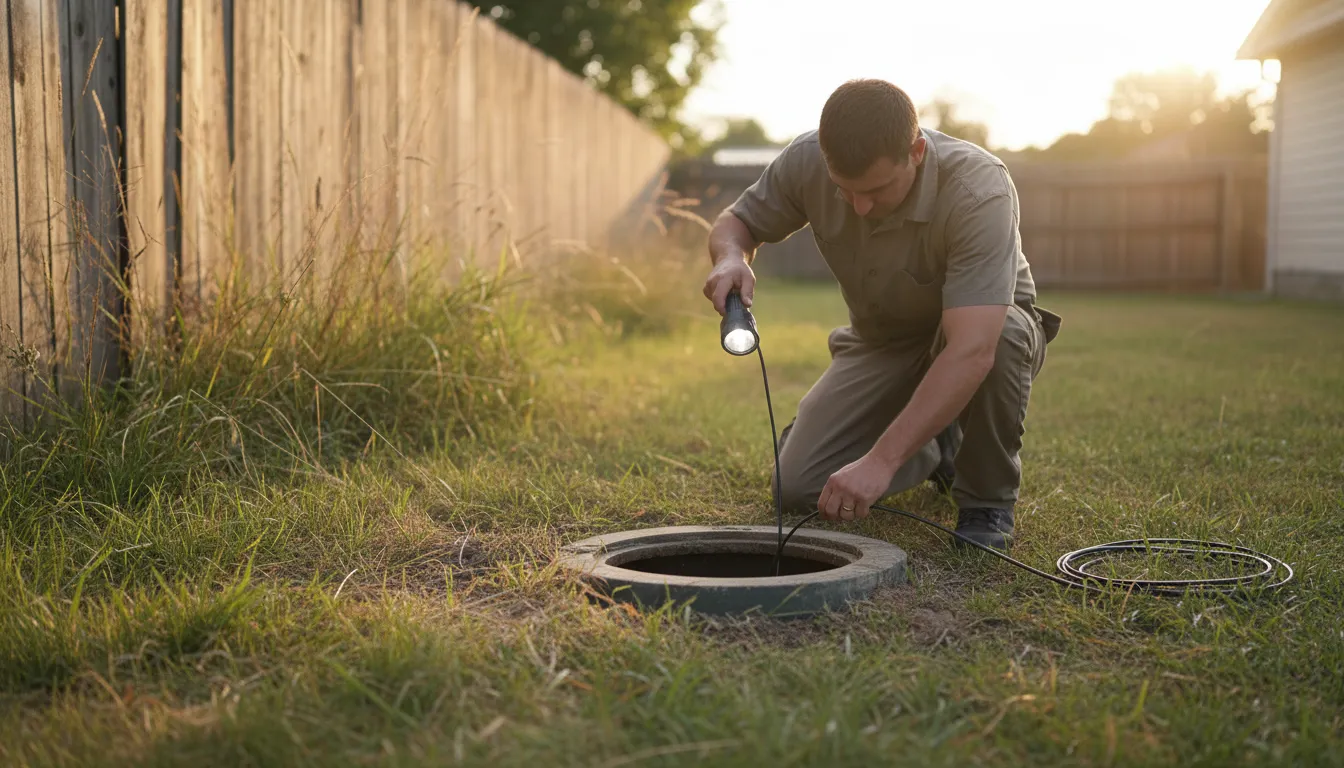
A professional septic system assessment in Honolulu County is a multi-step process designed to evaluate every component. Here's what you can typically expect during a thorough evaluation 2 3:
- Locating and Accessing the System: The inspector will locate the tank and drain field using plans, probes, or electronic equipment. They will then carefully excavate and open the tank's access manholes.
- Tank Interior Inspection: The professional will visually assess the tank's interior for structural integrity, checking for cracks, corrosion, and the condition of inlet/outlet baffles. They will also measure the levels of scum (floating layer) and sludge (settled solids) to determine if pumping is immediately needed.
- Hydraulic Function Test: Water will be run in the home (e.g., flushing toilets, running sinks) to verify that wastewater flows properly from the house to the tank.
- Drain Field Evaluation: This is a crucial step. The inspector will examine the soil over the drain field (leach field) for signs of failure, such as soggy ground, surfacing effluent, or unpleasant odors.
- Detailed Reporting: A reputable inspector will provide a written report detailing the system's condition, any issues found, and recommended actions or maintenance schedules.
Find the perfect septic tank inspection companies for your needs
Get personalized recommendations and expert advice
Costs Associated with Septic Inspections
The price of a septic system inspection in East Honolulu varies based on the depth of the evaluation and the system's specifics. It's important to clarify what service is being quoted.
- Routine Visual Inspection: A basic check of tank levels and a visual assessment might range from $100 to $250 4.
- Full Inspection with Pumping: For a real estate transaction or a comprehensive annual check, an inspection that includes pumping the tank for a complete internal view typically costs between $500 and $900 or more 5 6 7. The final price depends on tank size (common in Hawaii are 1,000 to 1,250 gallons) and ease of access.
- Pumping Fees: If pumping is needed but not included in the inspection quote, this is an additional cost based on tank volume.
Always ask for a detailed breakdown of costs and ensure the service provider is licensed and registered with the state, especially for pumping services, which must be performed by a registered pumper 8.
Key Regulations and Maintenance Tips for Homeowners
Staying informed helps you be a responsible system owner. Beyond inspections, keep these points in mind:
- Permitting is Required: Any new installation or major repair to an Individual Wastewater System must have plans developed by a licensed civil engineer and approved by the DOH Wastewater Branch. Installation must be done by a licensed contractor 9.
- Pump Regularly: Even with inspections, routine pumping is non-negotiable. The general guideline is every 3 to 5 years, but your inspector can recommend a schedule based on your tank's sludge accumulation 10.
- Avoid Additives: Commercial septic tank additives are generally discouraged. They do not eliminate the need for pumping and can sometimes harm the bacterial balance in your tank or damage components 11.
- Keep Detailed Records: Maintain a log of all inspections, pumpings, repairs, and permits. This record is crucial for troubleshooting, maintenance planning, and is essential documentation when selling your property.
Frequently asked questions
Sources
Footnotes
-
Why Maintain Your Septic System | US EPA - https://www.epa.gov/septic/why-maintain-your-septic-system ↩
-
What to Expect from a Septic Inspection - https://www.wrenvironmental.com/blog/2023/may/what-to-expect-from-a-septic-inspection/ ↩
-
What Does a Septic Inspection Entail? - HomeLight - https://www.homelight.com/blog/septic-inspection/ ↩
-
Exploring the Costs of Septic Tank Inspections: What to Expect - https://www.theflushfellas.com/exploring-the-costs-of-septic-tank-inspections-what-to-expect ↩
-
Hawaii Septic Tank Requirements | Individual Wastewater Systems - https://www.ntotank.com/blog/hawaii-septic-tank-requirements ↩
-
Septic Inspections near Honolulu County, Hawaii | Honest ... - https://acsihawaii.com/septic-inspections-near-honolulu-county-hawaii ↩
-
Yes - You Should Absolutely Get a Septic Inspection When ... - https://www.hawaiilife.com/blog/yes-you-should-absolutely-get-a-septic-inspection-when-buying-a-home-on-kaua%CA%BBi/ ↩
-
General Info and FAQ | Wastewater Branch - https://health.hawaii.gov/wastewater/home/general-info-and-faq/ ↩
-
Individual Wastewater Systems - https://health.hawaii.gov/wastewater/home/iws/ ↩
-
pdf - Hawaii State Department of Health - https://health.hawaii.gov/wastewater/files/2024/01/Pilot_Inspection_Report_Redacted-002.pdf ↩
-
SEPTIC SYSTEMS EXPLAINED - CTAHR.hawaii.edu - https://www.ctahr.hawaii.edu/pigsinparadise/currentmgmt/mgmtexamples/ASPA%20Septic%20Sys.pdf ↩