Find the Best Septic Tank Inspection Companies for Your Business
No obligation • Fast responses • Nationwide coverage

Why you can trust Septic Spot
Septic Spot is a leading United States resource for understanding and comparing septic services. Our editors review providers using consistent criteria and verify key business details. Listings and scores are independent, and companies cannot pay to influence our content.
Search providers near you
Top Septic Tank Inspection Companies in Hammond, Indiana Ranked
A septic tank inspection is a critical evaluation of your on-site wastewater system's health and functionality. In Hammond, where many homes rely on these private systems, regular assessments are essential for protecting your property, your family's health, and the local environment. This process involves a licensed professional checking the tank's integrity, sludge levels, and drain field performance to ensure everything is working as it should. Understanding the local requirements and what an inspection entails can help you maintain your system effectively and find qualified professionals to perform this vital service.
Home Inspection Star Inc.
2545 W Diversey Ave Suite 208, Chicago, IL 60647
Home Inspection Star Inc. is a property inspection firm based in Chicago, IL, offering residential and commercial inspections. They provide a range of services including septic tank inspections, sewer scope inspections, radon testing, and termite inspections. The company delivers detailed reports with photos and recommendations, helping clients understand current issues and potential future concerns. Founded in 2013, Home Inspection Star Inc. employs licensed and certified inspectors and serves clients throughout Chicago.

Suburban Plumbing Sewer Line and Drain Cleaning Experts
9100 Plainfield Rd Suite #9A, Brookfield, IL 60513
Suburban Plumbing Sewer Line and Drain Cleaning Experts is a full-service plumbing company serving Chicago, IL, and the greater Chicagoland area. They provide a wide range of services including septic tank pumping, inspections, repairs, and new system installations, as well as sewer line repairs, drain cleaning, water heater services, and flood control solutions. With over 30 years of experience, their licensed and insured technicians use advanced equipment like hydro jetting and sewer camera inspections to deliver effective plumbing solutions. The company offers 24/7 emergency plumbing services to address urgent issues promptly.

AmeriSpec Inspection Services
430 E 162nd St, South Holland, IL 60473
AmeriSpec Inspection Services is a septic tank inspection company based in Chicago, IL. They offer comprehensive home and specialty inspections, including septic tank evaluations, performed by a network of over 400 trained inspectors. With more than 35 years of experience and a national presence, AmeriSpec has completed over 2 million inspections across the country. Their inspectors receive extensive classroom and hands-on training to ensure thorough and accurate assessments.
Scott's Septic Service
Chicago, IL
Scott's Septic Service is a locally owned company providing septic tank pumping, inspection, and repair services in Chicago, IL. They serve residential and commercial clients with routine maintenance, thorough inspections, and prompt repairs. The company uses modern equipment and industry best practices to maintain septic system performance and longevity. Scott's Septic Service is committed to supporting the community with personalized septic solutions.
Hallmann Sanitary Service/Hallmann Septic
Chicago, IL
Hallmann Sanitary Service/Hallmann Septic provides septic tank pumping, cleaning, inspections, and system repairs in Chicago, IL. They offer comprehensive maintenance to help keep septic systems functioning properly and provide repair services such as installing baffles and hydro-jetting lines to address system issues.
Why Septic System Inspections Are Crucial in Hammond
For Hammond homeowners not connected to the municipal sewer, the septic system is an unseen but vital part of the property. A failing system can lead to sewage backups into the home, foul odors, contamination of groundwater, and costly environmental hazards. Regular septic system evaluations are not just a good idea-they are often a regulatory requirement. Indiana State Department of Health (ISDH) rules and local Hammond ordinances govern these systems to protect public health 1. Proactive inspections can identify minor issues like a worn baffle or rising sludge levels before they escalate into a full system failure, saving you thousands of dollars in emergency repairs or replacement.
Understanding Local Regulations and Inspection Frequency
Compliance with local and state codes is a fundamental aspect of septic system ownership. In Hammond, septic systems must adhere to Indiana State Department of Health Rule 410 IAC 6-8.3 as well as specific municipal codes. These regulations ensure systems are watertight and constructed from approved, durable materials like concrete, fiberglass, or plastic.
A key question for every homeowner is: how often should I get my system inspected? General guidelines, supported by the U.S. Environmental Protection Agency, recommend a septic tank inspection every 1 to 3 years 2. Pumping is typically needed less frequently, every 3 to 5 years, but the actual schedule depends heavily on household size and usage. It's important to note that some local jurisdictions may require an inspection to be completed within 72 hours of receiving an official notice, underscoring the need to have a trusted professional you can call quickly 3.
Any significant repair or new installation requires a permit from the local health authority, which must be secured before any work begins 4. Staying ahead of these requirements starts with a thorough, professional system assessment.
What a Professional Septic Inspection Involves
A comprehensive septic tank check is a multi-step process conducted by a licensed contractor. Knowing what to expect can help you prepare your property and understand the value of the service. Here is a typical breakdown of the procedure:
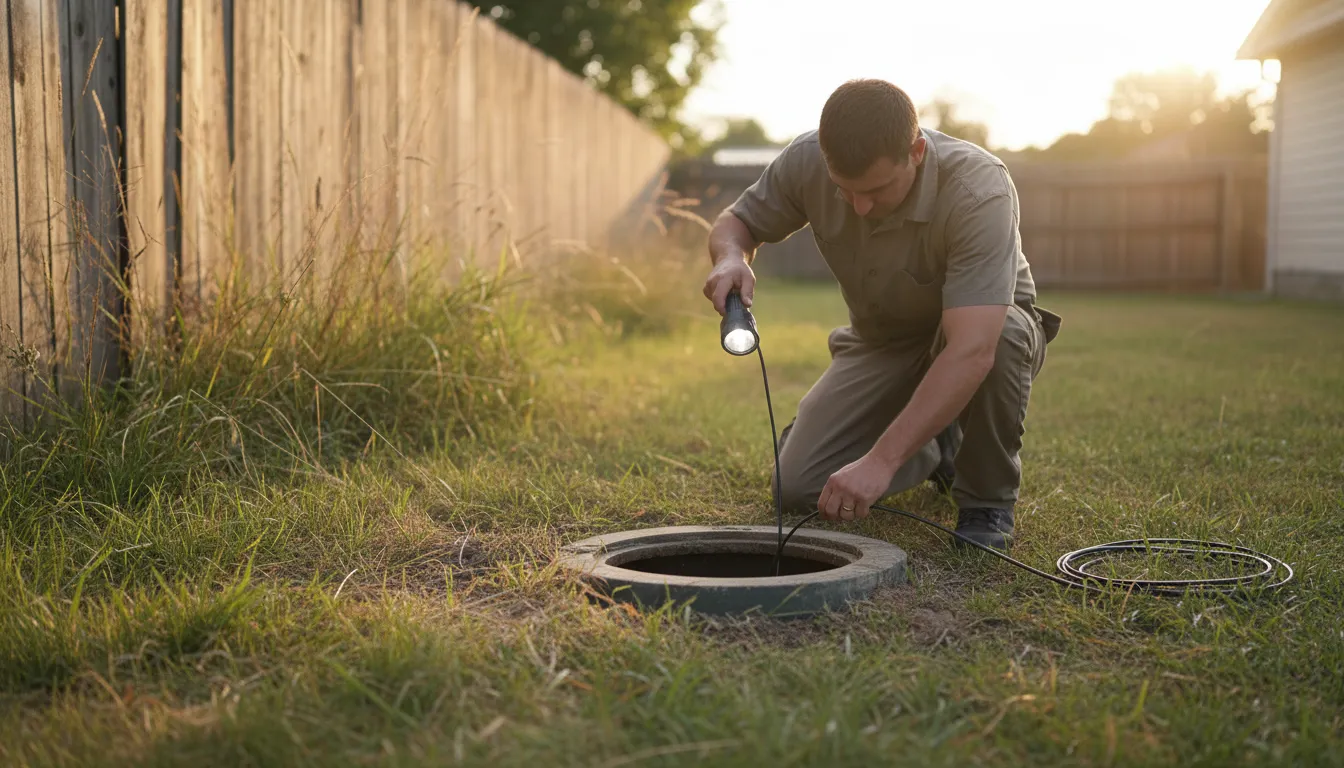
- Locating the System: The inspector will first locate the tank and drain field, which may involve probing the yard if the access lids are buried.
- Checking Liquid Levels: The inspector assesses the liquid level inside the tank to ensure it's at a normal height, indicating proper drainage from the house and into the drain field.
- Measuring Sludge and Scum: This is a core part of the inspection. Using specialized tools, the inspector measures the depth of the sludge layer at the bottom of the tank and the scum layer floating at the top. A common rule is that pumping is needed if the scum layer is within 6 inches of the outlet baffle or if the sludge layer is too deep.
- Inspecting Components: The inlet and outlet baffles (or tees) are checked for damage or blockage. The tank's structural integrity is examined for cracks or signs of collapse. If the system includes a pump or siphon, those electrical and mechanical components are tested for proper operation 5 6.
- Evaluating the Drain Field: The inspector will examine the drain field area for telltale signs of failure. This includes looking for surfacing sewage, persistent soggy soil, or unexplained lush grass growth, which can all indicate that the field is not properly absorbing treated effluent 7.
A reputable inspector will provide you with a detailed written report summarizing their findings on sludge levels, baffle condition, and overall system functionality, which is essential for your records 8.
Find the perfect septic tank inspection companies for your needs
Get personalized recommendations and expert advice
Costs Associated with Septic Inspections and Pumping
When budgeting for septic system maintenance, it's helpful to understand typical price ranges. In the Hammond area, a standard septic tank inspection typically costs between $200 and $600 9. The final price can vary based on the system's accessibility-if the tank lids are buried and require digging, additional fees will apply-and the complexity of your system (e.g., the presence of pumps, filters, or alternative technology).
If the inspection reveals that pumping is necessary, that service is typically priced separately. Septic tank pumping in this region generally costs between $250 and $600 or more, with the final price depending on the tank's size (measured in gallons) and the volume of solids that need to be removed 10 11. While this is an investment, it is far less costly than addressing the damage and health hazards caused by a neglected system.
How to Prepare for and Choose an Inspection Service
A little preparation can make the inspection process smoother and more accurate. First, ensure the tank's access lids are uncovered and easily reachable. If they are buried, you may want to dig them up yourself before the appointment to avoid potential "digging fees" from the contractor. Clear any vehicles, landscaping, or debris from the area above the tank and drain field to provide full access.
Selecting the right professional is critical. Always look for a contractor who is licensed and certified. In Indiana, many qualified inspectors are certified through organizations like the Indiana Onsite Wastewater Professionals Association (IOWPA) or are specifically approved by local health officials 12. Don't hesitate to ask for proof of licensing and insurance. A trustworthy professional will be happy to explain their process, provide references, and detail what their inspection report will include. This due diligence ensures the person evaluating one of your home's most critical systems is thoroughly qualified.
The Role of Inspections in Real Estate Transactions
A septic system evaluation is a non-negotiable step in most real estate transactions involving a property with an on-site system. For buyers, it is a crucial form of due diligence to avoid inheriting a failing system and a massive unexpected repair bill. For sellers, having a recent, clean inspection report can make the property more attractive and streamline the sale process. In these cases, the inspection is often more rigorous, sometimes including a "load test" where water is run through the system to verify the drain field's absorption capacity under simulated use. Whether you're buying, selling, or simply maintaining your home, a professional septic inspection provides peace of mind and financial protection.
Frequently asked questions
Sources
Footnotes
-
§ 51.100 PRIVIES, SEPTIC TANKS AND CESSPOOLS. - https://codelibrary.amlegal.com/codes/hammond/latest/hammond_in/0-0-0-2646 ↩
-
Frequent Questions on Septic Systems | US EPA - https://www.epa.gov/septic/frequent-questions-septic-systems ↩
-
RESIDENTIAL ONSITE SEPTIC PERMIT PROCESS - https://rushcounty.in.gov/wp-content/uploads/2021/07/RESIDENTIAL-ONSITE-SEPTIC-PERMIT-PROCESS-1.pdf ↩
-
Indiana Septic Tank Requirements | On-Site Sewage Systems - https://www.ntotank.com/blog/indiana-septic-tank-requirements ↩
-
Hammond IN Septic System Service - https://jlgsepticllc.com/service-areas/indiana/hammond/ ↩
-
What to Expect from a Septic Inspection - https://www.wrenvironmental.com/blog/2023/may/what-to-expect-from-a-septic-inspection/ ↩
-
Indiana Septic System Installation and Permit Procedure Guide - https://www.septicdesign.com/homeowners/the-septic-system-installation-processs-for-indiana/ ↩
-
howard county health department - septic tank inspection - IN.gov - https://www.in.gov/localhealth/howardcounty/files/SepticTankInsp.pdf ↩
-
Septic Inspections: What is Involved & Costs - Transactly - https://blog.transactly.com/septic-inspections ↩
-
Homeowner's Guide to Septic Systems - http://indiana.clearchoicescleanwater.org/resources/epa-homeowners-guide-to-septic-systems/ ↩
-
What Is the Role of Septic Tank Inspection in Real Estate - https://www.houzeo.com/blog/septic-tank-inspection/ ↩
-
Indiana Septic License & Certification | 2024 Contractor Guide - https://www.servicetitan.com/licensing/septic/indiana ↩