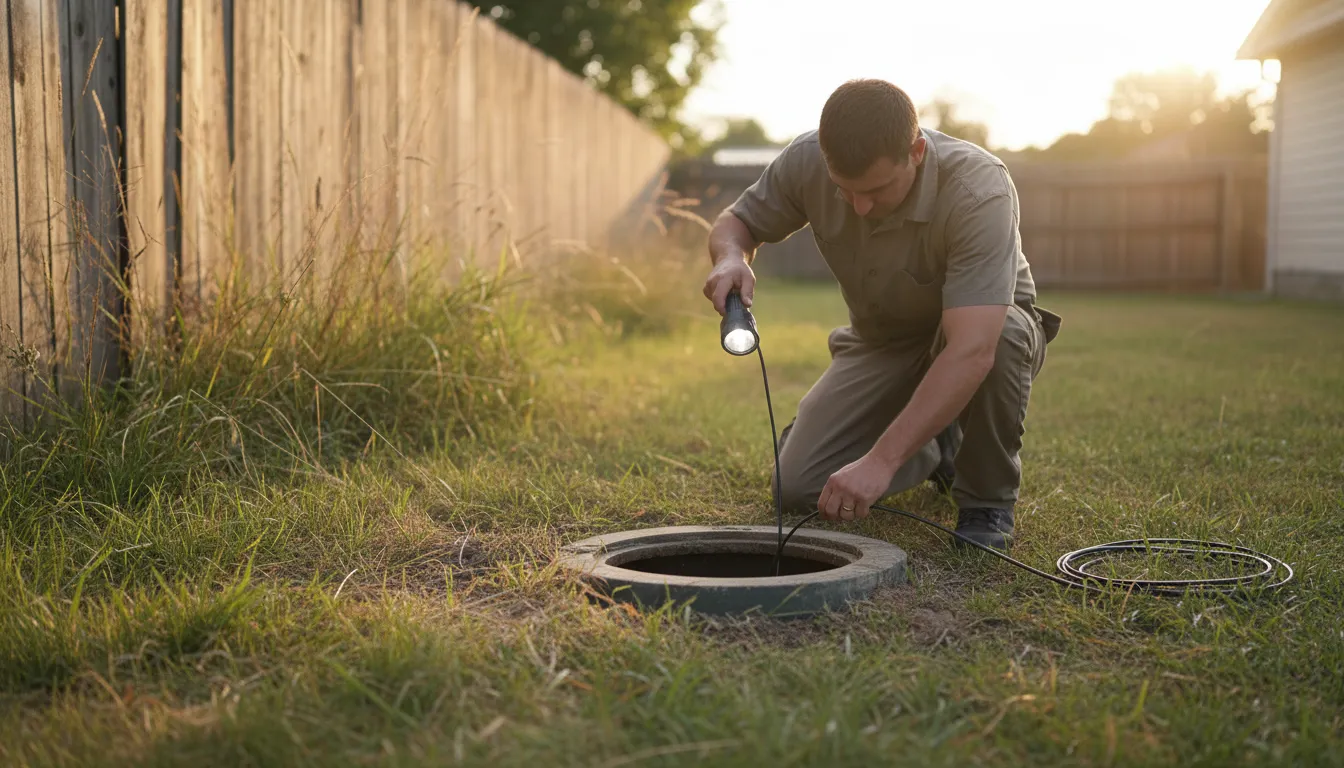
Find the Best Septic Tank Inspection Companies for Your Business
No obligation • Fast responses • Nationwide coverage

Why you can trust Septic Spot
Septic Spot is a leading United States resource for understanding and comparing septic services. Our editors review providers using consistent criteria and verify key business details. Listings and scores are independent, and companies cannot pay to influence our content.
Search providers near you
Top Septic Tank Inspection Companies in South Bend, Indiana Ranked
A septic tank inspection is a professional evaluation of your on-site wastewater system to ensure it is functioning safely and efficiently. In South Bend and St. Joseph County, these evaluations are not just a good idea-they are often a legal requirement, especially during a property sale. Understanding the process, local regulations, and finding a qualified professional can protect your investment, your health, and the local environment.
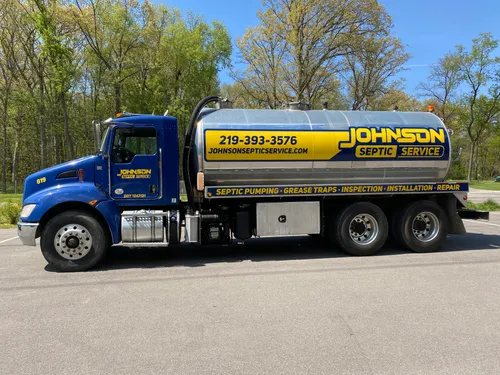
Johnson Septic Service
7523 S 1st Line Rd, Kingsbury, IN 46345
Johnson Septic Service provides septic tank pumping, inspection, repair, and installation services in Chicago, IL. They also offer grease trap pumping and use Bio-Tabs as part of their service options. The company serves the northwest Indiana area with a focus on quality septic system maintenance and repair.
Dogtag Septic Sevices LLC
2714 Nowak Dr, La Porte, IN 46350
Dogtag Septic Services LLC is a family-owned company based near Chicago, IL, specializing in septic tank inspections and small repairs. They are certified through I.O.W.P.A and NAWT to perform septic inspections required for home title transfers and ensure systems meet code standards. The company focuses on educating customers about proper septic maintenance and providing knowledgeable service.
K-Fex Inc.
5885 N 800 E, New Carlisle, IN 46552
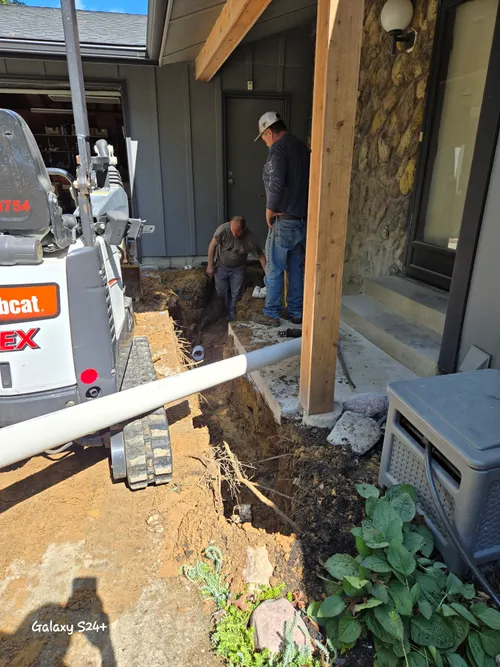
K-Fex Inc. provides septic tank pumping, inspection, repair, and installation services in Chicago, IL. They also handle drain field repair and replacement. The company offers excavation services and has a full-time office staff available during regular business hours. One notable capability is their service to locate and dig up septic tank lids when needed. K-Fex Inc. supports clients through the entire septic system process, including soil testing and health department coordination for system replacements.
Why Septic System Evaluations Are Critical in St. Joseph County
For homes not connected to municipal sewer lines, the septic system is a private wastewater treatment plant. A failing system can lead to sewage backing up into your home, contaminating groundwater, or creating unhealthy conditions in your yard. In South Bend, the local environment, including the water table and soil types, makes proper system maintenance essential. Furthermore, St. Joseph County has specific, enforceable rules governing these systems to protect public health 1. A thorough septic inspection is your first line of defense against costly repairs, environmental contamination, and legal penalties.
Key Local Regulations for South Bend Homeowners
St. Joseph County enforces strict regulations through its Department of Health. Ignorance of these rules can result in significant fines, so compliance is crucial.
- Permits Are Mandatory: You must obtain a permit from the St. Joseph County Department of Health before installing, repairing, or replacing any part of your septic system.
- The Property Transfer Rule: This is one of the most important regulations for buyers and sellers. During a real estate transaction involving a property with a septic system, a specialized inspection is required by law. The tank must be opened and inspected, and a site sketch must be provided to the buyer.
- Well Water Testing: If the property also has an on-site water well, it must be tested for total coliform bacteria, E. coli, nitrates, and arsenic. These results must be submitted to the health department alongside the septic inspection report.
- Deadlines and Penalties: The inspection and well test results must be provided to the buyer at least three days before closing. The complete Property Transfer Application, including the inspection report and a $75 fee, must be filed with the health department within five days of the closing date. Violations of these regulations can lead to penalties of up to $1,500 per violation, per day 2.
What Does a Professional Septic Inspection Involve?
A comprehensive septic system assessment is a multi-step process conducted by a licensed professional. It goes far beyond just looking at the tank. Here's what you can expect during a standard evaluation 3:
- Initial Site Assessment: The inspector begins by walking the property, specifically the drain field area, looking for visual signs of failure. These signs include soggy ground, standing water, or unusually lush grass over the system.
- Locating and Accessing the Tank: The inspector will locate and uncover the tank's inspection ports (manholes). This often requires digging.
- Internal Tank Inspection: This is the core of the process. The inspector will measure the depth of the sludge (solids at the bottom) and scum (floating layer) inside the tank. If the sludge layer is too high, the tank will need to be pumped to complete a proper inspection. They also check the tank's structural integrity for cracks and ensure the inlet and outlet baffles (which control flow) are present and intact.
- Component and Flow Test: The inspector examines other components, such as the distribution box (if applicable). Finally, they will perform a flow test by running a substantial amount of water (at least 35 gallons) through the household plumbing to verify that the system accepts water and drains properly without backing up 4 5.
Find the perfect septic tank inspection companies for your needs
Get personalized recommendations and expert advice
Understanding Inspection and Maintenance Costs
The cost of a septic inspection in South Bend varies based on the scope of work. For a standard inspection required for a property transfer, homeowners can typically expect to pay between $100 and $300 to the inspection company. Remember, this is separate from the $75 fee paid to the St. Joseph County Department of Health with the Property Transfer Application 6.
If the inspection reveals that the tank needs to be pumped, that is an additional service. In the South Bend area, septic tank pumping generally costs between $290 and $5607 8. While this is an added expense, pumping is a critical maintenance task that can extend the life of your entire system.
Recommended Maintenance Schedule
An inspection during a property sale is legally required, but proactive maintenance is the key to long-term system health. The U.S. Environmental Protection Agency recommends having your septic system inspected by a professional at least every 1 to 3 years 9. Based on the findings of that inspection, pumping is typically needed every 3 to 5 years, though this can vary based on household size and usage 9. Regular inspections can identify minor issues like a failing baffle or early signs of drain field problems before they turn into catastrophic and expensive failures.
Choosing a Qualified Inspection Professional in South Bend
Not all septic service companies are equal. When selecting a professional for your system evaluation, ensure they are familiar with St. Joseph County's specific permit and reporting requirements. They should provide a detailed report that includes the sludge/scum measurements, a sketch of the system layout, and notes on the condition of all components. This report is the official document you will submit to the health department. Look for licensed, insured professionals with strong local references who follow the standard inspection procedures outlined above.
The Consequences of a Failed Inspection
What happens if your system evaluation uncovers a problem? Common issues include a tank that needs immediate pumping, broken baffles, or a failing drain field. The inspector will provide a report detailing the deficiencies. For a property transfer, these issues must often be resolved before the sale can be finalized, as the system must be in proper working order. For existing homeowners, a failed inspection is a clear signal that repairs are needed immediately to avoid system failure, property damage, and potential health department violations.
Frequently asked questions
Sources
Footnotes
-
CHAPTER 51. - SEWAGE AND SEPTIC SYSTEMS REGULATIONS | ... - https://library.municode.com/in/st._joseph_county/codes/code_of_ordinances?nodeId=TITVPUWO_CH51SESESYRE ↩
-
St. Joseph County: Septic Systems - https://www.in.gov/localhealth/stjosephcounty/environmental-health/septic-systems/ ↩
-
Indiana Septic System Installation and Permit Procedure Guide - https://www.septicdesign.com/homeowners/the-septic-system-installation-processs-for-indiana/ ↩
-
Homeowner's Guide to Septic Systems - http://indiana.clearchoicescleanwater.org/resources/epa-homeowners-guide-to-septic-systems/ ↩
-
Understanding Septic Tank Inspections: A Complete Homeowner's ... - https://septic-masters.com/septic-tank-inspection-homeowner-guide/ ↩
-
Property Transfer Summary - St. Joseph County Department of Health - https://www.in.gov/localhealth/stjosephcounty/files/Summary-of-PT-Process.pdf ↩
-
Septic Tank Inspection Cost Guide | What to Expect & Save | Blog - https://www.blueribbonseptic.com/blog/septic-tank-inspection-costs-are-you-paying-too-much ↩
-
How Much Does a Septic System Inspection Cost? [2025 Data] - https://www.homeadvisor.com/cost/plumbing/septic-inspection-cost/ ↩
-
Frequent Questions on Septic Systems | US EPA - https://www.epa.gov/septic/frequent-questions-septic-systems ↩ ↩2