Find the Best Septic Tank Inspection Companies for Your Business
No obligation • Fast responses • Nationwide coverage

Why you can trust Septic Spot
Septic Spot is a leading United States resource for understanding and comparing septic services. Our editors review providers using consistent criteria and verify key business details. Listings and scores are independent, and companies cannot pay to influence our content.
Search providers near you
Best Septic Tank Inspection Companies in Kentucky Ranked
A septic tank inspection is a professional assessment of your onsite wastewater system's condition and functionality. In Kentucky, where many homes rely on these private systems, regular inspections are crucial for protecting your property value, your family's health, and the local environment. This guide provides clear information on Kentucky's regulations, inspection processes, and costs to help you find qualified local professionals to evaluate your system.

CHC Home Inspection
2333 Alexandria Dr, Lexington, KY 40504
CHC Home Inspection is a septic tank inspection company based in Louisville, KY, serving clients throughout Kentucky. The company offers a wide range of residential and commercial inspection services, including septic inspections, mold assessments, radon tests, termite inspections, and sewer scopes. Founded by Clay Hoskins, CHC Home Inspection has over five years of experience and a team of skilled inspectors who provide timely reports, often delivered the same day or within 24 hours. The company also has a strategic partnership with a local contracting firm to provide repair estimates based on inspection findings.

Shelby Septic Service
24 Main St, Shelbyville, KY 40065
Shelby Septic Service is a family-owned company based near Louisville, KY, providing comprehensive septic system services including pumping, inspections, filter cleaning, riser and lid access, and filter installation. They serve residential and commercial customers across Anderson, Franklin, Henry, Jefferson, Oldham, Shelby, and Spencer Counties. The company is experienced in septic tank cleaning, maintenance, and problem-solving, with capabilities such as backflushing to remove solids buildup. Shelby Septic Service is recognized for their knowledgeable technicians and thorough inspections, offering detailed reports to assist with property purchases and maintenance decisions.
Supreme Septic Services (formerly known as Garrett's Septic Service)
Louisville, KY
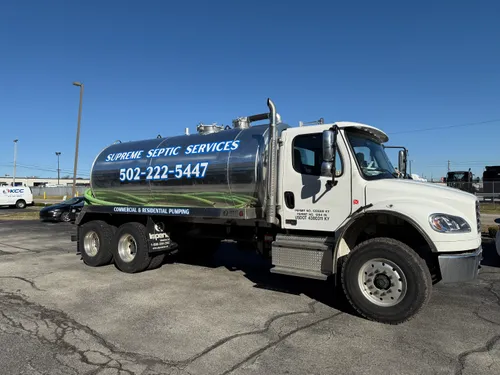
Supreme Septic Services (formerly known as Garrett's Septic Service) is a locally owned company based in Louisville, KY, offering a range of septic and grease system services. They provide septic pumping, grease trap cleaning, system repairs, inspections, and installations for residential, commercial, and restaurant clients. Their team uses modern equipment to ensure efficient service and compliance with local standards. Supreme Septic Services focuses on proper system design and maintenance to extend system life and prevent backups.

Doctor Rooter Plumbing
1703 Richmond Rd N, Berea, KY 40403
Doctor Rooter Plumbing is a septic tank inspection company based in Lexington, KY. They provide a range of plumbing services including septic tank location and inspection, faucet and water heater installation, main line clog clearing, and water line repairs. The company demonstrates capability in using camera technology to locate septic tanks and offers comprehensive plumbing solutions for residential needs.

United Plumbing
Louisville, KY
United Plumbing is a septic tank pumping and inspection company serving Louisville, KY, and the surrounding areas. Established in 1984, the company offers a range of plumbing services including septic system maintenance and repairs. They combine local expertise with national brand support to provide reliable solutions for home plumbing needs. United Plumbing operates 24 hours a day, ensuring availability for urgent and routine service calls. Their team is licensed and certified, delivering professional care backed by the Service Experts Guarantee.
Understanding Kentucky's Septic System Regulations
Septic systems in the Commonwealth are regulated at the state level by the Cabinet for Health and Family Services (CHFS), but administration and enforcement are handled by your local county health department. These departments operate under state regulations, primarily 902 KAR 10, which set the standards for design, installation, and maintenance.
A key requirement is that all new installations and major repairs must be performed by a certified installer 1. Furthermore, a permit from your local health department is mandatory for any new construction, replacement, or significant alteration of a system. This process begins with a site evaluation, where a sanitarian assesses your property's soil conditions, topography, and water table to determine the suitable type and size of system. Once a permit is issued, the health department must inspect all new septic components before they are covered with soil, ensuring the work meets code.
When and Why You Need a Septic Inspection
Proactive maintenance is the best way to avoid costly emergencies and environmental contamination. The U.S. Environmental Protection Agency (EPA) recommends having a standard septic system inspected at least every three years 2. Pumping is typically needed every three to five years, but the exact frequency depends on household size and usage 2.
Beyond routine maintenance, specific situations trigger the need for an inspection:
- Real Estate Transactions: When buying or selling a home with a septic system, a transfer inspection is highly recommended and often required by lenders. This inspection assesses the system's current condition and identifies any issues that need addressing before the sale closes.
- Suspected Problems: Signs like slow drains, sewage backups, foul odors indoors or outdoors, or unusually lush grass over the drain field are clear indicators that an inspection is urgently needed.
- Before Renovations or Additions: Adding a bathroom or increasing your home's occupancy puts additional load on your septic system. An inspection can determine if your existing system can handle the increased flow or if an upgrade is necessary.
- After Major System Work: Following repairs or a pump-out, an inspection can verify that the system is functioning correctly.
What Inspectors Look For: The Kentucky Inspection Process
A comprehensive septic system evaluation in Kentucky involves several steps to check all critical components. Inspectors, who are often certified sanitarians or experienced septic professionals, follow a systematic approach.
1. Record Review & Site History: The inspector will start by reviewing any available permits, as-built diagrams, and maintenance records for the system. They will also ask about the age of the system, the household size, and any past issues.
2. Locating & Accessing Components: The inspector locates the tank, distribution box, and drain field. Kentucky regulations require septic tanks to have at least two manholes (10-24 inches in diameter) for proper access, along with inlet and outlet baffles or sanitary tees, and a permanent effluent filter. They will check that these access points are present and unobstructed.
3. Tank Inspection: This is the core of the evaluation. The inspector will:
- Pump the tank (if part of the service) to examine its interior for structural cracks, corrosion, or leaks.
- Check the baffles/filters for blockages or damage.
- Measure scum and sludge layers to determine if pumping is needed and assess the rate of accumulation.
4. Hydraulic Load Test & Drain Field Assessment: To check the absorption field's function, the inspector may introduce a significant amount of water into the system (a load test) and monitor how quickly it dissipates. They will look for signs of failure, such as surfacing effluent, soggy ground, or overly vibrant vegetation over the field lines 3.
5. Dye Test (Optional/Additional): In some cases, especially when a leak is suspected, a non-toxic fluorescent dye is flushed into the household plumbing. The inspector then checks the yard and surrounding area for any trace of the dye, which would indicate a breach in the system.
Find the perfect septic tank inspection companies for your needs
Get personalized recommendations and expert advice
Cost of Septic Inspections and Related Fees in Kentucky
The price of a septic inspection in Kentucky varies based on the type of inspection, the system's complexity, and your location. Here is a breakdown of typical costs:
- Standard Existing System Inspection: For a routine check or one required for a real estate transfer, you can expect to pay an average of $150 to $200 4. This generally covers a visual assessment, sludge level measurement, and a basic functional check.
- Comprehensive Inspection with Dye Test: A more detailed inspection that includes a hydraulic load test and dye testing will cost more, typically ranging from $500 to $700 5 6.
- Permit and Evaluation Fees: If you're installing a new system, fees are separate. A site evaluation by the health department typically costs around $200 to $225 7. The construction permit fee itself varies by county but commonly falls between $200 and $425 8 9.
- New System Installation: For context, the total cost to install a new conventional septic system in Kentucky typically ranges from $6,000 to over $15,000, depending on soil conditions and system type 10.
Important Disclaimer: All regulations, procedures, and fees can vary significantly by county. It is essential to contact your local Kentucky Health Department for the most accurate and current information applicable to your property 11 12.
Finding a Qualified Inspector or Installer
When your home's wastewater system and your investment are on the line, choosing a qualified professional is critical. Look for the following:
- State Certification: Ensure the individual or company holds current certification from the Commonwealth of Kentucky for septic system installation, repair, or inspection. You can verify this through your local health department.
- Local Experience: Professionals familiar with your county's specific health department officials, regulations, and common soil types will navigate the process more efficiently.
- Insurance: Always choose an inspector or installer who carries general liability insurance.
- Detailed Reporting: A reputable inspector will provide a thorough written report detailing their findings, including photographs, measurements, and clear recommendations for any necessary repairs or maintenance.
Regular septic tank inspections are not just a regulatory suggestion; they are a fundamental part of responsible homeownership in Kentucky. By understanding the process and costs, you can make informed decisions to protect your property and the environment for years to come.
Frequently asked questions
Sources
Footnotes
-
Kentucky Septic License & Certification | 2025 Contractor Guide - https://www.servicetitan.com/licensing/septic/kentucky ↩
-
How to Care for Your Septic System | US EPA - https://www.epa.gov/septic/how-care-your-septic-system ↩ ↩2
-
Kentucky Septic Tank Requirements | Complete Overview Guide - https://www.ntotank.com/blog/kentucky-septic-tank-requirements ↩
-
Onsite Sewage (Septic Systems) - https://healthdepartment.org/community-health/onsite-sewage-septic-systems/ ↩
-
KY Well & Septic Inspections 2026: Buyer's Complete Guide - https://askdoss.com/how-to-handle-well-and-septic-inspections-in-kentucky-what-buyers-must-know/ ↩
-
Buying a Home with Septic? Inspection in Kentucky & Ohio - https://kentuckyinspectionservices.com/services/septic-inspection/ ↩
-
On-Site Sewage - Lincoln Trail District Health Department - https://ltdhd.org/on-site-sewage/ ↩
-
Onsite Septic System Program | LouisvilleKY.gov - https://louisvilleky.gov/government/health-wellness/onsite-septic-system-program ↩
-
Septic Systems - Marshall County Health Department | Benton, KY - https://www.marshallcohealthdepartment.com/2020/septic-systems/ ↩
-
Just How Much Is a New Septic System Going to Cost? - https://www.kysepticservice.com/helpful-info/just-how-much-is-a-new-septic-system-going-to-cost.html ↩
-
Onsite Sewage Disposal Systems Program - Cabinet for Health and Family Services - https://www.chfs.ky.gov/agencies/dph/dphps/emb/Pages/environmentmgmt.aspx ↩
-
Septic Systems - Northern Kentucky Health Department - https://nkyhealth.org/septic/ ↩