Find the Best Septic Tank Inspection Companies for Your Business
No obligation • Fast responses • Nationwide coverage

Why you can trust Septic Spot
Septic Spot is a leading United States resource for understanding and comparing septic services. Our editors review providers using consistent criteria and verify key business details. Listings and scores are independent, and companies cannot pay to influence our content.
Search providers near you
Top Septic Tank Inspection Companies in St Clair Shores, Michigan Ranked
A septic tank inspection is a professional evaluation of your onsite wastewater system to ensure it is functioning safely and in compliance with local health codes. In St. Clair Shores, these evaluations are not just a good idea-they are a regulated necessity for protecting your property, public health, and the local environment, including nearby Lake St. Clair. This guide will help you understand the process, requirements, and how to connect with qualified local professionals for your system assessment.

Why Septic System Inspections Are Critical in St. Clair Shores
For homes not connected to municipal sewer lines, a private septic system is responsible for treating all household wastewater. A malfunctioning system can lead to sewage backups into your home, foul odors, and contamination of groundwater and surface water. Given St. Clair Shores' proximity to significant waterways, proper system maintenance is an environmental imperative. Regular septic evaluations help identify problems early, such as failing drainfields or damaged baffles, before they become costly emergencies or health hazards 1.
Michigan law, specifically the Environmental Health Code, sets minimum standards for septic systems, and local health departments enforce these rules. For St. Clair Shores residents, this typically involves coordination with the Macomb County Health Department for certain services, as the city is located within Macomb County.
Local Inspection Requirements and Regulations
Understanding local mandates is the first step in responsible septic system ownership. Requirements often tie directly to property transactions and routine maintenance schedules.
Mandatory Three-Year Inspections: In St. Clair Shores and surrounding areas governed by St. Clair County regulations, septic systems must be inspected by a registered professional every three years to ensure they meet sanitary code standards. This periodic check is crucial for ongoing compliance.
Property Transfer Evaluations: If you are buying or selling a home with a septic system in Macomb County, a property transfer evaluation conducted by a registered evaluator is typically required 2. This is a more detailed assessment to certify the system's condition for the sale. Many homeowners discover the need for a system inspection or septic tank pumping as a result of this real estate transaction.
Permit Requirements: Any construction, repair, or alteration of a private sewage disposal system in St. Clair County requires a permit from the St. Clair County Health Department. The application fee for such a permit is $300 3 4. An inspection is a key part of the permitting process for new installations or major repairs.
What Does a Professional Septic Inspection Include?
A comprehensive septic system assessment is more than just looking into the tank. A qualified inspector will follow a systematic process to evaluate the entire system's health.
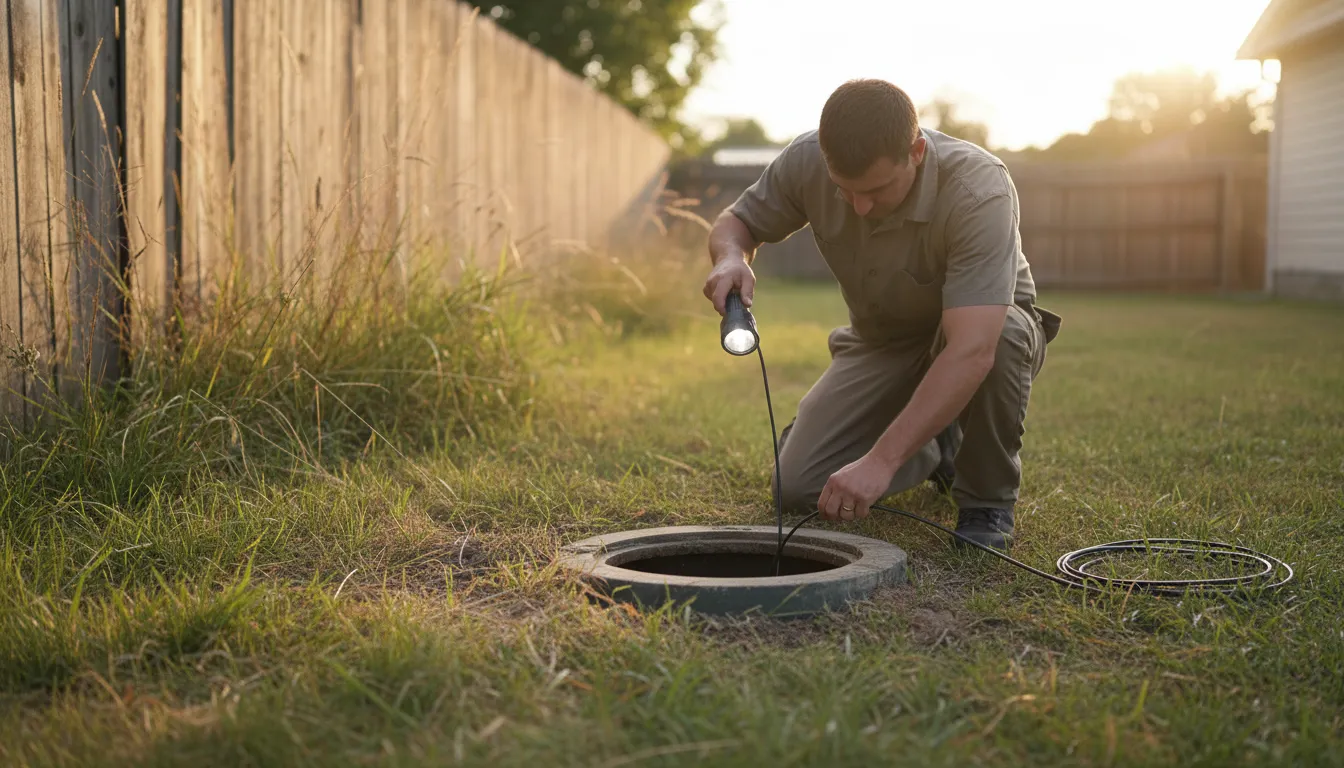
- Locate & Uncover: The inspector will first locate the septic tank and drainfield, then excavate and open the access ports. Michigan code requires an outside access cover of at least 12 inches for this purpose 5.
- Evaluate Tank Solids: This is a core part of the inspection. The professional will measure the layers of scum (floating solids) and sludge (settled solids) to determine if the tank needs to be pumped. Proper sludge and scum layer management is essential to prevent solids from flowing out into the drainfield and causing a failure.
- Check Baffles and Outlets: The inspector will examine the inlet and outlet baffles (or tees) inside the tank. These components are vital for preventing solids from exiting the tank and clogging the drainfield. Damaged or missing baffles are a common issue that requires repair.
- Inspect the Drainfield: The inspector will check the area over the drainfield (leach field) for signs of failure, such as pooling water, overly saturated soil, or foul odors. They may also check for sluggish drainage in your home's plumbing, which can indicate a problem.
- Check Mechanical Components: If your system includes a pump, lift station, or alarms, the inspector will test these components to ensure they are operational 6.
Find the perfect septic tank inspection companies for your needs
Get personalized recommendations and expert advice
Understanding Costs for Inspection and Pumping
Budgeting for septic maintenance is straightforward when you know the typical price ranges. Costs can vary based on tank size, accessibility, and the extent of the inspection required.
- Standard Septic Tank Inspection: For a routine evaluation of your system, you can expect to pay between $100 and $250.
- Septic Tank Pumping: If the inspection reveals the tank is full (typically one-third full of solids), pumping is recommended. The cost for pumping in this area generally ranges from $250 to $500, depending on tank capacity 7.
- Combined Service Package: Many homeowners schedule inspection and pumping together for efficiency. The total cost for a combined inspection and pumping service typically falls between $350 and $750 8.
Remember, while pumping costs more upfront, it is far less expensive than repairing or replacing a drainfield ruined by neglect.
How to Prepare for Your Septic Inspection
A little preparation can make the inspection process smoother, faster, and more effective.
- Locate Your System: If you have a diagram or record of your septic tank and drainfield location (often called an "as-built"), have it ready. If not, the inspector can locate it, but this may add time.
- Clear Access: Ensure the area above the septic tank lid and inspection ports is clear of obstructions like vehicles, landscaping, decks, or sheds.
- Conserve Water: Avoid excessive water use (like running multiple loads of laundry or taking long showers) for 12-24 hours before the inspection. A tank filled with liquid makes it harder to accurately measure sludge and scum layers 9.
- Know Your System: Be prepared to tell the inspector the approximate age of your system and any past issues or maintenance records.
Maintaining Your System Between Inspections
Professional inspections every three years are mandatory, but good daily practices extend your system's life. Have your tank pumped every 3-5 years, as recommended by health officials 10. Be mindful of what goes down your drains-avoid flushing chemicals, oils, grease, and non-biodegradable items. Use water efficiently and divert rainwater drainage away from your drainfield. Following these septic system care tips can prevent emergencies and ensure your system passes its next official evaluation with ease.
Frequently asked questions
Sources
Footnotes
-
SepticSmart - https://www.michigan.gov/egle/about/organization/drinking-water-and-environmental-health/onsite-wastewater-management/septicsmart ↩
-
Property transfers - https://www.macombgov.org/departments/health-department/environmental-health-services/property-transfers ↩
-
Water & Private Sewage | St. Clair County Health Department - https://scchealthdept.com/environmental-programs/water-private-sewage/ ↩
-
Residential Sewage Disposal Permit Application - St. Clair County - https://stclaircounty.org/PageBuilder/scchd/Uploads/005%20Residential%20Sewage%20Disposal%20Permit%20Application%20-%20Copy%204.pdf ↩
-
Mich. Admin. Code R. 325.423 - Minimum standards for septic tank ... - https://www.law.cornell.edu/regulations/michigan/Mich-Admin-Code-R-325-423 ↩
-
Septic Systems: - Mid-Michigan District Health Department - https://www.mmdhd.org/wp-content/uploads/2018/09/Septic-Systems.pdf ↩
-
On-Site Septic Systems | Bloomfield Hills, MI - https://www.bloomfieldhillsmi.net/227/On-Site-Septic-Systems ↩
-
Septic Tank Inspection Cost Guide | What to Expect & Save | Blog - https://www.blueribbonseptic.com/blog/septic-tank-inspection-costs-are-you-paying-too-much ↩
-
Preparing for Septic Tank Inspection: 7 Key Steps - https://septic911.com/preparing-for-septic-tank-inspection/ ↩
-
SepticSmart - Mid-Michigan District Health Department - https://www.mmdhd.org/environmental-services/septic/septic-smart/ ↩