Find the Best Septic Tank Inspection Companies for Your Business
No obligation • Fast responses • Nationwide coverage

Why you can trust Septic Spot
Septic Spot is a leading United States resource for understanding and comparing septic services. Our editors review providers using consistent criteria and verify key business details. Listings and scores are independent, and companies cannot pay to influence our content.
Search providers near you
Top Septic Tank Inspection Companies in Westland, Michigan Ranked
A septic tank inspection is a professional assessment of your home's onsite wastewater treatment system, crucial for ensuring it operates safely and complies with local health regulations. In Westland, these evaluations are not just a good idea-they are often a legal requirement, especially when selling your home. This guide will help you understand the process, local rules, and how to find qualified professionals to conduct your system evaluation.
Bolton Septic
Ann Arbor, MI
Bolton Septic is a full-service septic company serving Ann Arbor, MI, and surrounding counties including Oakland, Livingston, Wayne, and Washtenaw. Established in 1967, Bolton Septic offers septic tank pumping, inspection, and maintenance for residential and commercial properties. They emphasize preventative maintenance to extend the life of septic systems and provide licensed professionals to inspect and evaluate tanks during service. Bolton Septic is part of the Bolton Environmental Family, combining over 200 years of experience to support a wide range of septic needs.

Home Inspection Professionals
22924 Gaukler St, St Clair Shores, MI 48080
Home Inspection Professionals is a certified septic tank inspection company based in Detroit, MI. They offer thorough inspections conducted by licensed builders and certified evaluators, including septic and well inspections. The team is trained and certified through recognized organizations such as the National Institute of Building Inspectors and the American Society of Home Inspectors. They also provide inspection services for commercial, new construction, and investment properties. All inspectors carry bonding, insurance, and Errors and Omissions coverage, which adds protection for real estate professionals involved in transactions.
Howell Sanitary Co. II
Lansing, MI
Howell Sanitary Co. II provides a range of septic system services in Lansing, MI. Their offerings include septic tank pumping, inspections, repairs, and new installations. They also handle septic field repairs and replacements, with expertise in various field types such as conventional, elevated, dry wells, bed, and trench systems. Additional capabilities include septic tank riser installation, effluent filter cleaning, excavating, driveway grading, and land clearing.
Al Pearson & Son Septic Tank Cleaning
46885 Ford Rd, Canton Township, MI 48187
Al Pearson & Son Septic Tank Cleaning is a family-owned business serving Ann Arbor, MI, and the surrounding Southeast Michigan area. They offer a full range of septic services including tank pumping, cleaning, system repairs, new installations, soil evaluations, and excavation. With over 70 years of experience since 1953, the company is licensed and certified to handle advanced septic system work for both residential and commercial clients. They emphasize clear communication and honest recommendations to ensure septic systems operate reliably. Emergency septic services are also available with often same-day pumping.
Understanding Local Septic System Regulations
In Westland, septic system requirements are governed by the Wayne County Onsite Sewage Disposal System (OSDS) Evaluation and Maintenance Ordinance. This local health department rule mandates that septic systems be evaluated prior to the sale or transfer of a property. Homeowners must have their systems inspected by a county-registered evaluator and are required to maintain the system to prevent failure.
Wayne County's ordinance applies specifically to several municipalities, including Westland. Key regulatory highlights include:
- Point-of-Sale Requirement: An evaluation of the OSDS (septic tank and drain field) is required before a property is sold or transferred.
- Pumping Evaluations: A septic tank evaluation is required every time a tank is pumped.
- Report Validity: Transfer evaluation reports are valid for 6 months from the date of the evaluation.
- Failing Systems: If a system is found to have failed, the owner must either connect to available public sewers or bring the system into compliance with county performance standards.
- Registered Evaluators: Evaluations must be conducted by individuals registered with the Wayne County Environmental Health Division1 2.
It's important to note that Michigan recently considered legislation that could phase out local point-of-sale ordinances within 7 years of enactment, though current Wayne County rules remain in effect3. Always verify the latest requirements with the county.
What Happens During a Professional System Evaluation?
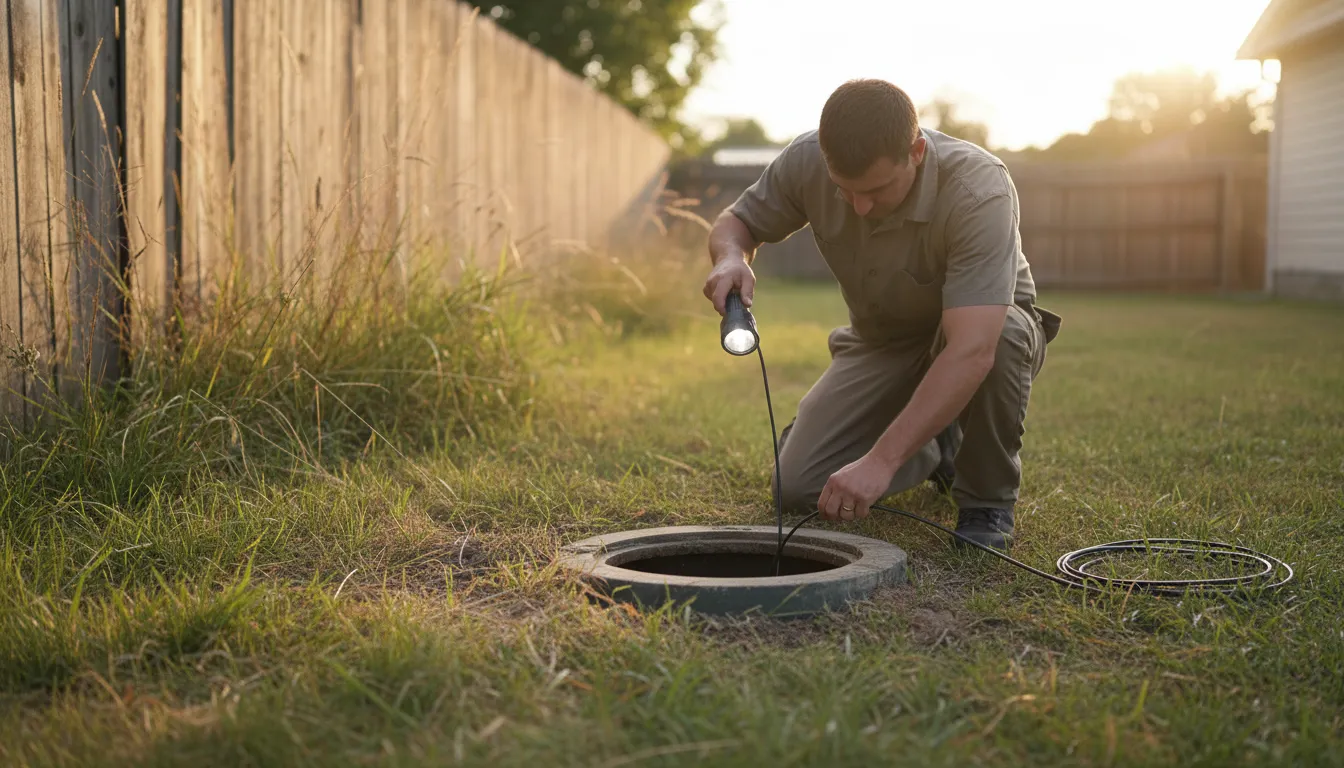
A standard septic system inspection is a multi-stage technical process designed to assess the health of both the tank and the drain field (also known as a leach field). Here's what you can expect a qualified inspector to do:
1. Locating the System The technician will first find the tank, which is often buried 5 to 25 feet from the house near the sewer line exit4. They may use probe rods or electronic locating equipment.
2. Accessing the Tank This involves uncovering the access holes (risers) and removing the lids, which may require digging or clearing away soil and debris5.
3. Initial Visual and Functional Tests The inspector will often flush toilets inside the home to check for slow drainage or backups, indicating a blockage. They will also check the area around the tank lids for wetness or odor, which could signal an overflow or flow issue6.
4. Measuring Scum and Sludge Accumulation This is a core part of the tank assessment. The inspector measures the layers of scum (oils and grease) floating at the top and the sludge (decomposed solids) settled at the bottom. A general rule is that a system is considered to have acceptable sludge levels if it takes up one-third or less of the tank's liquid depth7 8. Excessive sludge means the tank needs pumping.
5. Inspecting System Components The technician will check all mechanical parts, such as effluent pumps or electrical float switches, for proper operation. They will also inspect the condition of the inlet and outlet baffles (or tees) inside the tank, which are crucial for preventing solids from flowing into the drain field9 10.
6. Drain Field Assessment Evaluating the absorption field is critical. Inspectors use methods like soil probing to check for saturated soil, flow testing to see how quickly water disperses, or even specialized camera inspections of distribution lines11. A failing drain field, indicated by surfacing sewage or soggy ground, is a serious issue.
Find the perfect septic tank inspection companies for your needs
Get personalized recommendations and expert advice
The Importance of Regular Septic System Maintenance
Beyond mandatory point-of-sale inspections, regular maintenance is key to avoiding costly repairs and environmental hazards. A well-maintained system protects your property value, your family's health, and local groundwater. Think of a septic evaluation not as an expense, but as an investment in your home's infrastructure.
Routine maintenance includes:
- Regular Pumping: Typically needed every 3-5 years, depending on household size and usage.
- Water Conservation: Reducing water flow into the system helps the drain field function properly.
- Proper Waste Disposal: Avoid flushing chemicals, grease, or non-biodegradable items that can clog or damage the system.
- Landscaping Care: Keep heavy vehicles and deep-rooted plants away from the drain field area.
Scheduling a routine inspection, even when not selling your home, can identify minor issues before they become major failures.
Choosing a Qualified Septic Inspector in Westland
Given Wayne County's registration requirement for transfer evaluations, selecting the right professional is straightforward but essential12. Look for a provider who is not only registered with the county but also has a strong local reputation. They should be willing to explain the inspection process clearly and provide a detailed report of their findings. While costs can vary based on the provider and the specific services required (e.g., whether the evaluation includes water sampling), the priority should be on thoroughness and compliance with county standards.
A good inspector will provide you with a clear understanding of your system's condition and any recommended actions, giving you peace of mind whether you're buying, selling, or simply maintaining your Westland home.
Frequently asked questions
Sources
Footnotes
-
IMPORTANT IF YOU ARE SELLING YOUR HOME OF - Wayne County - https://www.waynecountymi.gov/files/assets/mainsite/v/1/economic-development/business/documents/septic/2017_wchd_ordinance_brochure.pdf ↩
-
Evaluation & Maintenance Ordinance - Wayne County, Michigan - https://www.waynecountymi.gov/Government/Departments/Environmental-Services/Water-Quality-Management/Storm-Water-Management/Evaluation-Maintenance-Ordinance ↩
-
part 128. onsite wastewater treatment systems - Michigan Legislature - https://www.legislature.mi.gov/documents/2023-2024/billintroduced/Senate/htm/2023-SIB-0299.htm ↩
-
Septic System Inspection and Maintenance - https://www.youtube.com/watch?v=uzksFrBBlzM&t=36 ↩
-
Septic Inspection - InsideOut Inspections Plus - https://insideoutinspectionsplus.com/septic-inspection/ ↩
-
On-Site Septic Systems | Bloomfield Hills, MI - https://www.bloomfieldhillsmi.net/227/On-Site-Septic-Systems ↩
-
A Genesee County Homeowner's Guide to a Well-Maintained ... - https://gcdcswm.com/PhaseII/Permit_Forms/septic_book_final.pdf ↩
-
How to Get Septic to Pass Inspection - https://www.guardianangelinspections.com/how-to-get-septic-to-pass-inspection ↩
-
§ 53.02 GENERAL REQUIREMENTS. - https://codelibrary.amlegal.com/codes/waynecoin/latest/wayneco_in/0-0-0-1677 ↩
-
Septic Systems: - Mid-Michigan District Health Department - https://www.mmdhd.org/wp-content/uploads/2018/09/Septic-Systems.pdf ↩
-
Drainfield Assessment FAQs, What Homeowners in Michigan Need ... - https://michigandrainfield.com/resources/drainfield-assessment-faq/ ↩
-
report of residential onsite sewage disposal system transfer evaluation - https://www.waynecountymi.gov/files/assets/mainsite/v/1/economic-development/business/documents/septic/2017_tos_report_of_disposal_system_transfer_evaluation.pdf ↩