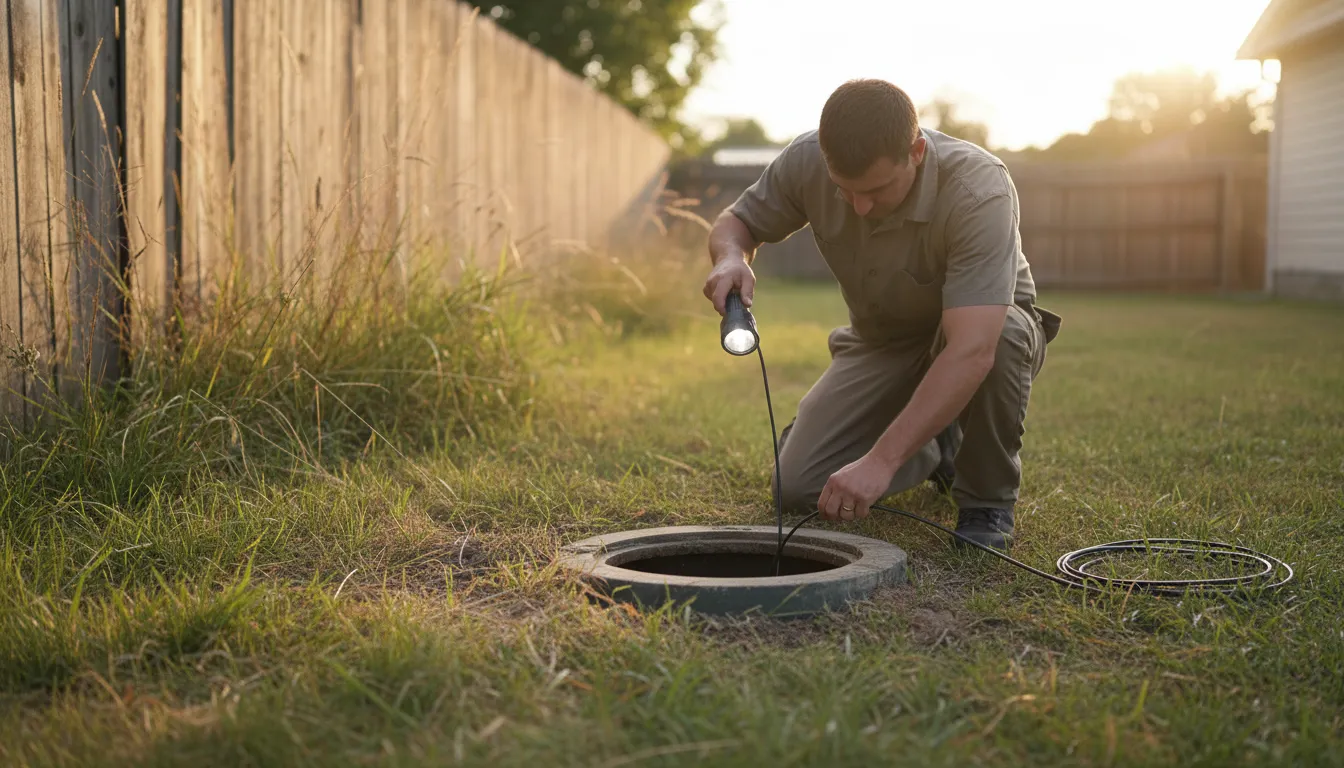
Find the Best Septic Tank Inspection Companies for Your Business
No obligation • Fast responses • Nationwide coverage

Why you can trust Septic Spot
Septic Spot is a leading United States resource for understanding and comparing septic services. Our editors review providers using consistent criteria and verify key business details. Listings and scores are independent, and companies cannot pay to influence our content.
Search providers near you
Best Septic Tank Inspection Companies in Minnesota Ranked
A septic tank inspection is a professional assessment of your onsite sewage treatment system (SSTS) to ensure it is functioning properly and complies with state and local regulations. In Minnesota, these evaluations are not just a good idea-they are a legal requirement for property transfers, system expansions, and routine maintenance. This guide explains the inspection process, state mandates, typical costs, and how you can find qualified, licensed professionals in your area to perform this critical service.
Gopher Septic Services Inc
Rochester, MN
Gopher Septic Services Inc is a family-owned business serving Rochester, MN, and the surrounding area with over 40 years of experience. They offer a full range of septic services including pumping, inspections, installations of various system types, and pump or switch replacements. The company is licensed to perform compliance inspections and service systems under state or local permits. They provide line jetting and thawing to address clogged or frozen lines. Gopher Septic also offers same day and after-hours emergency service.
Alto Sewer Service - MN Drain Cleaning Company
1019 Concord St N, South St Paul, MN 55075
Alto Sewer Service - MN Drain Cleaning Company is based in Minneapolis, MN, providing commercial and residential septic tank pumping and inspection services. Established in 1965, the company offers a range of services including water jetting, video inspections, pipe locating, steam thawing, and septic maintenance. They serve the Twin Cities Metro area with expertise in handling clogged plumbing and septic system needs. Alto Sewer Service operates 24 hours a day, 364 days a year, offering after-hours availability for urgent situations.

Gopher Septic Services
9124 County Rd 105 NW, Pine Island, MN 55963
Gopher Septic Services is a family-owned septic company serving Rochester, MN, and surrounding areas. With over 40 years of experience and four generations in the business, they provide a full range of septic services including pumping, inspections, repairs, and installations of various system types such as mounds, at-grades, gravity systems, and holding tanks. They also offer line jetting and thawing to clear clogs and frozen lines, along with pump and switch replacements. Licensed to perform compliance inspections and service systems under state or local permits, Gopher Septic Services offers same day and after-hours emergency service.
Alto Sewer & Drain Cleaning Services
Minneapolis, MN
Alto Sewer & Drain Cleaning Services is a full-service company based in Minneapolis, MN, specializing in septic tank pumping, inspection, and comprehensive drain and sewer cleaning. They offer services such as hydro-jetting, video inspections to diagnose pipe issues, commercial pumping, and frozen pipe thawing. Their licensed and bonded septic maintenance supports subsurface sewage treatment systems. Alto Sewer focuses on preventing blockages and maintaining system longevity through routine cleaning and professional care.
Why Septic System Inspections Are Required in Minnesota
Minnesota has strict regulations governing subsurface sewage treatment systems to protect public health and water quality. The state mandates that all SSTS be inspected by a licensed professional at key moments. The primary triggers for a mandatory inspection include the sale of a property, the issuance of a building permit for an addition or remodel, and as part of a routine maintenance schedule. Local counties and cities enforce these rules and may have ordinances that are even more restrictive than the state minimums, so checking with your local planning or zoning department is always a necessary first step.
Failing to get a required inspection can lead to significant problems. An uncertified system can halt a real estate transaction, void a building permit, or result in fines. More importantly, a malfunctioning septic system can contaminate groundwater, create unsanitary conditions, and lead to very expensive repairs or a complete system replacement.
Understanding Minnesota's Inspection Frequency Rules
The state sets clear timelines for how often your septic system needs to be examined. For most systems, a routine inspection and pumping are required at least once every three years. However, this is a maximum interval; your system may need attention more often. A key rule is that a tank must be pumped whenever the sludge and scum layers combined fill more than one-third of the liquid depth of the tank. An inspector will measure these layers to determine if pumping is needed immediately or can be scheduled for later.
Beyond the three-year rule, inspections are compulsory in these specific situations:
- Property Transfer: A compliance inspection is required when ownership of a property with an SSTS is transferred 1.
- System Installation or Replacement: A final "as-built" inspection is required after a new system is installed or an old one is replaced to verify it was built to approved plans.
- Building Expansion: If you apply for a permit to add a bedroom, expand your home, or construct a new building on the property, the local authority will require proof that your existing septic system is compliant and has sufficient capacity.
What Does a Professional Inspector Check?
A thorough septic system evaluation in Minnesota goes far beyond just looking at the tank. A state-licensed maintainer, installer, or designer will perform a multi-point check to assess the entire system's health.
Tank Integrity and Contents:
- Sludge and Scum Measurement: The inspector will locate and open the tank access ports (risers) to measure the depth of sludge at the bottom and scum at the top. This determines the pumping schedule and is critical for preventing solids from escaping into the drain field 2.
- Structural Soundness: They check for cracks, leaks, or corrosion in the tank and at the riser joints. The tank's water level is also checked to ensure it is operating at the correct depth 3.
- Baffles and Outlets: The inlet and outlet baffles are inspected to ensure they are intact and functioning to keep solids in the tank.
Drain Field and Component Assessment:
- Drain Field Performance: Inspectors look for signs of failure, such as surfacing sewage, soggy ground, or unusually lush grass over the field area.
- Pumps and Mechanical Parts: For systems with pumps, lift stations, or advanced treatment components, these are tested for proper operation.
- "As-Built" Verification: For new systems, the inspector confirms the final installation matches the approved design in terms of location, size, and component type, and files the required report with the local authority 4.
Find the perfect septic tank inspection companies for your needs
Get personalized recommendations and expert advice
Who Can Perform a Legally Valid Inspection?
Not just any handyman can sign off on a septic inspection in Minnesota. To be valid for compliance purposes, the inspection must be performed by a professional holding a current license from the state in one of the following categories: Septic System Maintainer, Installer, or Designer 5. These licensed experts have the training to properly evaluate all system components and complete the official documentation required by counties. Always verify the license of any professional you hire.
Septic Inspection Costs in Minnesota
The price of a septic inspection varies based on the type of evaluation and the complexity of your system. Here's a breakdown of typical price ranges in Minnesota:
- Basic Routine Inspection: A standard inspection, often performed alongside a three-year pumping service, typically costs between $250 and $400 6.
- Comprehensive Inspection with Pumping: A full inspection that includes pumping the tank to facilitate a complete internal check usually ranges from $300 to $600 7.
- Real Estate Transaction Inspection: These more detailed inspections, which include a compliance report for the county, average around $550 but can cost $900 or more for large, complex, or alternative technology systems 8 9.
The final cost is influenced by tank size, tank accessibility (the need to dig up risers), drain field size, and whether the system includes pumps or advanced treatment components.
Navigating Local Permits and Ordinances
State law (Minn. R. § 7080) sets the baseline, but local governments are the permitting and enforcement authorities 10. Before planning any work-whether it's an inspection for a home addition, a repair, or a new installation-you must contact your local county or city planning/zoning/environmental services department. They will inform you of any specific local requirements, provide the necessary permit applications, and tell you what inspection reports they need on file 11 12 13. This local check is a non-negotiable step in the process.
Maintaining Your System Between Inspections
Professional inspections are essential, but homeowners play a key role in daily system care. Good practices extend the life of your drain field and prevent emergencies. Avoid pouring grease, chemicals, or non-biodegradable items down the drain. Use water efficiently and space out laundry loads. Know where your tank and drain field are located and keep heavy vehicles and structures off the area. Keeping a record of all inspections, pumpings, and repairs is also highly recommended for your own reference and for future property sales.
Frequently asked questions
Sources
Footnotes
-
Septic Systems | Lino Lakes, MN - https://linolakes.us/188/Septic-Systems ↩
-
How Often Should You Pump Your Septic Tank: 3 Factors Solved - https://www.frasiers.com/blog/sewage-tank-pump-frequency/ ↩
-
Septic Systems | Dakota County - http://www.co.dakota.mn.us/Environment/WaterResources/SepticSystem/Pages/default.aspx ↩
-
Septic System Inspection Requirements in Minnesota - https://nsglc.olemiss.edu/Advisory/misc/pdfs/septic-in-mn.pdf ↩
-
SSTS service and maintenance - Minnesota Pollution Control Agency - https://www.pca.state.mn.us/business-with-us/ssts-service-and-maintenance ↩
-
How Much Are Septic Inspections? Ultimate Money-Saving Guide ... - https://www.firstcallseptic.com/septic-blog/how-much-are-septic-inspections ↩
-
How Much Does a Septic System Inspection Cost? [2025 Data] - https://www.homeadvisor.com/cost/plumbing/septic-inspection-cost/ ↩
-
How Much Does a Septic Inspection Cost? [2026 Data] - Angie's List - https://www.angi.com/articles/septic-inspection-cost.htm ↩
-
Septic Tank Inspection Cost: Here's The 2026 Average - https://ibuyer.com/blog/how-much-is-a-septic-tank-inspection/ ↩
-
SSTS Regulations - Onsite Sewage Treatment Program - https://septic.umn.edu/ssts-regulations ↩
-
Septic Systems | Scott County, MN - https://www.scottcountymn.gov/604/Septic-Systems ↩
-
On-site Septic Systems | Clay County, MN - Official Website - https://claycountymn.gov/316/On-site-Septic-Systems ↩
-
Septic Systems - Welcome to Pine County, MN - https://www.pinecountymn.gov/departments/planning_and_zoning/septicsystems.php ↩