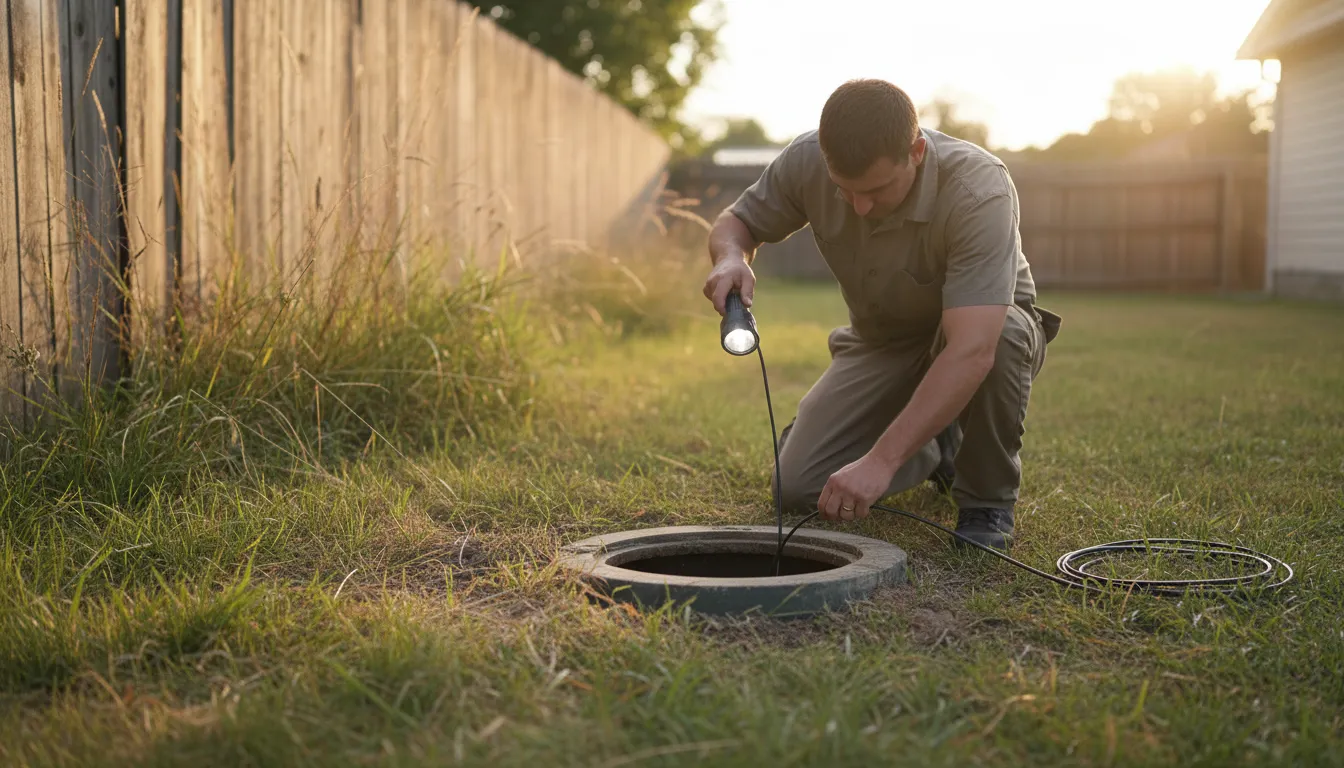
Find the Best Septic Tank Inspection Companies for Your Business
No obligation • Fast responses • Nationwide coverage

Why you can trust Septic Spot
Septic Spot is a leading United States resource for understanding and comparing septic services. Our editors review providers using consistent criteria and verify key business details. Listings and scores are independent, and companies cannot pay to influence our content.
Search providers near you
Top Septic Tank Inspection Companies in St Charles, Missouri Ranked
A septic tank inspection is a professional assessment of your home's onsite wastewater treatment system to ensure it is functioning safely and legally. In St. Charles, these evaluations are crucial for protecting your property value, your family's health, and the local environment. This guide will help you understand the local requirements, the inspection process, and how to find qualified professionals to perform this essential service.
Why Septic System Inspections Are Required in St. Charles County
Local regulations in St. Charles County mandate a septic system evaluation for several key reasons, primarily centered on public health and environmental protection. The most common triggers for an inspection include a property sale, applying for a building permit for an addition or upgrade, or observing signs of system failure like sewage backups or foul odors in the yard 1. The county's Division of Building and Code Enforcement requires that a licensed On-Site Wastewater Treatment System (OWTS) installer perform the inspection and submit a completed maintenance affidavit, along with a $15 administrative fee, to officially document the system's condition 2. This process ensures that all systems meet current code standards for setbacks from wells and property lines, and that they are not creating a nuisance or health hazard 3.
The Step-by-Step Septic Inspection Process
A thorough septic system assessment is methodical. While protocols can vary slightly by inspector, a comprehensive evaluation in St. Charles will typically follow these steps:
1. Locating and Exposing the System The inspector begins by locating all critical components: the septic tank, the distribution box (if present), and the drainfield (also called a leach field or absorption field). This may involve consulting property records, using probing tools, or visually surveying the yard. The inspector will then excavate to uncover the manhole and inspection ports on the tank to gain interior access-a crucial step that goes beyond a simple "flush test".
2. Inspecting the Tank Structure and Components With the tank opened, the inspector conducts a visual examination for structural integrity. This includes checking for cracks in the concrete, fiberglass, or plastic tank; ensuring inlet and outlet pipes are securely connected and not blocked; and verifying that baffles or tees are intact to prevent solids from flowing into the drainfield 4. The effluent filter, if installed, will be checked, cleaned, and noted.
3. Measuring Sludge and Scum Levels A core part of the inspection is measuring the accumulation of solids. Using a specialized "sludge judge" or similar tool, the inspector measures the depth of the sludge layer at the bottom and the scum layer floating at the top. If the combined depth of these layers exceeds one-third to one-half of the tank's liquid depth, pumping is immediately recommended to prevent system failure 5 6.
4. Evaluating the Drainfield The inspector will examine the soil absorption area for signs of failure. This involves looking for overly lush or soggy grass, standing water, or sewage effluent surfacing in the yard-all indicators that the drainfield is saturated and cannot properly treat wastewater 7. They may also check the distribution box for even flow to all sections of the field.
Find the perfect septic tank inspection companies for your needs
Get personalized recommendations and expert advice
Understanding Inspection Costs and Related Services
The cost for a standard septic tank inspection in the St. Charles area typically ranges from $300 to $550 8 9. This fee generally covers the visual inspection, sludge/scum measurement, and a basic report. It's important to note that this is usually separate from pumping costs. If the inspection reveals the tank needs to be pumped-which is recommended every 3 to 5 years-that service can add another $300 to $600 or more, depending on tank size (e.g., 1,000-gallon vs. 1,500-gallon) and accessibility 8 9.
For a real estate transaction, a more comprehensive inspection that includes a "dye test" (running colored water through the system to check for surfacing) or a flow test may be requested, potentially increasing the cost. Always clarify what is included in the quoted inspection price. Remember, the $15 county fee for filing the maintenance affidavit is typically an additional cost paid by the homeowner 10.
Local Regulations and Permit Requirements
St. Charles County enforces a specific Private Sewage Disposal Code that governs all OWTS installations, repairs, and inspections. Key regulations homeowners should be aware of include:
- Licensed Professionals: All inspections for official county compliance must be performed by a licensed OWTS installer recognized by St. Charles County.
- Permits for Work: Any repair, alteration, or new installation of a septic system component requires a permit from the county before work begins.
- Mandatory Repairs: If an inspection finds defects, the homeowner is required to have them corrected by a licensed professional, followed by a re-inspection to confirm the repairs.
- Access and Setbacks: Systems must be accessible for maintenance, with tanks located within 10 feet of an all-weather access road. Strict setback distances (often 50-100 feet) must be maintained from water wells, property lines, and structures 11.
How Often Should You Schedule a Septic Check-Up?
While an inspection is legally required during a property sale or for certain permits, proactive maintenance is wise. The U.S. Environmental Protection Agency recommends having your system inspected at least every one to three years. For older systems or those with garbage disposals, more frequent checks are prudent. Regular inspections can identify minor issues-like a damaged baffle or a full tank-before they escalate into costly drainfield failures or environmental hazards. Think of it as routine preventative care for one of your home's most critical and expensive systems.
Choosing a Qualified Septic Inspector in St. Charles
Selecting the right professional is vital for an accurate assessment and compliance with county rules. Look for a contractor who holds a current St. Charles County OWTS installer license. Ask about their specific experience with the soil types common in the area and the types of systems they are trained to evaluate (conventional, pump-assisted, etc.). A reputable inspector should be willing to walk you through their process, explain their findings on-site, and provide a clear, detailed written report that can be submitted to the county. Checking online reviews and asking for references from recent clients can also provide peace of mind.
Frequently asked questions
Sources
Footnotes
-
Septic System Inspections In St. Charles County - https://npiweb.com/gould/services/septic-inspections/ ↩
-
OWTS Permitting and Inspection | St Charles County, MO - https://www.sccmo.org/2175/OWTS-Permitting-and-Inspection ↩
-
Sewage Tanks | St Charles County, MO - Official Website - https://www.sccmo.org/2179/Sewage-Tanks ↩
-
Training Manual for Private Inspection/Evaluation Assessments - https://health.mo.gov/living/environment/onsite/pdf/TrnMnlPrivInspEval.pdf ↩
-
Septic Tank/Absorption Field Systems: A Homeowner's Guide to ... - https://extension.missouri.edu/publications/eq401 ↩
-
SEPTIC SYSTEM INSPECTION and COMPLIANCE STATEMENT - https://berkeleylake.com/Assets/Files/Docs/Administration/Forms%20and%20Checklists/Septic%20Permit/Septic%20Tank%20Inspection%20Form.pdf ↩
-
GUIDANCE FOR SEPTIC SYSTEMS BEFORE, DURING, AND AFTER WINTER WEATHER - https://www.neha.org/Images/resources/Winter_Weather_Guidance_Condensed_%28Septic%29_6-21-2019.pdf ↩
-
Frequent Questions on Septic Systems | US EPA - https://www.epa.gov/septic/frequent-questions-septic-systems ↩ ↩2
-
How Much Does A Well And Septic Inspection Cost In Missouri? - https://arc-homeinspections.com/well-septic-inspection-cost/ ↩ ↩2
-
PRIVATE SEWAGE DISPOSAL CODE - St. Charles County - https://www.sccmo.org/DocumentCenter/View/22408/2021-Private-Sewage-Disposal-Code-Amendments ↩
-
An Onsite Wastewater Treatment System Owner's Manual - https://health.mo.gov/living/environment/onsite/pdf/SystemOwnersManual.pdf ↩