Find the Best Septic Tank Inspection Companies for Your Business
No obligation • Fast responses • Nationwide coverage

Why you can trust Septic Spot
Septic Spot is a leading United States resource for understanding and comparing septic services. Our editors review providers using consistent criteria and verify key business details. Listings and scores are independent, and companies cannot pay to influence our content.
Search providers near you
Best Septic Tank Inspection Companies in Montana Ranked
A septic tank inspection is a professional assessment of your on-site wastewater system's condition and functionality. In Montana, where many homes rely on these private systems, regular checks are crucial for protecting your property value, your family's health, and the state's pristine environment. This guide explains Montana's specific rules, processes, and best practices, helping you understand when an inspection is needed, what it entails, and how to ensure your system remains compliant and operational.
Understanding Montana's Septic System Regulations
Septic system oversight in Montana operates under a unique state-county partnership. The Montana Department of Environmental Quality (DEQ) sets the minimum statewide standards, but primary regulation and permitting are handled at the county level by local health departments or sanitarians 1. This means the specific requirements, forms, and inspectors you'll work with are determined by your county of residence.
A fundamental rule is that a septic permit is required for any new construction, replacement, or significant alteration of an on-site wastewater treatment system 2 3. You cannot legally install or modify a system without this permit. The process typically begins with a site evaluation conducted by a county sanitarian, which may involve soil profile studies (perc tests), groundwater level checks, and a review of your property plot plan 2 4. Once a permit is issued, the system must be installed exactly to its specifications and often requires an inspection by county officials before the tank and drainfield can be backfilled and covered 5.
When Is a Septic Inspection Required or Recommended?
While Montana state law does not mandate a universal inspection schedule for existing residential systems, several situations make an inspection essential.
- Routine Maintenance: The U.S. Environmental Protection Agency (EPA) and the Montana DEQ strongly recommend having your septic tank inspected at least every three years 6. This inspection is often coupled with pumping, which is typically needed every 3 to 5 years, depending on household size and usage.
- Property Transfer (Real Estate Sale): Although not explicitly required by state statute, a septic system inspection is standard practice in virtually all Montana real estate transactions. Lenders often require it, and buyers are wise to make it a condition of sale to avoid unforeseen liabilities. This is sometimes called a "real estate inspection" or "compliance inspection."
- System Performance Issues: Signs like slow drains, sewage backups, soggy ground or foul odors in the drainfield area, and unusually lush grass over the tank or field are clear indicators that an immediate inspection is needed.
- Commercial & Experimental Systems: Systems serving businesses, restaurants, or other commercial entities often face stricter local oversight. Furthermore, certain alternative or experimental system designs may have permit conditions requiring quarterly inspections to ensure they are functioning as designed 7 8.
- After Major Events: If your property experiences significant flooding, ground movement, or if a large tree has grown near the drainfield, an inspection can assess potential damage.
What Does a Professional Inspection Involve?
A thorough septic inspection in Montana goes far beyond just looking at the tank. A qualified inspector will evaluate the entire system. Here's what you can expect:
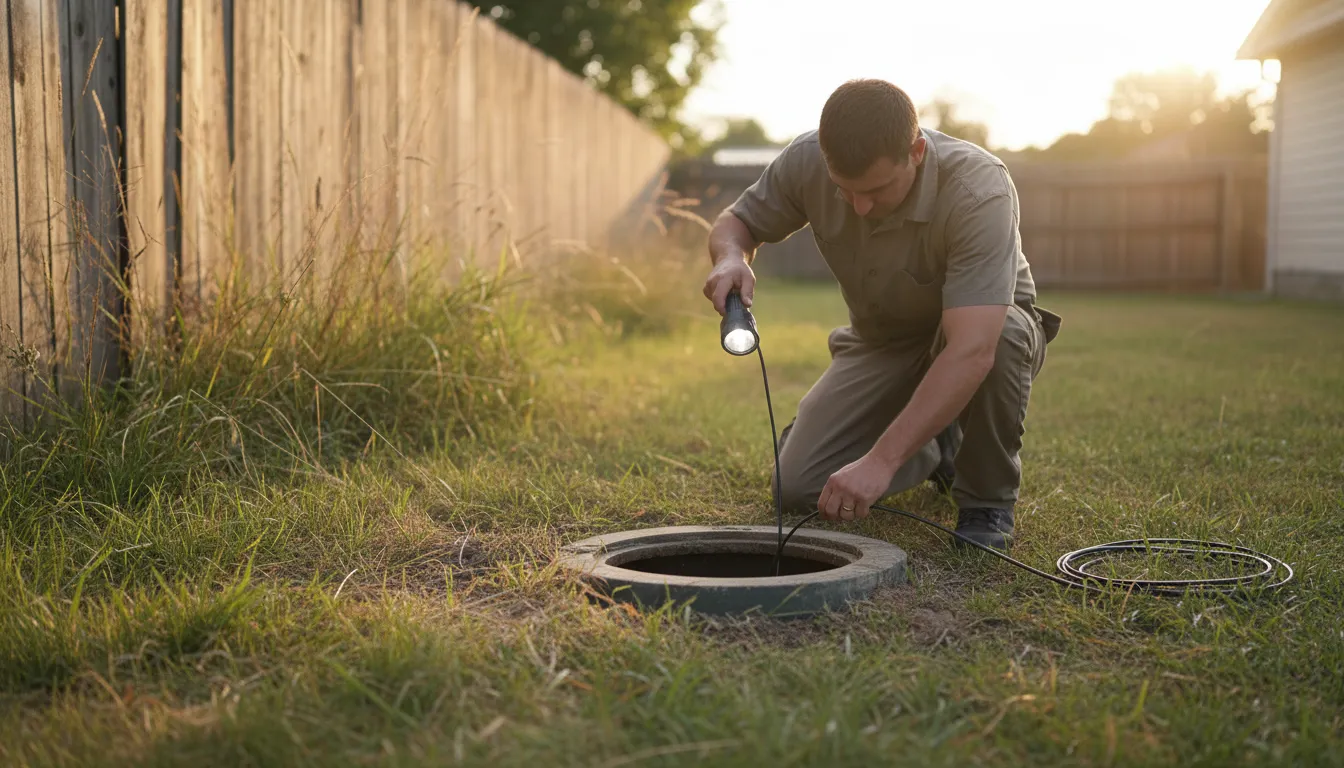
- Locating & Exposing Components: The inspector will locate and uncover the tank access lids and, if necessary, the distribution box.
- Tank Assessment: This is the core of the inspection. The inspector will measure the levels of sludge (solid waste at the bottom) and scum (floating fats and greases) to determine if pumping is needed. They will check the tank's structural integrity for cracks, leaks, or signs of corrosion on concrete tanks. The baffles or tees (inlet and outlet pipes) are examined to ensure they are intact and functioning to prevent solids from flowing into the drainfield.
- Effluent Filter Check: Many modern systems have an effluent filter on the tank outlet. The inspector will clean this filter and note its condition.
- Pump & Mechanical Inspection: If your system includes a pump or siphon to move effluent to the drainfield, the inspector will test its operation, check the float switches, and inspect the electrical components.
- Drainfield Evaluation: The inspector will visually survey the drainfield (leach field) area for signs of failure, such as surfacing effluent, soggy soil, or odors. They may also use a probe to check for soil saturation.
- Dye Test (if applicable): In some cases, particularly if a problem is suspected, a non-staining dye may be flushed into the system to see if it surfaces in the drainfield, indicating a blockage or failure.
- Report & Compliance Verification: Finally, the inspector provides a detailed report of their findings. For real estate or permit-related inspections, they will often note whether the system appears to be in compliance with local county regulations.
Find the perfect septic tank inspection companies for your needs
Get personalized recommendations and expert advice
Costs of Septic Inspections in Montana
The price of a septic inspection varies based on the type of inspection, system size and complexity, and your location within the state.
- Standard Maintenance Inspection: A basic inspection, often performed during a routine pumping service, typically costs between $200 and $600.
- Comprehensive Real Estate Inspection: A more detailed inspection for a property sale, which includes a full assessment, pumping, and sometimes excavation to expose components, can range from $550 to over $1,3009 10. The higher end often applies to larger systems, those with pumps, or inspections that require more labor to locate and uncover the tank.
Always get a detailed quote upfront that specifies what services are included.
Choosing a Qualified Inspector in Montana
It is critical to hire a competent professional. In Montana, septic tank pumpers are licensed and regulated by the DEQ11. When selecting an inspector:
- Verify Licensing: Ensure the company or individual holds a current Montana DEQ pumper license. You can ask for their license number.
- Check for Local Experience: Choose a provider familiar with your county's specific health department requirements and inspectors.
- Ask About Services: Confirm exactly what their inspection includes. Does the quoted price cover pumping if needed? Will they provide a written report suitable for a real estate transaction?
- Get References: A reputable company should be able to provide references from past customers in your area.
Consequences of a Failing System
Ignoring septic system problems is not just an inconvenience; it's a legal and health issue. Operating a failing or malfunctioning system is unlawful and constitutes a public health hazard12. Raw sewage can contaminate groundwater, streams, and lakes, posing serious risks to human health and Montana's aquatic ecosystems. If your system fails, you will be required by your local health department to repair or replace it, which is a far more significant expense than routine maintenance and inspection.
Maintaining Your System After Inspection
An inspection provides a snapshot of your system's health. To protect your investment:
- Pump Regularly: Follow the inspector's recommendation for pumping frequency.
- Conserve Water: Fix leaks and spread out laundry loads to avoid overloading the system.
- Mind What You Flush: Only human waste and toilet paper should go down the drain. Avoid chemicals, grease, wipes (even "flushable" ones), and medications.
- Protect the Drainfield: Never drive or park vehicles on it, and keep roof drains and sump pumps directed away from the area.
Frequently asked questions
Sources
Footnotes
-
Septic system permitting in Montana - https://archive.legmt.gov/media/filer_public/a5/47/a547d34b-b518-4041-924b-569941211a36/7519_septic_system_permitting_in_montana.pdf ↩
-
Septic Permits and Information - Butte-Silver Bow - https://www.co.silverbow.mt.us/469/Septic-Permits-and-Information ↩ ↩2
-
Outline of Septic System Permitting Process - https://centralmontanahealthdistrict.org/images/health/septic/Outline%20of%20Septic%20System%20Process.pdf ↩
-
Septic Systems - RICHLAND COUNTY MONTANA - https://www.richland.org/septic-systems.html ↩
-
Licensed Installers and Self Installers - Flathead County - https://flatheadcounty.gov/department-directory/health/environmental-health/sewage-and-septic/licensed-installers-and-self-installers ↩
-
How to Care for Your Septic System | US EPA - https://www.epa.gov/septic/how-care-your-septic-system ↩
-
A Montana Homeowner's Guide to Septic Systems - https://deq.mt.gov/files/Land/SolidWaste/Documents/HomeownerGuideSepticSystems.pdf ↩
-
Western Montana Conservation Commission Septic Briefing ... - https://westernmtwaters.com/wp-content/uploads/2025/07/WMCC_Septic_Briefing_Packet.pdf ↩
-
How Much Does a Septic Inspection Cost? [2026 Data] - Angie's List - https://www.angi.com/articles/septic-inspection-cost.htm ↩
-
What is a Title 5 Septic Inspection? When Do You Need One? - UpNest - https://www.upnest.com/post/title-5-inspection/ ↩
-
Septic Tank Pumper | Montana DEQ - https://deq.mt.gov/twr/Programs/septic-tank ↩
-
Onsite Wastewater Treatment Regulations - https://www.adlc.us/DocumentCenter/View/152/Tri-County-Wastewater-Regulation-PDF ↩