Find the Best Septic Tank Inspection Companies for Your Business
No obligation • Fast responses • Nationwide coverage

Why you can trust Septic Spot
Septic Spot is a leading United States resource for understanding and comparing septic services. Our editors review providers using consistent criteria and verify key business details. Listings and scores are independent, and companies cannot pay to influence our content.
Search providers near you
Top Septic Tank Inspection Companies in Fargo, North Dakota Ranked
A septic tank inspection is a professional assessment of your on-site wastewater treatment system to ensure it is functioning safely and in compliance with local regulations. This evaluation is crucial for protecting your property value, preventing environmental contamination, and avoiding costly system failures. For Fargo homeowners, understanding the local requirements and finding a qualified professional is the first step in responsible system maintenance.

Why Septic System Inspections Are Essential in Fargo
In Cass County, where many homes rely on private septic systems, regular evaluations are not just a good idea-they are often mandated by law. Fargo Cass Public Health (FCPH) oversees all on-site sewage treatment systems to ensure they meet North Dakota state codes. An inspection provides a clear picture of your system's health, identifying issues like sludge buildup, component failures, or drainfield problems before they lead to a messy and expensive backup into your home or yard. Proactive maintenance based on inspection findings is the most effective way to extend the life of your investment and safeguard local groundwater.
When Is a Septic Inspection Required?
Fargo and Cass County have specific triggers that necessitate a formal system evaluation by a licensed professional.
- Property Transfer: One of the most common reasons is the sale of a home. FCPH requires an evaluation of an existing system for code compliance upon property transfer. A clean inspection report is often a contingency for closing.
- New System Installation or Major Repair: Any new installation or significant modification to an on-site system requires permitting and inspection by FCPH to ensure it is built to current standards.
- Suspected System Failure: Signs like slow drains, sewage odors indoors or in the yard, soggy ground over the drainfield, or sewage backing up into the home are clear indicators that an immediate inspection is needed.
- Routine Maintenance: Even without a red flag, experts recommend having your system inspected every 3-5 years, typically in conjunction with a routine pumping. This regular check-up can catch minor issues before they become major headaches.
The Fargo Septic Inspection Process: What to Expect
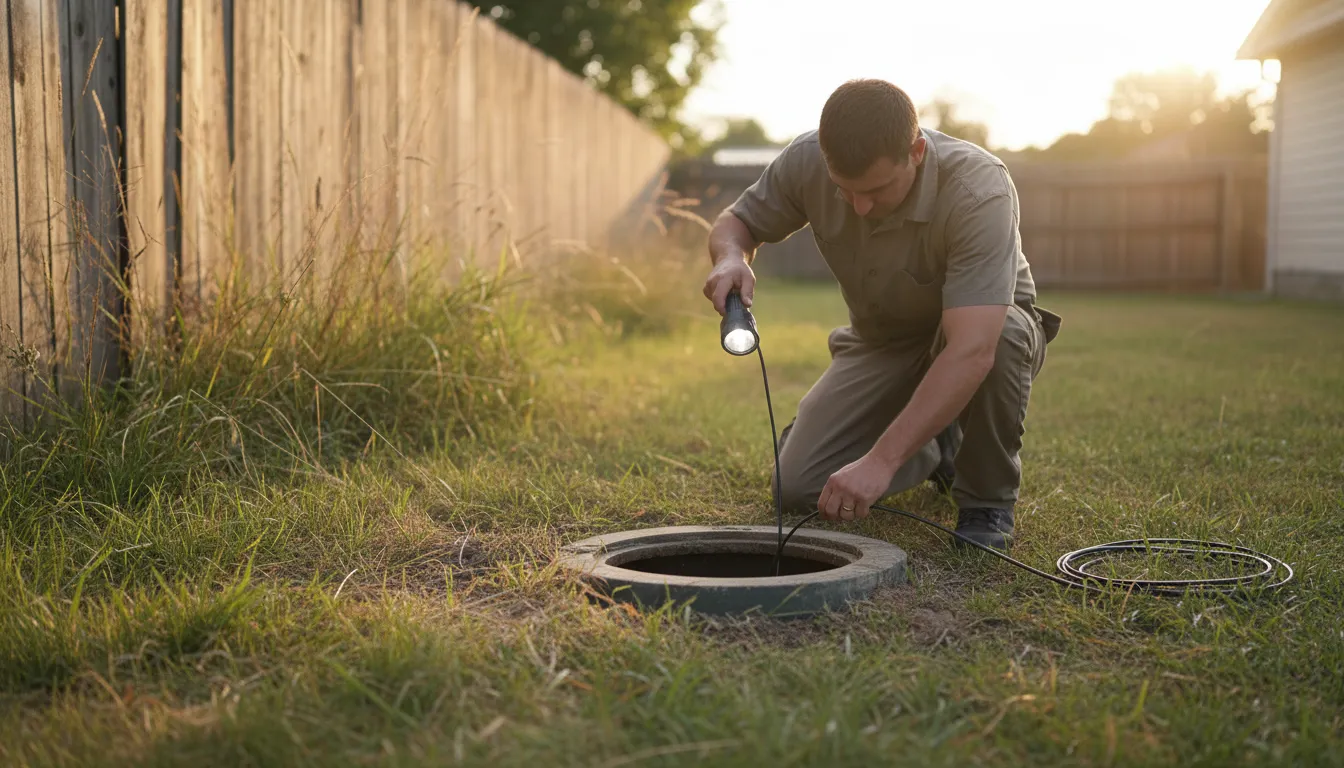
A comprehensive septic system assessment is a detailed process. When you hire a licensed inspector in Fargo, they will typically follow these steps to evaluate every component:
- Locating and Exposing the System: The inspector will locate the tank lid(s), distribution box, and access ports. This may require digging if they are not readily accessible.
- Tank Inspection: All compartments (septic tank, pump tank if present) are opened. The inspector checks the structural integrity of the tank for cracks, checks the inlet and outlet baffles for damage or blockage, and measures the levels of scum and sludge. This measurement determines if immediate pumping is necessary.
- Water Level Check: The liquid level in the tank is checked. A level that is too low can indicate a leak, while a level that is too high may signal a blockage or drainfield failure.
- Mechanical Component Check: For systems with pumps, electrical controls, alarms, or effluent filters, these components are tested to ensure they are operating correctly.
- Drainfield Assessment: The inspector will examine the area over the drainfield (leach field) for any signs of failure, such as surfacing sewage, overly lush vegetation, or persistently wet, soggy spots.
This thorough process provides a complete diagnostic of your system's condition.
Understanding Local Regulations and Permits
Navigating local rules is a key part of septic system ownership. In Fargo, all installers and pumpers must be licensed by the North Dakota Department of Environmental Quality (NDDEQ). FCPH mandates permits for installing or modifying any on-site system 1. Important local guidelines include:
- Setback Requirements: Septic tanks and drainfields must generally be located at least 100 feet from private wells less than 100 feet deep, and at least 50 feet from deeper wells 2.
- System Repairs: Local health units cannot force the replacement of a system that is repairable within 10 years of a noncompliance notice, unless the property is sold 3.
- Enhanced Maintenance: If your home has a garbage disposal, it introduces more solids into the tank, necessitating more frequent inspection and pumping-often every 1-2 years 4.
Find the perfect septic tank inspection companies for your needs
Get personalized recommendations and expert advice
Cost of Septic Inspections and Related Services in Fargo
The price for a septic system evaluation can vary based on the system's complexity and accessibility. Here's a general breakdown of what Fargo homeowners might expect:
- Inspection-Only: A standard inspection typically costs between $250 and $500+. The higher end of this range often applies if the tank lids need to be located and excavated.
- Pumping/Cleaning: Pumping the tank, which is often recommended following an inspection, usually ranges from $250 to $600+, depending on tank size and the disposal facility's distance 5.
- Combined Service: Many homeowners opt for a combined inspection and pumping visit. This package often provides better value, with total costs commonly ranging from approximately $500 to $900+ 6 7.
Remember, these are estimates. Always request a detailed quote from your licensed service provider.
Choosing a Qualified Septic Inspector in Fargo
Selecting the right professional is critical. Always verify that the inspector or company is currently licensed by the NDDEQ 8 9. Look for experienced professionals who are familiar with Fargo Cass Public Health's specific requirements and the soil conditions common in our region. A reputable inspector will provide a clear, written report detailing their findings, including sludge/scum measurements, component conditions, and any recommendations for repair or maintenance. Don't hesitate to ask for references or proof of insurance.
Maintaining Your System After the Inspection
An inspection report is a maintenance roadmap. If pumping is recommended, schedule it promptly. If repairs are needed, use a licensed installer. Beyond addressing immediate issues, adopt good habits: conserve water to avoid overloading the system, avoid pouring grease or harsh chemicals down drains, and never park or build over the drainfield. Following the inspector's advice and adhering to a 3-5 year maintenance schedule is the best way to ensure your septic system operates reliably for decades.
Frequently asked questions
Sources
Footnotes
-
On-site Sewage Treatment System - The City of Fargo - https://fargond.gov/city-government/departments/fargo-cass-public-health/environmental-health/on-site-sewage-treatment-systems ↩
-
Individual Home Sewage Treatment Systems - https://deq.nd.gov/publications/WQ/3_WM/NPS/SWCBinder/SepticSys/NDSUExt_guide.pdf ↩
-
25.0795.01006 - North Dakota Legislative Branch - https://ndlegis.gov/assembly/69-2025/regular/documents/25-0795-01006m.pdf ↩
-
Individual Home Sewage Treatment Systems - First District Health Unit - https://fdhu.org/wp-content/uploads/2021/06/NDSU-Extension-Service-Individual-Home-Sewage-Treatment-Systems.pdf ↩
-
North Dakota Septic Pumper Manual - https://deq.nd.gov/publications/wq/2_NDPDES/SepticPumper/PumperManual_20190501.pdf ↩
-
Frequent Questions on Septic Systems | US EPA - https://www.epa.gov/septic/frequent-questions-septic-systems ↩
-
What to Expect from a Septic Inspection - Wind River Environmental - https://www.wrenvironmental.com/blog/2023/may/what-to-expect-from-a-septic-inspection/ ↩
-
Septic Systems - North Dakota Department of Environmental Quality - https://deq.nd.gov/WQ/2_NDPDES_Permits/7_SepticSystems/Septic.aspx ↩
-
Septic Pumper - North Dakota Department of Environmental Quality - https://deq.nd.gov/WQ/2_NDPDES_Permits/6_SepticPumper/sp.aspx ↩