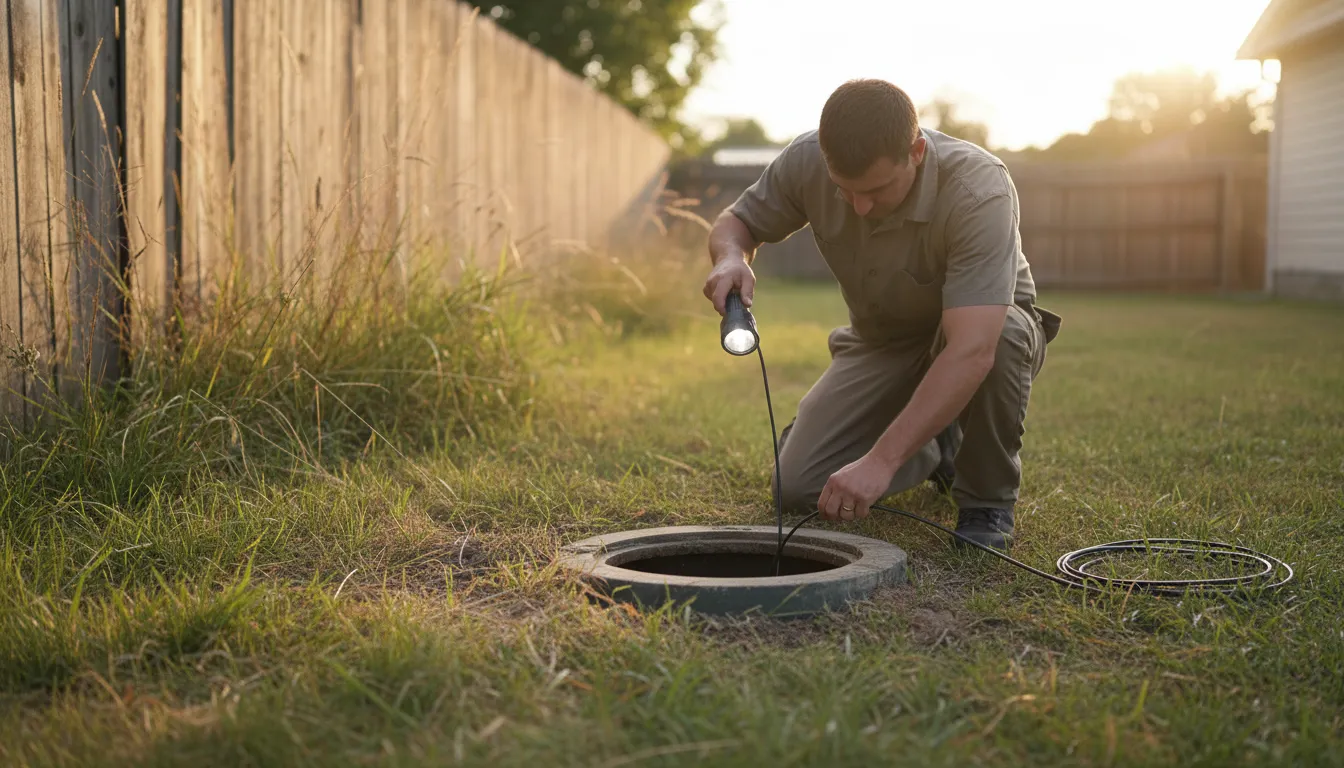
Find the Best Septic Tank Inspection Companies for Your Business
No obligation • Fast responses • Nationwide coverage

Why you can trust Septic Spot
Septic Spot is a leading United States resource for understanding and comparing septic services. Our editors review providers using consistent criteria and verify key business details. Listings and scores are independent, and companies cannot pay to influence our content.
Search providers near you
Best Septic Tank Inspection Companies in Rhode Island Ranked
A septic tank inspection is a professional assessment of your onsite wastewater system's condition, functionality, and compliance with state regulations. In Rhode Island, these evaluations are not just a good idea-they are often a legal requirement for property sales and are critical for protecting your investment, your health, and the local environment. This guide will help you understand Rhode Island's specific rules, what happens during an inspection, and how to find a qualified local professional to perform this essential service.
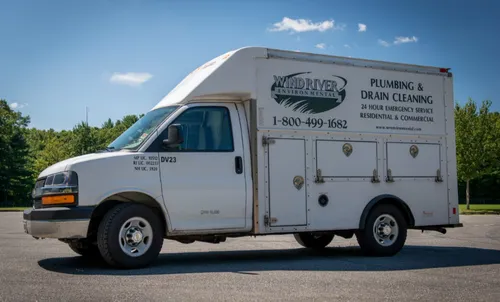
Wind River Environmental of Johnston, RI
141 Shun Pike, Johnston, RI 02919
Wind River Environmental of Johnston, RI provides septic tank pumping, inspection, and repair services in Providence, RI. Serving residential, commercial, and municipal clients, the company offers tailored solutions that comply with local codes and regulations. With a history dating back to 1946, Wind River Environmental brings decades of experience and a broad resource network to handle projects of varying complexity. The company is available 24/7 to address urgent septic and wastewater needs.
Devine Septic LLC
Providence, RI
Devine Septic LLC is a septic tank inspection and repair company serving Providence, RI. With over 10 years of experience, they offer services including septic system maintenance, emergency repairs, and Title V inspections required for home sales in Massachusetts. They focus on educating customers about septic system operation to help prevent issues and maintain efficient performance.

A & D Sanitation.
223 Hinchey Ln, Somerset, MA 02726
A & D Sanitation provides septic tank pumping, inspection, and repair services in Providence, RI. The company handles septic system maintenance including pumping, line snaking to clear blockages, and basic repairs such as installing filters, risers, and covers. They also offer yearly bacteria treatments and inspections required for Rhode Island point-of-sale ISDS. Their services include maintaining cesspool tight tanks and providing tank seals and jetting.

Croome Sanitation Inc
26 Hillside Ave, Rehoboth, MA 02769
Croome Sanitation Inc is a family-owned septic service company serving Providence, RI, and the surrounding areas of Southeast Massachusetts and Rhode Island. Established in 1962, the company offers a wide range of septic system services including pumping, Title 5 inspections, sewer camera diagnostics, pump station maintenance, and excavation work. Their expertise extends to wastewater treatment systems, providing comprehensive care to maintain system health and compliance with local regulations. Croome Sanitation also offers same-day and emergency services to address urgent septic needs.
Michael Perri & Sons Septic Service, Inc.
Providence, RI
Michael Perri & Sons Septic Service, Inc. is a family-owned and operated septic company serving Providence, RI, and the entire state of Rhode Island. They provide a full range of septic services including routine pumping, cleaning, inspections, repairs, and new system installations. Their skilled team also offers hydro-jetting, backhoe services, enzyme bacteria treatments, and drainage installation to maintain and protect septic systems. With over 50 years of experience and licenses for underground utility work, they handle both residential and commercial septic needs across multiple Rhode Island communities.
Why Septic Inspections Are Critical in Rhode Island
Rhode Island's dense coastal communities and sensitive watersheds make properly functioning septic systems vital. A failing system can contaminate groundwater, pollute coastal ponds and Narragansett Bay, and create public health hazards. The state mandates regular checks to prevent these issues. For homeowners, a clean inspection report provides peace of mind, while a failing report identifies problems before they become environmental disasters or extremely costly repairs.
Beyond environmental protection, a septic inspection is a key part of responsible homeownership. It can uncover hidden issues that affect property value and is a standard part of due diligence in real estate transactions. Knowing the condition of your system allows for proactive maintenance and budgeting.
Rhode Island Septic Inspection Requirements & Timelines
Rhode Island has clear, tiered requirements for when your Individual Sewage Disposal System (ISDS) must be inspected.
- Routine Maintenance: The Rhode Island Department of Environmental Management (RIDEM) recommends a professional inspection every 3 to 5 years for standard systems 1. This proactive schedule helps catch minor issues early.
- Property Transfer (Sale): A certified inspection is required for most home sales in Rhode Island. The inspection must typically be completed within 12 months prior to the transfer of title 2. This is a crucial step in the closing process.
- Innovative/Alternative (I/A) Systems: If your property uses an advanced treatment system (common in areas with poor soil conditions or near water bodies), annual inspections and maintenance are often required by RIDEM regulations 3.
- Local Municipal Ordinances: Some towns and cities in Rhode Island may have more stringent requirements through local wastewater management ordinances. Always check with your local building or health department.
What Does a Professional Inspection Include?
A comprehensive septic inspection in Rhode Island goes far beyond just looking at the tank. A licensed inspector will evaluate the entire system's operation and compliance.
- Record Review & Site Evaluation: The inspector will review any available system "as-built" plans and assess the site for signs of failure, such as soggy ground or sewage odors.
- Tank Access & Pumping: The tank lids are located and opened. While not always pumped during an inspection, the inspector will measure the sludge and scum layers to determine if pumping is needed. Rhode Island specifically recommends this measurement-based approach over arbitrary time intervals.
- Component Inspection: Every component is checked:
- Tank: Assessed for structural integrity, cracks, and baffle condition.
- Distribution Box: Checked for levelness and proper flow.
- Drainfield (Leach Field): Evaluated for surfacing effluent, biomat formation, and proper drainage. A probe may be used to check for soil saturation.
- Pumps & Alarms: For systems with pumps, mechanical components and alarm systems are tested.
- Flow Test & Dye Test (if applicable): The inspector may run water through household fixtures to evaluate the system's capacity and check for backups. A dye test can help identify leaks.
- Reporting: The inspector provides a detailed report of findings. For a real estate transaction, this often culminates in a "Certificate of Compliance" or an approved inspection report that satisfies RIDEM and municipal requirements.
Find the perfect septic tank inspection companies for your needs
Get personalized recommendations and expert advice
Understanding Costs: Inspection, Permits, and Repairs
Costs for septic services in Rhode Island vary based on system size, complexity, and the type of service required.
- Standard Routine Inspection: A basic inspection typically costs between $300 and $500 4.
- Real Estate Transfer Inspection: A more detailed inspection for a property sale, which includes comprehensive reporting for compliance, generally ranges from $500 to $1,500 5.
- Permit Fees: If your inspection reveals the need for repairs or you are installing a new system, RIDEM permit application fees can range from $200 to $500 6. The total cost for new system permits and approvals can reach $1,500 to $3,000 when including engineering and municipal fees 7.
- System Repair or Replacement: Major repairs or a full system replacement is a significant investment. In Rhode Island, replacement costs typically range from $15,000 to $35,000 or more, depending on soil conditions and the technology required 8.
Financial Assistance: Rhode Island offers the Community Septic System Loan Program (CSSLP), which provides low-interest loans to eligible homeowners for repairing or replacing failing septic systems 9. Check with RIDEM or your municipality to see if you qualify.
The Permit Process for New Systems and Major Repairs
If your inspection leads to the need for a new system or a major alteration, you will navigate RIDEM's permitting process.
- Site Evaluation: A licensed soil evaluator must perform a percolation test and deep hole observation to determine soil suitability.
- System Design: A professional engineer or designer creates plans based on the soil evaluation, household size, and local regulations.
- Municipal Approval: The design plans often require approval from your local city or town before submission to the state.
- RIDEM Application: The complete package-including soil report, design plans, and municipal approval-is submitted to RIDEM for an ISDS permit 10.
- Installation & Final Inspection: Once permitted, a licensed installer constructs the system. A final inspection by RIDEM or a designated agent is required for approval.
Choosing a Qualified Inspector in Rhode Island
Always hire a professional licensed by the State of Rhode Island to perform septic inspections. Key qualifications to look for include:
- RIDEM License: Confirm the individual or company holds a current RIDEM license for ISDS inspection, design, or installation.
- Experience & Insurance: Choose an inspector with extensive local experience and proof of liability insurance.
- Detailed Reporting: Ensure they provide a thorough, written report with photos and clear explanations, not just a pass/fail ticket.
- Local Knowledge: An inspector familiar with your town's specific requirements and common soil types can provide more accurate assessments.
Regular inspections are the most cost-effective way to manage your septic system. They extend the life of your drainfield, prevent emergency failures, and ensure your property remains compliant with Rhode Island's important environmental laws.
Frequently asked questions
Sources
Footnotes
-
SepticSmart Homeowners | Rhode Island Department of Environmental Management - https://dem.ri.gov/environmental-protection-bureau/water-resources/permitting/septic-smart-home ↩
-
Do I Need a Septic Inspection to Sell My House: Rhode Island - https://www.rockhouseconstruction.com/do-i-need-a-septic-inspection-to-sell-my-house-rhode-island ↩
-
Rhode Island Septic Inspection Requirements: What to Know - https://www.rockhouseconstruction.com/rhode-island-septic-inspection-requirements-what-to-know ↩
-
Rhode Island Septic Inspections: What's Included - https://www.rockhouseconstruction.com/rhode-island-septic-inspections-whats-included ↩
-
Essential Guide to Home Inspections for Rhode Island Buyers and ... - https://www.slocumhometeam.com/blog/home-inspection-guide-rhode-island ↩
-
Rhode Island Septic System Regulations for Homeowners - https://www.rockhouseconstruction.com/rhode-island-septic-system-regulations-for-homeowners ↩
-
What Size Septic Tank Do I Need in Rhode Island? - https://www.rockhouseconstruction.com/what-size-septic-tank-do-i-need-in-rhode-island ↩
-
Cost of Replacing a Septic System in Rhode Island - https://www.rockhouseconstruction.com/cost-of-replacing-a-septic-system-in-rhode-island ↩
-
Septic & Onsite Wastewater Treatment Systems - https://dem.ri.gov/environmental-protection-bureau/water-resources/permitting/septic-onsite-wastewater-treatment-owts ↩
-
Obtaining a Permit for a New Home's Septic System - https://dem.ri.gov/sites/g/files/xkgbur861/files/programs/benviron/water/permits/isds/pdfs/newhomfs.pdf ↩