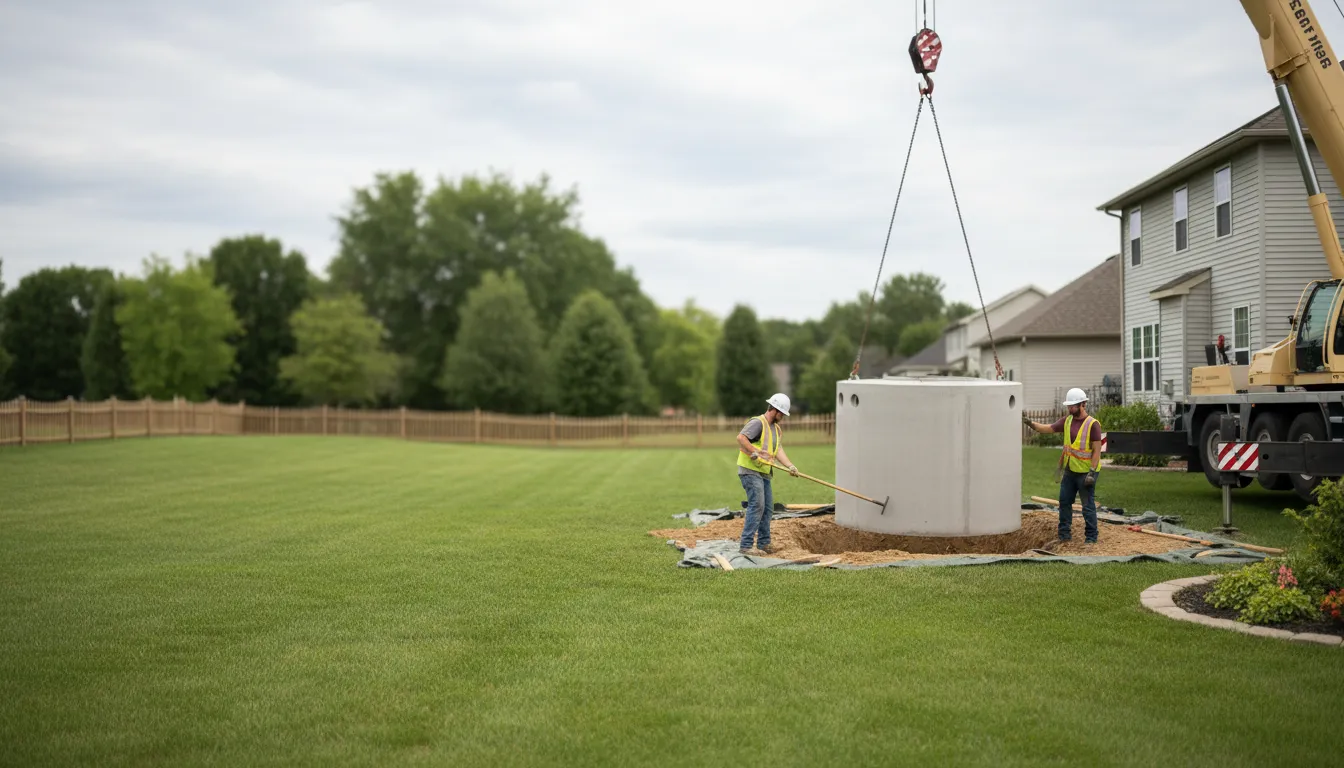
Find the Best Septic Tank Installation & Replacement Contractors for Your Business
No obligation • Fast responses • Nationwide coverage

Why you can trust Septic Spot
Septic Spot is a leading United States resource for understanding and comparing septic services. Our editors review providers using consistent criteria and verify key business details. Listings and scores are independent, and companies cannot pay to influence our content.
Search providers near you
Best Septic Tank Installation & Replacement Contractors in Hawaii Ranked
Installing or replacing a septic system in Hawaii is a significant project governed by strict state regulations. This process is essential for protecting public health, preserving the islands' delicate environment, and ensuring your property's long-term value. Whether you're building a new home, replacing an old system, or upgrading a cesspool, finding a qualified local professional is the critical first step. This guide provides the key information you need to understand the requirements, process, and costs, helping you connect with licensed engineers and contractors who can navigate Hawaii's specific rules.
First Quality Environmental
41-717 Kakaina St, Waimanalo, HI 96795
First Quality Environmental is a licensed wastewater contracting firm based in Honolulu, HI, specializing in septic tank installation, cesspool closures, grease interceptor installation, and septic tank pumping. Since 1991, they have provided tailored wastewater solutions for homeowners and industrial clients, ensuring systems meet Department of Health standards and protect Hawaii's environment. Their services include design, installation, soil percolation testing, and securing necessary approvals, with a focus on preserving the island's natural beauty.
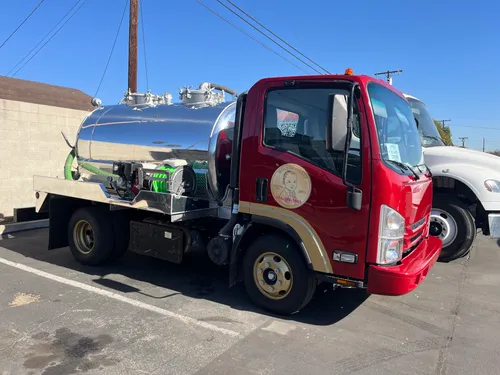
Golden Penny Sanitation Inc
Honolulu, HI
Golden Penny Sanitation Inc is a locally owned company providing sanitation services in Honolulu, HI. They serve residential homes, restaurants, and commercial properties with services including septic tank pumping, septic system installation and replacement, grease trap cleaning, restaurant waste oil recycling, sewer and drain cleaning, and sewer line repair. The company offers licensed, code-compliant septic system installations and uses advanced methods like hydro jetting for drain cleaning. With over 10 years of experience, Golden Penny Sanitation Inc also provides 24/7 sanitation support for emergency needs.
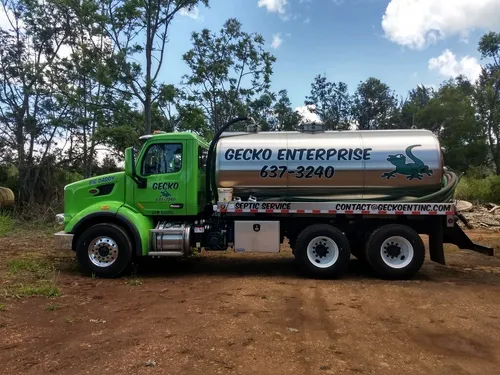
Gecko Enterprises
Honolulu, HI
Gecko Enterprises is a septic services company based in Honolulu, HI, offering a range of services including septic tank pumping, inspections, repairs, and installations. They also handle cesspool cleaning, wastewater hauling, and leach field repair or replacement. The company is licensed, insured, certified, and approved by the Department of Health. Since 1989, Gecko Enterprises has provided wastewater treatment operations and maintenance for both residential and commercial clients, emphasizing education on septic system care.
Understanding Hawaii's Regulatory Framework
All septic system work in Hawaii falls under the authority of the State Department of Health (DOH) Wastewater Branch. Unlike many mainland states, county health departments do not handle wastewater permits; all approvals flow through the state DOH. This centralized system ensures uniform application of the rules across all islands.
The cornerstone of the process is the requirement for a licensed professional engineer (PE). A PE must design the system, stamp the engineering plans, and oversee critical stages like the site evaluation and final inspection. The installation itself must be performed by a licensed contractor. This two-professional requirement underscores the technical complexity of designing a system that functions properly in Hawaii's diverse soil conditions and meets all health codes.
The 2050 Cesspool Upgrade Mandate
A critical law impacting thousands of properties is Hawaii Revised Statutes (HRS) 342D-72, which mandates that all of the state's estimated 83,000 cesspools be upgraded to septic systems or connected to sewer by January 1, 20501 2. A cesspool is simply a pit that collects raw wastewater, allowing it to seep untreated into the ground, posing a serious risk to groundwater and coastal waters.
If your property currently uses a cesspool, planning for its replacement is not optional-it's a legal requirement with a deadline. This law is a primary driver for septic system installations and replacements across the state, making it essential to start the planning process early.
The Step-by-Step Installation Process
Navigating a septic system project in Hawaii involves a defined sequence of steps. Understanding this workflow helps you know what to expect and ensures your project stays on track.
1. Site Evaluation and Percolation Test
The process begins with a site evaluation conducted by your licensed engineer. The most critical component is the percolation (perc) test, which measures how quickly water drains through your soil. The results determine the size and type of absorption field (leach field) needed. The engineer will also assess slope, groundwater levels, and proximity to wells, streams, or the ocean.
2. System Design and Engineering Plans
Based on the site evaluation, the engineer designs a system tailored to your property's specific conditions and the home's size (number of bedrooms). The design must comply with Hawaii Administrative Rules (HAR) Chapter 11-62. The engineer then prepares detailed, stamped plans that include the tank specifications, leach field layout, and all pertinent construction details.
3. DOH Permit Application and Review
The stamped engineering plans are submitted to the DOH Wastewater Branch for review. The DOH examines the design for compliance with all regulations. This review period can take several weeks. Approval from the DOH is required before any excavation or construction can begin.
4. Excavation and Installation
Once the permit is approved, your licensed contractor can begin work. This involves excavating for the septic tank and leach field, setting the tank (often concrete or plastic), installing all connecting piping, and constructing the gravel-based absorption field according to the approved plans3.
5. Final Inspection and Approval to Use
Before the system is backfilled, the installing contractor and the professional engineer must inspect the installation. The engineer then submits a final inspection report and certification to the DOH. Only after the DOH reviews and accepts this report will they issue an "approval to use" letter, which is the official sign-off that your system is operational and compliant4.
Find the perfect septic tank installation & replacement contractors for your needs
Get personalized recommendations and expert advice
System Sizing, Types, and Technical Requirements
Proper sizing is not just a recommendation-it's a code requirement. Sizing is primarily based on the number of bedrooms in the home, which is used as a proxy for daily wastewater flow.
- Tank Capacity: For a standard residential system, a 1,000-gallon tank is typically required for a 1-4 bedroom home. A 5-bedroom home generally requires a 1,500-gallon tank.
- Leach Field Sizing: The absorption field is sized based on soil percolation rates. A common rule is that it requires 75-100 square feet of absorption bed area per bedroom5. Poorer-draining soils require a larger field.
- Large Systems: For systems designed for a flow greater than 1,000 gallons per day (typically over 5 bedrooms), a specific formula is used: Minimum Tank Capacity (gallons) = 1,000 + (Q - 800) x 1.25, where Q is the design flow in gallons per day6.
Types of Systems in Hawaii
While a conventional septic tank and leach field is the most common, not all properties can support one.
- Conventional System: Used where soil conditions are favorable (good percolation, deep to groundwater).
- Aerobic Treatment Unit (ATU): Often required in areas with poor soil drainage, high groundwater, or limited space. ATUs use oxygen to break down waste more efficiently, producing a higher-quality effluent that can be dispersed in more challenging sites7.
- Alternative Systems: For the most difficult sites, other engineered solutions like mound systems or drip irrigation may be designed by your engineer.
Cost Expectations for Septic Systems in Hawaii
Septic system costs in Hawaii are generally higher than the national average due to the engineering mandate, shipping costs for materials, and site-specific challenges. Prices can vary significantly between islands.
- Standard Residential System: For a typical 3-4 bedroom home with favorable soil conditions, you can expect costs to range from $10,000 to $25,000 on average. This includes engineering, permits, the tank, and installation8 9.
- Complex or Large Systems: If your site requires an ATU, has poor soil, difficult access, or is on a steep slope, costs often rise to $20,000 to $30,000 or more10.
- Large Residential or Commercial: For homes with 5+ bedrooms or small commercial properties, system costs can easily reach $50,000 to $100,000+ due to the larger tank capacity and extensive leach field required11 12.
Remember that these are installation costs. All systems require ongoing maintenance, including regular pumping every 3-5 years and periodic inspections to ensure long-term functionality.
Choosing the Right Professional for Your Project
Given the complexity, your choice of professionals is the most important decision you'll make.
- Verify Licenses: Always confirm that the engineer is a Hawaii-licensed PE and the contractor holds a valid C-37 or similar specialty license. You can verify licenses through state boards.
- Check Experience and References: Ask for references from recent projects similar to yours, especially in your area. An experienced local professional will be familiar with the common soil types and DOH reviewers for your island.
- Get Detailed Quotes: A professional quote should itemize engineering fees, permit fees, equipment (tank, pipe, gravel), labor, and any anticipated site work (e.g., rock excavation, grading).
- Understand the Timeline: From initial site evaluation to final approval, a straightforward project can take 3-6 months. Complex systems or those requiring DOH variance approvals can take longer. Plan accordingly, especially if you are building a new home.
By understanding the regulations, process, and costs outlined here, you are well-prepared to manage your septic system project in Hawaii. This knowledge empowers you to ask the right questions and partner effectively with the professionals who will ensure your system is built to last and protect Hawaii's unique environment for years to come.
Frequently asked questions
Sources
Footnotes
-
Wastewater Branch / Permits | Department of Planning and Permitting - https://www.honolulu.gov/dpp/permitting/sdd/wwb/ ↩
-
Cesspools in Hawaii | US EPA - https://www.epa.gov/uic/cesspools-hawaii ↩
-
Septic Installation near Honolulu County, Hawaii - ACSI - https://acsihawaii.com/septic-installation-near-honolulu-county-hawaii ↩
-
Individual Wastewater Systems - https://health.hawaii.gov/wastewater/home/iws/ ↩
-
pdf - Hawaii State Department of Health - https://health.hawaii.gov/wastewater/files/2024/01/Pilot_Inspection_Report_Redacted-002.pdf ↩
-
Haw. Code R. § 11-62-33.1 - Specific requirements for new and ... - https://www.law.cornell.edu/regulations/hawaii/Haw-Code-R-SS-11-62-33-1 ↩
-
Hawaii Septic Tank Requirements | Individual Wastewater ... - https://www.ntotank.com/blog/hawaii-septic-tank-requirements ↩
-
Septic System Design Costs in Kauai: What to Expect - https://kauaiwastewatersolutions.com/blog/cost-of-septic-system-design-kauai/ ↩
-
Residential Septic Tank Installation Hawaii | Home Septic ... - https://acsihawaii.com/residential-septic-tank-installation-near-honolulu-county-hawaii ↩
-
Know Your S@!t - Maui Real Estate - https://mauirealestate.com/know-your-st/ ↩
-
General Info and FAQ | Wastewater Branch - https://health.hawaii.gov/wastewater/home/general-info-and-faq/ ↩
-
Foresignt Engieering | Septic System FAQ | Hawaii - https://www.foresight-hi.com/what-you-need-to-know ↩