Find the Best Septic Tank Installation & Replacement Contractors for Your Business
No obligation • Fast responses • Nationwide coverage

Why you can trust Septic Spot
Septic Spot is a leading United States resource for understanding and comparing septic services. Our editors review providers using consistent criteria and verify key business details. Listings and scores are independent, and companies cannot pay to influence our content.
Search providers near you
Top Septic Tank Installation & Replacement Contractors in Ames, Iowa Ranked
Installing or replacing a septic system is a significant home infrastructure project that requires careful planning and adherence to strict local and state regulations. In Ames, this process is governed by Story County and the Iowa Department of Natural Resources (DNR) to protect public health and groundwater quality. This guide explains the key steps, rules, and considerations for septic system work in Ames, helping you understand what to expect and how to connect with qualified local professionals for your installation or replacement needs.
Septic Services Of Iowa
Cedar Rapids, IA
Septic Services Of Iowa is a septic tank pumping, inspection, repair, and installation company based in Cedar Rapids, IA. They provide services including septic system inspections required by Iowa's Time of Transfer program, excavation work such as septic tank replacement and water line repairs, and regular septic tank pumping to maintain system longevity. The company is certified by the Iowa Onsite Waste Water Association and the National Environmental Health Association, ensuring compliance with state standards. Their services help protect public health and the environment by addressing failing or illegal septic systems.
Rogers Septic Maintenance & Repair
6288 NE 14th St, Des Moines, IA 50313
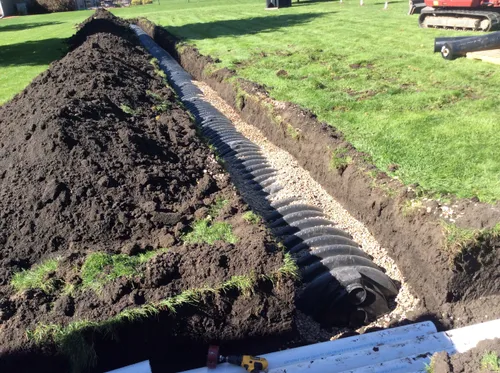
Rogers Septic Maintenance & Repair is a septic system repair and installation company based in Des Moines, IA. They provide services including septic tank installation and system repairs, focusing on clear communication and respectful customer interactions. The company is known for its attention to detail and professional approach to septic system projects.
Understanding Septic System Basics in Story County
A septic system, or on-site wastewater treatment system, is a private sewage disposal solution for properties not connected to a municipal sewer line. It typically consists of a septic tank, which separates solids from liquids, and a drain field (or leach field), where treated effluent is dispersed into the soil. In Ames and throughout Story County, these systems must be designed to handle the specific wastewater output of your household while complying with Iowa's environmental protection standards 1.
The type of system your property can support depends heavily on local soil conditions and site characteristics. A failing or improperly installed system can lead to costly repairs, environmental contamination, and public health hazards. Therefore, the installation or replacement process is highly regulated, requiring permits, certified contractors, and official inspections2 3.
The Permit Process: Your First Official Step
Before any digging begins, you must obtain a construction permit from the Story County Environmental Health Department. This is a non-negotiable legal requirement for installing, repairing, or altering any private sewage system4.
What you'll need for a permit application:
- A completed permit application form and the associated fee.
- A detailed site plan showing the proposed system location, property lines, wells, buildings, and water bodies.
- The results of a professional site evaluation and soil analysis.
- The name and certification number of your hired Certified Installer of On-site Wastewater Treatment Systems (CIOWTS).
The county reviews this package to ensure your planned septic system design meets all setback and engineering requirements. It's crucial to note that if a public sewer line is available within 200 feet of your property line, connection to that public sewer is typically required by law instead of installing a new private system 5.
Site Evaluation and Soil Testing: The Foundation of Your System
The most critical technical step in planning a new septic tank installation is the site evaluation. This assessment determines the suitability of your land for a subsurface sewage disposal system.
A licensed soil scientist or professional engineer must conduct this evaluation, which includes a percolation test (or "perc test"). This test measures how quickly water drains through your soil. The results dictate the size and type of system needed:
- Suitable Soil: Faster-draining soils may accommodate a standard gravity-fed drain field.
- Problematic Soil: Slow-draining soils, high groundwater tables, shallow bedrock, or steep slopes often require an alternative system, such as a mound or at-grade system, which involves more complex engineering and higher costs6 7.
This evaluation is not just a formality; it's the scientific basis for your entire system design and is mandatory for the permit process.
Hiring the Right Professional: Certified Installer Requirement
Iowa law mandates that all physical work on a septic system-from excavation to tank placement to pipe laying-must be performed by a Certified Installer of On-site Wastewater Treatment Systems (CIOWTS). You cannot legally install a system yourself.
When searching for a septic contractor in Ames, always verify their CIOWTS certification through the Iowa DNR. A certified installer will:
- Understand local Story County codes and state regulations.
- Help navigate the permit application.
- Properly execute the approved system design.
- Schedule the required inspections.
Working with a certified professional is your best assurance of a compliant and long-lasting installation.
Key Installation Rules and Setback Requirements
Story County enforces strict separation distances to prevent contamination. Your system's design must adhere to these Iowa DNR setbacks, including (but not limited to) 8:
- 50 feet minimum from any water well.
- 10 feet from property lines.
- 100 feet from lakes, streams, and rivers.
- Specific distances from buildings, foundation drains, and water supply lines.
These rules are strictly enforced to protect your drinking water and your neighbor's. Your site plan must accurately reflect these distances.
Find the perfect septic tank installation & replacement contractors for your needs
Get personalized recommendations and expert advice
The Installation and Inspection Timeline
Once your permit is approved, your certified installer will follow a structured process:
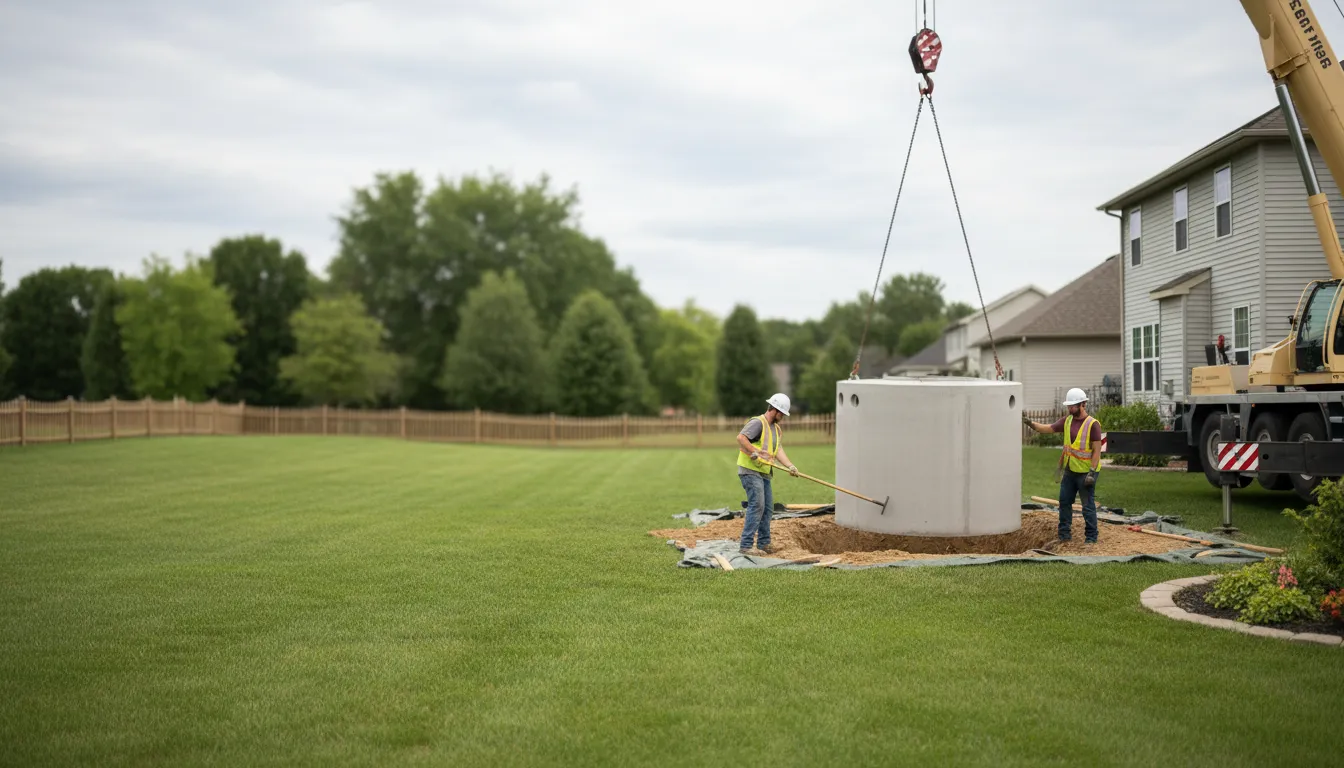
- Excavation & Installation: The contractor excavates the site and installs the septic tank and drain field according to the engineered plan.
- Pre-Cover Inspection: This is a critical milestone. After installation but before any backfill (soil) is placed over the system, the Story County Environmental Health inspector must visit the site to examine the work. They check for proper placement, materials, and connections.
- Final Approval: Only after the system passes this inspection can it be covered and put into service. The county will then provide a final approval, which is an important document for your property records.
Skipping the inspection and covering the system prematurely is a violation that can result in fines and orders to re-excavate.
Understanding Costs for Septic Systems in Ames
The cost of a new septic system in Ames varies widely based on system type, soil conditions, tank size, and property specifics. According to industry estimates and county data9 10:
- A conventional gravity system for a typical home can range from $5,000 to over $10,000.
- Alternative systems (like mound, at-grade, or pressure-dosed systems), required for challenging sites, are significantly more expensive due to added materials, pumps, and engineering complexity.
These figures generally include design, permits, excavation, tank, materials, and labor. Always get detailed, written estimates from multiple CIOWTS contractors.
Time of Transfer Inspections for Home Sales
If you are selling a home with a septic system in Iowa, state law often requires a Time of Transfer inspection11. This inspection, conducted by a certified inspector, assesses the system's condition and functionality. A passing inspection is frequently a contingency for sale. If problems are found, repairs or replacement may be negotiated between buyer and seller. This law underscores the importance of maintaining your system properly.
Maintaining Your New Septic System
After your new septic tank installation is complete, proper maintenance is key to longevity. This includes regular pumping (typically every 3-5 years), conserving water, avoiding flushing harmful chemicals or non-biodegradables, and protecting the drain field from compaction by vehicles or structures. A well-maintained system can last for decades.
Frequently asked questions
Sources
Footnotes
-
Private Sewage Disposal Systems - Iowa Waste Reduction Center - https://iwrc.uni.edu/environmental-assistance/regulatory-information/septic-tanks ↩
-
Getting Ready for Your New Septic System | Story County, IA - Official Website - https://www.storycountyiowa.gov/624/Getting-Ready-for-Your-New-Septic-System ↩
-
65.28 CERTIFIED INSTALLER. - https://codelibrary.amlegal.com/codes/storycounty/latest/storycount_ia/0-0-0-5206 ↩
-
65.10 WHEN SEPTIC CONSTRUCTION PERMIT NEEDED. - https://codelibrary.amlegal.com/codes/storycounty/latest/storycount_ia/0-0-0-5141 ↩
-
567-Chapter 69 - Iowa Administrative Code - https://www.legis.iowa.gov/docs/ACO/chapter/567.69.pdf ↩
-
Private Sewage Disposal and Septage - Iowa DNR - https://www.iowadnr.gov/environmental-protection/water-quality/private-sewage-disposal-and-septage ↩
-
How to Know if You Need a Septic System Permit - Pippin Home Designs - https://www.pippinhomedesigns.com/septic-system-permit/ ↩
-
Non-Public Water Wells and Water Systems - Iowa DNR - https://www.iowadnr.gov/media/4633/download?inline ↩
-
Iowa Septic Tank Requirements | Private Sewage Disposal ... - https://www.ntotank.com/blog/iowa-septic-tank-requirements ↩
-
Septic System - Environmental Health - Iowa County, Iowa - https://iowacounty.iowa.gov/environmental_health/septic_systems/ ↩
-
Time of Transfer - Environmental Health - Jackson County, Iowa - https://jacksoncounty.iowa.gov/environmental_health/time_of_transfer/ ↩