Find the Best Septic Tank Installation & Replacement Contractors for Your Business
No obligation • Fast responses • Nationwide coverage

Why you can trust Septic Spot
Septic Spot is a leading United States resource for understanding and comparing septic services. Our editors review providers using consistent criteria and verify key business details. Listings and scores are independent, and companies cannot pay to influence our content.
Search providers near you
Top Septic Tank Installation & Replacement Contractors in Iowa City, Iowa Ranked
Installing or replacing a septic system is a significant investment in your property's long-term functionality and environmental health. A properly designed and permitted private sewage disposal system ensures safe wastewater treatment and protects local groundwater. For homeowners in Iowa City and Johnson County, this process is governed by specific local and state regulations. This guide outlines the key steps, costs, and regulatory requirements to help you navigate planning a new septic installation or a full system replacement.
Understanding Local Authority and Key Mandates
In Iowa City, all private sewage disposal systems (PSDS) are regulated by Johnson County Public Health. Their Environmental Health division enforces the rules outlined in Iowa DNR Chapter 69, which sets the statewide standard for system design, permitting, and inspection 1.
Two critical mandates directly affect property owners:
- Permit Requirement: You must obtain a permit from Johnson County Public Health before any construction, installation, or modification of a septic system begins. Starting work without a permit can result in fines and orders to remove improperly installed components.
- Connection Mandate: If a public sewer line is available within 200 feet of your property line, you are legally required to connect to it. A permit for a new private septic system will not be issued in this scenario2.
Additionally, Iowa has a "Time of Transfer" law. When selling a property with an existing septic system, a state-certified inspection is mandatory. This rule underscores the importance of maintaining a compliant and functional system.
The First Step: Site Evaluation and Soil Analysis
The suitability of your property for a standard septic system is determined by a detailed site evaluation. This is not a DIY project. A certified professional must assess several critical factors:
- Soil Quality: The soil's texture and structure determine its ability to absorb and treat effluent.
- Groundwater Depth: There must be adequate separation between the system's drainage field and the seasonal high-water table.
- Setback Distances: The system must be located a specific distance from wells, property lines, buildings, and surface water.
The cornerstone of this evaluation is the professional soil analysis, often called a soil morphology report or percolation ("perc") test3. A certified inspector will dig a series of test holes-typically at least three, distributed across the proposed absorption field area. These holes are usually 4 to 12 inches in diameter and are dug to the proposed depth of the disposal trenches (not to exceed 36 inches deep). This test measures how quickly water drains through the soil, which directly informs the size and type of system required.
Navigating the Permit Application Process
Once you have a professional site evaluation and system design, you can apply for your permit. The process generally follows these steps:
- Application Submission: Complete the Sewage Permit Application and submit it with the required fee to the Johnson County Public Health Department at 855 S. Dubuque Street, Suite 217, Iowa City4. The permit fees typically range from $400 to $600.
- Review and Issuance: County sanitarians will review your application, including the soil analysis and proposed system design. If everything complies with Chapter 69 rules, a permit will be issued5. This permit is your official blueprint, outlining the approved design and installation requirements.
- Scheduling Inspections: The permit will detail required inspections. Crucially, you must schedule an inspection with a county sanitarian before any part of the installed system is covered with soil. It's advised to schedule this inspection well in advance-often 8 or more hours-to ensure an inspector is available.
Find the perfect septic tank installation & replacement contractors for your needs
Get personalized recommendations and expert advice
System Types, Costs, and Installation
The results of your soil analysis dictate the type of system you can install.
- Conventional Gravity Systems: These are the most common and least expensive option, but they require suitable soil with good percolation. In Iowa City, installation costs for a standard gravity system generally range from $10,000 to over $20,000, depending on the system size, soil conditions, and contractor6 7.
- Alternative/Advanced Systems: If the soil fails a standard perc test, you will need an engineered alternative. This includes systems like mound systems, sand filters, or aerobic treatment units (ATUs). These systems involve more complex components and construction, leading to significantly higher costs that can easily exceed the range for a conventional system8 9.
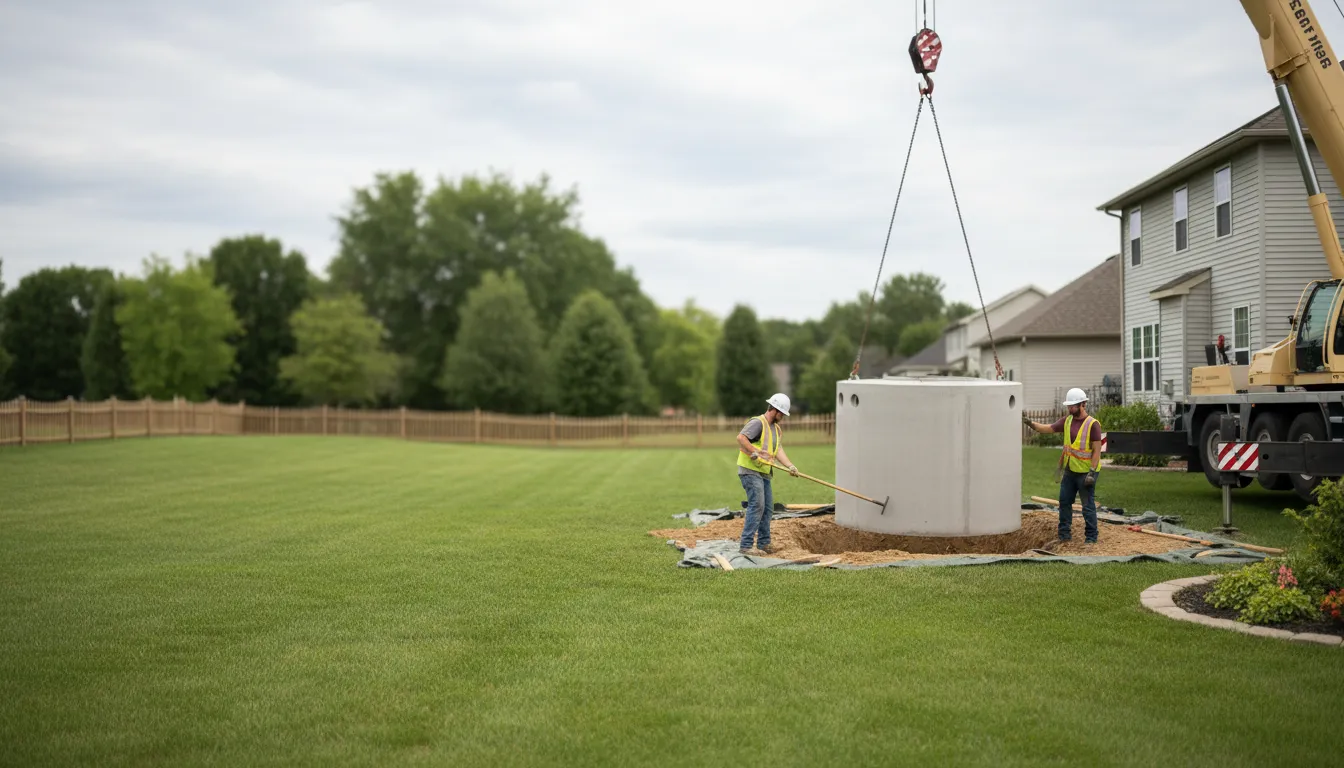
The installation process involves excavating for the septic tank and drainage field, placing the tank, constructing the distribution and absorption lines (laterals), and connecting plumbing from the house. All materials and workmanship must meet the standards specified in your permit.
Final Inspection and Long-Term Care
The mandatory final inspection by the county sanitarian is the last regulatory hurdle10. The inspector will verify that the installation matches the permitted design, that all components are properly installed, and that the site is ready for backfilling. Only after passing this inspection should the system be covered.
After installation, proper maintenance is key to a long system life. This includes regular pumping of the tank (typically every 3-5 years), conserving water to avoid overloading the drain field, and avoiding flushing harmful chemicals or non-biodegradable materials. Keeping detailed records of maintenance and inspections is also essential for future property transfers under the "Time of Transfer" rule11.
Frequently asked questions
Sources
Footnotes
-
567-Chapter 69 - Iowa Administrative Code - https://www.legis.iowa.gov/docs/ACO/chapter/567.69.pdf ↩
-
Johnson County Public Health Private Sewage Disposal ... - https://www.johnsoncountyiowa.gov/sites/default/files/2020-04/PrivateSewageDisposalSystemsRegulations.pdf ↩
-
Perc Test for Septic System: A Complete Guide - https://landperc.com/perc-test-for-septic-system/ ↩
-
Sewage Permit Application - Johnson County - https://www.johnsoncountyiowa.gov/pds/sewage-permit-application ↩
-
IAC Chapter 69 Summary.pdf - Grundy County, Iowa - https://grundycountyiowa.gov/images/departments/environmental/pdf/documentation/IAC%20Chapter%2069%20Summary.pdf ↩
-
Iowa Septic Tank Requirements | Private Sewage Disposal ... - https://www.ntotank.com/blog/iowa-septic-tank-requirements ↩
-
Septic System Cost Estimate: A Complete Breakdown - https://landperc.com/septic-system-cost-estimate/ ↩
-
Septic System - Environmental Health - Iowa County, Iowa - https://iowacounty.iowa.gov/environmental_health/septic_systems/ ↩
-
Iowa Code agency 567, tit. IV, ch. 69, app B | State Regulations - LII - https://www.law.cornell.edu/regulations/iowa/Iowa-Code-agency-567-tit-IV-ch-69-app-B ↩
-
Septic | Environmental Health - Cedar County, Iowa - https://cedarcounty.iowa.gov/environmental_health/septic/ ↩
-
Time of Transfer | Department of Natural Resources - Iowa DNR - https://www.iowadnr.gov/environmental-protection/water-quality/private-sewage-disposal-and-septage/time-transfer ↩