Find the Best Septic Tank Installation & Replacement Contractors for Your Business
No obligation • Fast responses • Nationwide coverage

Why you can trust Septic Spot
Septic Spot is a leading United States resource for understanding and comparing septic services. Our editors review providers using consistent criteria and verify key business details. Listings and scores are independent, and companies cannot pay to influence our content.
Search providers near you
Best Septic Tank Installation & Replacement Contractors in Maryland Ranked
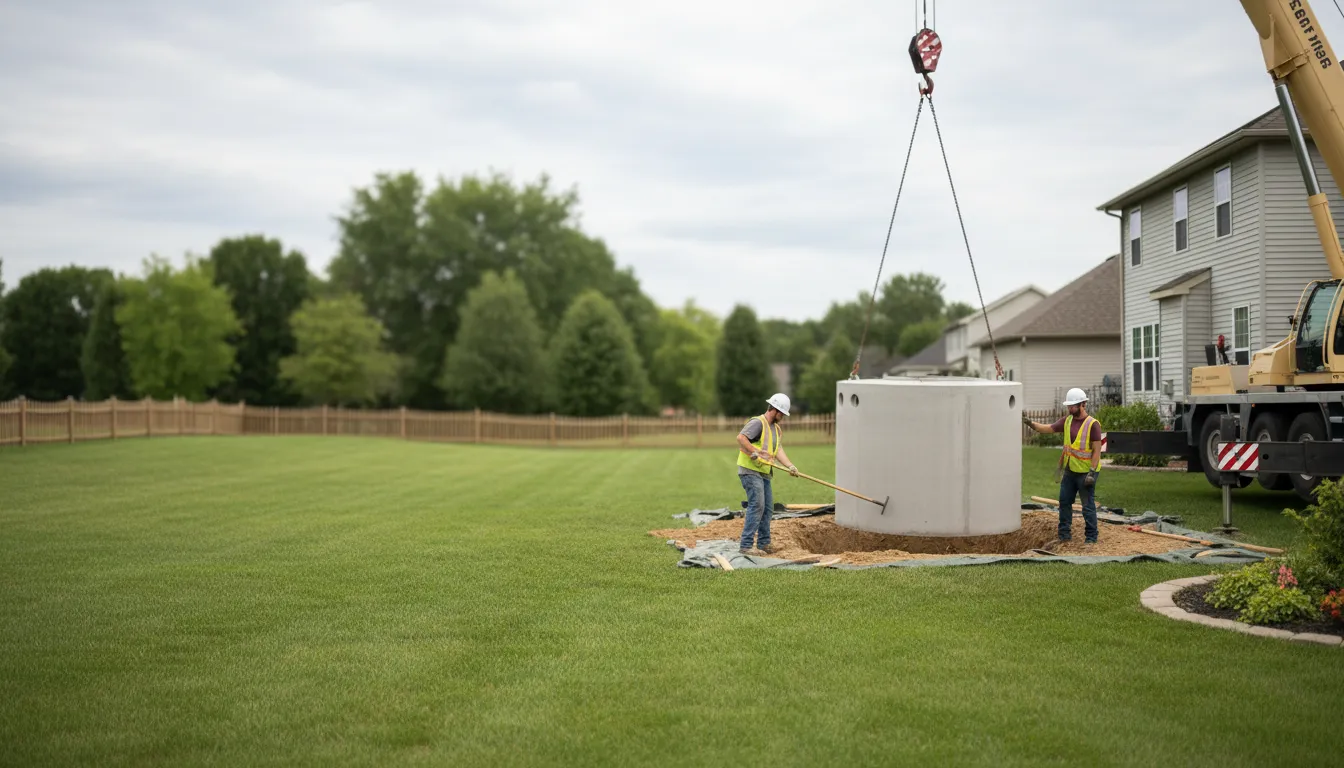
Installing or replacing a septic system is a significant home improvement project that ensures safe wastewater treatment and protects local water quality. In Maryland, this process is governed by specific state and county regulations designed to safeguard public health and the environment, particularly the Chesapeake Bay. This guide explains the key steps, costs, and regulatory requirements for septic work in Maryland, helping you understand what to expect and how to connect with qualified local professionals for your project.

Shilling septic
Baltimore, MD
Shilling Septic is a locally owned septic service provider based in Baltimore, MD, serving Anne Arundel County and Central Maryland. With over 65 years of experience, the company offers a full range of septic services including installation, pumping, cleaning, inspections, and repairs. Their expertise includes addressing regional challenges such as soil composition and proximity to water, ensuring systems are properly maintained and repaired. Shilling Septic also provides emergency services with 24/7 availability to handle urgent septic issues.
American Septic & Backhoe Service
Baltimore, MD
American Septic & Backhoe Service is a family-owned business providing comprehensive septic system care in Baltimore, MD, and nearby Harford County since 1992. They offer a full range of services including septic tank pumping, inspections, repairs, new system installations, and drain field maintenance. The company is certified in Best Available Technology (BAT) septic systems and provides 24-hour emergency services to address urgent septic needs.
Freedom Septic Service, Inc.
2809 Liberty Rd, Sykesville, MD 21784
Freedom Septic Service, Inc. is a family-owned business with over 20 years of experience providing septic system services in Baltimore, MD. They offer a range of solutions including septic tank pumping, installation, repair, sewage treatment, and grease trap cleaning. The company also provides portable toilet and restroom trailer rentals for events and job sites, featuring options like handicap accessible units and climate-controlled trailers. Serving Baltimore and surrounding counties, Freedom Septic Service combines licensed expertise with comprehensive sanitation services to meet residential and commercial needs.
John's Septic Service
510 S Stepney Rd, Aberdeen, MD 21001
John's Septic Service is a family-operated company serving Baltimore, MD, specializing in septic tank pumping, repair, and installation. The business is managed by the fourth generation of the family, combining modern equipment with extensive experience. They are recognized locally and have been featured in industry publications for their commitment to service.
ACE Septic Service
8555 Brad Ct suite b, Pasadena, MD 21122
ACE Septic Service is a septic tank pumping, repair, and installation contractor serving Baltimore, MD, and Anne Arundel County. Established in 1995, the company offers a full range of septic services including pumping, maintenance, repairs, and new system installations. Their team focuses on maintaining septic system health through thorough cleaning and timely repairs to ensure optimal performance.
Understanding Maryland's Septic System Regulations
Maryland has implemented stringent rules for onsite sewage disposal systems (OSDS) to prevent groundwater contamination and reduce nutrient pollution entering the Chesapeake Bay. All new installations, replacements, and major repairs require a permit from your local county health department or Department of Permitting Services (DPS). A critical statewide rule is the 100-foot minimum setback requirement from any water well.
Perhaps the most important regulation for many property owners is the requirement for Best Available Technology (BAT). In designated areas, especially within the Chesapeake Bay Critical Area and other sensitive watersheds, new and replacement systems must use BAT units that significantly reduce nitrogen levels in the treated effluent. Always check with your local permitting authority to see if this requirement applies to your property.
The Step-by-Step Installation & Replacement Process
Navigating a septic project involves several defined stages, from initial evaluation to final approval.
1. Site Evaluation and Soil Testing
The process begins with a site evaluation and a percolation (perc) test. A licensed soil evaluator or sanitarian assesses your property to determine soil suitability, groundwater depth, and the optimal location for the drainfield. The perc test measures how quickly water drains through the soil, which dictates the size and type of system that can be installed 1.
2. System Design and Permit Application
Once the site is evaluated, a professional designer or engineer creates a detailed site plan. This plan must include the proposed location of the tank, drainfield, and all required reserve areas. Maryland regulations typically mandate space for the initial drainfield plus three reserve fields, requiring a total area often exceeding 10,000 square feet 2. The plan, along with the permit application, is submitted to the local health department or DPS for review.
3. Obtaining the Permit
Permits for new installations are generally valid for 12 months, with the possibility of a 6-month extension 3. Separate, often expedited, repair permits are required for fixing failing systems or replacing components 4 5. Permit fees vary by county but commonly range from $50 to $500 6.
4. Installation and Inspections
During installation, critical inspections are mandatory. An inspector will check the excavated tank bed and drainfield trenches before the tank is set and the distribution lines are placed. The tank must be watertight and have access risers brought to within 18 inches of the final grade for easy future maintenance 7 8. A final inspection occurs once the system is fully installed but before the area is fully landscaped.
5. Final Approval and As-Built Records
After passing the final inspection, the installer provides an "as-built" drawing showing the exact location of all system components. This crucial document should be kept with your property records for future reference and maintenance 9.
Find the perfect septic tank installation & replacement contractors for your needs
Get personalized recommendations and expert advice
System Sizing and Technical Requirements
Proper sizing is not just a recommendation-it's a code requirement. Systems are sized based on daily wastewater flow.
- Residential Sizing: The minimum design flow is 150 gallons per day (gpd) per bedroom, with a minimum of 300 gpd for a standard residential system 10.
- Commercial Sizing: The minimum design flow starts at 400 gpd 11.
- Tank Specifications: Tanks must be structurally sound, watertight, and compatible with Maryland's environment. The size of the tank correlates with the home's bedroom count and estimated daily flow.
Cost Breakdown for Septic Systems in Maryland
The cost of a septic system in Maryland varies widely based on soil conditions, system type, property size, and local requirements.
- Standard Conventional System: The average cost for a standard gravity-fed system typically falls between $10,000 and $25,000 12.
- Best Available Technology (BAT) System: These advanced nitrogen-removing systems are more expensive due to complex components and technology. Costs can be significantly higher than a conventional system 13.
- Financial Assistance: To encourage the upgrade to BAT systems, Maryland offers grant programs like the Bay Restoration Fund. Eligible homeowners with household incomes under $300,000 may qualify for grants covering 50% to 100% of the cost of a BAT system 14.
- Additional Costs: Remember to budget for the site evaluation/perc test ($500-$1,500), permit fees ($50-$500), system design ($1,000-$3,000), and the required annual maintenance contract for BAT systems.
Special Considerations for System Replacement
Replacing a failing system follows a similar but urgent path. A "repair permit" is required. The health department will determine if a simple repair is sufficient or if a full system replacement is necessary. In many cases, especially near sensitive waterways, replacement systems must be upgraded to BAT standards, even if the original system was conventional. The requirement for multiple reserve drainfield areas can be a major constraint on older, smaller lots, potentially complicating the replacement process.
Choosing a Qualified Installation Professional
Given the complexity and regulatory oversight, selecting the right contractor is essential. Look for a licensed septic installer with extensive experience in your Maryland county. They should be familiar with local health department officials, BAT system options, and the specific soil challenges in your region. Always request references, verify insurance and licensing, and ensure they obtain all necessary permits and schedule all required inspections.
Maintenance: Protecting Your Investment
A new or replacement system is a major investment that requires proper care. All BAT systems in Maryland mandate a maintenance contract with a certified operator. Even conventional systems require regular pumping every 3-5 years and careful water usage. Proper maintenance prevents premature failure, protects the environment, and ensures the longevity of your system for decades to come.
Frequently asked questions
Sources
Footnotes
-
Onsite Well and Septic System Testing and Permitting, DEP - https://www.montgomerycountymd.gov/DEP/water/water-supply-wastewater/onsite-system-testing-permitting.html ↩
-
Septic Systems, DEP, Montgomery County, MD - https://www.montgomerycountymd.gov/DEP/water/water-supply-wastewater/septic-systems.html ↩
-
DPS - Septic Permit Process - Department of Permitting Services - https://www.montgomerycountymd.gov/DPS/Process/ld/septic-permit.html ↩
-
Septic System Repair Guidelines - Montgomery County - https://www.montgomerycountymd.gov/DPS/Resources/Files/Land_Development/Guideline_Septic%20System%20Repair.pdf ↩
-
DPS - Septic System Repair Permit Process - Montgomery County - https://www.montgomerycountymd.gov/DPS/Process/ld/septic-repair-permit.html ↩
-
Septic System Installation Permit Application - https://charlescountyhealth.org/wp-content/uploads/2025/07/2b-Septic-System-Installation-Permit-Application.pdf ↩
-
27A.00.01.07 On-Site Sewage Disposal System Design and ... - https://codelibrary.amlegal.com/codes/montgomerycounty/latest/montgomeryco_md_comcor/0-0-0-14911 ↩
-
SEPTIC TANK MANUAL | Frederick County Health Department - https://health.frederickcountymd.gov/DocumentCenter/View/2716/Septic-Manual-Large ↩
-
Septic Memo - https://www.aahealth.org/sites/default/files/2024-02/SepticMemo-6-30-22.pdf ↩
-
Design and Construction Manual For Maryland At-Grade Mound ... - https://mde.maryland.gov/programs/water/bayrestorationfund/onsitedisposalsystems/documents/onsite%20systems/at%20grade%20design%20manual%20jan%202015.pdf ↩
-
Md. Code Regs. 26.04.02.05 | State Regulations | US Law - https://www.law.cornell.edu/regulations/maryland/COMAR-26-04-02-05 ↩
-
Septic Installation Process Maryland - Cox Enterprises - https://www.coxenterprisesllc.com/septic-installation-process-maryland/ ↩
-
How Much Does It Cost To Install a Septic System in Baltimore, MD? - https://www.angi.com/articles/what-does-it-cost-install-septic-system/md/baltimore ↩
-
Step-By-Step Instructions For Septic System Upgrades and ... - https://www.aahealth.org/environmental-health/wells-and-septic-systems/septic-systems/step-step-instructions-septic-system ↩