
Find the Best Septic Tank Installation & Replacement Contractors for Your Business
No obligation • Fast responses • Nationwide coverage

Why you can trust Septic Spot
Septic Spot is a leading United States resource for understanding and comparing septic services. Our editors review providers using consistent criteria and verify key business details. Listings and scores are independent, and companies cannot pay to influence our content.
Search providers near you
Top Septic Tank Installation & Replacement Contractors in Minnetonka, Minnesota Ranked
Installing or replacing a septic system is a significant home infrastructure project that protects your property value and the local environment. In Minnetonka, this process is governed by specific state and local regulations to ensure wastewater is treated safely and effectively. This guide explains the key steps, rules, and considerations for septic system installation and replacement, helping you navigate the process of finding qualified local professionals for your project.
Understanding Septic System Regulations in Minnesota
All subsurface sewage treatment system (SSTS) work in Minnetonka must comply with Minnesota Pollution Control Agency (MPCA) rules, specifically Chapter 7080, as well as any local city ordinances 1. These regulations are designed to protect groundwater and public health. The MPCA licenses all professionals involved in the design, installation, and inspection of septic systems, ensuring they meet strict competency standards 1.
Local enforcement is typically handled by a city or county environmental health department or sanitarian. It's crucial to verify specific requirements with the Minnetonka planning department, as local rules can add additional layers to state guidelines 2. A critical statewide rule is the compliance inspection required during property transfers, which often triggers the need for system upgrades or full replacements.
The Step-by-Step Installation and Replacement Process
Embarking on a new septic system installation or a full system replacement follows a defined sequence. Skipping steps or failing to obtain proper approvals can result in costly fines and the need to redo work.
1. Site Evaluation and Soil Testing
The process begins with a thorough site evaluation. A licensed designer or soil evaluator must conduct a minimum of three soil observations (borings or test pits) to determine soil texture, depth to bedrock, and seasonal water table levels 3. These tests, often called perc tests, determine the soil's absorption rate and are crucial for designing a system that will function properly 4 5. The observations are typically made 7 to 12 feet deep to get an accurate profile of the soil conditions 3.
2. System Design and Permit Acquisition
Using the soil data, a licensed designer creates a detailed system design plan. This plan includes the site layout, tank type and size, and drainfield specifications (whether it's a trench, bed, or more advanced system). This design is then submitted to the local regulatory authority (e.g., Minnetonka or Hennepin County) for review and approval 6. Once the design is approved, you must obtain a construction permit before any excavation or installation work can legally begin 7.
3. Hiring a Licensed Installer and Construction
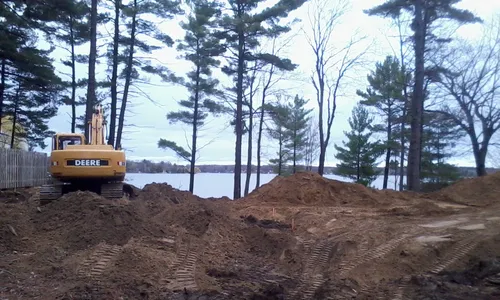
You must hire a MPCA-licensed installer to construct the system exactly according to the approved design 8. The installation involves excavating for the septic tank and drainfield, placing the tanks, connecting piping, and building the soil absorption area. Setback requirements are strictly enforced; for example, septic tanks generally need a minimum 10-foot separation from buildings and property lines, while drainfields require 20 feet 9.
4. Mandatory Inspections and Final Approval
Inspections are mandatory at key stages. The most critical is the pre-cover inspection, where the local inspector examines the excavated tank set, pipe placement, and drainfield construction before it is backfilled 10 11. Only after this inspection passes can the system be covered. A final inspection leads to the issuance of a Certificate of Compliance, which is your official record that the system meets all codes 12 13.
Find the perfect septic tank installation & replacement contractors for your needs
Get personalized recommendations and expert advice
Key Factors Influencing Your System and Cost
The type of system you need and its final cost are directly tied to your property's conditions and local requirements.
System Type: The most common is a gravity-fed system, but poor soil conditions often require a pressure distribution system, which includes a pump tank and dosing siphon to evenly distribute effluent. More complex systems like mounds or aerobic treatment units (ATUs) are needed for challenging sites with high water tables or shallow bedrock.
Cost Ranges: While prices can vary widely, available data provides a general framework. The cost for the septic tank alone can range from $500 to $2,500 14. For a complete system installation, including tank, drainfield, and all labor, homeowners often see costs between $3,600 and $12,400 or more 14 15. The final price is heavily influenced by the system type (gravity vs. pressure), soil quality, site accessibility, and the size of the system needed for your household 16 17.
Planning for a Successful Project
Proper planning is the best way to ensure a smooth installation process. Start by contacting the local regulatory office to understand Minnetonka-specific requirements. Then, interview several MPCA-licensed designers and installers. Ask for references, detailed quotes, and a projected timeline. Ensure your contract clearly outlines who is responsible for obtaining permits and scheduling inspections. Remember, investing in a properly designed and installed system prevents major headaches, environmental issues, and costly repairs down the line.
Frequently asked questions
Sources
Footnotes
-
Septic systems | Minnesota Pollution Control Agency - https://www.pca.state.mn.us/business-with-us/septic-systems ↩ ↩2
-
Local septic system programs | Minnesota Pollution Control Agency - https://www.pca.state.mn.us/business-with-us/local-septic-system-programs ↩
-
Perc Tests - M&M Septic - https://www.mmseptic.com/perc-tests ↩ ↩2
-
Septic Installation Tips & Best Practices You Should Know - https://www.rciseptic.com/understanding-septic-installations-key-tips-and-best-practices ↩
-
Septic System Approval: Percolation Test & Expert Guidance - https://smartsepticpros.com/blog/how-to-do-a-percolation-test/ ↩
-
7083 - MN Rules Chapter - https://www.revisor.mn.gov/rules/7083/full ↩
-
Septic Systems - Dakota County - http://www.co.dakota.mn.us/Environment/WaterResources/SepticSystem/Pages/construction-replacement.aspx ↩
-
§ 155.090 SEWAGE AND WASTEWATER TREATMENT AND ... - https://codelibrary.amlegal.com/codes/wrightcounty/latest/wrightco_mn/0-0-0-3587 ↩
-
Septic | Chisago County, MN - Official Website - https://www.chisagocountymn.gov/373/Septic ↩
-
MPCA SSTS Bulletin - GovDelivery - https://content.govdelivery.com/accounts/MNPCA/bulletins/1f017be ↩
-
Septic System Install Timeline - https://www.rciseptic.com/complete-step-by-step-timeline-septic-system-installation-from-permit-to-finish ↩
-
CHAPTER 5 SUBSURFACE SEWAGE TREATMENT SYSTEMS - https://www.otsegomn.gov/DocumentCenter/View/302/Otsego-City-Code---SSTS-PDF ↩
-
Septic Systems - http://www.co.dakota.mn.us/Environment/WaterResources/SepticSystem/Pages/default.aspx ↩
-
How Much Does a Septic Tank Cost? - NerdWallet - https://www.nerdwallet.com/home-ownership/home-improvement/learn/septic-tank-cost ↩ ↩2
-
All about septics | Onsite Sewage Treatment Program - https://septic.umn.edu/all-about-septics ↩
-
SSTS installation - Minnesota Pollution Control Agency - https://www.pca.state.mn.us/business-with-us/ssts-installation ↩
-
Septic System Installation: Essential Steps for a Reliable Setup - https://www.bridgewaterenviro.com/septic-system-installation/ ↩