Find the Best Septic Tank Installation & Replacement Contractors for Your Business
No obligation • Fast responses • Nationwide coverage

Why you can trust Septic Spot
Septic Spot is a leading United States resource for understanding and comparing septic services. Our editors review providers using consistent criteria and verify key business details. Listings and scores are independent, and companies cannot pay to influence our content.
Search providers near you
Top Septic Tank Installation & Replacement Contractors in St Louis Park, Minnesota Ranked
Installing or replacing a septic system is a significant home improvement project that ensures the safe and effective treatment of household wastewater. In St Louis Park, this process is governed by specific county and state regulations designed to protect public health and the environment. Understanding the steps, from soil testing to final inspection, is crucial for a successful project. This guide outlines the key considerations for septic system installation and replacement, helping you navigate the process and connect with qualified local professionals.
Understanding Septic System Regulations in St. Louis County
All subsurface sewage treatment system (SSTS) work in St Louis Park must comply with St. Louis County Ordinance 61 and the Minnesota Pollution Control Agency (MPCA) Rules, Chapters 7080-7083 1. These regulations are not mere suggestions; they are legally binding standards that ensure systems are designed and built to prevent contamination of groundwater and surface water. The rules cover everything from the initial site evaluation to the final inspection and ongoing maintenance. Non-compliance can result in enforcement actions, and systems deemed an "Imminent Threat to Public Health" (ITPH) must be repaired or replaced within a strict 10-month timeline.
The regulatory journey begins and ends with permits. You cannot legally begin any excavation or construction for a new or replacement septic system without an approved "Permit to Construct" from St. Louis County Planning & Zoning 2. The county manages this process through an online ePermits portal, where you can submit applications and track permit history2 3. Crucially, all design, installation, and inspection work must be performed by professionals licensed by the MPCA 4. Attempting a DIY installation is not only ill-advised due to the complexity but is also illegal without the proper credentials.
The Critical First Step: Site Evaluation and Soil Testing
Before any design can be drawn, a licensed site evaluator must conduct a thorough analysis of your property. This is arguably the most important phase, as the soil conditions dictate every aspect of the system that follows. The evaluator will perform a perk test (or percolation test) to determine how quickly water drains through the soil. They will also assess the soil texture, depth to bedrock, and seasonal high water table level.
The results of this assessment determine the type, size, and design of the septic system your property can support. For instance, properties with poorly draining soils may require a raised mound system, while those with suitable soil may accommodate a standard trench or bed drainfield5. This site-specific design, created by an MPCA-licensed designer, becomes the blueprint submitted for your permit application6 5. Skipping or inadequately performing this step can lead to system failure, costly repairs, and environmental violations down the line.
The Installation Process: From Permit to Final Approval
Once you have your approved Permit to Construct in hand, the physical installation can begin. This process must be carried out by an MPCA-licensed installer. A typical installation sequence for a septic tank and drainfield includes:
- Pre-construction Inspection: A county inspector may visit the site to verify stake locations and conditions before any digging starts.
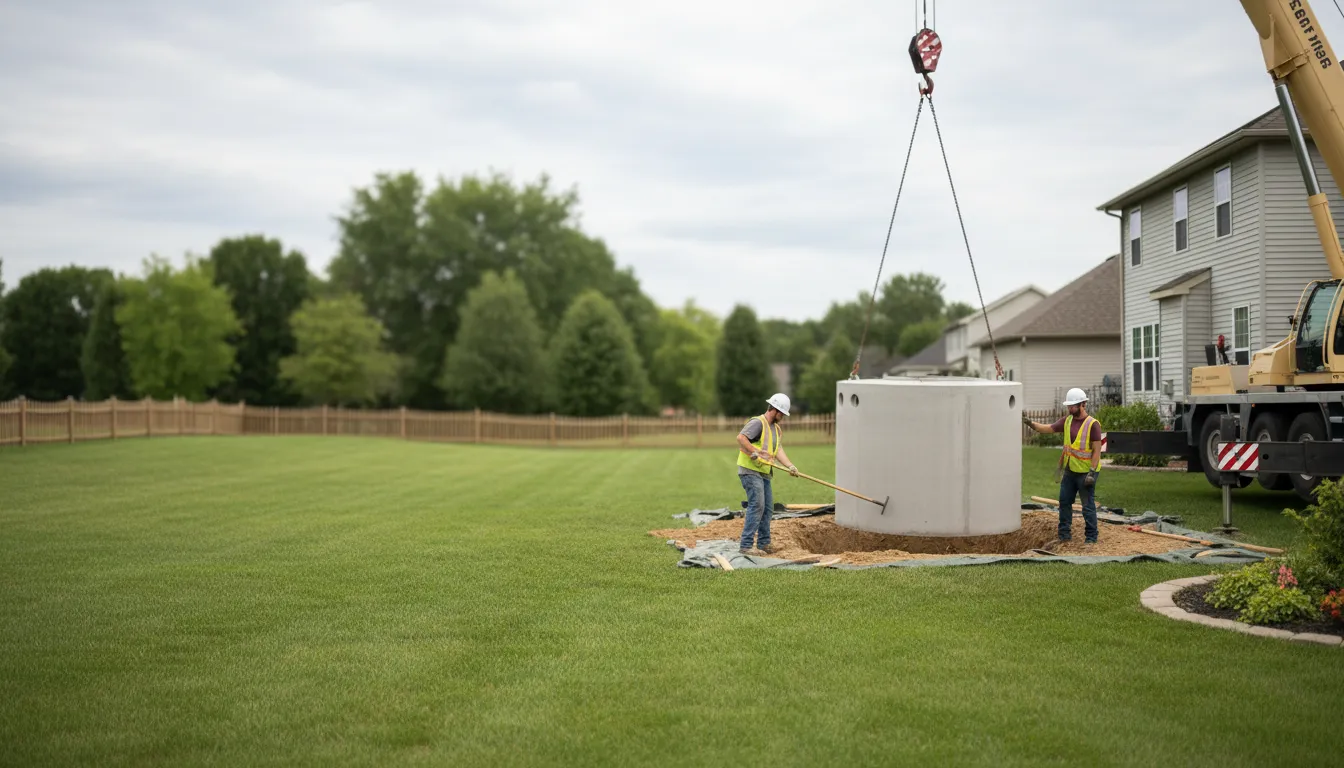
- Excavation and Tank Placement: The excavation for the septic tank and drainfield is dug according to the approved design. The tank is carefully set, leveled, and checked for proper inlet/outlet elevations.
- Tank Inspection: Before the tank is backfilled, an inspection verifies it is watertight, properly anchored (if necessary), and that all connections are correct7.
- Drainfield Construction: The drainfield (trenches, bed, or mound) is built with specific materials like gravel and distribution piping. The soil conditions in the excavated area are often verified again at this stage.
- Final Inspection and "As-Built" Submission: This is the critical last step. The inspector ensures the entire system was built exactly according to the permitted design. The installer must provide an "as-built" diagram documenting the final installation details. The system cannot be buried until the inspector grants final approval 8.
Find the perfect septic tank installation & replacement contractors for your needs
Get personalized recommendations and expert advice
Costs Associated with Septic System Installation
The cost of a new septic system installation or full system replacement in the St Louis Park area is highly variable. While permit fees from the county are relatively fixed, typically ranging from $150 to $500 depending on project complexity9, the total installation cost is driven by site-specific factors.
A standard residential septic system installation can range from $5,000 to over $15,00010. The final price tag is heavily influenced by:
- System Type: A conventional trench system is generally less expensive than a more complex mound system, which requires importing sand and more extensive construction.
- Site Conditions: Difficult terrain, rocky soil, poor access for equipment, or a high water table can significantly increase excavation and labor costs.
- Tank Size and Material: The capacity (measured in gallons) and material (concrete, plastic, or fiberglass) of the tank affect the price.
- Labor: This is a major component of the total expense, covering excavation, installation, and coordination with inspectors.
Getting multiple detailed quotes from licensed installers is essential. Be sure each quote is based on the same site evaluation and design specifications for an accurate comparison.
When is Septic System Replacement Necessary?
Understanding when to repair versus replace your existing onsite wastewater system can save you money and prevent emergencies. Replacement is typically required when:
- The system has completely failed, causing sewage backups or surfacing effluent.
- Major components like the tank or drainfield are damaged beyond repair.
- The system is declared an "Imminent Threat to Public Health" by a county inspector.
- You are adding bedrooms to your home, which increases the required system capacity beyond what the existing system is designed to handle.
- The drainfield has reached the end of its lifespan (often 20-40 years) and is no longer effectively treating wastewater.
The process for replacement follows the same rigorous path as a new installation: new site evaluation, new design, new permit, and installation by a licensed professional. The county's compliance rules for failing systems often establish strict deadlines for this work to be completed11.
Choosing a Licensed Professional in St Louis Park
Your choice of contractor is paramount. Always verify that any designer, installer, or inspector you hire holds a current MPCA license. Licensed professionals understand the local St. Louis County ordinances and MPCA rules intimately, which is vital for navigating the permit process and passing inspections. They can accurately interpret soil reports, submit proper paperwork to the county, and ensure the construction meets all code requirements.
Ask potential contractors for references, proof of insurance, and examples of similar projects in the area. A reputable professional will be transparent about the process, timelines, and costs, and will happily pull all required permits on your behalf. They are your partner in ensuring your new wastewater treatment system is safe, legal, and built to last.
Frequently asked questions
Sources
Footnotes
-
Septic system and plumbing regulations - https://www.pca.state.mn.us/sites/default/files/wq-wwists4-43.pdf ↩
-
Onsite Wastewater (Septic Systems) - https://www.stlouiscountymn.gov/departments-a-z/planning-zoning/onsite-wastewater ↩ ↩2
-
Permits | St. Louis Park, MN - https://www.stlouisparkmn.gov/services/permits ↩
-
Septic systems | Minnesota Pollution Control Agency - https://www.pca.state.mn.us/business-with-us/septic-systems ↩
-
SSTS design - Minnesota Pollution Control Agency - https://www.pca.state.mn.us/business-with-us/ssts-design ↩ ↩2
-
Homeowner Installation - St. Louis County - https://www.stlouiscountymn.gov/departments-a-z/planning-development/on-site-wastewater/contractor-information/homeowner-installation ↩
-
Septic System Install Timeline | RCI Septic Service - https://www.rciseptic.com/complete-step-by-step-timeline-septic-system-installation-from-permit-to-finish ↩
-
Septic System Installation 101: A Beginner's Guide - https://www.townesseptic.com/blog/septic-system-installation-beginners-guide ↩
-
Understanding Septic Tank Permits and Regulations - https://westcoastsanitationinc.com/understanding-septic-tank-permits-and-regulations/ ↩
-
Cost to Install a Septic System in Minneapolis [2026 Data] - Angie's List - https://www.angi.com/articles/what-does-it-cost-install-septic-system/mn/minneapolis ↩
-
Buying/Selling Property - St. Louis County - https://www.stlouiscountymn.gov/departments-a-z/planning-zoning/onsite-wastewater/buying-selling-property ↩