Find the Best Septic Tank Installation & Replacement Contractors for Your Business
No obligation • Fast responses • Nationwide coverage

Why you can trust Septic Spot
Septic Spot is a leading United States resource for understanding and comparing septic services. Our editors review providers using consistent criteria and verify key business details. Listings and scores are independent, and companies cannot pay to influence our content.
Search providers near you
Best Septic Tank Installation & Replacement Contractors in Montana Ranked
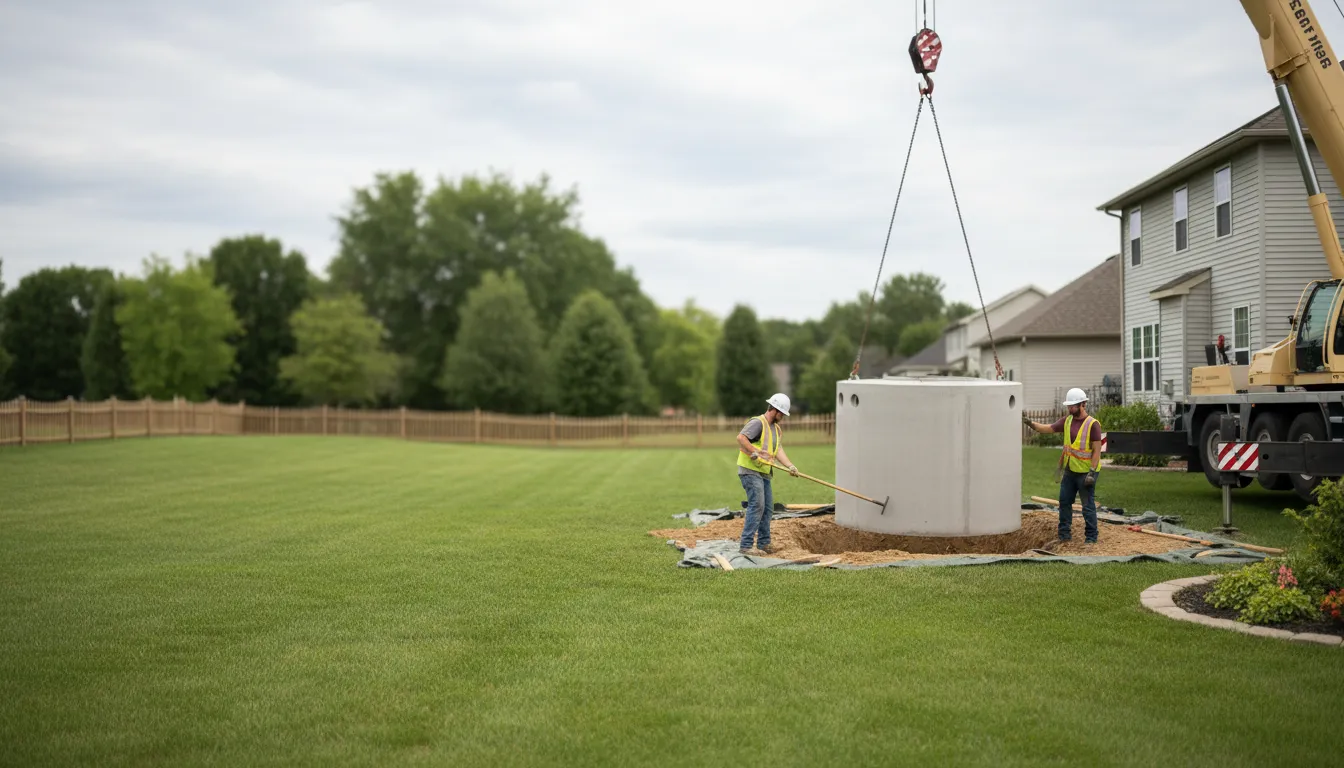
Installing or replacing a septic system is a significant project that requires careful planning and adherence to strict state and local regulations. In Montana, this process is governed by the Department of Environmental Quality (DEQ) and enforced by local county health departments to protect the state's water quality and public health. A properly designed and installed system is crucial for treating household wastewater safely on your property. This guide outlines the key steps, rules, and considerations for homeowners, helping you understand what to expect and how to connect with qualified local professionals for your project.
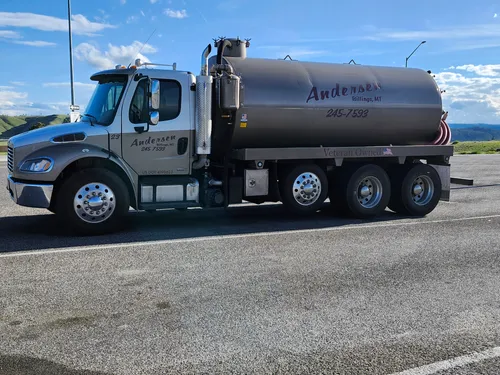
Andersen Sewer Service
7371 Kylee Sue Dr, Shepherd, MT 59079
Andersen Sewer Service is a veteran-owned, family-operated company providing septic system pumping, repair, and installation services in Billings, MT. They serve both residential and commercial clients across south-central Montana, including grease trap maintenance and emergency septic services. With over 40 years of combined experience, Andersen Sewer Service offers thorough assessments and repairs tailored to Montana's unique soil and climate conditions. The team emphasizes clear communication and practical solutions to maintain system health and prevent disruptions.
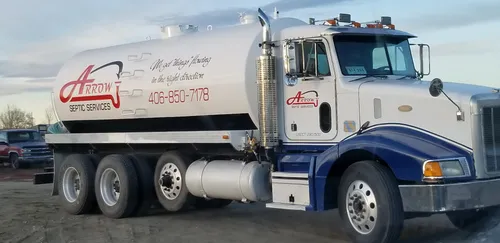
Arrow Septic and Sewer Services, LLC
8105 Hofferber Rd, Shepherd, MT 59079
Arrow Septic and Sewer Services, LLC provides a range of septic system services in Billings, MT, and surrounding areas including Shepherd, Red Lodge, Lockwood, and more. The company offers septic tank installation, pumping, grease trap pumping, drain field repair and replacement, septic tank filter cleaning, and porta-potty rentals. They serve both residential and commercial clients and provide 24/7 availability including same-day, evening, weekend, and emergency services. Their expertise includes comprehensive drain field services to address septic system seepage issues. Arrow Septic and Sewer Services also covers multiple counties such as Yellowstone, Musselshell, and Carbon. Serving a broad region around Billings, the company emphasizes maintaining septic systems to extend their lifespan and prevent costly repairs. They focus on protecting water supplies from contamination by providing professional septic maintenance and repair solutions.
Schessler Excavation and Septic
230 Lois Pl, Laurel, MT 59044
Schessler Excavation and Septic is a family-owned company serving Billings, MT, and nearby communities. They specialize in septic system design, installation, inspection, and repair, along with excavation and site preparation for residential properties. Their services include septic tank and sewage pump replacement, foundation excavation, cistern installation, road and pad building, and hydro excavation. With over 65 years of experience, they offer a range of equipment services such as skid steer, dump truck, loader, dozer, and road grader operations to support various residential projects.
Understanding Montana's Regulatory Framework
Septic system work in Montana is not a simple DIY project; it's a permitted activity with multiple oversight checkpoints. The state's primary goal is to prevent groundwater contamination, particularly nitrates, under its non-degradation laws. This means any new system or replacement must be designed to avoid increasing pollution. Authority is delegated to local County Health Departments (often called Environmental Health Services), which issue permits and conduct inspections 1. Regulations can vary by county, so your first and most important step is always to contact your local health department. They will provide the specific application forms, fee schedules, and a list of approved site evaluators and installers in your area.
The Step-by-Step Installation Process
1. Site Evaluation and Design
Before any permit is issued, a professional must evaluate your property. This site evaluation, conducted by a Montana Registered Professional Engineer or a county Sanitarian, involves soil testing (percolation tests, deep hole analysis) to determine the soil's absorption capacity and depth to bedrock or water table 2. The evaluator will also assess the slope, location of wells, and proximity to surface water. Based on this data, a system design plan is created. This plan specifies the tank size, drainfield type (conventional trench, mound, advanced treatment system), and exact layout on your property.
2. Permit Application and Approval
With a completed design plan in hand, you submit a permit application to your local health department along with the required fee. Permit fees for new or replacement systems commonly range from $400 to $480, as seen in counties like Lewis & Clark 3 4. The department reviews the design for compliance with all state and local rules. Key considerations during review include:
- System Sizing: Tank capacity is based on the number of bedrooms in the home, with 1,000 to 1,500-gallon tanks being standard for a typical single-family residence.
- Setbacks: Strict distances must be maintained. For example, absorption trenches must be at least 100 feet from any well or spring and 100 feet from the high-water mark of rivers, lakes, or streams.
- Replacement Area: Montana requires a 100% replacement area-a designated space on your lot suitable for a future second drainfield-to be reserved and kept undisturbed 5 6.
3. System Installation by Certified Professionals
Once the permit is approved, installation can begin. Montana law requires that installation be performed by authorized or licensed professionals 7. The installer will follow the approved design precisely, excavating for the tank and drainfield. Key installation specs include a maximum trench width of 4 feet (3 feet is typical) and a requirement for 3 feet of undisturbed soil between trenches. Using a certified installer ensures the work meets code and protects your investment.
4. Mandatory Construction Inspection
This is a critical step that cannot be skipped. Before the installer backfills (covers) the tank and drainfield, a representative from the local health department must perform a construction inspection 8. The inspector verifies that the installed system matches the approved design in every detail-placement, materials, depths, and connections. The system cannot be covered until this inspection is passed.
5. Final Approval and Use Permit
After a successful inspection, the health department will issue a final approval or "use permit" 9 10. This document is your official record that the system was installed correctly and is approved for operation. Keep it with your property deeds, as it is essential for future real estate transactions.
Find the perfect septic tank installation & replacement contractors for your needs
Get personalized recommendations and expert advice
Cost Considerations for Installation and Replacement
The total cost for a new septic system or a full replacement in Montana is highly variable and depends largely on site-specific conditions. The national average for a complete system installation falls between $3,615 and $12,408, and Montana costs can span this entire range or exceed it. A simple gravity-fed conventional system on ideal soil will be at the lower end, while a system requiring a mound, advanced nitrogen-reducing technology, or extensive site work due to poor soil or a high water table will be at the higher end.
Cost components include:
- Permit and Design Fees: $400 - $800+ for the site evaluation, design plan, and permit fees.
- Excavation and Earthwork: Costs depend on soil type, rock content, and accessibility.
- Tank: The septic tank itself can cost between $500 and $2,500 for materials, varying by size and material (concrete, plastic, or fiberglass) 11.
- Drainfield: This is often the most variable cost, involving gravel, distribution piping, and specialized materials for advanced systems.
- Labor: Professional installation labor is a significant portion of the total cost.
Replacing a failed system often costs as much as or more than a new installation, as it includes the additional expense of excavating and disposing of the old system components.
Choosing the Right System for Your Montana Property
Not all properties can support a standard trench system. The site evaluation will determine the appropriate technology. Common system types in Montana include:
- Conventional Trenches: Used in soils with adequate depth and permeability.
- Mound Systems: Built above the natural soil surface when there is shallow bedrock or a high water table. They require more space and are more expensive to install.
- Advanced Treatment Systems (ATS): Also known as alternative or engineered systems. These treat wastewater to a higher standard and are often required in sensitive areas (near water bodies) or on difficult sites to meet non-degradation requirements 12 13. They have more mechanical components and require more rigorous maintenance.
Your local health department and design professional will recommend the system type that is both compliant and most cost-effective for your land.
Maintenance: Protecting Your Investment Post-Installation
A new system is a major investment that, with proper care, can last for decades. Key maintenance responsibilities for Montana homeowners include:
- Regular Pumping: Have the septic tank pumped every 3 to 5 years by a licensed pumper to remove solids and prevent clogging of the drainfield.
- Water Conservation: Spreading out water use and fixing leaks prevents hydraulic overload of the drainfield.
- Mindful Flushing: Only human waste and toilet paper should go down the drain. Avoid chemicals, grease, wipes, and other non-biodegradables.
- Protect the Drainfield: Never drive or park vehicles over it, and keep heavy structures, patios, and pools away from the area. Direct roof drains and surface runoff away from it.
Keeping detailed records of pumping, inspections, and the original design plan is highly recommended.
Frequently asked questions
Sources
Footnotes
-
Septic Systems | Cascade County, MT - https://www.cascadecountymt.gov/320/Septic-Systems ↩
-
Septic Systems - RICHLAND COUNTY MONTANA - https://www.richland.org/septic-systems.html ↩
-
Outline of Septic System Permitting Process - https://jbcountymt.gov/wp-content/uploads/2026/02/Outline-of-Septic-System-Process.pdf ↩
-
Septic System Programs - Lewis & Clark County - https://www.lccountymt.gov/Government/Public-Health/Environmental-Health/Septic-Systems ↩
-
Rules and Regulations for On-Site Wastewater Treatment Systems ... - https://riverstonehealth.org/wp-content/uploads/Rule-3-11th-revision-approved-9.22.16-signed-document.pdf ↩
-
Septic Tank and Drainfield Operation and Maintenance - https://www.healthygallatin.org/wp-content/uploads/2013/04/WWTSOM.pdf ↩
-
Tanks, Waste & Recycling Permitting and Operator Assistance - https://deq.mt.gov/twr/assistance ↩
-
General Requirements for Wastewater Systems - Lake County - https://www.lakemt.gov/DocumentCenter/View/1701/General-Requirements-for-Wastewater-Systems-PDF ↩
-
How to install a septic system in Nassau County, Florida - https://rethinkrural.raydientrural.com/blog/how-to-install-a-septic-system-in-nassau-county-florida ↩
-
System Installation - https://topnotchseptic.com/system-installation/ ↩
-
How Much Does a Septic Tank Cost? - NerdWallet - https://www.nerdwallet.com/home-ownership/home-improvement/learn/septic-tank-cost ↩
-
Septic system permitting in Montana - https://archive.legmt.gov/media/filer_public/a5/47/a547d34b-b518-4041-924b-569941211a36/7519_septic_system_permitting_in_montana.pdf ↩
-
Montana Design & Installation Manual - Eljen Corporation - https://www.eljen.com/wp-content/uploads/2025/07/Montana-8.14.20.pdf ↩